Picture this: You’ve just stepped off the plane at Juan Santamaría International Airport in Alajuela, rented a car, and pointed it southwest toward the Central Pacific coast. The Pan-American Highway gives way to winding roads framed by dense tropical forest. Two hours later, Jacó materializes, beach town, surf culture, howler monkeys calling from the treetops, and the faint roar of the Pacific hammering the black-sand shore. You check into your hotel, open your phone, and search for something to actually do. Within minutes, you’ve seen the name everywhere: Monkey Bar.
For first-timers and repeat visitors alike, the Jacó Monkey Bar is one of those phrases that keeps surfacing, in hostel lobbies, on surf shop bulletin boards, in travel forums, and on the lips of tour operators who know the Central Pacific well. But what exactly is it? Is it a bar? An attraction? An experience? A landmark? The answer is more layered than most one-line descriptions suggest, and understanding it properly can genuinely reshape how you plan your time in this corner of Costa Rica. This guide breaks down everything worth knowing, from what Monkey Bar means in the Jacó context, to how it fits into a broader adventure itinerary, to why combining it with a guided waterfall tour turns a good trip into an exceptional one.
What Is the Jacó Monkey Bar? Understanding a Central Pacific Landmark
The term “Jacó Monkey Bar” refers to one of the most recognizable social and entertainment venues in Jacó’s bustling town center, a place that has become shorthand for the lively, anything-goes energy that defines this beach town’s nightlife and social scene. Situated along or near Jacó’s main strip (Avenida Pastor Díaz), Monkey Bar is the kind of establishment that functions simultaneously as a bar, a gathering point, and a cultural reference for travelers passing through the Central Pacific.
Jacó sits in the province of Puntarenas, roughly 100 kilometers southwest of San José. It’s one of the closest Pacific beach destinations to the capital, which makes it enormously popular with both international tourists and weekend travelers from San José. The town has a well-earned reputation as Costa Rica’s most energetic beach resort, drawing surfers, backpackers, families, cruise passengers from the nearby Caldera port, and adventure travelers who use it as a base for exploring the surrounding rainforest and coastline.
Within that context, Monkey Bar occupies a specific cultural role. It represents the social hub around which evenings in Jacó tend to orbit, a place where travelers compare notes on their day’s adventures, where tour guides unwind after leading groups through waterfalls and forest trails, and where the line between locals and visitors blurs over cold Imperial beers and tropical cocktails. The name itself is a nod to the monkeys that are genuinely part of daily life in Jacó: white-faced capuchins and mantled howler monkeys are regularly spotted in the trees along the edges of town, in the forest patches near the beach, and along the access roads to nearby national parks.
The Broader Meaning: Monkey Bar as a Travel Experience
Beyond the physical venue, “Monkey Bar Jacó” has evolved into a broader travel shorthand, a way of describing the particular mood of Jacó evenings, where adventure-fueled days give way to relaxed, social nights. Many travelers who ask about the Monkey Bar are really asking about the Jacó social scene as a whole: what’s the vibe, where do people gather, and how does the nightlife connect to the adventure culture that defines the town by day.
This dual meaning matters for trip planning. If you’re arriving in Jacó primarily as an adventure traveler, understanding Monkey Bar as both a physical place and a cultural concept helps you sequence your days more intentionally. The town rewards travelers who plan their mornings and afternoons around outdoor activities, waterfall tours, surfing, mangrove kayaking, ATV rides into the hills, and reserve their evenings for the social scene that Jacó does so well.
Jacó’s Position as Costa Rica’s Adventure Capital on the Central Pacific
Jacó doesn’t just happen to be near great adventure tourism, it was practically built around it. The town’s geography is extraordinary: to the west, the Pacific Ocean delivers consistent surf breaks that have attracted wave riders from around the world. To the east and south, the coastal mountain range rises sharply, draped in primary and secondary rainforest that shelters waterfalls, rivers, wildlife corridors, and hiking trails. Within an hour’s drive in almost any direction, you can reach Manuel Antonio National Park, Carara National Park, the Tárcoles River (famous for its American crocodile population), and a network of private reserves and cloud forest zones.
This concentration of natural assets makes Jacó genuinely exceptional as a base for adventure tourism. The town of Jacó and its surrounding region sit at the intersection of Pacific beach culture and dense tropical biodiversity, a combination that few destinations in Central America can match. Costa Rica as a country protects more than 25% of its national territory in protected areas and is home to roughly 5% of the world’s biodiversity despite covering less than 0.03% of Earth’s surface. The Central Pacific zone captures a significant slice of that richness.
For the traveler who wants to do more than sit on a beach (though the beach is genuinely excellent), Jacó offers a density of activities that can fill a week without repetition. The Monkey Bar experience, the social, convivial, end-of-day gathering, is the bookend that makes those active days feel complete. You hike to a waterfall in the morning, body surf in the afternoon, and compare stories over drinks in the evening. That rhythm is what Jacó does better than almost anywhere else on the Pacific coast.
Things to Do in Jacó Costa Rica: A Realistic Activity Map
Understanding the full menu of things to do in Jacó, Costa Rica helps contextualize where Monkey Bar fits. The town’s activity ecosystem breaks down roughly into four categories:
- Water and surf activities: Surfing at Playa Jacó and nearby Playa Hermosa (one of Costa Rica’s premier surf breaks, about 8 kilometers south), stand-up paddleboarding, swimming, and sport fishing charters departing from the Jacó marina.
- Jungle and rainforest adventures: Guided waterfall tours into the coastal mountain range, ATV tours through forest trails, zip-lining operations in the hills above town, and wildlife-watching hikes in Carara National Park and the Río Tárcoles wetlands.
- Cultural and culinary experiences: Fresh seafood at the town’s many restaurants, local sodas (traditional Costa Rican diners) serving casados and rice dishes, craft markets, and interaction with the genuinely diverse community that has grown around Jacó’s tourism economy.
- Social and nightlife experiences: Bars, restaurants with live music, the social scene along Avenida Pastor Díaz, and the Monkey Bar as the most prominent gathering point within that ecosystem.
The best Jacó itineraries blend all four. The mistake many travelers make is over-indexing on one category. Spending every day on the beach misses the extraordinary rainforest interior. Spending every night at Monkey Bar without doing a morning waterfall tour means missing the experience that most defines the Central Pacific’s natural character. The travelers who leave Jacó with the most vivid memories are typically those who pushed into the jungle at least once, and waterfall tours are the most accessible and rewarding way to do that.
The Waterfall Tours That Define Adventure Tourism Near Jacó
If there’s a single activity category that consistently earns the strongest reviews from travelers leaving Jacó, it’s guided waterfall tours. The coastal mountain range that rises immediately behind the town conceals an extraordinary network of waterfalls fed by rainfall patterns that make the Central Pacific one of Costa Rica’s wettest regions on the Pacific side. These aren’t gentle roadside trickles, they’re proper cascades dropping through primary forest, surrounded by the sounds of toucans, scarlet macaws, and the constant ambient noise of a fully alive tropical ecosystem.
What makes waterfall tours near Jacó particularly compelling is the combination of accessibility and genuine wildness. Unlike some of Costa Rica’s more remote waterfall experiences (Corcovado, for example, requires significant logistical planning and a multi-day commitment), the waterfalls accessible from Jacó can be reached in under an hour from town, yet they deliver the kind of immersive, off-grid forest experience that feels a world away from the beach strip. A well-guided tour takes you along forest trails, across rivers, past wildlife that most beach-focused visitors never see, all within a half-day window that leaves your afternoon free for the ocean.
What a Guided Waterfall Tour Actually Involves
The structure of a well-run waterfall tour from Jacó typically follows a progression that builds in intensity and reward. Groups depart early, usually in the morning, when the forest is coolest, most active with wildlife, and lit by the kind of low-angle tropical light that makes every photograph look professional. Transportation from Jacó takes you into the hills, where the paved road gives way to forest tracks. From the trailhead, guides lead the group through primary and secondary rainforest, pointing out wildlife, explaining the ecology of the cloud forest transition zone, and reading the terrain in ways that non-locals simply cannot.
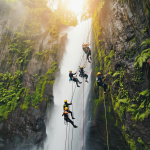
The waterfall itself is the centerpiece. Depending on the specific tour, you might be swimming in a natural pool at the base of a single dramatic cascade, or moving through a series of smaller falls connected by forest trails. Some tours include rappelling down the waterfall face, a genuinely thrilling experience that combines the technical skill of rock climbing with the sensory overload of standing in a tropical cascade. Others focus purely on hiking and swimming, which appeals to families and travelers who want immersion without the adrenaline component.
The return journey typically follows a different route, or takes you to secondary viewpoints that weren’t part of the outbound path. By the time you’re back in the vehicle heading to Jacó, you’ve covered something like 4 to 8 kilometers of forest terrain, swum in water that started as rain on a cloud forest ridge, and seen a slice of Costa Rica that the vast majority of visitors to the Central Pacific coast never experience.
Safety Standards and What to Look For in a Tour Operator
Adventure tourism in Costa Rica is regulated by the Instituto Costarricense de Turismo (ICT), the national tourism authority that certifies operators and maintains safety standards across the industry. When booking any waterfall tour near Jacó, confirming ICT certification is the baseline. Beyond that, look for operators who carry appropriate insurance, employ certified naturalist guides, maintain their equipment to current safety standards, and have a documented safety briefing process for every group.
The best operators, and Costa Rica Waterfall Tours is a strong example of this category, distinguish themselves through guide quality. A certified naturalist guide brings genuine ecological knowledge to the experience: they can identify the poison dart frog sitting on a leaf beside the trail, explain why the fig tree’s root structure looks the way it does, and give you context for the wildlife encounters that happen spontaneously throughout the tour. This knowledge transforms what might otherwise be a simple hike into an educational experience that reshapes how you see tropical ecosystems.
Group size also matters. Smaller groups move more quietly through the forest (increasing wildlife sighting probability), receive more personalized attention from guides, and create less environmental impact on sensitive trail sections. When comparing operators, ask about maximum group sizes and whether tours are private or shared.
Jacó Costa Rica Tours: Building the Perfect Adventure Itinerary
The question most travelers face when planning time in Jacó isn’t whether to do tours, it’s how to sequence them. A well-constructed Jacó itinerary treats the town as a base, radiating outward each day to different natural zones, and returning in the afternoon or evening to the beach, the restaurants, and the social scene that makes Jacó worth coming back to.
Below is a framework for thinking about a multi-day Jacó adventure itinerary, built around the kinds of experiences that genuinely distinguish a Central Pacific trip from a generic beach vacation.
| Day | Morning Activity | Afternoon Activity | Evening | Notes |
|---|---|---|---|---|
| Day 1 | Arrive, settle in, walk the beach | Town orientation, surf lesson or paddleboard rental | Dinner at a local soda, Monkey Bar social scene | Light day, let the body adjust to the heat |
| Day 2 | Guided waterfall tour (depart 7–8am) | Return by noon, beach swimming, rest | Sunset at the beach, dinner at a seafood restaurant | Core adventure day, do this early in the trip |
| Day 3 | Tárcoles River crocodile boat tour or Carara National Park wildlife hike | Surf session at Playa Hermosa or ATV tour in the hills | Live music dinner, Monkey Bar | Carara is 30 min north, scarlet macaws almost guaranteed |
| Day 4 | Day trip to Manuel Antonio National Park | Beach time inside the park, sloths and monkeys | Return to Jacó by evening | About 75 min south, book entry tickets in advance |
| Day 5 | Second waterfall tour (different route) or zip-lining | Free time, souvenir shopping, relaxed beach afternoon | Final evening on the Jacó strip | Good operators offer multiple tour routes, don’t repeat the same one |
This framework is flexible, cruise passengers arriving at Caldera typically have a single day, which changes the calculus entirely (see the cruise passenger section below). But for travelers staying multiple nights, this rhythm of alternating active mornings with relaxed afternoons, and social evenings, is close to optimal for the Central Pacific.
Jacó Attractions Beyond the Beach: The Natural Assets Most Visitors Miss
Jacó’s most famous attraction is its beach, and it deserves its reputation. Playa Jacó stretches roughly 4 kilometers of dark volcanic sand, consistently rideable surf, and Pacific sunsets that explain why so many people keep coming back. But the travelers who leave Jacó with the deepest memories are usually those who pushed inland, or south toward Manuel Antonio, or north toward Carara and the Tárcoles.
The following Jacó attractions represent the full spectrum of what the Central Pacific offers, and each one pairs naturally with the social scene that the Monkey Bar experience represents:
Carara National Park: Scarlet Macaw Territory
Located approximately 30 kilometers north of Jacó along the coastal highway, Carara National Park sits at the biological transition zone between the dry forests of Guanacaste and the humid tropical forests of the Central Pacific. This transition makes it one of the most biodiverse parks in Costa Rica’s entire protected area system, managed by SINAC (Sistema Nacional de Áreas de Conservación). The park’s most famous residents are scarlet macaws, one of the most visually spectacular birds in the Western Hemisphere, and almost guaranteed to be spotted at Carara by anyone who enters in the early morning.
Trails inside Carara range from accessible boardwalk sections near the entrance to more challenging interior routes. Even a two-hour morning visit yields wildlife encounters that feel genuinely wild: crocodiles in the Río Tárcoles (best viewed from the famous bridge on the coastal highway, just outside the park), white-faced capuchins in the canopy, and the constant background symphony of tropical birdsong.
Manuel Antonio National Park: The Iconic Day Trip
About 75 kilometers south of Jacó along the coastal highway (roughly a 75-minute drive), Manuel Antonio National Park is one of Costa Rica’s most celebrated natural areas. Combining a pristine rainforest with white-sand beaches and turquoise Pacific water, the park delivers the kind of scenery that ends up on magazine covers. Three-toed sloths hang in the cecropia trees beside the trails. Squirrel monkeys (a species found in very few places outside of Costa Rica and Panama) forage along the path to the beach. The park is genuinely extraordinary, and it’s close enough to Jacó to make a comfortable day trip.
The practical note: Manuel Antonio has a daily visitor cap, and entry tickets sell out regularly during dry season (December through April). Book online through the park’s official system well in advance, particularly if you’re traveling during peak weeks around Christmas, New Year, and Easter (Semana Santa).
The Tárcoles River: Costa Rica’s Crocodile Corridor
The bridge over the Río Tárcoles on the Costanera Sur highway, about 30 minutes north of Jacó, is one of the most-visited roadside stops in all of Costa Rica, and for good reason. The river below hosts one of the densest populations of American crocodiles anywhere in Central America. Looking down from the bridge, you’ll typically see dozens of crocodiles basking on the riverbanks, some exceeding 4 meters in length. Boat tours departing from the river offer closer encounters and the chance to spot roseate spoonbills, herons, kingfishers, and occasionally boat-billed herons in the mangrove sections.
Waterfall Zones in the Coastal Mountain Range
The network of waterfalls accessible from Jacó in the coastal mountain range is, for many travelers, the most memorable part of a Central Pacific trip. These aren’t marked on most tourist maps and aren’t accessible without a guide, which is precisely what makes them feel special. A guided waterfall tour takes you into a version of Costa Rica that hasn’t been packaged for mass consumption, where the forest is genuinely dense, the wildlife encounters are unscripted, and the sound of falling water is the only soundtrack.
The waterfalls in this zone tend to be most powerful during and immediately after the green season (May through November), when rainfall in the highlands keeps the rivers running strong. During dry season, the falls are still beautiful but may carry less volume. Either season has its appeal: dry season offers easier trail conditions and reliable weather, while green season delivers the lushest forest and the most dramatic water flow.
For Cruise Passengers: Making the Most of a Single Day in Jacó
A significant portion of Jacó’s visitors arrive not by plane or private car but by cruise ship, docking at the Puerto Caldera terminal approximately 17 kilometers north of town. For these travelers, time is the binding constraint, a typical shore excursion window runs from roughly 8:00am to 5:00pm, leaving perhaps 7 to 8 hours for everything Jacó has to offer.
The question every cruise passenger faces is the same: do you spend that time on the beach, or do you push into the jungle? The honest answer is that the beach, while excellent, doesn’t require a trip to Costa Rica specifically. The waterfall experience does. If you’re docking at Caldera and have a single day to experience the Central Pacific, a guided waterfall tour is the activity that will still feel vivid and significant years later. The beach will feel like many other beaches you’ve visited. The forest waterfall will feel like nothing else.
Logistics for cruise passengers work best when tours are booked in advance directly with an operator based in Jacó. Transportation from Caldera to the tour departure point can be arranged through the same operator, eliminating the need to coordinate multiple vendors in a language that may not be your own. The half-day structure of most waterfall tours from Jacó fits comfortably within a shore excursion window, leaving time for lunch in town and a brief walk on the beach before returning to the ship.
The Monkey Bar Experience in Context: Adventure Days and Social Evenings
Returning to where this guide began: the Jacó Monkey Bar experience makes the most sense when understood as the social complement to an active, adventure-focused day. The travelers who get the most out of it are those who arrive with stories to tell, a waterfall they swam beneath that morning, a scarlet macaw they photographed at Carara, a wave they caught at Playa Hermosa in the afternoon.
There’s a specific pleasure in the end-of-day gathering that Jacó facilitates better than almost any other destination in Costa Rica. The town is small enough that you repeatedly encounter the same people over the course of a stay, the guide from your waterfall tour, the surfer who gave you tips on the break, the family from Ohio at the next table who had the same instinct to come to Jacó over the more developed resorts of Guanacaste. The Monkey Bar scene is where these threads come together.
It’s worth noting what Monkey Bar is not, for travelers who may be expecting something more sedate. Jacó’s social scene skews energetic, particularly on weekends and during high season. If you’re looking for the quiet, romantic beach town experience, the Nicoya Peninsula, Montezuma, Santa Teresa, Mal País, might suit you better. Jacó, and Monkey Bar within it, caters to travelers who want their evenings to have some electricity.
Responsible Travel in Jacó: What Ecotourism Actually Means Here
Costa Rica’s tourism industry operates under a framework of ecological responsibility that’s more substantive than marketing language. The Certificación para la Sostenibilidad Turística (CST), administered by the ICT, rates tourism businesses on a scale of 0 to 5 leaves based on environmental management, sustainability practices, and community engagement. Choosing tour operators and accommodations with strong CST ratings is a meaningful way to ensure that your tourism spending contributes positively to the ecosystems and communities you’re visiting.
The Bandera Azul Ecológica program, a separate certification focusing on beach and water quality, has made measurable improvements to coastal environmental standards throughout Puntarenas province. Many of the beaches near Jacó participate in this program, reflecting genuine community commitment to environmental stewardship rather than purely performative sustainability.
For adventure travelers specifically, ecotourism in the Jacó context means choosing guided tours over self-guided exploration in sensitive ecosystems, staying on marked trails in national parks and private reserves, and patronizing operators who employ local guides and contribute to community economies. The waterfall zones accessible from Jacó are in private reserves and managed forest corridors, access through a licensed operator isn’t just convenient, it’s the responsible approach that keeps these areas viable for future visitors.
Practical Planning Guide: What to Know Before You Go
The logistical realities of a Jacó trip are straightforward but worth understanding clearly before you arrive. This section addresses the most common planning questions from travelers preparing for the Central Pacific.
Getting to Jacó from San José
The most common route from San José to Jacó runs via the Costanera Sur (Route 34), passing through Orotina and then south along the coast. By rental car, the drive takes approximately 1.5 to 2 hours depending on traffic, San José’s congestion can add 30 to 45 minutes during peak hours. Public buses depart from the Coca-Cola terminal in San José multiple times daily and take approximately 2 hours. Shared shuttles from many San José hotels are also available through tour operators and can be booked in advance.
From Liberia (for travelers flying into Guanacaste), the drive is longer, approximately 4 to 5 hours via San José or through Puntarenas, but the Central Pacific is worth the journey if you’re spending more than a week in Costa Rica.
When to Visit: Dry Season vs. Green Season
Both seasons have genuine merit for Jacó visitors, and the choice depends on what you’re prioritizing.
| Factor | Dry Season (December–April) | Green Season (May–November) |
|---|---|---|
| Weather | Consistent sunshine, low humidity, 28–33°C | Afternoon rain common, lush and green, 25–30°C |
| Waterfall Tours | ✅ Reliable access, easier trails | ✅ More powerful falls, dramatic scenery |
| Crowd Level | Higher, book tours well in advance | Lower, easier bookings, fewer crowds |
| Surfing | ✅ Consistent swells, good conditions | ⚠️ Can be excellent but more variable |
| Wildlife Viewing | ✅ Animals concentrated near water sources | ✅ Breeding season activity, more birds |
| Pricing | Higher, peak season rates apply | Lower, genuine value for money |
| Monkey Bar Scene | Busier, more international mix | More local, more relaxed atmosphere |
What to Pack for Waterfall Tours and Jungle Activities
Packing for a Jacó trip that includes waterfall tours requires slightly more thought than a pure beach vacation. The core items that make a meaningful difference:
- Water shoes or closed-toe sandals with grip: Essential for river crossings and wet trail sections. Regular flip-flops are dangerously inadequate on wet forest terrain.
- Quick-dry clothing: You will get wet. Lightweight synthetic fabrics that dry fast make the difference between a comfortable experience and a miserable one.
- Dry bag or waterproof phone case: Waterfalls and electronics do not coexist well without protection. Bring a dry bag for anything electronic.
- Sunscreen and insect repellent: DEET-based repellents are most effective against the insects found in Costa Rican forest zones. Apply before entering the forest.
- Reusable water bottle: Hydration is critical in tropical heat. Most tour operators provide water, but having your own bottle reduces plastic waste.
- A light rain jacket or packable poncho: Even in dry season, the coastal mountains can produce localized rain. In green season, it’s near-mandatory.
Booking Tours: Timing and Logistics
For dry season travel (particularly December through March, and the Easter week known as Semana Santa), waterfall tours from Jacó should be booked at least one to two weeks in advance. Tour operators fill up quickly during peak periods, and the most reputable operators with the best guide teams book out earliest. Green season offers more flexibility, but advance booking is still recommended to secure your preferred date and time.
The practical booking process through Costa Rica Waterfall Tours is designed to be simple: visit the adventure tours page, select your preferred tour type and date, and confirm your group size. The team can also advise on which tour best fits your group’s fitness level and interests, which is worth using, not all waterfall tours are equally appropriate for all groups.
Photography in Jacó: Waterfalls, Wildlife, and the Social Scene
Jacó and its surroundings offer extraordinary photography opportunities across every category, landscape, wildlife, surf, and social documentary. For travel photographers, the Central Pacific is one of Costa Rica’s most rewarding zones, and combining a waterfall tour with the Monkey Bar social scene gives you a full-spectrum day of material.
Waterfall photography works best in the morning, when soft light filters through the forest canopy and the harsh midday contrast hasn’t yet made exposure difficult. Most waterfall tours depart early enough to catch this optimal light. The technical challenge with waterfall photography is balancing exposure: a faster shutter speed (1/250s or faster) freezes the water in sharp detail; a slower shutter speed (1/15s or slower, with a tripod) creates the silky, motion-blurred effect that defines the classic waterfall image. Both are achievable at the falls accessible from Jacó, bring a small travel tripod if you want the silky effect.
Wildlife photography in the forest zones near Jacó rewards patience and early starts. The same waterfall tours that put you in front of cascading water also put you in front of wildlife: poison dart frogs on the trail margins, toucans and motmots in the canopy, and occasionally jaguarundi or coati crossing the forest floor. A 70–200mm equivalent zoom range covers most wildlife encounters adequately.
For the Monkey Bar and Jacó social scene, the golden hour before sunset on the beach strip is the most photographically productive. The beach itself, the surf breaks at Playa Hermosa, and the gathering crowds at outdoor venues all benefit from the warm Pacific light that falls in the 30 minutes before and after sunset.
Group and Incentive Travel: Why Jacó Works for Teams
Jacó has become an increasingly attractive destination for corporate incentive travel groups and team retreats, and waterfall tours are often the centerpiece activity that makes these programs memorable. The combination of shared physical challenge (the hike), shared reward (the waterfall swim), and shared social experience (the evening in Jacó) creates exactly the kind of bonding experience that incentive travel programs are designed to deliver.
Waterfall tours for groups work particularly well because they’re inherently collaborative. The trail sections require mutual encouragement. The river crossings require trust. The final arrival at the waterfall creates a shared emotional peak that’s difficult to replicate in conference rooms or at team dinners. Groups that do a morning waterfall tour together consistently report stronger social cohesion by the time they reach the evening social setting.
Costa Rica Waterfall Tours accommodates groups with customized logistics, transportation, guide ratios, and tour route selection can all be adjusted to fit a group’s specific composition and goals. For corporate planners, the key advantage is having a single, experienced operator handle the complexity of a multi-person adventure experience, eliminating the coordination overhead that can undermine group travel programs.
Frequently Asked Questions About Jacó and the Monkey Bar Experience
What exactly is the Jacó Monkey Bar?
The Jacó Monkey Bar is one of the most well-known social venues in Jacó, Costa Rica, a bar and gathering point that has become central to the town’s nightlife identity. It represents the social bookend to Jacó’s active adventure tourism culture, where travelers gather after days spent surfing, hiking, and exploring the surrounding rainforest.
Is Jacó safe for tourists?
Jacó is a heavily visited tourist destination with an established tourism infrastructure. Like any popular beach town, standard travel precautions apply: don’t leave valuables visible in vehicles, be aware of your surroundings in unfamiliar areas late at night, and use reputable operators for all tours. The town is generally safe for tourists who exercise normal common sense.
How far is Jacó from San José?
Jacó is approximately 100 kilometers southwest of San José via the Costanera Sur (Route 34). The drive takes approximately 1.5 to 2 hours by car, depending on traffic leaving the capital. Public buses and private shuttles also make the route regularly.
What are the best things to do in Jacó, Costa Rica?
The best activities in Jacó span beach and jungle experiences: guided waterfall tours into the coastal mountain range, surfing at Playa Jacó and Playa Hermosa, wildlife watching at Carara National Park, crocodile boat tours on the Río Tárcoles, day trips to Manuel Antonio National Park, and the social scene along the main strip in the evenings.
Are waterfall tours near Jacó suitable for beginners?
Yes. The best waterfall tour operators in Jacó offer options for a wide range of fitness levels, from relatively easy forest hikes with swimming at the base of a waterfall to more physically demanding treks with rappelling. When booking, communicate your group’s fitness level and any physical limitations so the operator can recommend the most appropriate tour.
What is the best time of year to visit Jacó?
Both dry season (December through April) and green season (May through November) have genuine appeal. Dry season offers the most reliable weather and is ideal for beach activities and consistent surf. Green season brings lush forest, more powerful waterfalls, lower prices, and fewer crowds. Many experienced Costa Rica travelers prefer the shoulder periods (November and late April/early May) for the best combination of conditions.
Do I need to book tours in advance in Jacó?
During dry season, particularly from December through March and during Semana Santa (Easter week), advance booking is strongly recommended. The most reputable operators fill quickly. During green season, more availability exists, but booking ahead still secures your preferred date and avoids disappointment.
Can cruise passengers from Caldera do a waterfall tour?
Yes. The Puerto Caldera terminal is approximately 17 kilometers north of Jacó, and the half-day structure of most waterfall tours fits comfortably within a typical shore excursion window. Transportation from Caldera to the tour departure point can be arranged directly with the tour operator. This is one of the most rewarding ways to use a Costa Rica port day.
What should I wear for a waterfall tour near Jacó?
Wear quick-dry clothing, bring water shoes or closed-toe sandals with grip, and carry a dry bag for electronics. Sunscreen and insect repellent should be applied before entering the forest. A light rain jacket is useful year-round in the coastal mountains.
Are waterfall tours near Jacó environmentally responsible?
Tours operated through ICT-certified operators in Costa Rica follow guidelines designed to minimize environmental impact, staying on marked trails, managing group sizes to reduce ecosystem stress, and employing local guides who have a genuine stake in the long-term health of the forest zones they work in. Look for operators with CST certification (Certificación para la Sostenibilidad Turística) for the strongest environmental assurance.
How does the Monkey Bar experience fit into a family trip to Jacó?
Jacó’s social scene, including Monkey Bar, skews toward adult travelers and is most active in the evenings. Families with children typically focus their Jacó time on daytime activities, waterfall tours, beach time, wildlife watching, and use the evenings for restaurant dinners. The social venues are accessible to families during early evening hours before the later-night crowd arrives.
What makes Costa Rica Waterfall Tours different from other operators in Jacó?
Costa Rica Waterfall Tours specializes specifically in waterfall and ecotourism experiences on the Central Pacific, with certified naturalist guides, a strong safety track record, and consistently strong traveler reviews. The company’s focus on guided immersive experiences, rather than mass-market packaged tours, means smaller group sizes, more knowledgeable guides, and a more authentic encounter with the forest ecosystems near Jacó.
Key Takeaways
- The Jacó Monkey Bar is both a physical venue and a cultural concept, it represents the social dimension of Jacó’s adventure tourism identity, where active days give way to convivial evenings.
- Jacó’s greatest asset is its dual nature: a Pacific beach town with immediate access to extraordinary jungle, waterfall, and wildlife experiences in the coastal mountain range behind it.
- Guided waterfall tours from Jacó are the single activity most likely to distinguish a Central Pacific trip from a generic beach vacation. They’re accessible, safe, and deliver a level of immersion in Costa Rica’s natural environment that few other activities can match.
- The best Jacó itinerary alternates between active mornings (waterfall tours, wildlife hikes, surf sessions) and relaxed afternoons and evenings (beach time, the Monkey Bar social scene, fresh seafood dinners).
- Seasonal timing matters: dry season offers reliable weather and is ideal for first-timers; green season delivers lush forest, dramatic waterfalls, and lower prices for travelers comfortable with afternoon rain.
- Cruise passengers from Caldera can absolutely do a half-day waterfall tour within their shore excursion window, it’s one of the most rewarding uses of a Costa Rica port day.
- Booking in advance is essential during peak season (December–March and Semana Santa). The best operators fill quickly, and last-minute availability at reputable companies is rare during high season.
- Choosing an ICT-certified operator with CST credentials ensures that your adventure tourism spending contributes positively to the ecosystems and communities that make the Central Pacific worth visiting.
Plan Your Jacó Adventure with Costa Rica Waterfall Tours
Jacó is a town that rewards curiosity. The travelers who push beyond the beach, into the forest, up the rivers, to the base of falls that aren’t on any tourist map, are the ones who come home with the stories that make other people book flights. The Monkey Bar experience waits at the end of those days, offering exactly the kind of social energy that makes a long day in the jungle feel like a complete adventure.
If you’re planning time in Jacó and want to build an itinerary that genuinely does justice to what the Central Pacific offers, start with the waterfall tours. They’re the experience that anchors everything else, the activity that transforms a beach trip into a Costa Rica trip in the fullest sense of what that means.
Costa Rica Waterfall Tours operates out of Jacó with an expert team of certified guides and a portfolio of waterfall and adventure experiences designed for every level of traveler, from families on their first jungle hike to experienced adventure travelers looking for routes that go deeper into the forest than the standard options. Five-star reviews across booking platforms reflect a consistent commitment to safety, expertise, and the kind of personalized experience that makes the difference between a good tour and an unforgettable one.
Ready to make your Jacó trip extraordinary? Browse the full range of waterfall and adventure tours, check availability for your travel dates, and book directly through the Costa Rica Waterfall Tours adventure tours page. Your waterfall is waiting, and the Monkey Bar will still be there when you get back.
About the author
Costa Rica Waterfall Tours Editorial Team · Editorial Team
Book Your Guided Waterfall Adventure