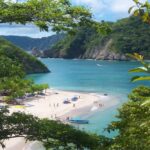
Every year, travelers arrive at Jacó Beach with the same plan: drop their bags at the hotel, walk straight to the water, and dive in. It looks safe. The waves are rolling, locals are out, the beach is beautiful. Then someone gets caught in a rip current they never saw coming. This is not a rare occurrence on Costa Rica’s Central Pacific coast, it is a regular one, and understanding why requires more than a quick glance at the surf before wading in. This article gives you the honest, unfiltered picture of what swimming at Jacó Beach actually involves, what the dangers are, when conditions are manageable, and what experienced visitors do instead when the ocean is not playing nice.
The Real Answer: Is Jacó Beach Safe for Swimming?
Jacó Beach is swimmable under the right conditions, but it is not a beginner-friendly beach by any measure, and it demands a higher level of situational awareness than most beach destinations marketed to tourists. The honest answer is that swimming safety at Jacó is highly variable, it depends on the season, the swell, the tide, and whether you know what warning signs to look for.
Jacó sits on Costa Rica’s Central Pacific coast in Puntarenas Province, roughly 100 km west of San José along the Costanera Sur highway. The beach stretches approximately 3 km and faces southwest, which means it receives open Pacific swell with relatively little geographic protection. Unlike sheltered coves such as Manuel Antonio’s Playa Biesanz or the calmer bays around the Nicoya Peninsula, Jacó’s shoreline absorbs the full force of Pacific swells that have often traveled thousands of kilometers before hitting the sand.
The beach has a history of drowning incidents, and the Instituto Costarricense de Turismo (ICT) and local Red Cross units have repeatedly flagged the Central Pacific coastline as one of Costa Rica’s highest-risk zones for ocean-related emergencies. Rip currents are the primary cause of swimmer distress here, and they form frequently, sometimes invisibly, especially at the northern and southern ends of the main beach strip.
This does not mean you should avoid the water entirely. It means you should approach Jacó Beach the way you would any powerful natural environment in Costa Rica: with respect, preparation, and ideally with local guidance.
What Makes Jacó’s Surf More Dangerous Than It Looks
The deceptive quality of Jacó’s surf is arguably its most dangerous feature. On a calm day, the waves appear manageable, knee-to-waist height, rolling in at comfortable intervals. But the hydrodynamics operating beneath the surface tell a different story. Rip currents form when water pushed onto shore by breaking waves finds concentrated exit channels, typically through troughs or gaps in sandbars. These channels can move water seaward at speeds exceeding 2.5 meters per second, which is faster than most competitive swimmers can maintain for any sustained period.
Jacó’s sandy bottom shifts constantly with tidal cycles and seasonal swell patterns, meaning the location of rip current channels changes regularly. A spot that was safe on Monday morning may develop a strong rip by Tuesday afternoon after a swell shift. This is why local knowledge matters so much, and why the “it looked fine yesterday” logic is genuinely dangerous at this beach.
Wave sets at Jacó can also arrive in irregular patterns. A lull of several small waves is often followed by a cleanup set significantly larger than what preceded it. Swimmers standing waist-deep in comfortable conditions can be knocked off their feet and disoriented by a set wave they did not anticipate, which is when rip currents do their worst damage: to a person who is already off-balance and fighting to stay upright.
Seasonal Conditions and What They Mean for Swimmers
Costa Rica’s two-season calendar has a direct effect on Jacó’s ocean conditions. During the dry season (December through April), trade winds from the north create more organized, consistent swell patterns from the northwest. Wave heights are generally moderate, and visibility is better, which makes it easier to read the water before entering. This is the period when Jacó’s surf is most crowded with both swimmers and surfers, and ironically it is also when the beach is most dangerous for non-surfers, because more people enter the water with less awareness.
The green season (May through November) brings larger, less predictable Pacific swells driven by southern and southwestern storm systems. Wave faces can increase significantly, and beach conditions change rapidly. The tradeoff is that Jacó is less crowded, which means lifeguard attention is less stretched, but the ocean is demonstrably more powerful. Serious surfers often prefer Jacó in the rainy season for exactly this reason; casual swimmers should exercise considerably more caution.
Understanding Rip Currents: The Primary Hazard at Jacó
Rip currents account for the vast majority of ocean rescues at beaches like Jacó, and the National Oceanic and Atmospheric Administration (NOAA) estimates they are responsible for the majority of lifeguard rescues at surf beaches globally. Knowing how to identify one and what to do if caught in one is not optional information for anyone planning to swim at Jacó, it is essential.
How to Identify a Rip Current from the Shore
Before entering the water at Jacó, spend at least five minutes watching the surf from a standing position on the beach. You are looking for several visual indicators:
- Discolored water channels: Rips often appear as darker, slightly murky channels of water that cut through the lighter, foamy surf zone. The color difference comes from disturbed sand carried seaward through the channel.
- Choppy, confused surface texture: Where a rip exits through the surf zone, the water surface looks choppier and more irregular than the surrounding surf. Waves in the adjacent surf zone will appear to break more cleanly on either side of the rip channel.
- Foam or debris moving seaward: If you see floating material, foam patches, seaweed, small debris, moving consistently toward the ocean rather than toward shore, you are looking at a rip current.
- A break in the wave pattern: Where waves are breaking on both sides but there is a gap of unbroken water between them, that gap is almost always a rip channel. The water is too deep there because the outflow has scoured a trough in the sand.
What to Do If You Get Caught
The instinct to swim directly back to shore is the wrong response to a rip current and the primary reason people drown in them. Fighting directly against a rip current exhausts even strong swimmers within minutes. The correct response is to swim parallel to shore, at a 90-degree angle to the current’s pull, until you feel the current release, then angle back toward the beach diagonally. If you cannot escape by swimming parallel, float and conserve energy while signaling for help. Rip currents release their energy a relatively short distance beyond the surf zone; they pull you out but do not drag you underwater.
At Jacó, the beach does have lifeguard coverage during certain hours, but coverage is not guaranteed 24/7 across the full 3 km stretch. Swimming in front of a staffed lifeguard post is always the safer choice, and asking the lifeguard on duty about current conditions before entering is the single most effective safety measure available to any visitor.
Flag System and Beach Safety Signage at Jacó
Jacó Beach uses a beach flag system to communicate daily ocean conditions to visitors, though the system’s consistency depends on municipal staffing and seasonal tourism management. Understanding what each flag color means could save your life.
| Flag Color | Meaning | Recommended Action for Visitors |
|---|---|---|
| Green | Calm conditions, low hazard | ✅ Swimming generally safe; stay aware of surf patterns |
| Yellow | Moderate hazard; caution required | ⚠️ Experienced swimmers only; children and non-swimmers should stay out |
| Red | High hazard; dangerous conditions | ❌ Do not swim; even strong swimmers face serious risk |
| Black / Double Red | Extreme danger; beach closed | ❌ Absolutely no entry; emergency conditions |
| Purple / Blue | Marine life present (jellyfish, etc.) | ⚠️ Be cautious of stings; check with lifeguard for specifics |
A critical point for visitors: the absence of any flag does not indicate safe conditions. It may simply mean no flag has been posted yet that day. When no flag is visible and no lifeguard is present, treat the water as an unknown hazard and apply your own observation skills before entering.
Sections of Jacó Beach and Relative Safety Levels
Jacó Beach is not uniformly dangerous along its full length. The central section of the beach, roughly in front of the main commercial strip on Calle Bohío and the area near the Jacó Walk shopping center, tends to receive the most lifeguard attention and is the most consistently monitored. The northern end of the beach, near the Tárcoles River mouth, sees significantly stronger currents and occasional crocodile activity in the estuarine zone, swimming is not advisable there under any conditions. The southern end near Playa Hermosa’s northern boundary also tends to have heavier surf and less consistent monitoring.
If you are determined to swim at Jacó, the mid-beach section during morning hours on a green-flag day, in front of a staffed lifeguard post, represents the best-case scenario for a reasonably safe experience.
Adventure Travel Safety in Costa Rica: A Broader Framework
Adventure travel safety in Costa Rica extends well beyond ocean swimming, and Jacó’s beach conditions are actually just one element of a much broader safety picture that every visitor to the Central Pacific should understand. Costa Rica attracts travelers precisely because of its intense natural environments, and those environments require genuine respect.
The country’s Sistema Nacional de Áreas de Conservación (SINAC) manages over 25% of Costa Rica’s land territory as protected areas, which means that a large proportion of popular tourist activities take place within ecosystems that are actively wild, not manicured for easy visitor access. Trails can flood during the rainy season, river crossings that are knee-deep in April can be waist-deep and fast-moving in October, and wildlife encounters that are benign in most contexts can become hazardous without appropriate local knowledge.
The Safety Standards That Separate Good Operators from Bad Ones
For adventure travelers evaluating tour operators in the Jacó area, several markers distinguish genuinely safety-conscious operators from those who prioritize sales over preparation. The most important questions to ask before booking any guided adventure activity in Costa Rica:
- Does the operator carry liability insurance specific to adventure tourism activities?
- Are guides certified in wilderness first aid or swift water rescue where relevant?
- What is the guide-to-guest ratio on the specific tour you are booking?
- Does the operator conduct pre-tour safety briefings, and are these mandatory or optional?
- What is the cancellation or modification policy when weather conditions make an activity unsafe?
- Has the operator received the CST (Certificación para la Sostenibilidad Turística) certification from ICT, which evaluates both environmental and operational standards?
Operators who answer these questions clearly and confidently are operating at a professional level. Those who deflect or minimize them are worth avoiding regardless of their price point.
What Responsible Travel Looks Like in Practice
Responsible travel in Costa Rica is not just about environmental ethics, it is about personal safety and community impact in equal measure. When travelers select operators who invest in proper safety training, appropriate equipment, and knowledgeable guides, they are directly funding the ecosystem of responsible tourism that keeps Costa Rica’s natural environments accessible for future visitors.
The flip side is real: unguided access to rivers, waterfalls, and trails in the Central Pacific can result in accidents that trigger search-and-rescue operations involving SINAC rangers, Cruz Roja (Red Cross) volunteers, and local emergency services, all of which place strain on communities that depend on tourism but cannot absorb the cost of preventable emergencies.
Waterfall Tour Safety Tips: What the Best Operators Do Differently
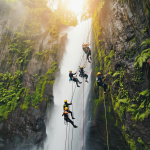
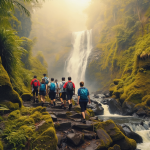
Waterfall trekking in the Jacó area is one of the region’s signature adventure experiences, and it offers something ocean swimming at Jacó cannot always guarantee: a controlled, guided experience in a spectacular natural setting. Understanding waterfall tour safety is essential for anyone booking this type of excursion, and the specifics matter.
Trail and Terrain Preparation
Waterfall trails in the Central Pacific region of Costa Rica typically involve uneven terrain, river crossings, muddy slopes, and root-covered paths through secondary and primary rainforest. The best operators communicate this clearly in advance and provide gear recommendations that go beyond generic advice. Closed-toe footwear with ankle support is not optional on serious waterfall trails, it is the difference between a minor slip and a sprained ankle 45 minutes from the nearest vehicle access point.
Reputable guides assess trail conditions before departure, not just at the start of the season. A waterfall trail that was in excellent condition two days ago may have a compromised river crossing after a heavy overnight rainfall. Flexible operators who adapt routes based on current conditions rather than a fixed itinerary are demonstrating exactly the kind of professional judgment that keeps guests safe.
Hydration, Sun Exposure, and Physical Preparation
Costa Rica’s Central Pacific climate operates at high humidity year-round, with temperatures typically ranging from 26°C to 34°C at sea level. The physiological demands of hiking in this environment are frequently underestimated by visitors arriving from temperate climates. Heat exhaustion develops more quickly in humid tropical environments than in dry heat, and the warning signs (nausea, headache, reduced sweating, disorientation) often appear rapidly in people who have not acclimatized.
Well-run waterfall tours in the Jacó area build hydration breaks into their itinerary, provide guests with water or electrolyte options, and brief participants on recognizing heat-related illness symptoms before the hike begins. Guides who are genuinely safety-focused will ask about pre-existing medical conditions during check-in, not as bureaucratic formality, but because altitude changes, physical exertion, and heat interact differently with conditions like hypertension, asthma, or recent injuries.
Wildlife Awareness on Guided Waterfall Excursions
The same biodiversity that makes Costa Rica one of the world’s most celebrated ecotourism destinations also means that trails near waterfall systems pass through habitat shared by a range of wildlife. Venomous snakes including the fer-de-lance (Bothrops asper) are present in rainforest environments across the Central Pacific. Wasps and stinging insects nest near trail margins. River environments host caimans in some areas.
None of this makes waterfall trekking dangerous in the hands of an experienced guide, it makes it an environment that demands local expertise. Guides who have spent years working specific trail systems develop an instinctive awareness of seasonal wildlife patterns, known hazard zones, and appropriate response protocols. This is knowledge that cannot be replicated by reading a trail description online the morning of your hike.
Safer Alternatives to Open Ocean Swimming Near Jacó
If Jacó’s beach conditions are not ideal on the days of your visit, which is a realistic possibility during any season, the Central Pacific coast offers several genuinely excellent alternatives that deliver an equally satisfying water experience without the rip current risk.
Playa Herradura
Located approximately 8 km north of Jacó, Playa Herradura sits inside a protected bay that dramatically reduces wave exposure and rip current formation. The bay’s enclosed geometry creates calmer, more consistent water conditions year-round. Los Sueños Marina and Resort is based here, and the bay sees regular use by kayakers and paddleboarders alongside swimmers. The water is not as dramatically scenic as open Pacific beaches, but for families with children or anyone who prioritizes safety over surf, Herradura is the sensible choice in the Jacó area.
Freshwater Swimming at Waterfall Pools
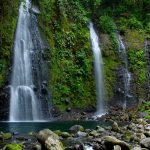
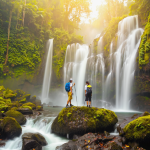
This is the alternative that many experienced travelers to the Central Pacific region consider the most rewarding. The waterfall systems accessible from Jacó feed natural pools of clear, cool freshwater that offer a swimming experience unlike anything available on the beach. Water temperatures in mountain-fed waterfall pools typically run significantly cooler than the Pacific, often between 18°C and 24°C, which is refreshing rather than cold in the humid Central Pacific climate.
Swimming in a guided waterfall pool context eliminates the rip current hazard entirely, replaces sun-exposed beach conditions with shaded forest canopy, and delivers a visual and sensory experience that ranks among the most memorable in Costa Rica for most visitors. The combination of a forest hike, a waterfall backdrop, and a freshwater pool is genuinely difficult to replicate anywhere on the planet.
Río Tarcoles and Estuarine Kayaking
The Tárcoles River, which empties into the Pacific just north of Jacó, is famous for its American crocodile population, one of the densest in the world and a legitimate attraction in its own right when experienced from the appropriate vantage point. Guided kayak and boat tours on the lower Tárcoles offer extraordinary wildlife viewing in a controlled, guide-managed context. This is not a swimming destination, but as an alternative adventure experience on the water in the Jacó area, it is exceptional.
Manuel Antonio National Park
For travelers with a full day and access to transportation, Manuel Antonio National Park, approximately 75 km south of Jacó near the town of Quepos, offers some of Costa Rica’s most reliably calm swimming beaches within a protected national park setting. Playa Biesanz in particular is a sheltered cove with minimal surf and excellent snorkeling conditions. The park is managed by SINAC under the Ley de Biodiversidad framework and requires advance entry reservation through the official ICT/SINAC booking system during peak season.
What Cruise Passengers and Shore Excursion Travelers Need to Know
Jacó is a primary port stop for cruise ships docking at the nearby Caldera port, roughly 18 km north of town. Cruise passengers typically have between 6 and 8 hours of shore time, which creates a specific set of constraints and opportunities that differ from multi-day visitors.
For cruise passengers specifically, the time pressure of a shore excursion makes beach swimming at Jacó a relatively poor use of limited time for several reasons. First, assessing ocean conditions, finding a lifeguard post, and watching the surf before entering all take time that competes with the window available. Second, the mid-morning to early afternoon timing of most shore excursions coincides with peak thermal heating, which increases both sun intensity and physical fatigue from walking. Third, returning to the ship with a sunburn or a rip current scare is a poor outcome for what should be a highlight experience.
Guided waterfall tours and rainforest excursions departing from Jacó are specifically structured to accommodate cruise passenger timelines, with departure times designed around ship arrival and return requirements. This type of tour delivers more of what makes Costa Rica genuinely extraordinary, its forest, its wildlife, its waterfalls, in the same time window that a beach visit would occupy, and does so with a structured safety framework and professional guide support.
Logistics for Cruise Passengers Booking Jacó Tours
Caldera port to central Jacó is approximately 18 km, typically 25 to 35 minutes by vehicle depending on traffic on the Costanera Sur. Most shore excursion operators offer pickup coordination from the port or from a designated central Jacó meeting point. Confirm transportation logistics before booking, ensure the operator has experience with cruise-schedule constraints, and always build a buffer of at least 90 minutes between your tour’s expected return time and your required ship boarding time.
How to Choose a Responsible, Safety-First Tour Operator in Jacó
The adventure tourism sector in Jacó ranges from highly professional operators with years of established safety records to informal vendors offering discounted experiences with minimal oversight. Distinguishing between them requires active evaluation, not just a quick review scan.
A Practical Decision Framework for Booking Adventure Tours
| Evaluation Criterion | Green Flag (Book With Confidence) | Red Flag (Proceed With Caution) |
|---|---|---|
| Guide credentials | ✅ Certified guides with first aid training; years of local experience | ❌ No mention of guide qualifications; vague “experienced team” language |
| Safety briefing | ✅ Mandatory pre-tour safety briefing described in tour details | ❌ No mention of safety protocols; emphasis only on fun and highlights |
| Group size limits | ✅ Clear maximum group sizes stated; small-group options available | ❌ Unlimited group sizes; no guide-to-guest ratio mentioned |
| Weather/condition policy | ✅ Clear policy for cancellation or rescheduling due to unsafe conditions | ❌ No-refund policy regardless of conditions; no flexibility stated |
| Equipment provision | ✅ Specific gear provided (helmets, life jackets, etc.) listed in tour details | ❌ Generic “all equipment included” without specifics |
| Reviews and reputation | ✅ Consistent five-star reviews mentioning guide quality and safety | ❌ Generic positive reviews with no specific detail; recent negative safety mentions |
| Sustainability commitment | ✅ CST certification or documented ecotourism practices | ❌ No sustainability mention; high-volume, low-engagement model |
Why Local Expertise Is Irreplaceable in This Region
The Central Pacific region of Costa Rica changes dramatically between seasons, and even within a single week during the green season. River levels, trail conditions, wildlife activity patterns, and ocean states are all dynamic systems that respond to rainfall, temperature, and tidal cycles in ways that are not captured by any static guide or travel blog published months in advance. A local guide who has been leading tours in the Jacó area for several years carries a living, updated understanding of these conditions that is genuinely irreplaceable.
This is one of the clearest practical arguments for booking guided experiences over independent exploration in the Jacó region, not because the landscape is inaccessible, but because its dynamics require real-time local knowledge to navigate safely. The best adventure travel safety in Costa Rica is not achieved by reading more before you go; it is achieved by hiring people who know the terrain the way you know your own neighborhood.
Responsible Travel in Costa Rica: Beyond the Safety Checklist
Responsible travel in Costa Rica has a dual dimension that often gets reduced to environmental talking points but actually encompasses visitor behavior, community relationships, and the long-term sustainability of the tourism ecosystem itself. Understanding this broader picture makes you a better traveler and a more informed consumer of adventure tourism services.
The Economic Dimension of Choosing Local Operators
When travelers book adventure tours with locally based, established operators rather than large international booking platforms that aggregate and resell tours, a significantly higher proportion of the revenue stays within the local economy. Guide wages, equipment maintenance, vehicle costs, and operational infrastructure all circulate through Jacó’s business community when you book locally. This has a direct bearing on the quality and safety of the tourism ecosystem you are traveling within, operators who can sustain reliable revenue invest more in guide training, equipment upgrades, and safety infrastructure.
Environmental Impact Awareness on Waterfall Trails
Costa Rica’s waterfall ecosystems are sensitive environments. The pools fed by waterfalls support specific aquatic communities, freshwater shrimp, fish species, invertebrates, and amphibians, that are affected by sunscreen chemicals, soap residue, and physical disturbance. Responsible operators brief guests on appropriate behavior near waterfall pools: no chemical sunscreens in the water, no disturbance of rocks or substrate, no feeding of wildlife, and staying within designated swim zones where these exist.
Costa Rica’s Ley de Biodiversidad (Biodiversity Law) provides the legal framework under which these ecosystems are protected, and MINAE (Ministerio de Ambiente y Energía) has enforcement authority over activities that damage protected natural systems. Operators who take these obligations seriously are not just following rules, they are preserving the resource that their entire business depends on.
Traveling During the Green Season: Underrated and Genuinely Rewarding
The green season gets a reputation problem it does not deserve. May through November in Costa Rica is not a period of relentless rain that shuts down outdoor activities, it is a period of afternoon and evening rainfall that leaves mornings reliably clear and the landscape at its most dramatically green and alive. Waterfalls are at their most powerful and photogenic during the rainy season. Wildlife activity increases near water sources. The forests are lush in a way that dry-season visitors simply do not see.
From a practical standpoint, green season travel means lower accommodation prices, shorter queues at popular sites, and more personalized attention from tour operators who are not managing peak-season crowds. For adventure travelers specifically, it represents a genuine opportunity to experience Costa Rica at its most vivid and wild, provided you book with operators who are experienced in adapting to seasonal trail and river conditions.
Frequently Asked Questions About Jacó Beach Safety and Adventure Travel
Is Jacó Beach safe for children to swim at?
Jacó Beach is not recommended for young children or non-swimmers under most conditions. The rip current risk is real and variable, and children are especially vulnerable to being overwhelmed by wave sets that arrive without warning. Families with children seeking a water experience near Jacó are better served by freshwater waterfall pools on guided tours or by the calmer conditions at Playa Herradura, approximately 8 km north.
When is Jacó Beach safest for swimming?
Morning hours during the dry season (December through April) on green-flag days in front of a staffed lifeguard post represent the safest swimming window at Jacó. Afternoons generally see increased wind and chop. The green season (May through November) brings larger, less predictable swell from the south and southwest, increasing risk substantially for casual swimmers.
Are there lifeguards at Jacó Beach?
Jacó Beach has lifeguard coverage during certain hours, primarily during peak tourist season and at the central sections of the beach. Coverage is not guaranteed 24/7 across the full beach length. The Cruz Roja (Red Cross) and local emergency services respond to ocean emergencies, but response times depend on the location on the beach and the time of day. Never rely solely on lifeguard presence as your primary safety measure.
What are the best swimming alternatives near Jacó?
The most popular alternatives include Playa Herradura (sheltered bay, 8 km north), guided waterfall pool experiences in the surrounding rainforest, and Manuel Antonio National Park beaches (approximately 75 km south near Quepos). Each offers a different character of experience, with the waterfall pools providing the most distinctive and memorable alternative.
What should I wear on a waterfall tour near Jacó?
Closed-toe shoes with ankle support are essential, not sandals or flip-flops. Quick-dry clothing or a swimsuit under light hiking clothes works well. Bring a small dry bag for your phone and valuables. A hat and reef-safe sunscreen for exposed sections of trail are recommended. Most reputable operators provide a packing list in their booking confirmation.
Is Jacó safe for surfing even when it’s dangerous for swimming?
Experienced surfers regularly use Jacó when conditions are too rough for casual swimmers. The same rip currents that threaten swimmers actually assist surfers in paddling out through the surf zone. However, Jacó’s surf is best suited to intermediate and experienced surfers, it is not a beginner surf break. Surf schools operating at Jacó use designated beginner sections and provide appropriate instruction and supervision.
What is the CST certification and does it matter for adventure tours?
The Certificación para la Sostenibilidad Turística (CST) is a national certification program administered by the Instituto Costarricense de Turismo (ICT) that evaluates tourism businesses across environmental, social, and operational criteria. A certified operator has been assessed against defined standards for sustainability and responsible practice. While CST certification is not the only marker of a quality operator, its presence is a meaningful positive signal, particularly for eco-focused travelers.
Can I swim at waterfalls on guided tours?
Yes, swimming in waterfall pools is typically a central feature of guided waterfall tours in the Jacó area, not an optional add-on. Guides designate safe swimming zones, brief guests on pool conditions, and monitor water entry and exit. The experience is generally far more controlled and enjoyable than ocean swimming, with the added sensory reward of being in pristine forest-fed freshwater beneath a waterfall.
What is the best time of year to visit Jacó for adventure tours?
Both seasons offer distinct advantages. The dry season (December through April) provides reliable clear mornings, lower river levels for easier trail crossings, and the most predictable weather windows. The green season (May through November) delivers more powerful waterfalls, a more dramatic forest landscape, fewer crowds, and lower prices. For most adventure travelers, either season is rewarding if you book with an operator experienced in managing seasonal conditions.
How far in advance should cruise passengers book waterfall tours from Jacó?
Booking at least 2 to 4 weeks in advance is recommended, particularly for cruise ship days when multiple vessels may be in port simultaneously and popular tour slots fill quickly. Confirm your ship’s arrival and departure times precisely and communicate them to your operator at booking. A reputable operator will factor your ship schedule into the tour plan and account for transport time from Caldera port.
Are waterfall tours suitable for people with limited fitness?
Many waterfall tour operators in the Jacó area offer tiered options that accommodate a range of fitness levels, from family-friendly trails with moderate gradients to more challenging multi-waterfall treks. When booking, be honest about your fitness level and ask specifically about trail difficulty, total hiking distance, and elevation change. A responsible operator will recommend the right tour for your group rather than upselling a harder option.
What happens if it rains during a waterfall tour?
Light to moderate rain during a waterfall tour is generally manageable and often makes the experience more dramatic and immersive. Heavy rainfall that makes river crossings unsafe is a different matter, reputable operators will modify the route, shorten the itinerary, or reschedule rather than push into genuinely dangerous conditions. Ask your operator about their rain policy before booking and ensure it includes a rescheduling or partial refund provision for weather-forced changes.
Key Takeaways
- Jacó Beach carries genuine rip current risk that is variable, often invisible from shore, and not mitigated by calm-looking surface conditions. Approach it with active observation, not assumption.
- The flag system is your primary safety tool on the beach. Green flag, morning hours, lifeguard presence, and the central beach section represent the best-case swimming scenario.
- Seasonal conditions matter significantly. The dry season (December–April) offers more predictable swell; the green season (May–November) brings larger, less predictable waves from the south.
- Freshwater waterfall pools are a genuine alternative to ocean swimming, safer, cooler, more visually extraordinary, and accessible through guided tours structured specifically for visitor safety.
- Local expertise is the most valuable safety asset in the Central Pacific region. A guide who knows the trails, the river levels, and the daily conditions is worth more than any amount of pre-trip research.
- Responsible tour operators can be identified by their transparency around safety briefings, guide credentials, group size limits, and weather flexibility policies.
- Cruise passengers should prioritize guided tours over independent beach visits to maximize their shore time and ensure they return to the ship on schedule with a genuinely memorable experience.
Experience Jacó’s Best Natural Adventures with Expert Guidance
The Central Pacific coast of Costa Rica holds some of the most spectacular waterfall and rainforest experiences on the planet, and Jacó is the ideal base from which to access them. When the ocean conditions are not ideal for swimming, or when you simply want an adventure that delivers more than a beach day can offer, a guided waterfall tour gives you direct access to the forest ecosystems, freshwater pools, and dramatic landscapes that define what makes this region genuinely extraordinary.
Costa Rica Waterfall Tours operates out of Jacó with a consistent focus on guest safety, local expertise, and five-star guest experiences built around the region’s most spectacular natural attractions. Whether you are a cruise passenger with a half-day window, a family looking for a safe and memorable outdoor activity, or an adventure traveler wanting to push deeper into the rainforest, the tour options are designed to match your timeline, fitness level, and adventure appetite.
Ready to explore Costa Rica’s Central Pacific from a safety-first, expert-guided perspective? Browse the full range of adventure tours at Costa Rica Waterfall Tours and find the experience that fits your visit.
About the author
Costa Rica Waterfall Tours Editorial Team · Editorial Team
Book Your Guided Waterfall Adventure