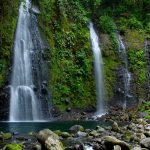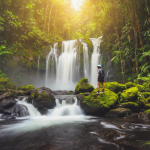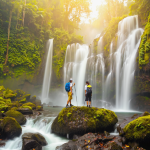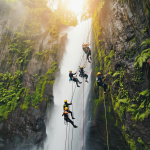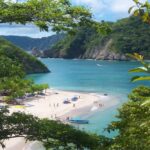
Most travelers arrive in Costa Rica with the same mental image: a hammock strung between two palms, a cold drink in hand, the ocean at their feet. And that version of Costa Rica absolutely exists. But here’s what the hammock-and-cocktail itinerary quietly skips: the country’s most extraordinary natural assets are not on the beach. They’re hidden inside 6.1 million hectares of forests, protected reserves, and river corridors that you cannot access without leaving the sand behind. Adventure tourism isn’t a detour from responsible travel in Costa Rica. For the traveler who genuinely cares about the places they visit, it is the most defensible way to experience them.
This article makes the case for that position across eight practical, evidence-grounded reasons. These aren’t abstract feel-good arguments. They are operational realities that shape what your tourism dollars do, how local communities benefit, what your safety exposure looks like, and what you actually remember when you get home. Whether you’re planning a first trip to Jacó and the Central Pacific coast, organizing a group excursion from a cruise ship docking at Caldera, or building a two-week itinerary that includes Guanacaste, Manuel Antonio, and Arenal, these reasons apply directly to the decisions you’re making right now.
Ranked by practical impact on both traveler experience and destination health, each reason below deserves more than a bullet point. Here’s the full case.
1. Guided Adventure Tours Directly Fund Costa Rica’s Conservation Infrastructure
The most important reason to choose guided adventure tourism isn’t the experience itself. It’s the economic mechanism underneath it. Costa Rica’s protected areas system, managed by SINAC (Sistema Nacional de Áreas de Conservación), covers more than 25% of the country’s national territory. That coverage doesn’t sustain itself on government budgets alone. It depends, structurally, on tourism revenue flowing into the communities that border protected zones.
When you book a guided waterfall tour in the Central Pacific region, a portion of that fee circulates through a specific economic chain: the operator pays local guides, local guides spend in local markets, and those markets sustain the community-level incentive to protect the forest rather than convert it. This is not idealism. It is the functional logic that has made Costa Rica one of the world’s most cited reforestation success stories. The country went from losing forests at alarming rates in the mid-twentieth century to actively reversing that trend, and tourism revenue was a documented part of that reversal.
The alternative, wandering into natural areas independently without paying for guided access, doesn’t replicate this economic chain. It may not damage the environment directly, but it contributes nothing to the financial infrastructure that protects it. Responsible travelers who care about that distinction choose guided tours not out of sentimentality but because the money goes somewhere useful.
How to Apply This Practically
When evaluating tour operators, ask directly whether they employ local guides from the surrounding municipality. For operations based in Jacó, that means guides from communities in the Garabito canton. Operators certified under the ICT’s CST (Certificación para la Sostenibilidad Turística) program are held to standards that include local employment and community benefit. A CST-certified operator isn’t just better for the environment in theory. It’s provably better for the economic structure that keeps ecosystems intact.
2. Professionally Guided Tours Eliminate the Safety Risks That Ruin Trips
Adventure tourism in Costa Rica carries real physical risk when approached without preparation. That isn’t a liability disclaimer. It’s geography. The Central Pacific’s rivers run fast during invierno (the rainy season, May through November), waterfall approach trails become slippery with daily rainfall, and the forest understory conceals hazards that an unfamiliar traveler simply won’t recognize on sight.
The difference between a professional guided experience and a self-guided attempt at the same destination is not cosmetic. Certified guides carry first aid training, maintain communication with emergency services, monitor weather conditions upstream (relevant for river and waterfall environments where flash floods can develop without visible warning at the site), and make real-time route decisions based on current conditions rather than what a trail map showed six months ago.
Costa Rica’s Red Cross (Cruz Roja Costarricense) and the Cuerpo de Bomberos respond to a consistent volume of rescue operations involving tourists attempting backcountry routes without guides. The vast majority of serious incidents involve independent travelers, not guests on guided tours. That gap in outcomes reflects the gap in preparation, not the gap in luck.
What Professional Safety Preparation Actually Looks Like
A well-run adventure tour operator in the Jacó area will conduct a pre-tour briefing covering trail conditions, water crossing protocols, wildlife awareness (particularly for fer-de-lance, the most medically significant snake in the region), and group communication procedures. They will carry a dedicated first aid kit appropriate for wilderness settings, not a basic travel kit. They will have an established protocol for contacting the 911 emergency system and local rescue teams. These are operational specifics worth asking about before you book, and any operator worth booking with will answer them without hesitation.
| Safety Factor | Guided Tour | Self-Guided Attempt |
|---|---|---|
| Trail condition knowledge | ✅ Real-time, current-season | ❌ Outdated or none |
| Upstream flood monitoring | ✅ Guide training includes this | ❌ No awareness |
| Wildlife hazard recognition | ✅ Guide identifies and navigates | ❌ Traveler unequipped |
| Emergency communication | ✅ Established protocols | ⚠️ Depends on cell coverage |
| First aid capability | ✅ Certified, equipped | ❌ Typically absent |
| Route decision-making | ✅ Experienced judgment | ❌ No reference point |
3. Ecotourism Activities in Costa Rica Actively Protect Biodiversity, Not Just Observe It
There is a meaningful difference between wildlife tourism that treats animals as props and ecotourism activities that use visitor presence as a conservation mechanism. Costa Rica has built its reputation on the latter, but the distinction only holds when the tourism operation is designed correctly.
Costa Rica contains approximately 5% of the world’s biodiversity despite covering less than 0.03% of the planet’s surface. That density is not an accident. It is the result of deliberate policy choices, including the creation of conservation areas that buffer national parks with secondary forest corridors. Those corridors exist in part because the land adjacent to them has economic value as tourism habitat. Remove the tourism revenue, and the economic incentive to maintain the corridor diminishes. The forest gets converted.
Properly structured ecotourism creates what conservation economists describe as a “protective value” for standing forest. When a community earns income from guiding visitors through a primary forest trail, that forest becomes more valuable intact than cleared. This is the practical mechanism behind Costa Rica’s ability to maintain and even expand its forest cover while most of the tropics moved in the opposite direction.
For travelers specifically interested in biodiversity, the Central Pacific region around Jacó provides access to several distinct ecosystems within short driving distance: primary lowland rainforest in areas adjacent to Carara National Park, mangrove estuaries along the Río Tárcoles (home to the largest American crocodile population in Central America), and secondary forest on the hillsides above Jacó itself. A single guided adventure day can pass through two or three of these habitat types, which is an ecological sampling that very few destinations on earth can match for accessibility.
The Carara Connection
Carara National Park, located approximately 23 km north of Jacó along the Costanera highway, sits at the ecological transition zone between the dry forests of Guanacaste and the wet forests of the South Pacific. This transition position makes it one of the highest-biodiversity parks in the country per unit area. Guided tours that access zones adjacent to Carara put travelers in that transition zone, with species lists that include scarlet macaws, white-faced capuchins, Jesus Christ lizards (basilisks), and over 400 bird species documented within the park boundary.
4. Adventure Tourism Supports Local Employment at a Higher Rate Than Most Tourism Models
This is the economic argument that most responsible travel guides understate. The employment multiplier for adventure and ecotourism is structurally higher than for resort-based tourism because the labor is inherently local. You cannot outsource a waterfall guide. The skills, the knowledge, and the physical presence required are place-specific in a way that hotel management, international food supply chains, and airline partnerships are not.
When a traveler stays at a large international chain property and eats primarily at the hotel restaurant, a substantial portion of their spend exits the local economy through corporate profit repatriation, imported food costs, and management fees to foreign parent companies. This is a well-documented pattern in tourism economics and one of the central critiques of mass tourism development in developing countries.
Guided adventure tours in the Central Pacific operate on a fundamentally different economic geometry. The guides are from Jacó, Parrita, Quepos, or surrounding communities in Puntarenas province. The transport operators are local. The equipment suppliers are regional. The food and beverage stops, when included in tour packages, are typically local sodas (family-run restaurants) rather than chain operations. The economic leakage that characterizes large resort tourism is substantially reduced.
Costa Rica’s Instituto Costarricense de Turismo (ICT) has consistently identified small and medium-sized tourism enterprises, particularly adventure and ecotourism operators, as the highest-impact segment for rural employment and income distribution. This is the operational reason why responsible travelers who are serious about community benefit should actively choose guided adventure experiences over purely resort-based itineraries.
The Local Guide Relationship
Beyond the economic mechanics, there’s a qualitative dimension worth naming. Local guides carry knowledge that no travel app replicates. A guide who grew up near the Río Tárcoles knows where the crocodiles haul out by season. A guide who has walked a waterfall trail through fifty rainy seasons can read the sound of the water and tell you whether the volume has changed since yesterday. This is the kind of knowledge that shapes a genuinely memorable experience, and it exists only within communities that have lived alongside these ecosystems for generations. Choosing guided tours is how you access that knowledge. Skipping guides means skipping the actual expertise.
5. Responsible Adventure Travel Benefits Your Physical and Mental Health in Measurable Ways
The health benefits of adventure travel aren’t soft marketing language. They reflect a consistent body of research in environmental psychology and exercise science. Time in natural environments at moderate to vigorous physical exertion levels produces outcomes that urban environments and sedentary tourism simply don’t generate.
Waterfall trekking in the Central Pacific region typically involves 2–5 km of trail hiking over mixed terrain, river crossings, and elevation changes of 100–300 metres depending on the specific route. That’s a meaningful cardiovascular workout for most travelers, delivered in a sensory environment (humidity, birdsong, the sound of moving water, filtered green light through forest canopy) that physiological research consistently identifies as restorative for stress response systems.
The combination of physical exertion with natural immersion produces what environmental psychologists at the University of Michigan have described as “attention restoration,” a measurable reduction in directed attention fatigue that accumulates from screen-heavy, schedule-dense modern life. You return from a forest waterfall hike with a different cognitive state than you return with from a beach bar. Both are valid choices. Only one reliably produces the kind of mental reset that most travelers are actually seeking when they describe wanting to “really disconnect.”
For travelers dealing with the specific stress of international travel logistics, group adventure activities add a social bonding dimension. Shared physical challenge, mild risk, and collective achievement in a natural setting accelerate the kind of connection between travel companions (couples, families, corporate groups, friend groups) that passive resort experiences take much longer to generate. This is why corporate team-building retreats that incorporate adventure activities consistently report higher participant satisfaction and team cohesion outcomes than those built around conference rooms and catered lunches.
Accessibility Across Fitness Levels
A common concern among travelers considering adventure tourism for the first time is fitness level. Well-designed guided adventure tours in the Jacó area accommodate a genuine range of physical capacity. Entry-level waterfall experiences involve relatively flat terrain with one or two moderate crossings. More challenging routes involve sustained elevation gain, rope-assisted descents, and longer trail distances. A good operator will match the tour level to the group’s realistic capacity during the booking process, not just describe everything as “moderate.” Ask specifically: what is the elevation gain, what is the trail distance, and are there any sections that require upper body strength or balance on uneven surfaces? The answers tell you whether the tour is genuinely appropriate for your group.
6. Adventure Tourism Creates Irreplaceable Memories That Drive Positive Word-of-Mouth
This reason sounds like marketing, but it’s actually a conservation and economic argument dressed in experiential language. The most effective advertisement Costa Rica’s tourism sector has ever produced is a traveler returning home and telling fifteen people about the waterfall they stood under in a rainforest. That word-of-mouth is worth more than any paid campaign, and it only happens when the experience was genuinely extraordinary.
Passive tourism experiences, pool days, beach time, shopping, casino visits, generate satisfaction but rarely generate the kind of story-worth narrative that drives sustained referral behavior. Adventure experiences, particularly those with a physical challenge component, a natural wonder element, and a social dimension, hit the neurological conditions for strong episodic memory encoding. The experience becomes a story. The story gets told. The destination benefits from the telling.
For Costa Rica specifically, this memory-generation mechanism has been foundational to the country’s tourism growth. Costa Rica doesn’t compete on beach quality alone (Cancún, the Dominican Republic, and the Maldives offer beaches that are objectively more developed for mass tourism). It competes on experience density: the number of genuinely extraordinary moments per travel day that a visitor can access. Adventure tourism is the delivery mechanism for that density.
The Central Pacific coast around Jacó is particularly well-positioned for this because the destination combines beach accessibility (direct road from San José via the Route 27 highway, approximately 90 minutes) with rainforest proximity, waterfall access, marine wildlife, and crocodile river tours within a 30-km radius. Travelers who build adventure activities into their Jacó itinerary routinely describe those activities as the highlight of the trip, even when the trip also included other well-regarded Costa Rican destinations.
Photography and the Memory Artifact
For travel photographers specifically, adventure tours in waterfall environments provide compositional opportunities that require physical presence in the environment. A 30-metre waterfall with a natural plunge pool, surrounded by primary forest, photographed in the diffuse light of a cloudy afternoon during invierno, is not a shot that any travel stock library contains at the resolution or angle you’ll capture from your own position in that moment. The photograph becomes its own artifact of the experience, extending the memory value long after the trip ends. Operators who understand this provide tour timing guidance and photography-friendly positioning that maximizes the visual return on the experience.
7. Guided Adventure Tours Give You Legitimate Access to Restricted and Protected Zones
This is a practical reason that many travelers overlook entirely until they encounter it in the field. Costa Rica’s most spectacular natural environments are not freely accessible. Under the SINAC management framework, many primary forest areas, waterfall access corridors, and wildlife viewing zones operate under formal visitor capacity limits and access protocols. Independent access to these areas is either prohibited, technically illegal without a registered guide, or practically impossible without local knowledge of the entry points.
The Ley de Biodiversidad (Law No. 7788) and the Ley Forestal (Law No. 7575) together establish the legal framework for protected area management in Costa Rica. Under these laws, MINAE and SINAC have the authority to require licensed guide accompaniment for access to designated zones. This isn’t bureaucratic obstruction. It’s the mechanism through which visitor impact in sensitive ecosystems is controlled. A guided tour operator with the appropriate permits and guide licensing isn’t just offering convenience. They’re offering legal access to places you cannot go without them.
For travelers in the Central Pacific region, this matters practically because some of the most spectacular waterfall environments near Jacó involve access through private reserves or land managed under conservation agreements. These agreements typically include provisions that allow guided tourism access while prohibiting independent entry. The guided tour is not the compromise option. It’s the only option for reaching these specific locations.
Understanding SETENA and Environmental Compliance
Reputable adventure tour operators in Costa Rica operate in compliance with SETENA (Secretaría Técnica Nacional Ambiental), the environmental impact authority that reviews and approves activities in ecologically sensitive zones. When you book with a compliant operator, you are participating in an activity that has been reviewed for environmental impact and approved to proceed within defined parameters. That compliance framework is what separates legitimate ecotourism from the informal, unregulated access that can cause lasting damage to fragile ecosystems. Asking an operator whether they are ICT-registered and operating with appropriate SETENA compliance is a legitimate and responsible question before booking.
8. Choosing Responsible Adventure Travel Benefits the Destination’s Long-Term Viability
The eighth reason is the most strategic and the one that most directly connects individual travel decisions to destination-scale outcomes. Tourism is Costa Rica’s largest economic sector. What form that tourism takes determines what Costa Rica looks like in a generation. This is not a hypothetical concern. It is the demonstrated pattern of destinations that developed mass tourism without ecotourism counterweights.
Compare two trajectories: a coastal destination that develops primarily around all-inclusive resorts, concrete hotel towers, and beach club infrastructure, versus a destination that anchors its tourism identity around guided natural experiences, forest access, wildlife encounters, and adventure activities. The first trajectory generates short-term revenue density but progressively degrades the natural assets that attracted visitors in the first place. The second trajectory creates a self-reinforcing cycle: the natural assets remain intact because they have economic value, which sustains visitor interest, which sustains the revenue that protects the assets.
Jacó has navigated this tension more consciously than many comparable beach destinations in Central America. The presence of active adventure tourism operators, ecotourism certification programs, and proximity to protected areas has maintained the destination’s natural character alongside its beach tourism identity. But that balance is not self-sustaining. It requires traveler behavior that actively supports the adventure and ecotourism sector rather than defaulting entirely to resort-based consumption.
Every traveler who books a guided waterfall tour, a forest trek, or a wildlife river excursion instead of a resort day-pass is making a small but directional vote for the destination’s long-term character. At scale, those votes shape what Costa Rica’s Central Pacific coast looks like for the next generation of visitors. The responsible traveler understands this mechanism and makes choices accordingly.
The Cruise Passenger Opportunity
A specific subset of travelers for whom this argument is particularly actionable: cruise passengers arriving at Puerto Caldera, approximately 15 km from Jacó. Shore excursion time is limited, typically 6–8 hours, and the default options marketed through cruise lines are often the highest-margin, lowest-local-impact choices available. A guided adventure tour booked directly with a local Jacó operator returns more money to the local economy, delivers a more authentic experience, and contributes more to the conservation infrastructure than the equivalent spend through a cruise-line-branded excursion. The logistics are straightforward: Puerto Caldera to Jacó is a 20-minute drive, and most reputable operators offer pickup coordination from the port. The choice to book locally is both more economical and more responsible.
How to Choose the Right Adventure Tour Operator in Costa Rica’s Central Pacific
The eight reasons above all assume you’re booking with a legitimate, well-run operator. That assumption deserves its own practical framework, because the quality gap between operators in Costa Rica’s adventure tourism sector is real and consequential for both experience quality and responsible travel impact.
The Operator Evaluation Framework
| Evaluation Criterion | What to Look For | Red Flags |
|---|---|---|
| ICT Registration | ✅ Registered with Instituto Costarricense de Turismo | ❌ No registration, won’t share documentation |
| Guide Credentials | ✅ Licensed guides with first aid certification | ❌ Vague about guide training |
| Safety Briefing | ✅ Pre-tour briefing with emergency protocols | ❌ No briefing, no safety equipment visible |
| Local Employment | ✅ Guides and staff from local communities | ❌ No connection to local community |
| Group Size Management | ✅ Defined maximum group sizes per guide | ❌ Unlimited group sizes, one guide for large groups |
| Environmental Practices | ✅ Leave No Trace principles, no wildlife feeding | ❌ Wildlife interaction practices that stress animals |
| Review Consistency | ✅ Consistent five-star reviews with specific detail | ❌ Generic reviews, unresolved negative feedback |
| Transparency on Conditions | ✅ Honest about seasonal trail conditions | ❌ Minimizes risk or refuses to discuss conditions |
Dry Season vs. Green Season: What Changes for Adventure Tours
One of the most practically useful things a traveler can understand about adventure tourism in Costa Rica is that both seasons offer genuine value, but they offer different value. During verano (dry season, December through April), trail footing is firmer, river levels are lower and crossings are easier, and wildlife is more concentrated around permanent water sources, making sightings more predictable. The landscape is more golden and dramatic, with clear skies offering better photography conditions.
During invierno (green/rainy season, May through November), the landscape shifts to an intensity of green that is genuinely difficult to describe without seeing it. Waterfalls run at their full volume and power, which is the version most travelers imagine when they think of a Central American waterfall. The forest is louder, wetter, and more alive in ways that dry season visitors sometimes find surprising when they see rainy season footage. Well-run operators schedule tours for morning departures during green season to maximize the dry-weather window before afternoon convective rains develop, typically between 14:00 and 16:00.
The responsible traveler who has flexibility in scheduling shouldn’t automatically default to dry season. Green season tours are typically less crowded, often priced more favorably, and deliver the waterfall experience at its most dramatic. They simply require a little more logistical awareness and a willingness to get wet in a context where getting wet is part of the adventure.
Frequently Asked Questions About Adventure Tourism in Costa Rica
What is adventure tourism in Costa Rica, and how is it different from regular tourism?
Adventure tourism in Costa Rica refers to guided outdoor experiences that involve physical activity, natural immersion, and varying degrees of managed risk, including waterfall trekking, rainforest hiking, river excursions, and multi-activity packages. The key distinction from conventional tourism is that adventure tourism is activity-centered rather than amenity-centered. You are engaging with the environment rather than consuming a curated resort experience. In Costa Rica specifically, adventure tourism overlaps substantially with ecotourism because most activities take place in or adjacent to protected natural areas.
Is adventure tourism in Costa Rica safe for families with children?
Yes, with appropriate operator and tour selection. Many guided adventure tours in the Central Pacific region, including waterfall excursions near Jacó, are designed for family participation and accommodate children from approximately 6 years old upward depending on the specific trail. The key is selecting a tour that is genuinely rated for families, not one that is described as “suitable for all” without qualification. Ask the operator specifically about the minimum age, trail terrain, and whether the guide-to-guest ratio is appropriate for managing a group with children.
What should I wear and bring on a waterfall trekking tour?
For waterfall trekking in the Central Pacific, expect to get wet and to walk on uneven, potentially slippery terrain. Wear quick-dry athletic clothing or a swimsuit underneath shorts. Footwear is the most important equipment decision: closed-toe water shoes or trail sandals with ankle support are strongly preferred over flip-flops. Bring sunscreen (reef-safe formulas are encouraged near freshwater ecosystems), insect repellent, a small dry bag for electronics, and a change of clothes for the return. Your operator will typically advise on specific gear requirements during the booking confirmation process.
How do guided adventure tours contribute to conservation in Costa Rica?
Guided adventure tours contribute to conservation through several mechanisms: direct employment of local guides who have a livelihood interest in maintaining the natural environment, fees that flow to operators who maintain access trails and work within regulated frameworks, and visitor presence that creates economic value for standing forest. Under Costa Rica’s CST certification program and the broader legal framework of the Ley de Biodiversidad, certified operators are held to environmental standards that require minimal impact practices and active contribution to conservation objectives in their operating areas.
What is the best time of year to do adventure tours in Costa Rica?
Both seasons offer genuine value. The dry season (December through April, verano) offers easier trail conditions and lower river crossings. The rainy season (May through November, invierno) delivers waterfalls at their most powerful and landscapes at their most intensely green. For most travelers, the best season is whichever one aligns with their existing travel plans. The Central Pacific receives rain year-round relative to the North Pacific, so even dry season visitors should expect some moisture. Morning tour departures are recommended in both seasons.
Are there age or fitness restrictions for adventure tours near Jacó?
Age and fitness requirements vary by specific tour. Entry-level waterfall hikes near Jacó typically require basic mobility on uneven ground and the ability to walk 2–4 km at a gentle pace. More challenging trekking experiences may involve 5+ km of trail, elevation changes of 200–400 metres, and optional rope-assisted sections. Most operators offer a range of difficulty levels and will help match your group to the appropriate experience during the booking conversation. Travelers with significant mobility limitations should discuss specifics with the operator before booking rather than relying on general descriptions.
Can cruise passengers from Puerto Caldera book adventure tours in Jacó?
Yes, and this is one of the most practical shore excursion options available from Puerto Caldera. The port is approximately 15–20 km from Jacó’s adventure tour operators, making it a straightforward logistics connection. Most reputable operators in the area offer port pickup coordination. Shore excursion time typically runs 6–8 hours, which accommodates a 2–3 hour tour plus transit comfortably. Booking directly with a local operator rather than through cruise-line excursion programs typically delivers better value and higher local economic impact.
What is the CST certification, and why does it matter when choosing a tour operator?
The CST (Certificación para la Sostenibilidad Turística) is administered by the Instituto Costarricense de Turismo and evaluates tourism businesses on four dimensions: physical-biological environment management, service and product quality, socioeconomic environment impact, and cultural heritage practices. Operators with CST certification have been independently evaluated and scored against these standards. Choosing a CST-certified operator is a practical shortcut for identifying businesses that are operationally committed to responsible tourism, not just marketing it.
What wildlife can I expect to see on an adventure tour in the Central Pacific region?
The Central Pacific region, particularly areas adjacent to Carara National Park and the Río Tárcoles, offers some of the highest wildlife encounter rates in the country. Common sightings on guided adventure tours include scarlet macaws (particularly around the Tárcoles area), white-faced capuchin monkeys, howler monkeys, coatis, Jesus Christ lizards, and a wide variety of bird species. River excursions near the Tárcoles estuary reliably produce American crocodile sightings. Waterfall trail environments often include poison dart frogs, katydids, and forest birds including motmots, trogons, and toucans. Wildlife sightings are never guaranteed but are consistently part of the guided experience in this region.
How do I know if an adventure tour operator is reputable?
Look for ICT registration, consistent five-star reviews with specific operational detail (not just “great tour!”), transparent safety briefing protocols, clear information about guide credentials, and honest communication about seasonal trail conditions. Operators who are reluctant to discuss safety procedures, who cannot describe their guide training, or whose reviews are generic and undifferentiated should be approached with caution. A genuinely excellent operator will welcome specific questions about safety, environmental practices, and local community employment.
What is the difference between adventure tourism and ecotourism in Costa Rica?
Adventure tourism and ecotourism overlap substantially in Costa Rica but are not identical. Ecotourism is defined primarily by its conservation and community benefit objectives, the activity is structured to minimize environmental impact and maximize local economic benefit. Adventure tourism is defined primarily by its activity profile: physical engagement, natural environments, and managed risk. The best operators in Costa Rica deliver both simultaneously: adventure experiences designed and operated according to ecotourism principles. This combination is what makes ecotourism activities in Costa Rica genuinely distinct from adventure tourism in other contexts.
What languages do guides speak on adventure tours near Jacó?
Most established adventure tour operators in the Jacó area employ bilingual guides fluent in English and Spanish, reflecting the primary market composition of U.S., Canadian, and Costa Rican domestic visitors. Some operators also have guides with working French or German for European visitors. When booking, confirm the language of your guide rather than assuming bilingual availability, particularly if you are booking during peak season when guide scheduling may be more constrained.
Key Takeaways for the Responsible Traveler
- Adventure tourism is a conservation mechanism, not just an activity. The economic chain from tour booking to local guide employment to community forest protection is direct and documented.
- Guided tours provide safety infrastructure that self-guided attempts cannot replicate. The gap in outcomes between guided and unguided adventure in Costa Rica’s terrain is significant and not worth ignoring.
- The Central Pacific region around Jacó offers exceptional adventure tourism density. Waterfall environments, marine wildlife, forest ecosystems, and river habitats are all accessible within a 30-km radius of a major highway connection.
- Both seasons have real value. Dry season offers easier logistics; green season delivers waterfalls at their most powerful. Neither is categorically superior.
- Operator quality matters enormously. ICT registration, guide credentials, safety protocols, and CST certification are the practical filters that separate responsible adventure tourism from its less defensible alternatives.
- Cruise passengers at Puerto Caldera have a straightforward path to world-class adventure experiences. The logistics work, and direct booking with local operators is both more economical and more impactful than cruise-line excursion alternatives.
- Every adventure tour booking is a vote for the destination’s long-term character. At scale, traveler behavior shapes what Costa Rica’s natural assets look like for future visitors.
Ready to Experience It Firsthand?
The eight reasons above don’t exist in the abstract. They are realized through specific, well-run guided experiences in places like the waterfall corridors above Jacó, the forest edges of Carara, and the river systems of the Central Pacific. Costa Rica Waterfall Tours has built its reputation on exactly this kind of experience: guided adventure that is safe, ecologically responsible, locally rooted, and genuinely extraordinary for the people who show up for it.
Whether you’re planning a multi-day itinerary from San José, coordinating a shore excursion from Puerto Caldera, or looking for the single best half-day activity your Jacó trip can include, the practical next step is the same.
Browse the full range of guided adventure tours at Costa Rica Waterfall Tours and find the experience that matches your group’s fitness level, schedule, and appetite for the extraordinary. The waterfalls are running. The guides are ready. The forest is waiting.
About the author
Costa Rica Waterfall Tours Editorial Team · Editorial Team
Book Your Guided Waterfall Adventure