Most travelers who visit Isla Tortuga come back with the same sentiment: it was beautiful, the water was clear, and they had a good time. But a surprising number of those same travelers also mention that they weren’t quite sure what they were getting into, that the experience was different from what they expected, or that they wish they had done a bit more planning before they boarded the boat. That gap between expectation and reality is exactly what this guide exists to close.
Isla Tortuga sits in the Gulf of Nicoya, roughly 20 nautical miles off the coast of the Nicoya Peninsula. It is not a secret. It has appeared in countless “best of Costa Rica” lists, attracted cruise passengers from nearby ports, and become one of the most-visited island day trips in the country. And yet, for all its popularity, the island is frequently misunderstood, over-romanticized in some respects and underappreciated in others. The truth about Isla Tortuga CR is more nuanced than the brochures suggest, and knowing that truth before you arrive makes the whole experience better.
This guide covers everything: the logistics of getting there, what the snorkeling is actually like, who the trip is genuinely right for, how it compares to other ocean excursions in the region, and what experienced travelers tend to do differently. If you are planning a trip to Jacó, the Central Pacific coast, or Costa Rica more broadly, this is the context you need.
Where Exactly Is Isla Tortuga, and How Do You Get There?
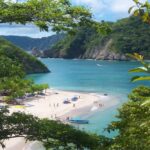
Isla Tortuga is a privately managed island located in the Gulf of Nicoya, accessible primarily by boat from the Puntarenas ferry terminal or from various coastal departure points along the Central Pacific. The island itself is technically a pair of small islands, though most tours use the larger of the two. It falls within the jurisdiction of Puntarenas province, and its name, which translates to Turtle Island, comes from its distinctive shape when viewed from above.
Getting to the island is a journey in itself. The most common departure point for organized tours is Puntarenas, the port town on the Gulf of Nicoya’s eastern shore. From San José, Puntarenas is approximately 110 kilometers west, typically a 90-minute to two-hour drive depending on traffic through the Río Grande valley and the descent toward the coast. From Jacó, the situation is slightly different: most Jacó-based tours involve a transfer to a coastal departure point, which means your total travel time from hotel to island can range from two to three hours each way.
For travelers based in Jacó or along the Central Pacific coast between Herradura and Quepos, it is worth understanding this geography clearly. Isla Tortuga is not a short hop from Jacó, and any operator who suggests otherwise is glossing over the reality of the transit. The boat ride itself from Puntarenas typically takes 60 to 90 minutes, and the crossing through the Gulf of Nicoya can be choppy, particularly during the rainy season (May through November) when afternoon winds pick up.
If you are prone to seasickness, this is the most important logistical consideration in your planning. The Gulf of Nicoya is a semi-enclosed body of water, and while it is generally calmer than the open Pacific, the crossing is not always smooth. Bringing over-the-counter motion sickness medication and choosing a morning departure (when conditions tend to be calmer) are both practical steps that most experienced travelers take.
Departure Points and Operator Options
Tour operators running Isla Tortuga excursions depart from several locations. Puntarenas is the most common hub for organized day trips. Some operators also depart from Montezuma or other Nicoya Peninsula access points, which can reduce the boat transit time significantly but adds road travel instead. If your home base is San José, a full-day Isla Tortuga tour is a popular and manageable excursion. If you are based in Guanacaste (Liberia, Tamarindo, Playa del Coco), the drive to the departure point makes it a longer day but still doable.
Cruise passengers arriving at Puntarenas have historically had the most convenient access, since the port is the primary departure hub and the timeline aligns well with shore excursion windows. The Instituto Costarricense de Turismo (ICT) maintains a registry of licensed tour operators, which is a useful starting point for verifying operator legitimacy before booking.
What Is Isla Tortuga Snorkeling Actually Like?
Isla Tortuga snorkeling is genuinely enjoyable for most visitors, but it is best understood as a calm, accessible, beginner-friendly experience rather than a world-class dive destination. The waters around the island are clear by Central American standards, the reef system is intact and healthy in several areas, and the marine life is diverse enough to reward even experienced snorkelers. But if you are arriving with expectations shaped by Caribbean imagery or Indo-Pacific reef experiences, you may need to recalibrate.
The visibility in the Gulf of Nicoya varies considerably by season. During the dry season (December through April), visibility at the snorkeling sites around Isla Tortuga can reach 8 to 12 meters on calm days, and the water takes on the kind of turquoise clarity that makes for excellent underwater photography. During the rainy season, particularly after heavy downpours that stir up river sediment in the surrounding gulf, visibility can drop to 4 to 6 meters or less. This does not make the experience bad, but it does affect what you see and how far you can see it.
In terms of marine life, Isla Tortuga snorkeling commonly yields sightings of colorful reef fish including sergeant majors, parrotfish, and angelfish, along with the occasional moray eel tucked into rocky outcroppings. Sea turtles are present in the region (they give the island its name), though sightings during snorkeling excursions are not guaranteed. Rays, particularly spotted eagle rays, are occasionally seen in the sandy areas adjacent to the reef. The coral structures themselves, while not as dramatic as the Caribbean’s Cahuita or Gandoca-Manzanillo reefs, are healthy and provide good habitat for the resident fish populations.
Snorkeling Equipment and Guided Versus Free Snorkeling
Most organized Isla Tortuga tours include snorkeling equipment as part of the package: mask, snorkel, and fins. The quality of this equipment varies by operator. Higher-end operators use well-maintained gear with proper fitting options; budget operators sometimes provide older equipment that can leak or fit poorly. If snorkeling is a priority for you, it is worth asking the operator specifically about gear quality before booking, and experienced snorkelers often bring their own mask for a guaranteed comfortable fit.
Snorkeling at Isla Tortuga is typically structured as a combination of guided group time in the water and free exploration within a designated safe zone. The guides are generally knowledgeable about the local reef and can point out marine life that casual observers might miss. This is particularly valuable for first-time snorkelers who may be focused on the mechanics of breathing through the snorkel rather than scanning the seafloor for camouflaged creatures.
The best snorkeling spots are typically on the eastern side of the island, away from the main beach and activity areas. Operators who include time at these secondary sites tend to get better reviews from snorkeling-focused travelers. If snorkeling is your primary reason for visiting, communicate that clearly when booking and ask which specific sites the tour visits.
Is Tortuga Island Worth Visiting? An Honest Assessment
The honest answer to whether Isla Tortuga is worth visiting depends almost entirely on what you are optimizing for. For travelers who want a relaxed, beach-focused day trip with good snorkeling, warm water, and a festive social atmosphere, the island consistently delivers. For travelers seeking raw nature immersion, solitude, or world-class marine biodiversity, other destinations in Costa Rica will likely serve them better.
Here is the tension that most travel content glosses over: Isla Tortuga is a managed tourism product, not a wilderness destination. The beaches are beautiful and the water is clear, but the island operates as an organized excursion hub, which means a certain amount of infrastructure, activity programming, and fellow tourists are part of the package. On busy days during the dry season, particularly when multiple tour boats arrive simultaneously, the beach can feel crowded. The experience is social by nature, and that is a feature for many visitors and a drawback for others.
What the island does exceptionally well is create a memorable, comfortable, and accessible day-trip experience that works for a wide range of travelers. Families with children, couples looking for a scenic beach day, and groups celebrating special occasions all tend to have an excellent time. The combination of boat ride, beach time, snorkeling, and often a meal served on board or on the island creates a full-day narrative that feels more like an adventure than a standard beach visit.
| Traveler Type | Isla Tortuga Fit | Better Alternative If Not |
|---|---|---|
| Families with young children | ✅ Excellent, calm water, wide beach, structured day | N/A |
| Experienced snorkelers or divers | ⚠️ Decent, good reef but not world-class | Cahuita National Park, Cocos Island (advanced divers) |
| Nature immersion seekers | ⚠️ Moderate, island ecology is interesting but managed | Corcovado, Tortuguero, Manuel Antonio |
| Couples seeking a scenic day out | ✅ Strong, beautiful setting, romantic boat transit | N/A |
| Solo travelers seeking social experience | ✅ Good, group tour format, easy to meet others | N/A |
| Travelers seeking solitude | ❌ Not ideal, can be crowded during peak season | Osa Peninsula beaches, remote Nicoya Peninsula coves |
| Cruise passengers with limited shore time | ✅ Ideal, close to Puntarenas port, well-timed tours | N/A |
| Travelers prone to seasickness | ⚠️ Plan carefully, gulf crossing can be choppy | Inland waterfall and rainforest tours |
The Ecological Side of Isla Tortuga
The island sits within a region of significant biodiversity. The Gulf of Nicoya supports a complex marine ecosystem that includes mangroves, seagrass beds, and rocky reef structures. The waters around Isla Tortuga are part of this broader system, and the island itself hosts dry tropical forest vegetation that is increasingly rare along Costa Rica’s Pacific coast.
Costa Rica’s commitment to protected areas and biodiversity conservation is well documented. The country hosts approximately 5% of the world’s total biodiversity within just 0.03% of the planet’s land surface. While Isla Tortuga itself is privately managed rather than part of a formally designated protected area under SINAC (Sistema Nacional de Áreas de Conservación), the surrounding marine environment benefits from the broader conservation framework that governs Costa Rican waters.
Responsible visitors should note that coral reef ecosystems are sensitive to sunscreen chemicals. Several compounds in standard sunscreens, particularly oxybenzone and octinoxate, have been documented to cause coral bleaching. Choosing reef-safe sunscreen is not just a trend; it is a meaningful act of stewardship when visiting marine environments like those around Isla Tortuga.
Ocean Excursions from Jacó, Costa Rica: How Isla Tortuga Fits the Picture
Jacó sits at the heart of Central Pacific adventure tourism, and ocean excursions from the area span a wide range of formats, distances, and experience types. Understanding where Isla Tortuga fits within this broader menu of options helps travelers make a more informed decision about how to allocate their time and budget.
Jacó’s location on the Pacific coast means the ocean excursions available here are fundamentally different in character from what you find in the Caribbean. The Pacific side offers stronger waves, bigger swells, more dramatic coastal geology, and a marine ecosystem shaped by upwelling cold currents and seasonal whale migrations. The Gulf of Nicoya, which is where Isla Tortuga sits, is a calmer, semi-enclosed body of water that provides a different experience from the open Pacific surf that defines Jacó’s beach culture.
From Jacó, the primary ocean excursions available to visitors include:
- Isla Tortuga day trips (typically departing from Puntarenas or Herradura Bay, involving a transfer from Jacó)
- Sunset sailing and catamaran cruises along the Central Pacific coast, often including snorkeling stops near local rocky outcroppings
- Sport fishing charters out of Herradura or Los Sueños marina, targeting billfish, tuna, and dorado
- Whale watching tours (seasonal, primarily humpback whales from July through October and December through April)
- Mangrove boat tours through the Tárcoles River estuary, where American crocodiles are commonly spotted from the water
For travelers staying in Jacó who are weighing an Isla Tortuga trip against these alternatives, the key variables are time, budget, and what the group most wants to experience. An Isla Tortuga day trip is a full-day commitment (often 8 to 10 hours door to door), while a sunset catamaran cruise from Herradura can deliver a memorable ocean experience in half the time. A whale watching tour during the right season can be a genuinely extraordinary wildlife encounter that Isla Tortuga simply cannot match.
The Waterfall Alternative: What Inland Excursions Offer That Ocean Trips Cannot
Here is a perspective that does not appear in most Isla Tortuga promotional content: for many travelers based in Jacó, the most memorable and distinctive Costa Rican nature experience they can have is not on the water at all. It is in the rainforest, following a trail through primary jungle to a waterfall that most tourists never find.
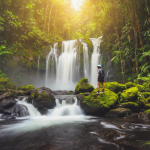
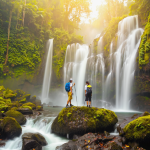
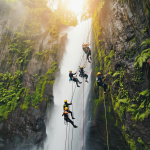
The Central Pacific region surrounding Jacó contains some of the most spectacular waterfall terrain in the country. The mountains that rise sharply from the coastal plain are laced with rivers fed by year-round rainfall, and the waterfalls that result from this geography are genuinely dramatic: multi-tiered cascades, jungle swimming holes with cold mountain water, and ecosystems that include scarlet macaws, white-faced capuchin monkeys, and poison dart frogs.
Guided waterfall tours in this region offer something that an Isla Tortuga trip structurally cannot: the sensation of being genuinely immersed in Costa Rica’s famous biodiversity rather than observing it from a beach chair or through a snorkel mask. The effort of the hike, the sound of the jungle, the shock of cold water at the base of a waterfall, and the guide’s ability to interpret the ecosystem around you all create a different kind of memory.
This is not to suggest that one experience is superior to the other. They serve different emotional needs and different types of travelers. But for visitors who chose Costa Rica specifically because of its reputation as one of the world’s great ecotourism destinations, a guided rainforest waterfall tour is often the experience that matches that motivation most directly.
If you are considering your options for Costa Rica nature tours from Jacó, comparing what each type of excursion actually delivers, rather than just where it goes, is the most useful framework for deciding.
Practical Logistics: Booking, Timing, and What to Bring
The logistics of an Isla Tortuga trip are manageable but require more advance planning than most other day trips in Costa Rica, primarily because the journey involves multiple segments and weather-dependent boat travel. Getting these details right makes the difference between a smooth, enjoyable day and a frustrating one.
When to Book and How Far Ahead
Isla Tortuga tours operate year-round, but availability and conditions vary significantly by season. During the dry season (December through April), particularly around the Christmas-New Year period and Semana Santa (Holy Week before Easter), the most reputable tours book out weeks in advance. If you are traveling during this window, booking at least two to three weeks ahead is practical.
The rainy season (May through November) offers fewer crowds and sometimes lower pricing, but also a greater chance of rough sea conditions and reduced visibility for snorkeling. Some tours are cancelled during periods of heavy rain or high seas, and most reputable operators have clear cancellation and rescheduling policies for weather-related situations. Understanding those policies before you pay is important.
What the Tour Package Typically Includes
Organized Isla Tortuga tours almost always include transportation to and from the departure point (or at minimum a clear meeting point), the boat crossing, beach time on the island, snorkeling equipment, and some form of food and beverage. The specifics vary considerably:
- Some tours include a full lunch prepared on board or served on the island; others include only snacks
- Alcoholic beverages are sometimes included, sometimes available for purchase
- Guided snorkeling with an instructor versus free snorkeling time varies by operator
- Some tours include banana boat rides, kayaking, or paddleboarding as additional island activities
- Hotel pickup from San José or Jacó is common but adds to the total day length
Reading the itinerary carefully and asking specific questions before booking prevents unpleasant surprises. A tour that appears inexpensive at first glance may exclude lunch, transportation, or equipment, making the effective cost comparable to a more comprehensive package that includes everything.
What to Pack for an Isla Tortuga Day Trip
- Reef-safe sunscreen (essential, both for your skin and for coral reef health)
- Rash guard or UV-protective shirt (the sun on the open water is more intense than on a shaded beach)
- Dry bag for electronics, passport copies, and cash
- Motion sickness medication if you have any sensitivity, taken 30 to 60 minutes before departure
- Biodegradable insect repellent for time on the island, particularly at the forest edges
- Waterproof camera or phone case
- Cash in USD or colones for any additional purchases on the island or at the departure port
- Change of dry clothes for the return journey
Understanding the Fee Structure
Pricing for Isla Tortuga tours from Puntarenas or Jacó generally falls into a range that reflects the level of service, what is included, and the operator’s reputation. Budget tours at the lower end of the price range often cut corners on food quality, equipment maintenance, or guide expertise. Mid-range and premium tours typically offer a noticeably better experience in all three areas. For a trip that involves this much travel time, investing in a reputable operator is generally worthwhile.
Note that the entry fee structure for the island is typically bundled into the tour price rather than charged separately, unlike national park entry fees that visitors pay directly to SINAC at parks like Manuel Antonio or Cahuita.
Isla Tortuga’s Ecology and the Conservation Context
Isla Tortuga sits within a region that exemplifies both Costa Rica’s extraordinary biodiversity and the ongoing tension between tourism development and ecological preservation. Understanding this context enriches the experience of visiting and helps travelers make choices that support rather than undermine the ecosystems they are there to enjoy.
The Gulf of Nicoya is one of the most biologically productive marine environments in Central America. The gulf’s mixing of river outflow, tidal movement, and seasonal upwelling creates nutrient-rich conditions that support an extensive food web, from microscopic plankton to large pelagic species. This productivity is why the gulf has historically been important for commercial fishing communities in Puntarenas province, and why the balance between fishing, tourism, and conservation is a live and sometimes contentious issue in the region.
The island’s vegetation is classified as tropical dry forest, an ecosystem that is among the most threatened in Mesoamerica. Unlike the wet rainforests of the Caribbean coast or the high-altitude cloud forests of Monteverde, tropical dry forests experience a pronounced dry season during which many trees lose their leaves. This seasonal rhythm creates a distinctive landscape that changes dramatically between verano and invierno, and visitors who arrive at different times of year will see the island’s terrestrial environment in quite different states.
Costa Rica’s framework for environmental governance is among the most developed in the region. The SINAC system of national conservation areas manages over 25% of the country’s territory as protected land, and the broader legislative framework including the Ley de Biodiversidad and Ley Forestal establishes strong protections for both terrestrial and marine habitats. While Isla Tortuga itself operates under private management, responsible operators on the island are expected to comply with environmental regulations enforced by SETENA (Secretaría Técnica Nacional Ambiental) and the relevant Municipalidad.
For travelers who care about the sustainability of the destinations they visit, the CST (Certificación para la Sostenibilidad Turística) certification is the most reliable indicator of an operator’s commitment to responsible practices. Operators with CST certification have been evaluated across multiple dimensions including environmental management, social engagement, and economic transparency. Asking about CST status when booking a Isla Tortuga tour is a reasonable due diligence step for eco-conscious travelers.
How Isla Tortuga Compares to Other Costa Rica Island Destinations
Costa Rica has several island destinations that attract visitors for different reasons, and placing Isla Tortuga in this broader context helps calibrate expectations more accurately than any amount of beach photography can.
At the extreme end of the spectrum sits Isla del Coco (Cocos Island), a UNESCO World Heritage Site roughly 550 kilometers off the Pacific coast that is considered one of the world’s top scuba diving destinations. Cocos is accessible only by live-aboard dive boat, requires a permit, and attracts serious divers pursuing encounters with schooling hammerheads, whale sharks, and massive pelagic species. It shares nothing logistically or experientially with Isla Tortuga except the word “island.”
Closer in character but still distinct is the Isla Caño Biological Reserve off the Osa Peninsula, near Drake Bay and Corcovado National Park. Isla Caño offers excellent snorkeling and diving in protected waters, with healthier and more extensive coral systems than Isla Tortuga and the context of being adjacent to one of the most biodiverse places on earth. The tradeoff is that accessing Isla Caño requires traveling to a more remote part of Costa Rica, which adds days to the itinerary.
Within the Gulf of Nicoya itself, the islands of Chira, Venado, and Gitana offer different experiences, mostly centered on mangrove ecology and fishing community culture rather than beach tourism. These are largely off the tourist circuit and attract visitors interested in authentic cultural and ecological experiences rather than beach-and-snorkel days.
Within this spectrum, Isla Tortuga occupies a clear and legitimate niche: it is the most accessible, most polished, and most consistently enjoyable island day trip for mainstream visitors to Costa Rica’s Pacific coast. That is a real value proposition, and it explains the island’s sustained popularity across many years of Costa Rican tourism development.
The Jacó Advantage: Why Your Base Matters for Excursion Planning
Jacó’s position on the Central Pacific coast makes it one of the most strategically useful base camps for Costa Rica excursions, with day-trip access to a wider range of ecosystems and experiences than almost any other town in the country. Understanding this geography helps travelers prioritize which excursions to take and how to sequence them across a multi-day itinerary.
From Jacó, a motivated traveler can reach the following within two to three hours:
- The departure point for Isla Tortuga (via transfer to Puntarenas)
- Manuel Antonio National Park, one of Costa Rica’s most beloved and biodiverse protected areas
- The Tárcoles River crocodile bridge, famous for its extraordinary concentration of American crocodiles
- The cloud forests of the Turrubares range, accessible via the mountain road toward San José
- Multiple waterfall destinations in the Central Pacific hinterland, reached by 4WD vehicle and short hikes
- The Carara National Park, a transition zone between dry and wet forest with exceptional birding
This geographic richness means that travelers based in Jacó face genuine choices about how to spend limited time. An Isla Tortuga day trip consumes a full day. A guided waterfall excursion through the surrounding hills might consume half a day but deliver an experience that feels more distinctively Costa Rican to some travelers. A morning in Carara followed by an afternoon at a local surf beach is a completely different kind of day that costs less and requires less planning.
The most experienced travelers to Jacó tend to use a mixed itinerary: one or two ocean excursions balanced with inland nature experiences. This approach captures the full character of the Central Pacific region, which is simultaneously a marine environment and a mountain rainforest ecosystem, without over-indexing on either.
Working with a Local Operator
One consistent advantage of booking through a locally based operator rather than an international booking platform is the quality of personalized advice. A Jacó-based tour company that has been operating in the region for years knows which days are best for Isla Tortuga given current ocean conditions, which waterfall trails are in peak condition after recent rainfall, and how to build an itinerary that genuinely matches what a specific group of travelers is looking for.
That local expertise is genuinely valuable when you are trying to make the most of a limited travel window. Costa Rica nature tours booked through knowledgeable regional operators consistently deliver better experiences than those booked through anonymous platforms, not because the destination changes, but because the guidance, logistics, and contingency planning are better calibrated to local realities.
If you are planning ocean or waterfall excursions from Jacó, exploring the full range of what the Central Pacific offers, from island day trips to jungle waterfall treks, is far easier with a trusted local partner. Browse the adventure tour options available through Costa Rica Waterfall Tours to see what guided Central Pacific experiences look like when local expertise drives the planning.
Seasonal Planning: When to Go and What to Expect
Timing a trip to Isla Tortuga involves balancing weather conditions, crowd levels, and the broader Costa Rican travel calendar in ways that are not always intuitive for first-time visitors. The conventional wisdom that dry season is always better for ocean excursions is true in many respects but misses important nuances.
The dry season, which runs from December through April (verano), offers the most consistent conditions for Isla Tortuga: calmer seas, better underwater visibility, and lower probability of afternoon rain. This is the most popular travel period for North American visitors, which means boats, hotels, and popular tours are at their fullest. If you want the classic Isla Tortuga experience with the clearest water and the most reliable weather, visit between January and March, when conditions are typically at their best without the Christmas and New Year premium pricing.
The rainy season (invierno, May through November) brings a different character to the island experience. Afternoon rain is common but rarely all-day; mornings are frequently clear and beautiful, and the landscape around the gulf is intensely green. The island itself is less crowded, and prices for tours and accommodation in Jacó and along the Central Pacific are generally lower. For snorkeling, visibility is more variable, but on calm days the experience can be excellent. The biggest risk factor during invierno is the possibility of choppy seas and occasional tour cancellations due to weather.
October and November are the most intense months of the rainy season on the Pacific side, and planning an Isla Tortuga trip during this window requires the most flexibility and the clearest understanding of cancellation policies.
The Gulf of Nicoya’s Micro-Climate
The Gulf of Nicoya has a micro-climate that differs somewhat from the open Pacific coast. Because it is a semi-enclosed body of water, it tends to be calmer than the Pacific but can also trap heat and humidity more intensely. The gulf’s tidal range is significant, and the direction and speed of winds in the gulf are shaped by the surrounding topography of the Nicoya Peninsula and the mountains of Puntarenas province. This means that even during the dry season, conditions in the gulf can shift quickly, and morning departures are generally preferred by experienced operators for exactly this reason.
What Experienced Travelers Do Differently at Isla Tortuga
There is a visible difference between first-time Isla Tortuga visitors and those who have been before or who have done their research, and that difference shows up in how much they enjoy the experience. The following patterns tend to separate a good day from a great one.
They choose the right operator from the start. The range of quality among Isla Tortuga tour operators is wider than the marketing suggests. Researching reviews specifically on platforms where unverified purchases cannot generate feedback, and looking for operators with documented CST certification or ICT registration, filters out the lower-quality options before money changes hands.
They book the earliest available departure. Morning crossings are calmer, the beach is less crowded when you arrive, and the light for underwater photography is at its best in the mid-morning hours. Afternoon arrivals at Isla Tortuga often encounter more crowded conditions and choppier return crossings.
They treat the boat ride as part of the experience. The transit through the Gulf of Nicoya is genuinely scenic. The coastal mountains of Puntarenas province, the islands of the gulf, and the occasional pod of dolphins that approach boats in the open water are all worth paying attention to. Travelers who spend the crossing below deck miss a meaningful part of the day.
They bring their own snorkeling mask. The single biggest quality-of-life upgrade for the snorkeling portion of the trip is a properly fitting mask. A leaky or ill-fitting mask from a shared equipment bin turns an enjoyable 45 minutes in the water into a frustrating one. A personal mask costs less than most people spend on a single restaurant meal and makes a disproportionate difference.
They pair the trip with a different kind of experience on adjacent days. Travelers who visit Isla Tortuga as one piece of a varied Central Pacific itinerary consistently rate it more highly than those who treat it as the centerpiece of their trip. The island is a wonderful day, not a complete Costa Rica experience, and it works best in that context.
Frequently Asked Questions About Isla Tortuga, CR
How far is Isla Tortuga from Jacó?
Jacó is approximately 45 to 60 kilometres by road from Puntarenas, the main departure point for Isla Tortuga tours. From Puntarenas, the boat crossing to the island takes roughly 60 to 90 minutes. Total transit time from a Jacó hotel to the island is typically 2.5 to 3 hours each way, making it a full-day commitment.
Is Isla Tortuga snorkeling good for beginners?
Yes. Isla Tortuga snorkeling is well-suited to beginners. The water is calm by Costa Rica standards, the reef areas are accessible at shallow depths, and most organized tours include guided instruction time. Experienced snorkelers will find it enjoyable but not technically challenging.
Is Isla Tortuga a national park?
No. Isla Tortuga is privately managed and is not part of Costa Rica’s SINAC national park system. The surrounding marine environment benefits from broader national conservation regulations, but the island itself operates as a private tourism destination.
What is the best time of year to visit Isla Tortuga?
January through March offers the most consistently favorable conditions: calm seas, good visibility, and dry weather. December and April are also generally good. The rainy season (May through November) is possible but requires flexibility and an understanding that tours may be cancelled or conditions may be less ideal.
Can you visit Isla Tortuga independently, without a tour?
Technically possible but logistically complicated. The island is not served by public ferry, and reaching it independently requires chartering a private boat. For almost all visitors, an organized tour is the practical and cost-effective option.
Are there sea turtles at Isla Tortuga?
The island’s name references turtles, and sea turtles are present in the broader Gulf of Nicoya. Snorkeling encounters with turtles are possible but not guaranteed. For more reliable sea turtle experiences, Tortuguero National Park on the Caribbean coast is the premier destination in Costa Rica.
Is Isla Tortuga suitable for young children?
Yes, it is one of the more family-friendly ocean excursions in Costa Rica. The beach is wide and relatively calm, the snorkeling areas are accessible at shallow depths, and most operators accommodate children well. Motion sickness is the main concern for young travelers on the boat crossing.
How does Isla Tortuga compare to Manuel Antonio for a day trip from Jacó?
Manuel Antonio National Park offers denser wildlife encounters, more established hiking trails, and a more immersive rainforest-to-beach experience. Isla Tortuga delivers a more structured, water-focused day with snorkeling as the central activity. Both are excellent; the choice depends on whether ocean activities or wildlife and jungle are the priority.
What currency is used at Isla Tortuga?
USD is widely accepted for tourist-oriented purchases. Costa Rican colones (₡/CRC) are also accepted and are useful for smaller transactions. Most tour packages cover the major expenses, so cash needs at the island itself are typically modest.
What is the ocean excursion scene like from Jacó specifically?
Ocean excursions from Jacó, Costa Rica span a broad range including sunset sailing, sport fishing, whale watching, mangrove tours, and transfers to Isla Tortuga. The Herradura Bay area just north of Jacó is the primary hub for boat-based activities. Local operators with regional knowledge can help match the right excursion to a specific group’s interests and timeline.
Is it safe to swim at Isla Tortuga?
Yes. The beach areas designated for swimming and snorkeling are calm and supervised by tour staff. Standard water safety rules apply: stay within designated zones, follow guide instructions, and do not snorkel alone. Strong swimmers and non-swimmers alike are accommodated on most organized tours.
How do I find a reputable Isla Tortuga tour operator?
Look for operators registered with the Instituto Costarricense de Turismo, CST-certified where possible, and with a substantial history of verified traveler reviews. Avoid operators whose pricing seems unusually low or whose itinerary descriptions are vague about what is included.
Key Takeaways
- Isla Tortuga CR is a consistently enjoyable and well-organized island day trip, best suited to families, couples, groups, and travelers who want a beach-and-snorkeling experience with a social, festive atmosphere.
- Isla Tortuga snorkeling is genuinely good, particularly in the dry season, though it is better classified as accessible and enjoyable rather than world-class by dive-destination standards.
- The journey from Jacó involves meaningful transit time (often 2.5 to 3 hours each way), making it a full-day commitment that should be factored into itinerary planning.
- Morning departures and dry season timing (January through March) produce the best conditions for both the crossing and the on-island experience.
- Reef-safe sunscreen, a personal snorkel mask, and motion sickness medication are the three practical items that most improve the day for unprepared visitors.
- For travelers whose primary motivation is Costa Rica’s biodiversity and rainforest character, guided inland waterfall and rainforest excursions from Jacó often deliver a more distinctive and immersive experience.
- The best Jacó itineraries mix ocean and inland experiences, using the Central Pacific’s geographic richness rather than treating any single excursion as the definitive trip.
- Booking through ICT-registered, CST-certified operators with strong verified reviews consistently produces better outcomes than price-driven selection from anonymous platforms.
Plan Your Central Pacific Adventure with Local Expertise
Whether Isla Tortuga ends up on your Costa Rica itinerary or you decide a jungle waterfall experience better fits what you came to Costa Rica for, the Central Pacific region around Jacó offers more variety than most travelers realize until they start planning in earnest. The combination of ocean access, mountain rainforest, national parks, and world-class adventure tourism infrastructure makes this one of the most capable adventure hubs in all of Central America.
Costa Rica Waterfall Tours operates from Jacó with deep local knowledge of the Central Pacific, running guided waterfall treks, rainforest excursions, and multi-activity adventure packages designed to match what different travelers are actually looking for. Five-star reviewed and committed to genuine ecotourism principles, the team helps visitors navigate the full range of what the region offers, including honest advice about when an ocean excursion like Isla Tortuga is the right call and when a waterfall adventure in the surrounding hills will deliver something more memorable.
Explore the full range of adventure tours available from Jacó and find the Central Pacific experience that matches your group, your timeline, and what you want to take home from Costa Rica.
About the author
Costa Rica Waterfall Tours Editorial Team · Editorial Team
Book Your Guided Waterfall Adventure