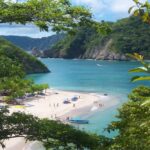
Picture this: you’ve just stepped off a plane at Juan Santamaría International Airport in Alajuela, and within two hours you’re watching the Pacific Ocean materialize through the windshield as you descend the mountains toward the Central Pacific coast. The air shifts. It gets warmer, heavier, alive with something that feels like possibility. By the time Jacó’s beachfront comes into view, with its grey-sand shore stretching beneath jungle-draped hills, you realize you’ve arrived somewhere that operates by entirely different rules than the city you left behind.
Jacó gets a mixed reputation. Some travelers dismiss it as Costa Rica’s party town, a place for spring breakers and cruise passengers grabbing a rushed beach photo. That framing misses most of the picture. Beneath the surf shops and open-air bars, Jacó sits at the geographic heart of one of the most adventure-dense corridors in the entire country. Within a 90-minute radius, you have active rivers carving through primary rainforest, waterfalls dropping into emerald pools, crocodile-filled estuaries, sea turtle nesting beaches, and trail systems that connect the Pacific lowlands to cloud forest elevation. For travelers who know how to use it, Jacó isn’t a destination to survive. It’s a launchpad.
This guide is written for people who want to use it as exactly that. Whether you’re planning a week-long Jacó beach vacation, arriving on a cruise ship with six hours to fill, or building a multi-destination Costa Rica itinerary with the Central Pacific as your anchor, what follows is an honest, ground-level breakdown of what adventure actually looks like here, what to expect from the region’s tours and operators, and how to make decisions that lead to real experiences rather than tourist-trap regret.
Why the Central Pacific Became Costa Rica’s Adventure Corridor
The Central Pacific coast isn’t just geographically convenient. Its ecological position makes it one of the most biologically productive zones in a country that already holds roughly 5% of the world’s biodiversity within its borders. The mountains that separate the Central Valley from the coast create dramatic elevation gradients over short horizontal distances, which means waterfall-producing river systems, distinct micro-climates, and layered forest ecosystems within an hour’s drive of the beach.
Jacó sits in the province of Puntarenas, roughly 100 kilometers southwest of San José. The drive down from the capital via Route 27 (the Caldera Highway) takes about 90 minutes under normal conditions, which makes Jacó the most accessible major beach town from the capital. That accessibility is a double-edged thing. It means weekenders from San José fill the town on dry-season Fridays, but it also means that international travelers landing in San José don’t need to spend a full travel day just reaching the coast. You can land, clear customs, and be swimming in the Pacific before sunset on the same day.
The Central Pacific corridor stretches from Punta Caldera in the north to the Osa Peninsula in the south, but for most adventure travelers, the active zone runs from Jacó through Quepos to Manuel Antonio National Park. Within this zone, you’ll find the Río Tárcoles (one of the country’s great crocodile habitats), the Carara National Park (a critical biological transition zone between dry and humid tropical forest), Playa Hermosa (a world-class surf break just 8 kilometers south), and a network of rivers, waterfalls, and cloud-adjacent highlands that feed into some of Costa Rica’s most photogenic backcountry.
What this means for the traveler planning Central Pacific Costa Rica tours: you’re not choosing between beach and jungle. You’re choosing both, simultaneously, from a single base.
The Seasonal Reality That Changes Everything
Costa Rica operates on two seasons, and understanding them is non-negotiable for adventure planning. The dry season (verano) runs from December through April. The green season, or rainy season (invierno), covers May through November. Neither is categorically better for adventure travel, but they’re dramatically different experiences.
During the dry season, trails are firmer, river crossings are more predictable, and the skies over the Pacific tend to deliver postcard conditions. It’s also high season, which means higher prices, more crowds, and advance booking requirements for quality tour operators. The green season brings daily afternoon rains (typically 2-4 hours, not full-day downpours), which actually intensifies the waterfalls, deepens the green of the forest, and drives many tourists away. For travelers who don’t mind getting wet, the rainy season offers lower rates, fuller rivers, and a version of Costa Rica that feels significantly less managed.
Waterfalls, specifically, are worth calling out here: they are dramatically more powerful and visually striking during and after the green season. If waterfall trekking is your primary goal, the May-to-November window often delivers the most spectacular results, provided you’re working with a guide who knows how to read river conditions and adjust accordingly.
What Jacó Actually Offers Adventure Travelers (An Honest Assessment)
Most travel content about Jacó lists the same activities in the same order: surfing, ATV tours, zip-lining, crocodile boat tours. Those activities exist and some of them are genuinely excellent. But the list misses the deeper architecture of what makes Jacó work as an adventure base, and it doesn’t help travelers make quality decisions about which operators and experiences are worth their time and money.
Here’s a more useful framework. Things to do in Jacó Costa Rica fall into roughly three categories:
- Ocean and beach-based activities: Surfing at Jacó or Playa Hermosa, sport fishing, kayaking, paddleboarding, and whale watching (humpback whales use the Central Pacific as a migratory corridor during specific months).
- Jungle and inland activities: Waterfall trekking, rainforest hiking, wildlife tours, canopy zip-lines, white-water rafting on the Río Savegre or Río Naranjo, and ATV or horseback excursions into the surrounding hills.
- Ecological and wildlife observation: Sea turtle tours at Playa Hermosa (nesting season runs July through December for olive ridley turtles), crocodile spotting at Tárcoles, bird watching in Carara (one of the best places on the planet to observe scarlet macaws in the wild), and guided night walks to observe nocturnal species.
The honest caveat: quality varies enormously across operators in Jacó. Because the town sees high tourist volume and relatively easy access from San José, it has attracted a full spectrum of tour providers, from genuinely excellent, ecotourism-certified guides to budget operations that prioritize throughput over safety or experience quality. The single most important decision any adventure traveler makes in Jacó isn’t which activity to choose. It’s which operator to trust with that activity.
How to Read an Operator’s Credibility in Costa Rica
The town of Jacó has no shortage of tour booking desks, and nearly all of them will tell you they offer “the best” experience. Here are the signals that actually matter:
- ICT registration: The Instituto Costarricense de Turismo licenses legitimate tour operators. An ICT-registered company has met minimum standards for legal operation in the tourism sector.
- CST certification: The Certificación para la Sostenibilidad Turística is a voluntary national program that grades tourism businesses on environmental, social, and economic sustainability. A CST-certified operator has been independently audited, which is a meaningful differentiator.
- Verified reviews across multiple platforms: Not just star ratings, but the content of reviews. Look for specifics: guide names, safety practices mentioned, what happened when something didn’t go to plan.
- Transparent safety briefings: Any reputable operator will provide detailed pre-tour safety information. If a company is vague about safety protocols or discourages questions, that’s a signal worth taking seriously.
- Locally operated vs. booking aggregator: Booking directly with the operating company (rather than through a generic booking aggregator) typically means better communication, more accountability, and often better pricing.
Waterfall Trekking: The Experience That Defines the Region
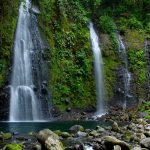
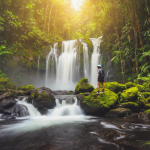
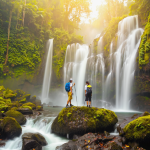
If there’s one activity that best captures what outdoor adventures in Costa Rica actually feel like at their peak, it’s waterfall trekking in the rainforest. Not because it’s the most adrenaline-intensive option available, but because it combines physical engagement, ecological immersion, and visual payoff in a way that almost nothing else matches. You earn the waterfall. The trek through the forest, the sounds shifting as you descend toward moving water, the moment the cascade comes into view through the canopy: that sequence is the reason people fly thousands of miles to be here.
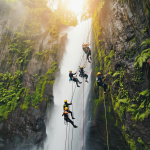
The Central Pacific region has several waterfall destinations accessible from Jacó, ranging from short walks to full-day jungle expeditions. The terrain varies considerably. Some routes follow established trails through secondary forest. Others require river crossings, boulder scrambling, or rope-assisted descents. The difficulty range means waterfall trekking in this region is genuinely accessible to a wide range of fitness levels, provided travelers are honest about their abilities and matched with the appropriate route.
What to Expect on a Guided Waterfall Trek
A well-run guided waterfall trek is structured experience, not a loose walk in the woods. Here’s what the format typically looks like with a quality operator:
Pre-departure briefing: A serious guide will cover trail conditions, water safety, what to do if you twist an ankle, how to move on slippery terrain, and what wildlife to watch for. This isn’t just box-ticking. In a rainforest environment where roots, river rocks, and sudden rainfall can all affect footing, this information is practically useful.
The approach: Most waterfall treks from Jacó involve some form of transport before the trail begins, whether a short drive into the hills or a boat transfer depending on the specific destination. The trail itself often passes through forest that rewards attention: poison dart frogs, leaf-cutter ant columns, howler monkeys in the canopy, and dozens of bird species that a knowledgeable guide can identify and provide context for.
The waterfall itself: Depending on the destination, you may have the option to swim in the pool at the base, stand under the cascade, or simply observe. A responsible guide will assess conditions before allowing water entry, particularly during or after heavy rain when currents and water volume can change rapidly.
The return: Often underestimated. The trail out is frequently more demanding than the trail in because legs are tired and terrain that felt manageable on the way down can feel technical on the way back up. Budget energy accordingly.
What to Pack for Waterfall Trekking
| Item | Why It Matters | Notes |
|---|---|---|
| Water shoes or closed-toe sandals with grip | River crossings and wet rocks require traction | Flip-flops are a safety hazard on wet terrain |
| Dry bag or waterproof phone case | Electronics don’t survive mist zones near falls | Bring it even if you think you won’t need it |
| Sunscreen (reef-safe/biodegradable) | UV exposure is intense even under canopy | Reef-safe formulas protect aquatic ecosystems |
| Insect repellent | Mosquitoes are present near standing water | DEET-based products are most effective |
| Change of clothes in a bag | You will get wet, even if you plan not to | Light, quick-dry fabrics work best |
| 1.5–2 liters of water | Humidity accelerates dehydration even when you don’t feel thirsty | Most operators provide water; confirm in advance |
| Small snack | Energy dips mid-trail are common | Avoid heavily packaged items that generate waste in the forest |
| Camera with wrist strap | Falls are photogenic; wet hands drop things | Wrist strap prevents the most common camera loss scenario |
Jacó Costa Rica Tours Beyond Waterfalls: Building a Full Adventure Itinerary
Jacó Costa Rica tours cover enough ground that it’s genuinely possible to fill five to seven days without repeating an activity type, without leaving the Central Pacific region, and without ever feeling like you’re running out of options. The challenge for most travelers isn’t finding things to do. It’s structuring days intelligently so that activities complement each other rather than compete.
Here’s a framework for thinking about itinerary construction in the Jacó region:
The High-Energy Morning Rule
The Central Pacific’s climate follows a reliable pattern during most of the year: mornings tend to be clear, warm, and relatively calm. Afternoon rains (primarily during the green season, but occasionally during dry season as well) tend to arrive between 2:00 and 4:00 PM. This means that physically demanding outdoor activities, waterfall treks, jungle hikes, river tours, are best scheduled for morning starts, with return by early afternoon. Beach time, town exploration, and lower-intensity activities fit naturally into late afternoon once the rains have passed.
Practically, this means booking tours that depart at 7:00 or 8:00 AM rather than 10:00 or 11:00 AM. Early starts also mean cooler temperatures on the trail and fewer other tour groups at shared destinations.
A Sample Five-Day Adventure Itinerary from Jacó
| Day | Morning Activity | Afternoon Option | Notes |
|---|---|---|---|
| Day 1 | Arrive, settle in, walk the beach | Sunset surf lesson or beach yoga | Use first day to orient before committing to tours |
| Day 2 | Guided waterfall trek (early departure) | Rest and recovery; town exploration | Don’t underestimate post-trek fatigue |
| Day 3 | Carara National Park birding tour | Crocodile boat tour on Río Tárcoles | Both activities are within 30 min of Jacó |
| Day 4 | Sport fishing or kayak mangrove tour | Playa Hermosa surf session | Playa Hermosa is for experienced surfers; beginners stay at Jacó |
| Day 5 | Day trip toward Manuel Antonio or Quepos | Return to Jacó for dinner | Manuel Antonio is ~1.5 hours south; worth the drive |
For Cruise Passengers: Making Six Hours Count
Jacó sits within range of the Caldera cruise port (technically located at Puerto Caldera in Puntarenas, approximately 25 kilometers from Jacó). Cruise passengers disembarking at Caldera have a realistic window of 5-7 hours for shore excursions before needing to return to the ship. That window, used intelligently, is enough for a meaningful adventure experience.
The most efficient approach for cruise-day adventures: book a tour that combines 2-3 elements in a single guided outing. A half-day waterfall trek, for example, covers transport, the trail, time at the waterfall, and return in 4-5 hours, leaving buffer time for the port return. Attempting to self-navigate to a remote waterfall without a guide in a time-constrained day is a recipe for either a rushed experience or a missed ship, and neither outcome is acceptable.
Reliable operators who work regularly with cruise passengers understand timing constraints and build them into their logistics. When booking any shore excursion, confirm in writing that the operator has experience with cruise passengers and has a contingency plan if the return transfer runs late.
Ecotourism in the Central Pacific: What It Means in Practice
The word “ecotourism” appears on a lot of tour flyers in Costa Rica, sometimes meaningfully and sometimes as decoration. Understanding what responsible ecotourism actually requires helps travelers make better choices and hold operators accountable to higher standards.
Costa Rica’s national ecotourism framework is administered through the ICT’s CST program. The Certificación para la Sostenibilidad Turística evaluates tourism businesses across four domains: the physical-biological environment, the infrastructure and services, the management of external factors, and the socio-economic environment. A high CST rating isn’t just a marketing badge. It represents documented practices around waste management, water use, energy consumption, community engagement, and ecological education.
SINAC (the Sistema Nacional de Áreas de Conservación) oversees Costa Rica’s protected areas system, which covers more than 25% of the country’s territory. Any tour operating within or adjacent to protected areas is subject to SINAC regulations, including group size limits, trail conduct standards, and wildlife interaction protocols. Responsible operators comply with these regulations, which sometimes means smaller groups, slower pace, and more restrictions than a traveler might expect. These constraints exist for good reason.
The Low-Impact Travel Mindset
For adventure travelers who want their visits to contribute positively rather than extractively, a few practices make a genuine difference:
- Stay on marked trails. Off-trail movement damages root systems and disrupts the ground-level ecology that isn’t visible but is biologically critical. In protected areas, it’s also illegal under the Ley de Biodiversidad.
- Don’t touch wildlife. This applies even to animals that appear approachable. Sloths, for example, are frequently offered to tourists for photo opportunities in some parts of Costa Rica. Legitimate ecotourism operators do not engage in this practice.
- Pack out everything you pack in. This is standard wilderness ethics, and it matters more in biodiverse ecosystems where even organic waste from outside the local environment can introduce pathogens.
- Use reef-safe sunscreen. The Central Pacific’s coastal reef systems are ecologically sensitive. Oxybenzone and octinoxate (common sunscreen chemicals) have documented bleaching effects on coral. Biodegradable, mineral-based alternatives are widely available and worth the small price premium.
- Tip your guides generously. Guides are the economic engine of sustainable ecotourism. A well-tipped, fairly compensated guide community creates economic incentives to preserve natural areas rather than convert them to other uses. In Costa Rica, 10-15% of the tour cost is a standard and appreciated guide tip.
Wildlife You’ll Actually See Near Jacó (and How to See It Responsibly)
One of the persistent misconceptions about Costa Rica wildlife viewing is that it requires going deep into remote national parks. Some of the country’s most reliable wildlife encounters happen within easy reach of Jacó, for travelers who know where to look and how to behave once they find it.
Scarlet Macaws at Carara National Park
Carara National Park sits roughly 25 kilometers north of Jacó on the Costanera Sur highway. It occupies a biological transition zone between the dry forests of Guanacaste and the humid tropical forests of the Central Pacific lowlands, which creates unusually high biodiversity even by Costa Rican standards. The park is one of the most reliable places in the world to observe scarlet macaws in their wild habitat. The birds typically fly in pairs or small flocks during morning and late afternoon hours, their red-yellow-blue plumage visible even from a distance. A knowledgeable guide can locate nesting pairs and position the group for observation without disrupting the birds’ behavior.
American Crocodiles on the Río Tárcoles
The bridge over the Río Tárcoles (often called the Crocodile Bridge) is one of the most visited roadside wildlife viewing spots in Costa Rica. The American crocodiles that congregate beneath and around this bridge are wild animals. The bridge viewing experience is free and takes about 10 minutes. For a more extended encounter, boat tours on the Tárcoles provide access to areas where crocodiles are observed basking and swimming in natural behavior. These tours require a responsible operator who maintains safe distances and does not engage in feeding activities, which are harmful to the animals and illegal in protected waterways.
Sea Turtles at Playa Hermosa
Playa Hermosa (the one south of Jacó, not the one in Guanacaste) hosts olive ridley sea turtle nesting between July and December. Guided nighttime turtle tours must be conducted by ICT-registered operators with SINAC authorization. The protocols exist to protect the turtles: no flash photography, red-light flashlights only, mandatory guide supervision, limited group sizes, and no touching of animals or nests. Any operator that doesn’t enforce these rules is operating outside the legal framework and should be avoided regardless of price.
Poison Dart Frogs and Forest Floor Wildlife
Waterfall treks and forest hikes near Jacó frequently pass through habitat occupied by blue jeans poison dart frogs (Oophaga pumilio), the small, brilliantly colored amphibians that have become one of Costa Rica’s iconic wildlife symbols. Their brilliant coloration is a warning signal, not an invitation: these frogs are genuinely toxic through skin contact. A guide who knows the forest floor ecology will point them out and explain the biochemistry without encouraging approach. Similar encounters with other forest floor species, including various gecko species, anole lizards, and the occasional basilisk lizard (the so-called “Jesus Christ lizard” that runs across water), are common on well-guided forest excursions.
Practical Logistics for Jacó Beach Vacations
Getting the logistics right is the unsexy foundation of a great trip. Adventure travelers who nail the practical details spend more time in the forest and less time solving problems they could have anticipated.
Getting to Jacó from San José
The most common route is the Caldera Highway (Route 27) from San José, which typically takes 90 minutes to 2 hours depending on traffic and the day of the week. Friday afternoon departures and Sunday returns are the worst traffic windows. Private shuttle services from San José to Jacó are widely available, cost-effective compared to rental cars for short stays, and eliminate the navigational stress of driving in an unfamiliar country. Public buses also operate this route from the Coca-Cola terminal in San José (formally the Terminal 7-10) at lower cost but longer travel time due to stops.
Rental cars give maximum flexibility for independent exploration and are worth the cost for travelers planning to venture beyond Jacó toward Quepos, Manuel Antonio, or the Osa Peninsula. Road conditions on the Costanera Sur are generally good. A 4×4 vehicle is not strictly necessary for Jacó itself but becomes useful if you’re exploring secondary roads toward inland waterfall destinations during the rainy season.
Where to Stay: Matching Accommodation to Travel Style
Jacó has a full spectrum of accommodation, from budget hostels near the beach to mid-range boutique hotels in quieter neighborhoods to higher-end options with pools and amenities. For adventure travelers, proximity to the beach is less important than proximity to reliable transportation and tour departure points. Many guided tours depart from central Jacó locations; confirming pickup logistics with your operator before booking accommodation saves a lot of morning stress.
The neighborhoods immediately north of Jacó’s main avenue tend to be quieter and less expensive. The central beachfront strip is more convenient but also noisier, particularly on weekends. If peaceful sleep before an early-morning adventure departure matters to you, the quieter residential streets or properties outside the immediate town center are worth the slight trade-off in walking distance.
Money, Connectivity, and Safety Basics
Costa Rica operates on the colón (CRC) as its official currency, but USD is widely accepted in tourist-facing businesses in Jacó. ATMs dispensing both currencies are available throughout the town. Credit cards are accepted at most hotels and larger restaurants but less reliably at small sodas (local restaurants) and market stalls. Carrying some cash in both currencies gives maximum flexibility.
Mobile coverage in Jacó is reliable through Kolbi, Claro, and Movistar networks. International travelers with unlocked phones can purchase a local SIM at the airport or in town. WiFi is available at most accommodations. In the backcountry and on waterfall treks, cell coverage can be patchy to nonexistent, which is another reason to have a guide rather than relying on GPS navigation from your phone.
Personal safety in Jacó follows the same principles as any tourist-dense coastal town: keep valuables out of sight at the beach, use hotel safes, don’t leave bags in rental cars, and be aware of your surroundings after dark near the main strip. The town itself is not uniquely dangerous, but it’s not a place for inattentiveness either. Adventure activities carry their own safety considerations, which is why operator selection matters so much. A guide who’s done a waterfall route hundreds of times knows where the hazards are. A tourist who found the trailhead on a travel blog does not.
Photography at Jacó Waterfalls: Getting the Shots You Actually Want
Travel photographers and casual Instagram-motivated tourists share a common goal at waterfalls: the image that captures the scale, the motion, and the color of moving water in a forest setting. Getting that image requires more than pointing a phone at the falls.
Technical Approaches for Waterfall Photography
The classic waterfall photograph uses a slow shutter speed to create the silky, motion-blurred appearance of moving water against sharp background elements. In practice, this requires either a camera with manual controls or a phone with a “pro” mode that allows shutter speed adjustment, plus a small tripod or stable surface. A shutter speed of 1/4 to 2 seconds is the typical range for the silky effect; anything faster freezes the water droplets.
The challenge in the Central Pacific rainforest is light. The canopy overhead creates highly variable, often low-light conditions that make exposure calculation difficult. Overcast days are actually advantageous for waterfall photography because diffuse cloud light eliminates the harsh shadows that direct tropical sun creates. This is a counterintuitive reason to appreciate the green season: the softer light of cloudy days produces better waterfall images than the hard midday light of the dry season.
For smartphone photographers without pro mode, HDR settings can help manage the dynamic range challenges of bright water against dark forest backgrounds. Positioning yourself so the falls are in shade (or partially backlit) rather than directly sun-lit gives the sensor a more manageable exposure range.
Protecting Your Equipment
Mist zones near waterfalls are the primary threat to cameras and phones. Even at a distance that feels safe, water particles travel further than expected. A waterproof case or dry bag is non-negotiable for any electronics you’re not actively using. For cameras in use, a lens cloth in a pocket allows quick wipe-downs between shots. Silica gel packets in your camera bag help manage moisture absorption during the hike.
Group Travel and Corporate Adventures from Jacó
Jacó’s infrastructure and the concentration of quality tour operators in the region makes it one of the most practical bases for group adventure travel in Costa Rica. Corporate retreat groups, incentive travel programs, bachelor and bachelorette parties, family reunions, and educational groups have all used Jacó as a staging point for Central Pacific adventures.
Group-specific considerations include: group size limits on certain tours (SINAC-regulated parks have strict limits per guide), transportation logistics for groups larger than a standard van can accommodate, and the need for customized itineraries that balance different fitness levels and comfort zones within a single group.
The best group adventure operators in the region offer pre-trip consultation to understand the group’s composition and design experiences accordingly. A corporate group of 20 adults with varying fitness levels needs a different approach than a family of six including children and an older parent. Operators who ask those questions before confirming a booking are demonstrating the kind of client-focused approach that produces successful group experiences.
For groups with a team-building objective, certain adventure formats translate particularly well: activities with collaborative elements (white-water rafting, where everyone in the raft succeeds or fails together), shared challenge experiences (a difficult waterfall trek where group members support each other on technical sections), and post-activity shared meals at local sodas that combine cultural immersion with social time.
Ready to Plan Your Jacó Adventure? Here’s Your Next Step
The research phase of a Costa Rica trip can feel overwhelming. There are dozens of operators, hundreds of activities, and an internet full of conflicting advice from people with wildly different travel styles and expectations. The most useful thing this guide can leave you with is a decision-making filter rather than a prescriptive itinerary: prioritize operators with verifiable credentials, book activities that match your actual fitness level rather than an idealized version of it, and front-load your schedule with the outdoor experiences that require physical energy.
For waterfall trekking and guided outdoor adventures from Jacó, the team at Costa Rica Waterfall Tours has built a reputation on exactly the kind of experience this article describes: expert local guides, safety-first protocols, small groups, and a genuine commitment to ecotourism principles that go beyond marketing language. Whether you’re planning a full-week adventure itinerary or a single standout experience from a cruise stopover, their tours are designed to deliver the Central Pacific in its full, unfiltered form.
Browse available adventure tours and book your experience before your preferred dates fill. Waterfall tours in particular book quickly during dry season, and for good reason.
Frequently Asked Questions About Jacó Beach Vacations
How far is Jacó from San José?
Jacó is approximately 100 kilometers southwest of San José. The drive via the Caldera Highway (Route 27) takes roughly 90 minutes to 2 hours under normal traffic conditions. Private shuttles and public buses both serve this route daily.
What is the best time of year to visit Jacó for adventure activities?
Both seasons have distinct advantages. The dry season (December through April) offers more predictable weather and firmer trail conditions. The green season (May through November) delivers more powerful waterfalls, fewer crowds, and lower accommodation rates. Most guided tours operate year-round with experienced guides who adjust routes based on current conditions.
Are waterfall tours in Jacó suitable for families with children?
Yes, with the right operator and the right tour selection. Many waterfall tours near Jacó are designed to accommodate families with children as young as 6-8 years old. The key is communicating honestly with the operator about the ages and fitness levels of all participants so they can match your group with an appropriate difficulty level and route.
Do I need to be physically fit to do a waterfall trek near Jacó?
Moderate fitness is helpful, but most reputable operators offer tours across a range of difficulty levels. A basic level of comfort with uneven terrain and some uphill walking is useful. If you have specific physical limitations, discuss them with the operator before booking. Quality operators will recommend the most suitable option rather than overselling a difficult experience.
Is it safe to swim at the base of waterfalls?
It depends on conditions and the specific waterfall. A responsible guide will assess water volume, current strength, and upstream conditions before allowing swimming. After heavy rainfall, even normally calm waterfall pools can have strong currents. Always defer to your guide’s assessment rather than making independent decisions about water entry.
What currency should I bring to Jacó?
USD is widely accepted throughout Jacó in hotels, restaurants, and tour operations. The local currency is the Costa Rican colón (CRC). ATMs dispensing both currencies are available in town. Credit cards work at most establishments but not all; carrying some cash in both currencies covers all scenarios.
Can cruise passengers from Caldera do a waterfall tour?
Yes. Puerto Caldera is approximately 25 kilometers from Jacó, and a half-day waterfall tour is achievable within a typical cruise port day. Book with an operator experienced in working with cruise passengers, confirm the tour timing in writing, and ensure the operator understands that you have a fixed ship departure time. Build in buffer time for the port return.
What wildlife can I expect to see near Jacó?
The Central Pacific region is exceptionally rich in wildlife. Common sightings near Jacó include scarlet macaws, American crocodiles (at the Tárcoles River), howler and white-faced capuchin monkeys, poison dart frogs, various iguana and lizard species, sea turtles (seasonal nesting at Playa Hermosa), and a vast range of bird species. A knowledgeable guide significantly increases both the quantity and quality of wildlife encounters.
What is the Certificación para la Sostenibilidad Turística (CST)?
The CST is Costa Rica’s national sustainable tourism certification program, administered by the Instituto Costarricense de Turismo (ICT). It evaluates tourism businesses on environmental, social, and economic sustainability criteria. A CST-certified operator has been independently audited and meets documented standards for responsible tourism operation. It is a meaningful differentiator when choosing between operators.
How far in advance should I book tours in Jacó?
During dry season (December through April), popular tours book 1-2 weeks in advance or more. During green season, more availability is typical, but advance booking is still recommended to secure preferred dates and times. For cruise passengers with fixed port days, booking well in advance is essential to guarantee availability on your specific date.
What should I wear on a waterfall trek?
Lightweight, quick-dry clothing is ideal. Long pants or convertible pants offer protection against trail vegetation. Closed-toe shoes or water shoes with good grip are essential on wet terrain. Avoid cotton, which stays wet and heavy. Bring a light rain layer if you’re trekking during the green season. Sun protection (hat, sunscreen) matters even under jungle canopy.
Are tours from Jacó available in languages other than English?
Many tour operators in Jacó offer bilingual tours in English and Spanish. Some operators also offer tours in other languages depending on guide availability. Confirm language options when booking, particularly for groups with non-English speakers who want full engagement with the guide’s ecological commentary.
Key Takeaways for Adventure Travelers Planning a Jacó Beach Vacation
- Jacó’s greatest value isn’t the beach itself, it’s the position. The town puts you within striking distance of waterfalls, rainforest, wildlife corridors, surf breaks, and river systems that collectively represent one of the most adventure-dense regions in Central America.
- Operator selection is the most important decision you’ll make. Look for ICT registration, CST certification, verified reviews with specific content, and transparent safety communication before committing to any tour.
- Season affects experience, not viability. Both dry and green seasons produce excellent adventures. The green season delivers more powerful waterfalls and fewer crowds; the dry season offers more reliable weather and firmer trails. Neither season should be ruled out.
- Book high-energy activities in the morning. The Central Pacific climate rewards early starts. Trail conditions, temperatures, and light quality are all better before noon, and afternoon rains during the green season are best observed from a comfortable position rather than a jungle trail.
- Waterfall trekking is the defining experience of the region for a reason. The combination of physical engagement, ecological immersion, and visual payoff that a well-guided waterfall trek delivers is difficult to match with any other single activity.
- Low-impact travel choices compound positively. Reef-safe sunscreen, staying on marked trails, tipping guides generously, and choosing CST-certified operators all contribute to a tourism economy that has genuine incentives to preserve the natural assets that make Jacó worth visiting in the first place.
- Cruise passengers can have a complete experience in a shore-excursion day if they book efficiently with operators who understand timing constraints. A half-day waterfall tour is achievable; attempting to self-navigate to remote natural areas without a guide is not.
- Photography at waterfalls improves dramatically with two things: a slow shutter speed for motion blur, and overcast conditions for soft, even light. The green season’s cloudy days are actually ideal for waterfall photography.
About the author
Costa Rica Waterfall Tours Editorial Team · Editorial Team
Book Your Guided Waterfall Adventure