Here’s a question that doesn’t get asked nearly enough: if you’re already going to Costa Rica for adventure, why are you planning two separate trips to do two separate things when you could stack both into one unforgettable day? Travelers who have done both canyoning in Costa Rica and coasteering along its Pacific shoreline will tell you the same thing, these two activities are so complementary that experiencing them back-to-back isn’t just convenient, it’s transformative. One takes you into the jungle’s vertical interior, rappelling down waterfalls and navigating slot canyons. The other plants you squarely at the edge of the continent, scrambling across sea-carved rock, diving into swells, and discovering marine caves that most tourists never see.
The real question travelers are searching for an honest answer to is this: is there a tour operator offering canyoning and coasteering in one trip? The short answer is yes, but the longer answer requires understanding what each activity actually involves, why the Jacó region of Costa Rica’s Central Pacific coast is uniquely positioned to deliver both, and how to evaluate whether a multi-activity adventure package actually lives up to its promise. This guide breaks all of that down, section by section, so you can make an informed decision and book with confidence.
What Canyoning in Costa Rica Actually Involves (Beyond the Instagram Clips)
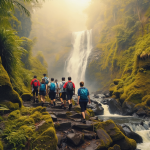
Canyoning is the art of descending through canyons using a combination of rappelling, swimming, jumping, sliding, and scrambling. In Costa Rica, this means navigating the country’s dramatic volcanic terrain, where rivers have carved deep gorges through jungle-covered hillsides over millions of years. It is one of the most immersive ways to experience the country’s interior landscape, and the Central Pacific region around Jacó offers some of the most accessible and technically rewarding canyon routes available to guided tour participants.
The Technical Mechanics of a Canyoning Descent
A typical canyoning Costa Rica session begins well before anyone touches a rope. Guests receive a safety briefing covering harness fitting, rope management, rappelling technique, and communication signals. Reputable operators use double-rope systems with backup anchors, and guides are positioned both at the top and bottom of each rappel station to assist participants through the descent. This setup is particularly important for waterfall rappels, where water flow can affect visibility, footing, and rope friction in ways that dry-rock rappelling does not.
The rappels themselves vary by route. Beginner-friendly routes might feature drops of five to fifteen metres down mossy canyon walls beside cascading water. Intermediate and advanced routes push into the thirty-to-fifty metre range, sometimes requiring participants to descend directly through active waterfall curtains where the force of water against your back creates a sensory experience unlike anything in conventional outdoor recreation. Between rappels, guides lead groups through canyon swims, natural water slides formed by centuries of erosion, and boulder scrambles that demand coordination and body awareness.
What makes Costa Rica’s canyoning particularly compelling is the biodiversity present even within the canyon itself. Poison dart frogs rest on mossy ledges. Ferns the size of ceiling fans hang over pools. The sound of howler monkeys carries through the gorge. These aren’t incidental details, they are core to why canyoning in this country is categorically different from the same activity performed in arid desert canyons or European limestone gorges.
Physical Requirements and Who Can Participate
Canyoning is accessible to a broader range of participants than most people assume. Moderate fitness is required, the ability to walk on uneven terrain for an extended period and support your own body weight briefly during rappel transitions. Participants with joint issues should consult their guides before booking, and most operators set a minimum age (typically eight to twelve years, depending on route difficulty). Maximum weight limits, usually around 120 kilograms, exist for harness safety compliance and are non-negotiable.
For travelers staying in or near Jacó, the logistics work in your favor. The canyoning routes accessible from the Central Pacific coast are within a one-to-two hour drive of the town, meaning you aren’t sacrificing a full day to transportation. This geographic efficiency is precisely what makes combining canyoning with a second activity on the same trip not just possible but genuinely practical.
What Coasteering Is and Why Most Travelers Haven’t Heard of It
Coasteering is a relatively underrecognized adventure activity, particularly in Central America, which is part of what makes finding it in Costa Rica so genuinely exciting. Originating in the sea cliffs of Wales, coasteering involves traversing coastal terrain at the waterline, swimming, climbing, scrambling, cliff jumping, and exploring sea caves and tidal channels entirely under human power, with no boats or equipment beyond a wetsuit, helmet, and buoyancy aid.
Why Costa Rica’s Pacific Coast Is Ideal for Coasteering
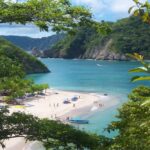
The Pacific coastline around Jacó and the broader Central Pacific region presents a geological profile that suits coasteering remarkably well. Volcanic rock formations create irregular, fractured shorelines with natural platforms, submerged ledges, sea caves formed by wave action, and channels where water surges in dramatic, navigable patterns. The Pacific swell, while powerful enough to create world-class surf breaks, also shapes the coastal topography into features that experienced guides can safely navigate with small groups.
The marine biodiversity along this coast adds an additional dimension to the experience. Coasteering here isn’t just a physical challenge, it’s an encounter with tide pools hosting sea urchins, hermit crabs, and starfish; with sea caves whose ceilings glitter with bioluminescent organisms at certain times of year; and with the kind of raw geological drama that reminds you the Pacific Ocean is an active, living system, not a backdrop.
How Coasteering Differs from Surfing, Snorkeling, and Kayaking
Travelers sometimes confuse coasteering with other ocean-based activities. The distinction is important. Surfing is board-dependent and skill-specific. Snorkeling keeps you passive and horizontal at the water surface. Kayaking puts distance between you and the coastline itself. Coasteering, by contrast, puts you in direct, tactile contact with the coastal environment. You’re using hands and feet on rock. You’re swimming through surge channels where the swell picks you up and carries you. You’re jumping from ledges into deep blue water below. The activity demands attentiveness, physical engagement, and a willingness to be in dynamic relationship with the ocean rather than simply observing it.
For adventure travelers who have already ticked surfing, snorkeling, and kayaking off their Costa Rica list, coasteering offers something genuinely new, and pairing it with canyoning on the same trip creates a narrative arc that moves from the jungle interior to the ocean edge, covering two of Costa Rica’s most dramatic ecosystems in a single day or a single multi-day itinerary.
The Case for Combining Both Activities: Why One Isn’t Enough
The conventional approach to Costa Rica adventure tourism is to pick one activity per day, keep the schedule relaxed, and fill gaps with beach time. That model works perfectly well for travelers whose primary goal is relaxation punctuated by occasional excitement. But for the traveler who came to Costa Rica specifically for the adventure, who chose this country because of its density of natural experiences and its reputation as a global ecotourism benchmark, the one-activity-per-day model leaves significant value on the table.
The Ecosystem Contrast Argument
Costa Rica’s geography compresses an extraordinary range of ecosystems into a remarkably small area. The country spans just 51,100 square kilometres, yet contains an estimated five percent of the world’s total biodiversity, according to the Sistema Nacional de Áreas de Conservación (SINAC). This compression means that within a single day’s travel radius from Jacó, you can experience primary rainforest canyon environments and open Pacific coastline, two ecosystems that are ecologically, visually, and experientially distinct.
Canyoning immerses you in vertical jungle: the sounds, smells, and textures of deep forest interrupted by the physics of falling water. Coasteering immerses you in the horizontal drama of the land’s edge: salt air, wave surge, volcanic rock, and open ocean horizon. Experiencing both in the same trip doesn’t dilute either, it amplifies both by contrast. The jungle feels denser after you’ve stood on an exposed sea cliff. The ocean feels wilder after you’ve been enclosed inside a canyon.
The Efficiency Argument for Visiting Travelers
Most international travelers visiting Costa Rica are working with a fixed window, typically seven to fourteen days. Within that window, they want to cover multiple regions, perhaps Arenal, Monteverde, Manuel Antonio, and a beach destination. The time allocated to any single area like Jacó is often two to four days. For travelers in this situation, a multi-activity adventure package that delivers both canyoning and coasteering within a single booking is not a luxury, it’s a logical optimization of limited time in a destination that demands to be experienced fully.
Cruise passengers face an even tighter constraint. Ships docking at Puntarenas, the nearest cruise port to Jacó (approximately ninety kilometres north), give passengers shore excursion windows that can range from six to ten hours. Within that window, a combined canyoning and coasteering experience that is professionally sequenced, transport-inclusive, and efficiently guided can genuinely be accomplished, provided the operator has the logistics infrastructure to make it work.
The Skill Transfer Argument
There is also a less obvious reason why canyoning and coasteering pair well together: the physical skills required for each activity complement rather than exhaust each other. Canyoning builds confidence in moving through three-dimensional terrain, trusting equipment, and managing controlled descents. Coasteering then deploys that same spatial confidence in a completely different context, applying the body awareness developed on canyon walls to the dynamic, unpredictable surface of sea-washed rock. Participants who complete canyoning first often report that they approach the coasteering portion with noticeably greater physical confidence than they would have had starting cold.
What to Look for in a Multi-Activity Adventure Tour Operator
Not all operators offering combined adventure packages deliver equivalent experiences, and the gap between a well-run multi-activity tour and a poorly coordinated one is significant enough to determine whether you spend the day exhilarated or frustrated. Understanding what separates good operators from great ones is essential before you book.
Guide Certification and Safety Infrastructure
Costa Rica’s adventure tourism sector operates under the oversight of the Instituto Costarricense de Turismo (ICT), which licenses tour operators and establishes baseline safety standards for adventure activities. Reputable operators hold ICT registration and can provide documentation on request. Beyond this baseline, look for guides who hold internationally recognized certifications in rope-access or canyoning (such as those issued by the International Canyoning Association or equivalent bodies), and who have current wilderness first aid or first responder credentials.
For coasteering specifically, ask whether guides have surf lifesaving or open-water rescue training. Coasteering inherently involves dynamic ocean environments where conditions can change, and the difference between a guide who can read swell patterns and one who cannot is the difference between a thrilling experience and a dangerous one.
Group Size and Guide-to-Participant Ratios
Multi-activity tours that try to run large groups through two demanding environments in a single day are setting themselves up for logistical failure. Look for operators who cap group sizes at small numbers (typically eight to twelve participants per group) and maintain guide-to-participant ratios that allow for individualized attention at technical sections. During rappel stations in canyoning, a minimum of one guide at the top and one at the bottom per rope line is a non-negotiable safety standard. During coasteering, at least one guide should be in the water with participants at all times.
Equipment Quality and Maintenance Standards
The tropical environment of Costa Rica is particularly hard on adventure equipment. Humidity, salt air, UV exposure, and constant moisture accelerate the degradation of harnesses, ropes, helmets, and wetsuits. Ask operators directly about their equipment replacement schedules and whether they perform pre-use inspections on every item. Ropes and harnesses used in canyoning should meet CE or UIAA standards, and operators should be able to tell you the age and inspection history of any equipment you’ll be wearing.
Environmental Commitment and Ecotourism Principles
Costa Rica’s adventure tourism industry exists within one of the world’s most ecologically significant landscapes. Operators who take this seriously will have visible practices: no single-use plastics on tours, leave-no-trace protocols in canyon and coastal environments, briefings on wildlife interaction boundaries, and ideally participation in Costa Rica’s Certificación para la Sostenibilidad Turística (CST) program. These aren’t just ethical considerations, they’re indicators that an operator understands and respects the environment they’re working in, which generally correlates with higher overall operational quality.
Adventure Tours Jacó Costa Rica: Why This Region Is the Right Base
Jacó sits at the center of one of Costa Rica’s most adventure-dense corridors, and its position on the Central Pacific coast makes it uniquely suited as a base for combined canyoning and coasteering experiences. Understanding the geography helps explain why.
The Terrain Immediately Behind Jacó
The mountains of the Cordillera de la Costa rise sharply from the coastal plain immediately east and northeast of Jacó. This terrain, part of the Carara and adjacent protected zones, is characterized by steep river valleys, volcanic rock formations, and dense primary and secondary rainforest. The rivers draining westward toward the Pacific have created canyon systems that are well-suited to guided canyoning, with a variety of routes ranging from beginner-accessible to genuinely technical.
The proximity of these canyon systems to the coast is what makes same-day multi-activity logistics feasible. A canyon route that would take an entire day to access from San José or Arenal can be reached from Jacó in under an hour. This geographic compression is the operational foundation on which combined adventure packages are built.
The Coastal Geology Around Jacó and Beyond
The Pacific coastline around Jacó and extending south toward Herradura, Esterillos, and Quepos features the kind of varied coastal geology that coasteering requires. Rocky headlands alternate with sandy beaches, creating sections of volcanic shoreline where wave action has carved platforms, channels, and caves. Tidal range on the Pacific coast of Costa Rica is moderate, which means that the rock terrain accessible at lower tide becomes partially submerged at higher tide, creating naturally dynamic coasteering conditions without the extreme exposure of some Atlantic coastlines.
The marine environment here also benefits from the proximity of the Golfo de Nicoya to the north and the broader Pacific upwelling system, which supports high concentrations of marine life in the intertidal zones, another compelling reason to combine coasteering with canyoning in this region rather than doing either activity in a less ecologically rich location.
Jacó’s Infrastructure for Adventure Travelers
Beyond the terrain itself, Jacó offers practical infrastructure that matters for multi-activity tour participants. The town has a well-developed accommodation sector ranging from budget hostels to boutique hotels, excellent restaurant options for post-adventure meals, and reliable transport links to San José (approximately ninety minutes by car) and to cruise port facilities at Puntarenas. This infrastructure means that logistics surrounding a combined adventure day, arriving rested, departing fed and satisfied, are manageable in ways that they might not be in more remote locations.
How a Combined Canyoning and Coasteering Day Actually Flows
Understanding the practical structure of a combined adventure day helps travelers set realistic expectations and plan the rest of their itinerary around it. What follows is a representative sequence based on how well-organized multi-activity packages in this region are typically structured.
Morning: Canyoning (Canyon Environment, Vertical Terrain)
Most combined itineraries schedule canyoning in the morning for sound operational reasons. The canyon environment is cooler in the morning hours, which is a significant comfort factor when wearing a harness and helmet in tropical humidity. Early starts also mean the canyon is quieter, with fewer groups and more wildlife activity. A typical canyoning session runs three to five hours, including transport from the meeting point, the approach hike to the canyon entrance, the descent itself with multiple rappel stations, and the exit hike back to vehicles.
Breakfast should be eaten before departure, and most operators recommend a light meal rather than a heavy one. Lunch is typically scheduled between the two activities, either at a local restaurant near the canyon exit or as a packed meal at a scenic transition point. This midday break is not just a logistical pause, it gives participants time to process the first activity, change into dry clothes, and recalibrate their energy before the afternoon session.
Afternoon: Coasteering (Coastal Environment, Horizontal Terrain)
Coasteering in the afternoon makes practical sense for two reasons. First, the Pacific swell tends to be more predictable in the afternoon than in the early morning, when offshore conditions can be choppier. Second, afternoon light on the Pacific coast of Costa Rica is extraordinary, the quality of light filtering through sea spray against volcanic rock is unlike morning light, and for travelers who are also photography-oriented, this matters.
A guided coasteering session runs two to four hours, depending on the route and the group’s pace. Participants don wetsuits, helmets, and buoyancy aids at a staging area near the entry point, receive a briefing on the day’s route, swell conditions, and safety protocols, and then enter the coastal terrain at a controlled access point. The guide leads the group through the route, identifying features, explaining the marine biology of tide pools, and facilitating jumps and swims at appropriate points.
The session concludes with an exit to a calm beach or rocky platform, where participants rinse equipment and return to the staging area. Total time from hotel pickup to hotel dropoff for a combined canyoning and coasteering day runs approximately eight to ten hours, which is a full but not exhausting day for reasonably fit adults.
Comparing Multi-Activity Adventure Package Formats
Not every operator structures combined adventure packages the same way, and the format matters for traveler satisfaction. The table below outlines the main formats you’re likely to encounter and what to expect from each.
| Package Format | Who It Suits | Typical Duration | Key Considerations |
|---|---|---|---|
| Same-Day Combined (canyoning AM + coasteering PM) | Time-limited travelers, cruise passengers, those wanting maximum value from a single day | 8–10 hours | ⚠️ Requires good fitness level; confirm transport is included between activities |
| Two-Day Package (one activity per day) | Travelers wanting full immersion in each activity without time pressure | 2 days | ✅ More relaxed pace; often includes accommodation component |
| Multi-Activity Adventure Package (3+ activities over 2–3 days) | Dedicated adventure travelers wanting a curated experience | 2–3 days | ✅ Best value per activity; allows for waterfall trekking, wildlife tours as additions |
| Add-On Booking (book activities separately with same operator) | Flexible travelers who prefer to build their own schedule | Flexible | ⚠️ Less logistical coordination; may miss bundled pricing discounts |
| Group / Corporate Package | Teams, corporate incentive groups, bachelor/bachelorette parties | Customizable | ✅ Often includes private guiding, custom routing, and catering options |
What the Dry Season vs. Green Season Means for Your Adventure Plans
Costa Rica’s two distinct seasons shape adventure tourism in ways that travelers often underestimate when planning from abroad. Getting this right can be the difference between ideal conditions and a trip that requires significant adaptation.
Dry Season (December Through April): Peak Conditions for Coasteering
Costa Rica’s dry season, known locally as verano, runs from December through April. During this period, the Central Pacific coast receives minimal rainfall, the ocean surface is generally calmer, and coastal visibility improves significantly. For coasteering specifically, dry season conditions are typically optimal, swell patterns are more predictable, sea caves are more accessible because water levels in tidal channels are lower, and the warm, sunny weather makes extended time in wetsuits genuinely enjoyable rather than merely tolerable.
The trade-off is that waterfalls and canyon water volumes are lower during the dry season. Canyoning is still fully operational and enjoyable, but the dramatic waterfall curtains that define the most visually spectacular rappels are less voluminous than they are during the rainy months. Some guides argue that dry season canyoning is actually preferable for beginner participants precisely because reduced water flow makes technical sections less intimidating.
Green Season (May Through November): Peak Conditions for Canyoning
The rainy season, or invierno, transforms Costa Rica’s canyon environments. Waterfalls that are trickles in April become thundering cascades by July. The canyon vegetation is at its most lush and intensely green. The sensory experience of rappelling beside or through an active waterfall at peak flow is genuinely extraordinary, the sound, the mist, the force of water against your body create an immersive intensity that dry season canyoning simply cannot replicate.
For coasteering, the green season requires more careful planning. Pacific swell can be more variable and stronger, which means that the best operators will read conditions on the morning of a booked tour and may adjust routes or timing accordingly. This is actually a mark of operator quality, a guide who cancels or modifies a coasteering session based on genuine swell assessment is a guide who prioritizes participant safety over revenue. Be appropriately skeptical of any operator who claims their coasteering tours run identically regardless of conditions.
The green season also brings the benefit of significantly lower tourist volumes, meaning smaller group sizes, quieter canyon routes, and the particular pleasure of experiencing Costa Rica’s most spectacular natural environments without crowds. For travelers with schedule flexibility, the shoulder periods of May to June and October to November offer a genuine sweet spot: residual dry conditions in the early green season, or the tail end of rains in the late green season, with the density of experience that only tropical wet-season landscapes provide.
Costa Rica Adventure Packages: What Honest Pricing Looks Like
Adventure tourism in Costa Rica sits in a pricing tier that reflects the genuine costs of operating safely in a remote tropical environment. Understanding what drives pricing helps travelers evaluate whether a quoted price represents fair value or a concerning shortcut.
The Cost Drivers Behind Quality Adventure Tours
Guide wages and certification maintenance are the largest single cost driver in quality adventure tourism operations. Certified canyoning and coasteering guides earn professional wages, and their certifications require ongoing renewal. Equipment replacement is the second major cost: ropes, harnesses, wetsuits, and helmets have finite safe-use lifespans that are shorter in tropical conditions than in temperate climates. Transport, insurance (which must meet ICT standards for licensed tour operators), and park or reserve entry fees where applicable round out the cost structure.
The general pricing range for a quality combined canyoning and coasteering package from a reputable Jacó-based operator falls in the range of $150 to $300 USD per person, depending on group size, inclusion of transport, meal provisions, and whether the package spans one or two days. Packages priced significantly below this range warrant scrutiny about where the savings are coming from, the most common answers are under-qualified guides, older equipment, or group sizes large enough to compromise the experience quality.
Group Pricing and Private Tour Economics
Larger groups can access better per-person pricing through bundled rates, and many operators offer group discounts for parties of six or more. Private tours, where a guide or guide team works exclusively with a single group, command a premium but deliver a qualitatively different experience, routes can be customized, pace can be adjusted to group ability, and the absence of strangers creates a social dynamic that many travelers find significantly more enjoyable.
For corporate incentive groups and team-building travel, the per-person premium for private multi-activity adventure packages is typically justifiable when measured against the program outcomes: genuine shared challenge, memorable bonding experiences, and a story that participants will tell for years afterward. The Jacó region is increasingly recognized as a viable corporate adventure destination precisely because its activity density per day allows meaningful programs within tight travel windows.
Planning Your Combined Adventure: A Decision Framework
The following framework helps travelers move from general interest to a concrete booking decision. Work through each question in sequence to arrive at the package format that best fits your situation.
- How many days do you have in or near Jacó? One day or less: prioritize a same-day combined package. Two or more days: consider a two-day format with each activity getting its own morning.
- What is your fitness level? Comfortable with sustained physical effort for eight or more hours: same-day combined works well. Moderate fitness: two-day format is more appropriate and more enjoyable.
- Are you traveling in a group? Groups of six or more: ask about private or semi-private group packages, which typically offer better per-person value and a more customized experience.
- What season are you visiting? Dry season (December to April): coasteering conditions are optimal; plan your best coasteering day here. Green season (May to November): canyoning is at its most spectacular; be prepared for coast-side flexibility.
- What is your primary goal? Maximum adventure in minimum time: same-day combined package. Depth of experience in each activity: two-day format. Broader Costa Rica adventure itinerary: multi-activity package that may also include waterfall trekking, wildlife tours, or other activities.
- Have you verified the operator’s credentials? Confirm ICT licensing, guide certifications, equipment standards, and group size caps before booking. A brief email exchange with an operator before booking reveals a great deal about their operational professionalism.
Costa Rica Waterfall Tours: A Base for Central Pacific Adventure
For travelers looking at adventure tours in Jacó, Costa Rica, Costa Rica Waterfall Tours represents exactly the kind of experienced, ecotourism-committed operator that the combined canyoning and coasteering model demands. Operating from Jacó with deep knowledge of the Central Pacific region’s terrain, this team brings together guided waterfall trekking, ocean excursions, and multi-activity adventure packages within a single operation.
The company’s approach reflects the reality that the Central Pacific coast is genuinely one of the world’s most adventure-dense regions, a place where the vertical drama of jungle canyons and the horizontal energy of the Pacific coastline are separated by less than an hour’s drive. Their packages are designed around this geographic advantage, giving travelers the ability to move between ecosystems in a single day without sacrificing depth of experience in either.
What sets this kind of operator apart from generic booking platforms is the local expertise that comes from running tours in the same terrain, season after season. Guide teams who have descended the same canyon routes dozens of times know exactly which rock ledges to use as footholds, which pools are safe for jumping in any given season, and which coastal features to access at which tide stage. This accumulated knowledge is what converts a theoretically possible combined adventure day into one that actually flows smoothly and safely.
For anyone planning Costa Rica adventure packages that include both jungle and ocean experiences, the Central Pacific corridor around Jacó is the most logistically efficient and ecologically compelling place to base that plan, and having a single, trusted operator handling both activities eliminates the coordination overhead that comes with booking through multiple vendors.
Ready to experience both? Explore the full range of adventure tours available through Costa Rica Waterfall Tours and find the multi-activity combination that fits your schedule, fitness level, and sense of adventure.
Frequently Asked Questions About Combining Canyoning and Coasteering in Costa Rica
Is there actually a tour operator offering canyoning and coasteering in one trip in Costa Rica?
Yes, multi-activity adventure operators based in the Jacó region of Costa Rica’s Central Pacific coast offer combined packages that include both canyoning and coasteering. The geographic proximity of canyon terrain and accessible Pacific coastline around Jacó makes same-day or two-day combined itineraries genuinely practical. The key is finding an operator with guide teams certified in both activities and the logistics infrastructure to move groups between environments efficiently.
How physically demanding is a combined canyoning and coasteering day?
A same-day combined itinerary is moderately to significantly demanding. Canyoning involves hiking, rappelling, swimming, and scrambling over three to five hours. Coasteering adds two to four hours of swimming, climbing, and dynamic ocean navigation. Total time of sustained physical activity runs six to eight hours. Participants should be in reasonable cardiovascular health, comfortable in water, and free from significant joint or mobility limitations. If you have any concerns, a two-day format with one activity per day is a more appropriate and equally rewarding alternative.
What is the best time of year for a combined canyoning and coasteering trip to Costa Rica?
The dry season (December through April) offers optimal coasteering conditions with calmer Pacific swell and better coastal visibility. The green season (May through November) is peak canyoning season, with waterfall volumes at their most dramatic. The shoulder periods of May to June and October to November often represent a sweet spot where residual dry conditions or clearing skies align with lush canyon vegetation. Discuss seasonal conditions directly with your chosen operator when booking.
Are these activities safe for beginners?
Both canyoning and coasteering have beginner-accessible versions when conducted by qualified guides with appropriate safety protocols. Beginner canyoning routes feature shorter rappels and calmer water sections. Beginner coasteering routes stay on more sheltered coastal terrain away from high-surge channels. Reputable operators assess participant experience and ability at the start of each tour and adjust the route accordingly. The key safety factor is guide certification and group size management, not the activity category itself.
Can cruise passengers from Puntarenas do a combined canyoning and coasteering tour near Jacó?
It is possible but requires careful planning. The drive from Puntarenas to Jacó takes approximately ninety minutes, which means a cruise passenger with a six-hour shore excursion window would have limited time for a full combined day. In this scenario, a single-activity tour (either canyoning or coasteering) is typically more realistic and more enjoyable than trying to compress both into a constrained window. Cruise passengers with eight or more hours ashore and pre-arranged private transport have made combined tours work successfully. Discuss your specific ship schedule with the operator before booking.
What equipment is provided, and what should I bring myself?
Reputable operators provide all technical equipment: harnesses, ropes, helmets, and belay devices for canyoning; wetsuits, helmets, and buoyancy aids for coasteering. What you should bring: water shoes or closed-toe sandals suitable for wet rocky terrain, a swimsuit (worn under provided wetsuits), sunscreen (reef-safe if possible, given proximity to marine environments), a change of dry clothes for after the tour, and a small dry bag for personal items like phones and cameras. Most operators can provide or recommend dry bag solutions. Avoid bringing valuables that cannot be secured.
How do I verify that a Costa Rica tour operator is legitimate and safe?
Start by confirming ICT (Instituto Costarricense de Turismo) registration, which is a legal requirement for tour operators in Costa Rica. Ask directly about guide certifications in the specific activities offered. Check recent reviews on multiple platforms. Ask about equipment replacement schedules and what safety protocols apply if conditions change on the day. An operator who answers these questions transparently and in detail is demonstrating the kind of operational seriousness that correlates with safe, high-quality tours.
What is the typical price range for a combined canyoning and coasteering package in the Jacó area?
Quality combined packages from reputable operators in the Central Pacific region generally range from $150 to $300 USD per person, depending on group size, format (same-day vs. two-day), transport inclusion, and whether meals are provided. Private tours command a premium over shared group tours. Packages priced significantly below $100 USD per person for both activities combined should be evaluated carefully for guide qualifications and equipment quality.
Can children participate in canyoning and coasteering in Costa Rica?
Many canyoning routes have minimum age requirements, typically eight to twelve years depending on route difficulty. Some beginner routes are genuinely family-friendly. Coasteering has similar age considerations, with the additional factor that children must be comfortable swimmers and able to follow safety instructions in dynamic water environments. Confirm age and weight restrictions directly with the operator when booking, and be honest about your child’s swimming confidence and general outdoor experience.
Is canyoning or coasteering more appropriate for someone with a fear of heights?
Canyoning involves rappelling from heights and is directly confrontational for anyone with a fear of heights. Coasteering, while it includes optional cliff jumps, can be navigated with minimal vertical exposure if a participant chooses not to jump from elevated ledges. The swimming, scrambling, and sea cave exploration elements of coasteering are perfectly accessible to height-averse participants. If acrophobia is a genuine concern, consider starting with coasteering as a standalone activity or discuss route options with the operator before booking a combined package.
What happens if weather or conditions require cancellation?
Reputable operators have clear weather and conditions policies, typically offering rebooking without penalty when cancellation is initiated by the operator due to safety concerns. Understand the operator’s policy before booking: specifically, what constitutes a cancellation-triggering condition, how much notice they provide, and what rebooking or refund options are available. Operator-initiated cancellations for genuine safety reasons are a sign of responsible management, not poor organization.
Can I add waterfall trekking to a combined canyoning and coasteering package?
In the Jacó region, yes. The Central Pacific coast’s proximity to multiple waterfall systems means that operators like Costa Rica Waterfall Tours can incorporate waterfall trekking into a multi-day adventure package alongside canyoning and coasteering. Adding a dedicated waterfall trek, which is a more moderate activity appropriate for a wider range of fitness levels, to the itinerary creates a three-environment experience: canyon interior, waterfall systems, and Pacific coastline. This is arguably the most comprehensive natural adventure itinerary available from a single base in Costa Rica.
Key Takeaways
- Combined canyoning and coasteering packages do exist in Costa Rica, and the Jacó region of the Central Pacific coast is the most logistically practical base for experiencing both activities in a single trip or a single day.
- The two activities are genuinely complementary: canyoning delivers vertical jungle immersion, coasteering delivers horizontal ocean engagement. Together they cover two of Costa Rica’s most dramatic ecosystems.
- Operator quality is the critical variable. Confirm ICT licensing, guide certifications, equipment standards, and group size caps before booking any multi-activity adventure package.
- Season shapes the experience meaningfully: dry season (December to April) is optimal for coasteering; green season (May to November) produces the most dramatic canyoning conditions. Neither season makes either activity unavailable.
- Same-day combined formats suit time-limited travelers with moderate-to-good fitness. Two-day formats suit those who want full immersion in each activity without time pressure.
- Jacó’s geographic position, with canyon terrain within an hour inland and accessible Pacific coastline immediately to hand, is what makes multi-activity adventure tourism here genuinely efficient rather than logistically compromised.
- Pricing between $150 and $300 USD per person for a quality combined package reflects the genuine cost of safe, professional adventure tourism in a tropical environment. Significantly lower prices warrant scrutiny.
- The best next step is contacting an experienced, locally based operator directly, discussing your dates, group composition, and fitness levels, and letting their expertise shape a package that fits your actual trip, not a generic template.
Costa Rica’s adventure density is real, and the Central Pacific region around Jacó is where that density is most efficiently accessed. Whether you’re planning a single extraordinary day or a multi-day adventure itinerary, explore the adventure tour options at Costa Rica Waterfall Tours and take the first step toward a trip that covers ground most visitors never reach.
About the author
Costa Rica Waterfall Tours Editorial Team · Editorial Team
Book Your Guided Waterfall Adventure