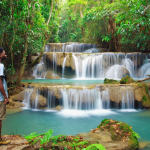
Picture this: you’re standing at the edge of a jungle trail just forty minutes from Jacó’s beach bars and surf breaks, listening to the distant roar of falling water get louder with every step. The air smells like wet earth and wild ginger. A scarlet macaw cuts across the canopy overhead. And then you round a corner and the waterfall hits you — a wall of white water thundering into an emerald pool, misting your face from thirty metres away. No zip line, no ATV, no snorkeling tour has ever made a first-time visitor stop and genuinely lose their breath quite like this.
Costa Rica’s adventure tourism menu is longer than most travelers realize. Between the Central Pacific coast’s surf schools, the crocodile boat tours on the Río Tárcoles, the canopy tours above Jacó, and the sport fishing charters heading offshore, it’s easy to fill an entire week without ever setting foot on a jungle trail. But here’s what five-star reviews, repeat visitors, and seasoned ecotourism guides consistently confirm: guided waterfall tours remain the single adventure experience that guests talk about long after they’ve forgotten which zip line platform they launched from.
This article makes the case — in detail and with genuine expert backing — for why a professionally guided waterfall tour near Jacó should sit at the absolute top of your Costa Rica bucket list in 2026. Whether you’re a solo traveler on a two-week backpacking loop, a family of four booking your first international adventure, a cruise passenger with six hours of shore time, or a corporate incentive group looking for something authentically memorable, the following ten reasons apply directly to you.
1. Costa Rica’s Waterfalls Are Among the Most Spectacular on the Planet — and the Central Pacific Delivers
Costa Rica’s geography is almost absurdly generous to waterfall hunters. The country sits at the convergence of two tectonic plates, producing a mountain spine — the Cordillera Central and Cordillera de Talamanca — that forces moisture-laden Pacific and Caribbean air masses upward, generating the rainfall that feeds hundreds of cascades year-round. The result is a country roughly the size of West Virginia that holds more dramatic waterfall terrain than most nations ten times its size.
The Central Pacific region surrounding Jacó is particularly blessed. The Fila Costera mountain range rises sharply from the coastal plain, creating the right topography for rivers to drop fast and dramatically. Within a one-hour drive of Jacó’s town center, visitors have access to waterfalls ranging from intimate jungle cascades you can swim beneath to multi-tiered giants that require serious trekking to reach. This geographic concentration is a critical logistical advantage: you don’t lose half your day to a four-hour bus transfer.
What separates Costa Rica’s waterfalls from those found in, say, Iceland or Patagonia is the living ecosystem surrounding them. A waterfall in a temperate climate is a geological feature. A waterfall in a Costa Rican rainforest is an entire world — poison dart frogs on the boulders, morpho butterflies drifting through the spray, heliconia flowers lining the river margins, and the constant acoustic tapestry of birds, insects, and rushing water. The National System of Conservation Areas (SINAC), which manages over 25% of Costa Rica’s national territory as protected land, ensures that many of these waterfall corridors sit within or adjacent to protected zones where this biodiversity is actively conserved.
For travelers who have seen waterfalls elsewhere in the world, Costa Rica’s jungle-embedded cascades represent a genuinely different category of experience. For first-timers, the combination of tropical heat, dense rainforest, wildlife sightings, and the physical reward of a cold-water plunge pool creates a sensory memory that’s almost impossible to replicate. The Central Pacific coast, with Jacó as its adventure hub, offers the most convenient access point to this world-class natural infrastructure.
2. A Professional Guide Transforms a Hike Into an Education — and That Changes Everything
The difference between a self-guided waterfall walk and a professionally guided waterfall tour is not merely logistical — it’s experiential at a fundamental level. A competent guide doesn’t just prevent you from getting lost; they decode the rainforest around you in real time, turning a walk through green vegetation into an encounter with one of the most biodiverse ecosystems on Earth.
Costa Rica holds roughly 5% of the world’s total biodiversity within its borders — a statistic so extraordinary that it still surprises most visitors when they hear it. But that biodiversity is invisible without context. Most tourists walk past a strangler fig without realizing they’re looking at one of the jungle’s most ecologically dramatic stories. Most people hear a bird call and can’t place it. Most travelers step over a leaf-cutter ant trail without understanding that the colony beneath their feet processes more organic material than almost any other organism in the forest.
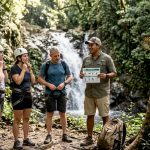
A qualified naturalist guide — the kind employed by experienced, five-star-reviewed operators working out of Jacó — changes all of this. They spot the Jesus Christ lizard before it bolts across the water’s surface. They identify the call of the fiery-billed aracari before you even look up. They stop you at the right moment to notice the two-toed sloth sleeping fifteen metres above your head. This kind of guided interpretation is what elevates a waterfall tour from a physical experience to an intellectual and emotional one.
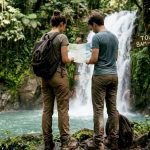
There’s also a meaningful safety dimension to professional guidance that goes beyond trail navigation. Costa Rica’s rainforests are genuinely wild. River crossings that look benign can surge dangerously during afternoon rainstorms. Certain plant species cause serious skin reactions on contact. Rocky canyon walls near waterfall bases present real fall hazards for the unprepared. An experienced guide anticipates these conditions, adjusts routes accordingly, and ensures that every participant — regardless of fitness level or prior outdoor experience — stays safe from start to finish.
For families traveling with children, this safety layer is especially valuable. For solo travelers unfamiliar with the region, it provides peace of mind that allows full immersion in the experience rather than constant navigation anxiety. For photographers, a knowledgeable guide who knows exactly when and where the light falls on a particular cascade is worth more than any camera accessory.
3. Guided Waterfall Tours Near Jacó Are Accessible to Almost Every Fitness Level
One of the most persistent misconceptions about waterfall trekking in Costa Rica is that it requires serious athletic ability. In reality, the Central Pacific region around Jacó offers a spectrum of waterfall experiences calibrated to genuinely different fitness levels — and a well-organized tour operator structures their offerings to match guests to the right experience from the outset.
At the accessible end, shorter jungle waterfall hikes involving moderate terrain and minimal elevation gain are achievable for healthy adults of all ages, including seniors, and for children as young as six or seven with appropriate footwear. These tours typically involve well-maintained jungle paths, clear river crossings with guide assistance, and reward participants with stunning cascades and swimming pools without demanding technical fitness. Many families report these shorter waterfall experiences as the highlight of their entire Costa Rica trip precisely because the payoff feels enormous relative to the effort.
At the more demanding end, certain waterfall approaches in the Fila Costera range involve significant elevation changes, river scrambling, and canyon navigation that genuinely challenges fit adults seeking a physical adventure. These routes are where experienced outdoor enthusiasts — trail runners, hikers, climbers — find their threshold pushed in a tropical setting unlike anything they’ve encountered elsewhere.
What makes this range work logistically is the expertise of the guiding team. Experienced operators running tours out of Jacó conduct genuine pre-tour assessments — not just liability checkbox conversations — to ensure each participant is matched with the right experience. They carry appropriate safety equipment, know when conditions warrant route modifications, and maintain the kind of first-aid preparedness that responsible outdoor operators in Costa Rica are expected to maintain under guidelines set by the Instituto Costarricense de Turismo (ICT).
The accessibility factor is particularly significant for group travel. Corporate incentive groups, wedding parties, school groups, and multi-generational family gatherings often include participants with dramatically varying fitness levels. A professional waterfall tour operator manages this diversity smoothly — sometimes splitting groups by capability, sometimes choosing routes that work for everyone — in a way that a self-organized hike simply cannot replicate.
4. The Ecological Context Makes Waterfall Tours the Purest Expression of Costa Rica’s Ecotourism Identity
Costa Rica didn’t accidentally become the world’s most cited ecotourism destination. The country made deliberate, legislatively backed decisions over decades to protect its natural heritage while building a tourism economy around it. The Ley de Biodiversidad and Ley Forestal established the legal frameworks that protect the forest corridors through which most waterfall tours travel. The Certificación para la Sostenibilidad Turística (CST), administered by the ICT, provides a rigorous, independently verified standard that responsible tour operators pursue to demonstrate genuine environmental commitment — not just marketing language.
When you book a guided waterfall tour with a certified, responsible operator near Jacó, you are participating in a tourism model that was consciously designed to benefit local ecosystems and communities simultaneously. Your tour fee supports local guides who have deep generational knowledge of the land. It supports operators who advocate for trail maintenance, watershed protection, and wildlife monitoring. And it contributes to the economic incentive structure that makes forest conservation more financially viable than deforestation for Costa Rican landowners — one of the most successful conservation finance models in the developing world.
This matters increasingly to modern travelers. Industry research consistently shows that a growing proportion of international tourists — particularly in the 25–45 age demographic — actively seek experiences that align with environmental values. Costa Rica’s waterfall tours, when operated by genuinely committed ecotourism companies, deliver this alignment in a way that feels authentic rather than performative. You’re not buying a carbon offset after the fact; you’re choosing an experience that was designed from the ground up to be ecologically responsible.
The contrast with other adventure activities is worth noting. ATV tours, while popular in Guanacaste and along the Central Pacific coast, carry documented environmental concerns related to trail erosion and noise pollution in wildlife corridors. Jet ski and motorized water sports have well-known impacts on marine ecosystems. Waterfall trekking, by contrast, has a minimal footprint when properly managed — low noise, no emissions, and natural trail surfaces that, with proper guide-enforced protocols, can sustain regular visitor traffic without significant degradation.
5. The Photography Opportunities Are Genuinely World-Class — and Guides Know Exactly Where to Stand
Travel photography has become a primary motivation for adventure tourism bookings, and Costa Rica’s waterfall landscape delivers photographic material that is genuinely difficult to replicate anywhere else on Earth. The combination of tropical light, dense green jungle framing, dramatic water movement, and the frequent presence of wildlife in the same frame creates compositions that stop social media feeds cold and make professional photographers return year after year.
What most visitors don’t anticipate is how significantly guide knowledge improves their photography outcomes. The difference between a tourist snapshot and a genuinely stunning waterfall image often comes down to positioning — knowing which angle captures the full cascade without the sun blowing out the highlights, understanding which time of day produces the soft diffused light that makes waterfall photographs glow, recognizing the specific ledge or mid-stream boulder that places a human subject perfectly against the falling water for scale.
Experienced guides who have walked the same waterfall trails hundreds of times carry this knowledge intuitively. They know that the best light on a particular cascade hits between 09:00 and 10:30 in the dry season (verano, December through April), when the sun is at the right angle to illuminate the mist without overexposing the pool. They know which rock to climb for the elevated perspective that shows the full drop. They know when to pause, when to rush, and when to simply let you stand in silence with your camera and wait for the moment.
For travel photographers specifically — whether shooting professionally or for personal archives — a guided waterfall tour near Jacó provides access to locations that are genuinely difficult to find independently, combined with the in-field expertise that consistently produces better images. The operators running five-star tours in this region have built reputations partly on the quality of photographs their guests come away with, which creates a virtuous cycle: guides who care about the photographic experience deliver tours that generate stunning imagery, which attracts more photography-focused travelers, which further incentivizes guide expertise in this area.
The green season (invierno, May through November) deserves special mention for photography purposes. While many tourists avoid Costa Rica’s rainy season based on a misunderstanding of what it actually entails — typically sunny mornings with afternoon showers, not all-day downpours — the green season produces the most spectacular waterfall conditions. Higher water volumes mean more dramatic cascades, lusher surrounding vegetation, and a quality of light through cloud-diffused skies that professional photographers actively seek. A knowledgeable guide navigates the rain window skillfully, timing departures and returns to maximize the spectacular conditions while avoiding the afternoon downpours that are a predictable feature of the season.
6. Waterfall Tours Deliver an Authentic Cultural Encounter, Not Just a Natural One
Costa Rica’s best guided waterfall experiences aren’t purely about the destination — they’re about the people who know it best. The guides leading these tours are, in many cases, locals from Jacó, Parrita, Quepos, and the small agricultural communities tucked into the Fila Costera foothills. Their relationship with these rivers, trails, and forests is generational. Their knowledge of the land incorporates ecological science, yes, but also oral history, traditional plant knowledge, and the kind of practical wisdom that comes from having grown up swimming in the same pools where they now guide international visitors.
This cultural dimension is something that most other adventure activities simply don’t offer. A zip line is an engineered experience that could exist anywhere. A surf lesson is a technical skill transfer that doesn’t connect you to place. A guided waterfall trek, led by someone who knows the local watershed the way a chef knows their kitchen, offers a genuine window into how Costa Ricans relate to their extraordinary natural environment — with pride, intimacy, and a kind of casual reverence that is deeply affecting to witness.
For many international visitors, this human connection becomes the most memorable element of the tour. Conversations on the trail about local ecology, land use history, family stories connected to particular rivers, and the guide’s own perspective on how tourism has changed their community provide a richness of experience that no itinerary can fully anticipate. It’s the kind of authentic cultural exchange that responsible tourism advocates have promoted for decades and that genuinely thoughtful travelers increasingly seek.
Operators working out of Jacó who prioritize local hiring and community benefit are contributing directly to the economic resilience of Central Pacific communities — keeping tourism revenue circulating locally rather than exporting it to multinational hotel chains and foreign-owned tour aggregators. When you choose a locally operated, community-embedded waterfall tour company, this economic dimension is real and meaningful.
7. The Wet Season Advantage: Why 2026’s Green Season Tours Are Unmissable
Most international tourists book Costa Rica trips during the dry season — roughly December through April — because the predictable sunshine and lower rainfall feel like a safer choice. This is understandable, but it comes with a significant opportunity cost that experienced travelers and seasoned guides are happy to explain: the green season produces the most spectacular waterfall conditions of the year, and it does so when tourist crowds are substantially thinner.
During the dry season, waterfall volumes along the Central Pacific coast can diminish considerably. Rivers fed primarily by rainfall — which describes most of the short, steep Fila Costera drainages that produce the region’s most accessible waterfalls — respond directly to precipitation patterns. By March and April, at the tail end of verano, some cascades that roared impressively in November are reduced to a fraction of their peak flow. The experience is still beautiful, but the drama is dialed down.
In contrast, waterfalls during the green season — particularly from June through October, when the Pacific slope receives its heaviest rainfall — are at their most thunderous, visually spectacular, and photographically dramatic. The mist carries further. The sound is more immersive. The surrounding vegetation achieves a density and vibrancy of green that simply doesn’t exist during the dry season. For travelers who have the flexibility to visit between May and November, the waterfall experience is categorically superior.
The practical key is tour timing. Experienced green season guides in the Jacó area know the local precipitation patterns intimately. Morning tours that depart by 07:30 or 08:00 typically complete the waterfall experience before the afternoon rain window arrives. This predictable weather cycle, combined with guide expertise in reading conditions, means that green season tours are not merely viable — they’re often more satisfying than their dry season equivalents. The guides who have been running these tours for years have refined their seasonal timing to a science.
For 2026 specifically, travelers planning Central Pacific coast adventures have an excellent opportunity to experience waterfall tours during shoulder season periods — late November through early December, and late April through May — when weather conditions are favorable, waterfalls are at strong flow, and the crowds associated with peak dry season haven’t arrived or have already departed.
8. Safety Standards and Operator Quality in Costa Rica’s Waterfall Tourism Sector
Adventure tourism safety is a topic that deserves honest, direct treatment rather than reassuring platitudes. Costa Rica’s outdoor adventure sector operates within a regulatory framework that, while not as prescriptive as equivalent regulations in Europe or North America, has matured considerably over the past decade. The ICT licenses tour operators and guides, and operators pursuing CST certification must meet documented safety and environmental standards. SETENA (the Secretaría Técnica Nacional Ambiental) governs environmental impact assessments for operations that affect protected or ecologically sensitive areas.
Within this framework, the quality differential between operators is real and significant. The waterfall tourism market near Jacó includes operators ranging from genuinely excellent — with certified guides, proper first-aid training, quality equipment, and transparent communication about tour conditions — to informal outfits that prioritize low price points over guest safety. For visitors making booking decisions, this differential matters enormously.
The markers of a high-quality operator are identifiable. Look for ICT licensing and documentation. Check for CST certification or active pursuit of it. Review guide credentials — naturalist certification from recognized bodies, wilderness first aid training, and demonstrable local knowledge. Read reviews carefully, paying specific attention to comments about guide expertise, group management, and how operators handled unexpected conditions. A five-star review average across hundreds of verified bookings is not accidental — it reflects consistent operational quality that can be trusted.
Equipment standards matter for waterfall tours in ways that aren’t immediately obvious to first-time visitors. Appropriate footwear guidance, quality trekking poles for river crossings, personal flotation options for swimming areas, and clear communication about what to wear and bring are all indicators of an operator who has thought carefully about participant safety. The best operators near Jacó provide detailed pre-tour preparation materials — not because it’s legally required, but because they understand that a well-prepared guest has a better and safer experience.
For families with young children, this safety infrastructure is particularly important to verify before booking. Reputable operators will be entirely transparent about minimum age requirements, trail difficulty, and what specific assistance guides provide for children at challenging trail sections. If an operator is vague or dismissive about these questions, that tells you something important about their operational culture.
9. Waterfall Tours Integrate Seamlessly With Jacó’s Broader Adventure Ecosystem
Jacó’s position as the Central Pacific coast’s premier adventure hub means that a guided waterfall tour doesn’t exist in isolation — it sits within a rich ecosystem of complementary experiences that can be combined into genuinely spectacular multi-day itineraries. Understanding how waterfall tours integrate with the broader Jacó adventure calendar helps travelers maximize their time and extract the most value from their Costa Rica visit.
The most natural pairings involve water and wildlife. A morning waterfall trek followed by an afternoon crocodile boat tour on the nearby Río Tárcoles — one of the world’s highest-density American crocodile habitats — creates a full-day nature immersion that showcases the remarkable ecological variety of the Central Pacific region. The contrast between the intimate jungle waterfall environment and the wide, sun-baked river teeming with massive reptiles is genuinely startling and memorable.
For beach-oriented travelers, the physical contrast between Jacó’s surf and the cool rainforest interior is itself part of the appeal. Jacó’s waves serve the surf community year-round, and the town’s beach bars, restaurants, and nightlife are established enough to satisfy travelers who want adventure by day and relaxation by evening. A waterfall tour fits naturally into this rhythm — an early departure, a return to town by midday, and the rest of the day at the beach or exploring Jacó’s increasingly sophisticated restaurant scene.
For travelers with extended itineraries on the Central Pacific coast, the region’s waterfall terrain provides multiple distinct experiences rather than a single highlight. The waterfalls accessible from Jacó differ meaningfully in character from those near Quepos and Manuel Antonio to the south, or those in the montane forests above Atenas and the Río Grande valley to the north. A week-long itinerary built around progressive waterfall experiences — easier, more accessible cascades early in the trip, more demanding trekking approaches later — gives adventure travelers a genuinely rich and varied program.
Cruise passengers arriving at Puntarenas — the nearest major port to Jacó, approximately 90 kilometres to the northwest — have a particularly strong case for choosing a waterfall tour as their shore excursion. The drive from Puntarenas to the Jacó area waterfalls is manageable within a typical shore excursion window, and the experience delivers a concentrated dose of Costa Rica’s defining natural character in the time available. For passengers who want something more memorable than a shopping trip or a poolside resort day, a guided waterfall trek in the Central Pacific rainforest is the obvious choice.
10. The Emotional Return on Investment Outperforms Every Other Adventure Activity
There’s a concept in experiential psychology sometimes called “peak experience” — moments of intense positive emotion, heightened perception, and a sense of connection to something larger than oneself that leave lasting imprints on memory and wellbeing. Adventure travel, at its best, reliably generates these moments. But not all adventure experiences are equally effective at delivering them.
Zip lining is thrilling. The adrenaline spike is real and immediate. But it’s over in seconds, and the dominant sensation is speed and fear rather than wonder. ATV tours are fun, but the machine mediates the experience — you’re always somewhat separated from the environment by engine noise and mechanical momentum. Even surfing, for all its genuine connection to natural forces, requires so much technical attention in the learning stages that beginners rarely experience the meditative flow state that makes surfing transformative for experts.
Waterfall trekking, guided by someone who knows the terrain and its stories, delivers peak experiences through a completely different mechanism. The approach builds anticipation gradually — the sound of water intensifying, the air cooling, the vegetation becoming denser and more primordial. The arrival at the waterfall delivers an overwhelming sensory payoff that is almost universally described, across cultural backgrounds and age groups, in terms of awe. And then there’s the plunge — jumping or lowering yourself into the cold, crystal-clear pool beneath a Costa Rican waterfall is one of the most purely joyful physical experiences available to a human being in 2026.
Industry research on experiential tourism consistently supports the idea that nature-immersion experiences — particularly those involving water, physical effort, and wildlife encounters — generate higher reported satisfaction and longer-lasting positive memories than thrill-based activities centered on speed or height. The combination of physical engagement, sensory richness, emotional reward, and meaningful social interaction (with guides, with travel companions, with other group members) creates a memory structure that is robust and durable in a way that a ten-second zip line ride simply isn’t.
For couples, waterfall tours offer a shared physical challenge and a genuinely romantic natural setting that creates the kind of bonding experience that travel agents and relationship psychologists alike recommend. For families, the shared achievement of reaching a spectacular waterfall — perhaps with a child who doubted their ability to make the hike — creates family mythology: the story that gets told at every dinner table for years. For solo travelers, the group dynamic of a guided tour provides social connection with like-minded adventurers without the vulnerability of solo wilderness navigation in an unfamiliar country.
The emotional return on investment, in short, is exceptional. And it’s consistently exceptional — not dependent on perfect conditions, exceptional athletic performance, or technical skill. The waterfall is always there. The guide’s knowledge and enthusiasm are always there. The jungle is always extraordinary. The result, reliably and repeatedly confirmed by five-star reviews from guests who came as strangers and left as converts, is an experience that earns its place at the very top of the Costa Rica adventure hierarchy.
Frequently Asked Questions About Guided Waterfall Tours Near Jacó, Costa Rica
What is the best time of year to do a waterfall tour near Jacó?
Waterfall tours near Jacó can be enjoyed year-round, but the green season (May through November) produces the most spectacular waterfall volumes and lush jungle conditions. Dry season tours (December through April) offer more predictable weather with reduced waterfall flow. For the best balance of conditions and crowd levels, late November, early December, and late April are excellent shoulder-season windows. Always book with a guide who knows how to time morning departures to avoid afternoon rainfall in the rainy season.
How physically fit do I need to be for a Costa Rica waterfall tour?
Most waterfall tours near Jacó are designed for average fitness levels and do not require athletic training or prior hiking experience. Reputable operators offer multiple difficulty levels — from short, moderate jungle walks suitable for families and seniors to more demanding canyon treks for experienced hikers. The key is honest communication with your operator before booking: describe your fitness level and any physical limitations, and a good guide service will match you with the appropriate experience.
Are guided waterfall tours in Costa Rica safe for children?
Yes, many guided waterfall tours near Jacó are family-friendly and suitable for children, typically from around age six or seven depending on the specific route. Professional guides provide hands-on assistance at river crossings and challenging trail sections. Always confirm minimum age requirements, trail difficulty, and what safety protocols are in place before booking with children. Reputable operators will provide clear guidance on footwear, clothing, and what children should bring.
What should I wear and bring on a waterfall tour near Jacó?
Closed-toe shoes with grip — water shoes, trail runners, or hiking sandals — are essential for river crossings and wet rocky terrain. Bring a swimsuit worn under quick-dry shorts or pants, a light rain jacket, sunscreen, insect repellent, a small dry bag for electronics, and drinking water. Most quality operators provide a detailed packing list before your tour date. Avoid cotton clothing, which stays wet and heavy; synthetic or quick-dry materials are strongly preferred.
How long does a typical guided waterfall tour last?
Most guided waterfall tours in the Jacó area run between three and six hours total, including transport from Jacó, the trek to the waterfall, time at the swimming area, and return. Shorter, more accessible tours can be completed in a half-day morning window. More demanding multi-waterfall or canyon trekking experiences may run a full day. Your operator will provide a clear timeline during the booking process so you can plan the rest of your day accordingly.
Can cruise passengers from Puntarenas do a waterfall tour near Jacó?
Yes — cruise passengers docking at Puntarenas can access waterfall tours in the Jacó area within a typical shore excursion window. The drive from Puntarenas to the Central Pacific waterfall corridor takes approximately 90 minutes to two hours depending on specific destination. It’s critical to book with an operator who understands cruise schedules and provides a guaranteed return-to-port time. Always confirm the exact timeline and buffer with your operator before your ship’s departure date.
What makes a guided waterfall tour better than going independently?
A professional guide provides safety, ecological interpretation, and access that self-guided visitors simply cannot replicate. Guides know safe river crossing points, trail conditions after rainfall, wildlife locations, and photographic vantage points that aren’t marked on any map. They carry first-aid supplies, manage group pacing, and can adapt routes to changing weather conditions. For visitors unfamiliar with Costa Rica’s jungle terrain, attempting waterfall hikes without a guide introduces real risks that a competent operator eliminates entirely.
Are waterfall tours in Costa Rica considered ecotourism?
When operated by responsible, certified companies, guided waterfall tours are among the most genuinely ecotourism-aligned adventure activities available in Costa Rica. They have minimal environmental footprint, support local guide employment, and contribute to the economic case for forest conservation. Look for operators holding or pursuing the Certificación para la Sostenibilidad Turística (CST) issued by the ICT, which provides independent verification of environmental and community responsibility standards.
Are waterfall tours suitable for solo travelers visiting Jacó?
Absolutely. Solo travelers are consistently well-served by guided waterfall tours, which provide built-in social connection through the group tour format, safety infrastructure for solo wilderness navigation, and the kind of local expertise that dramatically enriches an independent traveler’s experience. Many solo travelers report that their waterfall tour guide became one of their most memorable Costa Rica encounters — a window into local culture and ecological knowledge that solo sightseeing cannot replicate.
What is the best waterfall in the Jacó area for first-time visitors?
The best waterfall for first-time visitors is one that matches your fitness level and delivers maximum visual impact for reasonable physical effort — and an experienced local guide is the best judge of this. The Fila Costera foothills accessible from Jacó contain multiple spectacular cascades that reward first-timers without requiring advanced trekking fitness. Rather than researching specific waterfall names independently, the most reliable approach is booking with a five-star-reviewed operator and letting their guide team match you to the right destination based on current conditions, group size, and your preferences.
How much does a guided waterfall tour near Jacó typically cost?
Guided waterfall tour pricing in the Jacó area typically reflects tour duration, group size, included amenities, and operator quality. Half-day tours for private or small groups generally represent a meaningful but accessible investment for international tourists, while full-day experiences command higher rates commensurate with the extended guide time and logistical complexity. Always compare operators on value rather than price alone — the cheapest waterfall tour in Jacó is rarely the best one. Verified five-star reviews, guide credentials, and transparent communication about inclusions are far better decision criteria than finding the lowest price point.
Can the tours be customized for special groups like corporate teams or wedding parties?
Yes — experienced operators near Jacó regularly work with corporate incentive groups, wedding parties, and multi-generational family gatherings to create customized waterfall experiences. This can include route selection for mixed fitness levels, catering and picnic arrangements at waterfall locations, photography coordination, and integration with other activities for multi-day itineraries. Contact operators directly with group size, dates, and any specific requirements well in advance — particularly for groups larger than ten people, where logistics require additional planning lead time.
The Bottom Line: Why Guided Waterfall Tours Belong at the Top of Your Jacó Itinerary
Costa Rica in 2026 offers adventure travelers more options than ever before. The country’s tourism infrastructure has matured, the operator quality in the best-established regions has risen, and the range of experiences available along the Central Pacific coast from Jacó is genuinely impressive. Against this backdrop of options, the case for prioritizing a guided waterfall tour isn’t about dismissing other experiences — it’s about recognizing which experience delivers the deepest return on the time and investment you’ve committed to being here.
The ten reasons outlined above aren’t marketing talking points. They reflect what experienced travelers, naturalist guides, ecotourism researchers, and repeat visitors to Costa Rica’s Central Pacific coast consistently report: that the combination of world-class natural scenery, expert local guidance, ecological authenticity, physical accessibility, photographic opportunity, cultural connection, and lasting emotional impact that a guided waterfall tour delivers is simply unmatched by any other single adventure activity available in the region.
The waterfalls themselves — roaring down jungle canyon walls, pooling in turquoise basins, misting the faces of people who traveled thousands of kilometres to stand in their spray — are extraordinary. But it’s the guided experience that transforms extraordinary scenery into a genuinely life-changing encounter. The guide who knows every bird call. The moment a morpho butterfly drifts through the waterfall mist. The cold plunge that erases every trace of jet lag and travel stress. The conversation on the trail that gives you a window into what it means to grow up in one of the world’s most biodiverse countries and spend your working life helping others appreciate it.
These are the moments that Costa Rica’s best waterfall tours consistently deliver. They are why five-star reviews accumulate, why guests return with their families years later, and why, of everything on a packed Costa Rica adventure itinerary, the waterfall tour is the experience that travelers say — almost without exception — they are most glad they didn’t miss.
Book early, prepare properly, trust your guide, and get ready to understand firsthand why the Central Pacific rainforest and its thundering waterfalls have been stopping travelers in their tracks for decades. In 2026, there is no better adventure experience in Costa Rica — and there may not be anywhere else on Earth.