Most people arrive in Jacó with a vague plan and a full week ahead of them. They’ve seen the photos — emerald waterfalls dropping into jungle pools, zip lines threading through cloud forest canopies, waves cresting against volcanic rock — and they know they want all of it. What they don’t always know is how to sequence it, what to prioritize, how to get from one experience to the next, and which operators actually deliver on their promises. The result, far too often, is a scrambled itinerary, missed opportunities, and the nagging feeling on the flight home that they left the best parts undiscovered.
This guide exists to fix that. Whether you’re arriving in 2026 with five days or fifteen, traveling solo or coordinating a group of twenty, planning your first Costa Rica adventure or returning for a deeper experience, the Central Pacific is the single most logistically efficient and scenically rewarding base you can choose. And Jacó — once dismissed as merely a surf town — has quietly matured into one of the most capable adventure hubs in all of Central America.
What follows is a ranked, practical breakdown of the most important decisions you’ll make when planning your Central Pacific adventure. Each point is ordered by impact — the things that will most dramatically shape the quality of your trip come first. Read through in order, apply what’s relevant to your situation, and you’ll arrive prepared for an experience that rivals anything this country has to offer.
1. Choose Your Base Wisely — Why Jacó Outperforms Every Rival
Your choice of base camp determines everything that comes after it. The Central Pacific’s geography is deceptively layered: the coastline runs roughly north to south, with Jacó sitting at a strategic midpoint that puts you within striking distance of Manuel Antonio, the Tárcoles River, the Carara Biological Reserve, La Cangreja Waterfall, and the Naranjo River — all within a 45-to-90-minute radius. No other town on the Pacific coast offers equivalent access to this density of adventure.
Jacó is located in the province of Puntarenas, approximately 100 kilometers southwest of San José along the Costanera Sur highway. The drive from Juan Santamaría International Airport — Costa Rica’s main international gateway in Alajuela — takes roughly 90 minutes to two hours depending on traffic, which is far shorter than the transfer times to popular alternatives like Monteverde (3–4 hours), La Fortuna (3.5+ hours), or the Osa Peninsula (5–6 hours). For travelers with limited time, this proximity to the capital translates directly into more adventure hours per day.
The town itself has matured considerably. While Jacó’s reputation was built on surf culture, the infrastructure now supports the full spectrum of adventure tourism: multiple reputable tour operators, international-standard accommodation across all price ranges, reliable internet connectivity, bilingual service staff, and same-day logistics that can shift when plans change. Travelers staying in Jacó also benefit from access to Playa Hermosa to the south — one of the most demanding surf breaks in the country — and Playa Herradura to the north, where cruise ships periodically dock.
Practical Positioning Strategy
If your trip is five days or fewer, stay in Jacó proper and use it as your operational center. If you have seven or more days and want to explore further, consider a two-base strategy: spend the first half in Jacó accessing the northern Central Pacific (Carara, Tárcoles, Herradura), and move south to Quepos or Manuel Antonio for the second half. This approach lets you experience distinct ecosystems — the transitional dry forest of Carara versus the humid primary forest around Manuel Antonio — without burning half your trip in transit.
One consideration often overlooked by first-time visitors: the dry season (December through April, locally called verano) versus the green season (invierno, May through November) affects your base strategy meaningfully. During the rainy season, waterfall flows are at their most spectacular — a genuinely important factor if waterfall trekking is central to your itinerary. River levels, trail conditions, and tour availability all shift seasonally, and operators like Costa Rica Waterfall Tours calibrate their offerings accordingly. Understanding this before you book avoids disappointment.
2. Build Your Itinerary Around Water — The Central Pacific’s Defining Feature
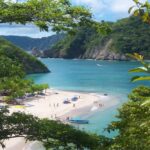
The Central Pacific’s defining ecological asset is water in every form it takes. The rivers flowing west out of the Talamanca range feed some of the most accessible waterfall systems in the country, and the ocean itself offers surfing, kayaking, snorkeling, and sport fishing within minutes of Jacó’s main street. A well-built Central Pacific itinerary weaves these water-based experiences together rather than treating them as isolated events.
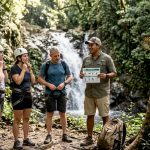
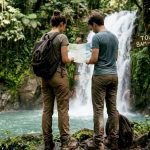
Waterfall trekking deserves particular attention because it’s consistently the experience that surprises visitors most. People arrive expecting the ocean — Costa Rica’s Pacific beaches are world-famous — but they leave talking about the waterfalls. The reason is immersion: a guided waterfall hike takes you through active rainforest, exposes you to wildlife corridors, and delivers you to places that feel genuinely remote even when they’re 45 minutes from your hotel. The sound of a significant waterfall in full flow, the temperature drop as you approach the pool beneath it, the clarity of the water — these are sensory experiences that photographs fail to convey.
Key Waterfall Systems to Prioritize
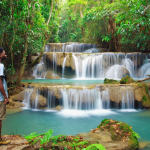
The Central Pacific region contains several waterfall destinations worth anchoring your itinerary around. La Cangreja Waterfall, located within Carara National Park’s extended trail network, is one of the most photogenic in the region — a single-drop cascade into a blue-green pool surrounded by primary forest. The hike to reach it passes through transitional forest where you’re likely to encounter scarlet macaws, which nest in the Carara corridor in numbers unmatched anywhere else in the country.
Further inland, the river systems feeding into the Central Pacific watershed offer multi-waterfall trekking routes where a single guided excursion might take you past three or four distinct falls in a half-day. These are the experiences that specialized operators have mapped out over years of local knowledge — trails that don’t appear on mainstream apps, access that requires relationships with local landowners, and route knowledge that changes with seasonal water levels.
For ocean-side water experiences, the estuaries of the Tárcoles River offer boat-based wildlife tours that combine river ecology with Pacific coastline access. American crocodiles in the Tárcoles are among the largest in Central America, and a river tour here is one of those experiences that simultaneously thrills and humbles — a reminder that the ecosystem around Jacó operates on a scale that dwarfs human activity.
How to Sequence Water Experiences
A practical sequencing principle: put your most physically demanding experiences early in the week, when energy is highest and jet lag has cleared. A challenging waterfall trek on day two or three, followed by a more relaxed river boat tour on day four, and a beach morning on day five, creates a natural arc that peaks in physical intensity and ends in recovery. Avoid the common mistake of saving the “best” experience for the last full day — tour cancellations due to weather, minor injuries, or logistics issues are more disruptive when there’s no buffer.
3. Select Your Tour Operator Before Anything Else — This Decision Outweighs All Others
The single decision that most directly determines the quality of your Costa Rica adventure is which operator you trust with your experience. No itinerary, however well-designed, survives a poorly executed tour. Conversely, a skilled guide with deep local knowledge can turn a standard waterfall hike into a transformative encounter with Costa Rican biodiversity. This choice deserves more research time than most travelers give it.
Costa Rica’s adventure tourism industry is regulated at several levels. The Instituto Costarricense de Turismo (ICT) licenses tour operators and maintains standards for safety equipment, guide certification, and operational practices. Legitimate operators will have an ICT license number they’re willing to share, and verifying this takes less than five minutes on the ICT website. This is your baseline filter — any operator unwilling to provide their ICT credentials should be immediately disqualified.
What to Look for Beyond Licensing
Licensing is a floor, not a ceiling. Above that floor, the differentiators that actually predict experience quality include:
- Guide specialization: A naturalist guide trained in the specific ecosystems you’ll be visiting is categorically more valuable than a generalist. For waterfall trekking in the Central Pacific, look for guides with knowledge of Carara’s avifauna and the specific trail systems around Jacó — not guides who rotate between beach tours and ziplines without deep expertise in any.
- Group size limits: Smaller groups have better wildlife encounter rates, more personalized safety attention, and more meaningful interactions with guides. Ask operators directly what their maximum group size is and why.
- Safety equipment standards: Helmets, harnesses, water shoes, life vests — depending on the activity, the quality and condition of safety equipment varies significantly between operators. Established companies with strong review records invest in equipment maintenance because they understand the reputational and legal stakes.
- Verified review consistency: Look at the full distribution of reviews, not just the average. An operator with 500 five-star reviews accumulated over three years is a fundamentally different proposition than one with 50 reviews and a spike of activity in the past few months. Costa Rica Waterfall Tours, for example, has built its reputation precisely through this kind of consistent, verifiable track record across hundreds of guided experiences.
The Ecotourism Certification Layer
Costa Rica’s Certificación para la Sostenibilidad Turística (CST) is a government-administered certification that evaluates tourism businesses on their environmental, social, and economic sustainability practices. CST-certified operators have been independently assessed — not simply self-declared — and the certification is tiered, with higher levels indicating more rigorous sustainable practices. For travelers whose choice to visit Costa Rica is partly motivated by ecological values, CST certification is a meaningful signal worth checking.
The Bandera Azul Ecológica program, while primarily associated with beach water quality, extends to tourism operations and community environmental programs. Together, these certifications give you a framework for evaluating whether an operator’s sustainability claims have any institutional backing — important in a country where “eco” is sometimes more marketing language than operational commitment.
4. Master the Logistics of Getting Around — Transportation Shapes Every Day
Transportation in the Central Pacific is the variable that most frequently derails well-planned itineraries. Understanding your options — and their trade-offs — before you arrive prevents the kind of last-minute scrambling that wastes hours of prime adventure time.
The Costanera Sur highway (Route 34) is the main arterial road connecting Jacó north to Tárcoles, Carara, and San José, and south to Quepos and Manuel Antonio. It’s a paved, two-lane highway in generally good condition, though passing through towns like Parrita and Quepos adds time. Driving times on this route are roughly predictable, but the surrounding secondary roads — the ones leading to trailheads, waterfall access points, and rural lodges — vary from well-maintained gravel to routes that require a 4×4 vehicle and local knowledge.
Your Three Realistic Transport Options
Option 1: Arrange transport through your tour operator. This is the highest-value choice for adventure days. Established operators like Costa Rica Waterfall Tours typically include transport from Jacó in their packages, meaning you’re not navigating unfamiliar roads, dealing with parking at remote trailheads, or managing the logistics of multiple pickup points. For waterfall tours specifically, this matters because access roads near trailheads are often unmarked and require local knowledge to navigate correctly.
Option 2: Rent a vehicle. A rental gives you flexibility for non-tour days — beach exploration, town hopping, spontaneous roadside stops. If you rent, choose a 4×4 or AWD vehicle regardless of what the rental company suggests. The Central Pacific’s secondary roads, especially during the rainy season, regularly defeat two-wheel-drive vehicles, and the recovery costs far exceed the rental upgrade premium. Book through a reputable agency in Jacó or through your accommodation — avoid airport-only rentals that lock you into returning to San José.
Option 3: Public buses and shared shuttles. The public bus network connecting Jacó to San José (Terminal Coca-Cola), Quepos, and Puntarenas is reliable, affordable, and genuinely functional for budget travelers or those making straightforward inter-city moves. Shared shuttles (operated by companies like Interbus and Monkey Ride) bridge the gap between public buses and private transfers — they’re more flexible than buses, more affordable than private cars, and operate on schedules that can be booked in advance online.
The Rainy Season Road Reality
If you’re visiting during the green season (May through November), build extra time into every transit plan. Tropical downpours can temporarily flood low-lying sections of secondary roads, slow highway traffic significantly, and occasionally make trailhead access routes impassable for a few hours. This isn’t a reason to avoid the rainy season — waterfall flows are most spectacular precisely because of the rainfall — but it does mean that tight back-to-back scheduling is risky. Leave buffer time between activities, and choose operators who have contingency plans for weather-related delays.
5. Understand Costa Rica’s Protected Area System — It Governs Where You Can Go
Costa Rica has placed more than 25% of its national territory under some form of protected status, and the rules governing access to these areas directly affect your adventure planning. Understanding the framework helps you avoid disappointment, plan around permit requirements, and appreciate why certain experiences require advance booking rather than spontaneous arrival.
The primary administrative body is SINAC (Sistema Nacional de Áreas de Conservación), which manages the national park system, wildlife refuges, and biological reserves under the SINAC national conservation network. Within the Central Pacific region, the most relevant protected areas include:
- Carara National Park (Puntarenas province): One of the most accessible national parks in Costa Rica, located just north of Jacó on the Tárcoles River estuary. Carara sits at the ecological transition between the dry forests of Guanacaste and the humid forests of the southern Pacific — a rare overlap that produces extraordinary biodiversity. Entry requires payment of the national park fee, and guided entry with a licensed naturalist guide is strongly recommended for wildlife encounters.
- Manuel Antonio National Park (Puntarenas/Quepos area): The most visited national park in Costa Rica, for good reason — its combination of primary forest, beach, and marine protected area is genuinely unmatched. Critically, Manuel Antonio has daily visitor caps enforced strictly, and the park closes on Tuesdays. Advance online reservation is mandatory and regularly sells out during high season. Building a Manuel Antonio day into your itinerary without a confirmed reservation is a planning mistake.
- Reserva Biológica Carara and surrounding private reserves: Much of the waterfall trekking in the Central Pacific region occurs on private land adjacent to or bordering protected areas. This is why operator relationships matter — access to the best waterfall trails often depends on agreements between tour operators and local landowners, not on public access rights.
The Ley de Biodiversidad and What It Means for Travelers
Costa Rica’s Ley de Biodiversidad (No. 7788) governs the protection of biological diversity and establishes that wildlife, plants, and ecosystems within protected areas are national heritage — not resources available for extraction or disturbance. In practical terms, this means collecting plants, disturbing wildlife, removing rocks from riverbeds, and feeding animals are all illegal activities in national parks and protected areas. Responsible operators enforce these rules actively, and travelers should understand them before they arrive — not because enforcement is always visible, but because the legal and ecological stakes are genuine.
6. Match Activities to Fitness Levels — Honestly
The greatest source of negative adventure travel experiences in Costa Rica is the mismatch between what travelers think they can handle and what activities actually demand physically. This isn’t about discouraging ambition — it’s about planning honestly so that every member of your group can participate fully and safely.
Waterfall trekking in the Central Pacific spans a wide fitness spectrum. Some routes are genuinely accessible to families with children aged eight and up, featuring maintained trails, moderate elevation gain, and minimal technical terrain. Others involve river crossings, steep scrambling on wet rock, and sustained uphill hiking in high humidity and heat — conditions that demand a meaningful level of cardiovascular fitness and prior hiking experience.
A Practical Fitness Framework for Central Pacific Adventures
When evaluating tours, ask operators to describe activities in terms of:
- Trail duration and distance: Total round-trip time on foot, not just one-way distance
- Elevation change: Cumulative gain/loss in metres — not just “moderate” or “challenging”
- Technical terrain: Whether the route involves river crossings, rope assists, or scrambling
- Heat and humidity exposure: Jacó sits at low elevation (essentially sea level) and the surrounding jungle environment creates humidity levels that substantially increase perceived exertion — a trail that feels easy at home in cooler, drier conditions may feel significantly harder here
Costa Rica Waterfall Tours structures its offerings to accommodate this range explicitly — from family-accessible waterfall hikes suitable for children and older adults to more demanding multi-waterfall trekking routes for visitors who want a genuine physical challenge. The key is communicating honestly with your operator about your group’s fitness profile before booking. A five-star experience for a group of experienced hikers may be an exhausting ordeal for a mixed group with varying abilities.
Acclimatization Matters
If you’re arriving from a cold climate or high altitude, allow a day of acclimatization before your most physically demanding activity. The combination of tropical heat (Jacó regularly reaches 32–35°C during the dry season), high humidity, and unfamiliar terrain creates an aerobic demand that catches many visitors off guard on day one. A beach morning or light cultural activity on your arrival day, followed by a moderately demanding tour on day two, and your most challenging trek on day three, creates a physiological ramp-up that improves performance and reduces injury risk.
7. Plan Around the Seasons — Not Despite Them
The most experienced Costa Rica travelers don’t avoid the rainy season — they exploit it. Understanding what each season actually delivers, rather than defaulting to the assumption that dry equals better, opens up options that most tourists never consider and often produces the most memorable experiences.
The dry season (December through April, verano) delivers reliable sunshine, lower humidity, easier road conditions, and beach days that match the postcard imagery. It’s also the most crowded and most expensive period to visit, with accommodation and tour prices reflecting peak demand. Booking lead times are longer, popular national parks hit their daily visitor caps earlier in the day, and the social fabric of Jacó has a distinctly tourist-heavy character that some travelers find energizing and others find overwhelming.
The green season (May through November, invierno) brings daily rainfall — typically in the afternoons, leaving mornings reliably clear — and with it, the full expression of Costa Rica’s ecosystem. Waterfalls run at their maximum volume and drama. The forest is explosively green. Wildlife activity increases as animals respond to the abundance of water and food. Prices drop meaningfully, crowds thin dramatically, and the country feels more authentically itself. The trade-off is unpredictable logistics and the occasional full-day rain event that requires flexibility.
The Sweet Spots No One Talks About
The transitional shoulder months — particularly May and November — offer a genuinely compelling combination of conditions. Early May sees the first rains refreshing the landscape while the heat of the dry season hasn’t fully broken. November catches the tail of the rainy season with waterfalls still flowing strongly but weather patterns becoming more manageable. Both months typically offer lower prices than peak dry season while delivering better natural spectacle than the height of summer.
For waterfall-focused itineraries specifically, October through January is arguably the optimal window — the end of the rainy season ensures maximum waterfall flow while the transitioning weather gradually improves. This is the kind of insider timing that operators with years of on-the-ground experience communicate to their guests, and it’s the kind of detail that separates a good trip from a genuinely exceptional one.
8. Budget Intelligently — The Costs That Surprise People
Costa Rica is not a budget destination, and travelers who arrive expecting Southeast Asia prices leave frustrated. It is, however, a destination where smart spending decisions dramatically improve the value of your experience — because the difference between a mediocre operator and an excellent one, in terms of tour price, is often smaller than people expect.
A realistic daily budget for a mid-range Central Pacific adventure trip in 2026 includes accommodation, meals, tour costs, transportation, and incidentals. Jacó has a wide accommodation range — from hostels and budget guesthouses priced in colones for local travelers to boutique hotels and beachfront properties priced in USD for international visitors. Tour costs vary significantly by activity type, group size, and operator quality.
Where to Spend More
Tours and guides: This is the single category where underinvesting has the clearest consequences. A cheaper waterfall tour run by an unlicensed operator without a certified naturalist guide will deliver you to the same waterfall — but you’ll miss the ecological context, the wildlife encounters, the safety protocols, and the storytelling that transforms a hike into an education. The price differential between a budget operator and a quality one is rarely large enough to justify the trade-off in experience quality.
Accommodation with strategic location: Paying a modest premium to stay within walking distance of Jacó’s main strip — where tour operators, restaurants, and transport options are concentrated — saves significant time and incidental transport costs over the course of a week.
Where to Spend Less
Meals: The soda culture in Costa Rica — small family-run restaurants serving traditional casados (rice, beans, protein, salad) — delivers excellent, filling, affordable meals that often outperform tourist-oriented restaurants on quality. A casado in a local soda in Jacó or Tárcoles will cost a fraction of the price of a tourist-menu meal and give you a more authentic experience of Costa Rican food culture.
Souvenirs and trinkets: The roadside and beach souvenir market is heavily tourist-priced. If you want meaningful keepsakes, look for locally made crafts at the weekend markets in nearby towns, or purchase directly from artisans rather than through hotel gift shops.
9. Prepare Your Body and Gear — What to Bring That Actually Matters
Gear preparation for a Central Pacific adventure is less about specialized equipment and more about choosing the right basics for a hot, humid, wet environment. The most common gear mistakes travelers make — bringing the wrong footwear, underpacking sun protection, or overpacking clothing — are all easily avoided with a little advance thinking.
The Non-Negotiable Gear List
Footwear is the most important gear decision for waterfall trekking. Dedicated water shoes with rubber soles — not flip-flops, not trail runners, not sandals with fabric straps — are essential for river crossings and wet rock surfaces. Many operators provide water shoes or rent them, but bringing your own ensures a correct fit. If you’ll be doing dry-trail hiking as well, a pair of lightweight trail shoes with aggressive rubber soles rounds out your footwear needs.
Sun protection in a rainforest context is counterintuitive to some travelers — the canopy provides shade, so many people underestimate UV exposure. River crossings, open ridgelines, and boat-based tours expose you to direct equatorial sun, and the reflection from water surfaces intensifies this significantly. Reef-safe sunscreen is not just an ethical preference in Costa Rica — operators working near protected marine and freshwater ecosystems actively encourage it, and some require it. Research on chemical sunscreen and reef ecosystems supports this approach.
Dry bags or waterproof pouches for electronics are essential for any water-adjacent activity. The Central Pacific’s combination of humidity, river crossings, and tropical downpours makes moisture protection for cameras, phones, and passports a practical necessity rather than an optional upgrade.
Hydration: A reusable water bottle with a filter capacity (like a LifeStraw or Sawyer filter bottle) allows you to refill from natural water sources on longer hikes, reducing plastic waste — consistent with the ecotourism values that responsible operators promote — and ensuring you can stay hydrated on extended routes where resupply points don’t exist.
What Not to Bring
Leave cotton clothing at home. Cotton absorbs moisture, retains it, becomes heavy, and provides no insulation when wet — in a humid jungle environment, this creates discomfort and increases chafing and blister risk on longer hikes. Lightweight synthetic or merino wool base layers dry quickly and maintain their functional properties when wet. A single lightweight waterproof shell jacket, compressible enough to fit in a small daypack, handles the afternoon rain events that characterize the green season without the weight of full rain gear.
10. Capture It Right — Photography Strategy for Waterfall Adventures
Waterfall photography in the Central Pacific is one of the most rewarding and technically interesting subjects in adventure travel, but it requires specific preparation to execute well. The combination of high contrast, moving water, dense forest, and unpredictable light creates conditions that defeat default camera settings — and produce extraordinary results when approached with intention.
The fundamental technique for compelling waterfall photography is a slow shutter speed — typically between 1/4 and 1/2 second — which renders the falling water as a smooth, silky flow rather than a frozen spray. This requires a stable surface or small tripod, a camera with manual exposure controls, and a low ISO setting. Most modern smartphones can achieve this effect using their built-in “long exposure” or “night mode” settings, but the results are more consistent and controllable with a dedicated camera.
Timing and Light
The best waterfall photography light in the Central Pacific occurs in the two hours after sunrise and the hour before sunset — the classic golden hours apply here as powerfully as anywhere. Midday light in a tropical forest is harsh and creates deep shadow contrast that’s difficult to expose correctly. On guided tours, the departure time is usually determined by logistics (early starts to beat heat and crowds), which often means arriving at waterfalls in the morning when light quality is at its best.
Overcast conditions — common during the green season — are actually ideal for waterfall photography because they act as a giant diffuser, eliminating harsh shadows and producing even, saturated color across the entire frame. Many of the most compelling waterfall images from Costa Rica were shot on overcast days that most tourists would have considered disappointing weather.
Protecting Your Equipment
Waterfall environments are brutally wet. The mist radius around a significant waterfall can extend 20–30 metres, and the humidity in the surrounding forest keeps surfaces perpetually damp. Use a rain cover for your camera bag, keep a microfiber cloth accessible for lens cleaning, and consider a UV filter as a sacrificial layer of protection for your front element. Silica gel packets in your camera bag help manage humidity during storage — a detail that protects expensive equipment over the course of a multi-week trip.
Frequently Asked Questions About Planning a Central Pacific Costa Rica Adventure
What is the best time of year to visit Jacó and the Central Pacific for adventure tours?
The dry season (December–April) offers the most reliable weather and easiest logistics, making it the most popular period. However, the green season (May–November) delivers the most dramatic waterfall flows and the most lush, vibrant forest conditions. Shoulder months — particularly November and May — offer a compelling balance of conditions and lower prices. For waterfall-focused trips, the tail end of the rainy season (October–November) is arguably the best window.
How far is Jacó from San José International Airport?
Jacó is approximately 100 kilometers southwest of Juan Santamaría International Airport in Alajuela. The drive takes 90 minutes to two hours depending on traffic, using the Costanera Sur highway (Route 34). Private transfers, shared shuttles, and public buses all serve this route. It’s one of the shortest airport-to-beach-destination transfers in Costa Rica.
Do I need to be physically fit for waterfall tours in the Central Pacific?
It depends on the specific tour. Reputable operators like Costa Rica Waterfall Tours offer a range of difficulty levels, from family-friendly hikes accessible to children and older adults to more challenging multi-waterfall trekking routes. Be honest with your operator about your group’s fitness profile before booking so they can match you to the right experience. Waterfall environments involve wet, sometimes slippery terrain regardless of difficulty level — appropriate footwear is essential.
Is Costa Rica safe for adventure tourism?
Costa Rica has a well-developed adventure tourism safety infrastructure. The ICT (Instituto Costarricense de Turismo) licenses operators and sets safety standards. When you book with an ICT-licensed operator who employs certified guides and maintains proper safety equipment, the risk profile of activities like waterfall trekking and river tours is well-managed. The key is choosing licensed, reviewed operators rather than informal or unlicensed providers.
What should I pack specifically for waterfall tours in Jacó?
The essentials are: water shoes with rubber soles, quick-dry clothing (avoid cotton), reef-safe sunscreen, a dry bag for electronics, a reusable water bottle, and a lightweight rain jacket. Many operators provide helmets, harnesses, and life vests where required. Confirm with your operator what equipment is provided versus what you need to bring when booking.
Can cruise ship passengers do waterfall tours from Puerto Caldera or Puntarenas?
Yes. The port of Puerto Caldera (near Puntarenas) is approximately 40–50 kilometers north of Jacó, making it a realistic departure point for day tours to the Central Pacific waterfall corridor. Cruise passengers with shore excursion time should book in advance — same-day availability with quality operators is not guaranteed, especially during peak season. Confirm transfer times carefully against your ship’s all-aboard deadline, and choose operators with a specific track record of serving cruise passengers.
What is the difference between Carara National Park and Manuel Antonio National Park?
Carara is a transitional forest park known for its scarlet macaw population and relatively uncrowded trails — located just north of Jacó, it’s easily combined with other Central Pacific activities. Manuel Antonio is further south near Quepos, features a combination of forest and beach, and is the most visited national park in Costa Rica — it requires advance reservation and has daily visitor limits. Both are worth visiting, but they offer distinctly different experiences.
Do I need travel insurance for adventure activities in Costa Rica?
Yes. Standard travel insurance often excludes “adventure activities” — you need a policy that explicitly covers activities like waterfall trekking, river tours, and zip-lining. Policies from providers like World Nomads are specifically designed for adventure travelers and cover medical evacuation — an important consideration in remote areas of the Central Pacific. Confirm coverage details before departure, not after an incident.
How much should I budget per day for a Central Pacific adventure trip in 2026?
Mid-range travelers typically spend between $100–$200 USD per day including accommodation, meals, and one guided activity. Budget travelers staying in hostels and eating at local sodas can manage on less; luxury travelers or those doing multiple guided tours per day will spend more. Tour costs vary by operator and activity type — quality guided waterfall tours represent excellent value relative to the experience they deliver.
Are there family-friendly waterfall tours available near Jacó?
Yes. Costa Rica Waterfall Tours and other reputable operators offer waterfall experiences specifically designed for families with children. These routes feature maintained trails, moderate terrain, and activities that engage younger visitors without demanding adult-level fitness. Specify the ages of children in your group when inquiring — operators can match you to routes where the experience is genuinely appropriate and enjoyable for all ages.
What languages do tour guides speak in the Central Pacific region?
English is widely spoken by guides working with established adventure tour operators in Jacó — the area’s long history as an international tourist destination means bilingual guides are standard practice. Many guides also speak basic German, French, or Italian. If you require a guide fluent in a language other than English or Spanish, confirm availability when booking rather than assuming.
How do I verify that a tour operator is legitimate and ICT-licensed?
Ask the operator directly for their ICT license number and verify it on the ICT official website. Additionally, look for a consistent review history on multiple platforms (Google, TripAdvisor, Viator), check that the operator has a physical address in Costa Rica, and confirm that they carry liability insurance. Legitimate operators are transparent about all of these details — any hesitation to provide them is a meaningful warning sign.
The Bottom Line: Your Central Pacific Adventure Starts With the Right Decisions
The Central Pacific region of Costa Rica is not a difficult place to have a good time — the raw materials for an extraordinary adventure are simply too abundant for that. But there’s a real difference between a good trip and a genuinely memorable one, and that difference almost always traces back to the decisions made before departure: which base you chose, which operator you trusted, how you matched activities to your group’s actual capabilities, and whether you built your itinerary around the season’s strengths rather than against its limitations.
Jacó, for all its evolution from surf town to adventure hub, still rewards travelers who engage with it intentionally. The waterfalls in the surrounding jungle, the macaws in the Carara corridor, the crocodiles in the Tárcoles estuary, the Pacific swells rolling into Playa Hermosa — these aren’t manufactured attractions. They’re the outputs of one of the most biodiverse ecosystems on the planet, accessible to visitors who take the time to approach them with the right preparation and the right guides.
The ten principles in this guide are ordered by impact because that’s how planning decisions actually work — the early choices constrain and enable everything that follows. Get your base right, build around water, choose your operator with the seriousness the decision deserves, and the rest of the logistics fall into place with surprising ease. Costa Rica’s adventure tourism infrastructure, at its best, is world-class. Your job is to engage with the best of it.
If you’re ready to start building your Central Pacific itinerary around a waterfall experience you’ll be talking about for years, Costa Rica Waterfall Tours is the starting point — five-star reviewed, ICT-compliant, and built by people who have been running these routes long enough to know every river crossing, every wildlife corridor, and every lighting angle that makes a waterfall photograph unforgettable. Your adventure in 2026 starts with the right first call.