Seeking adventure in Costa Rica often means choosing between adrenaline-packed moments and a desire to protect wild places. Sustainable adventure travel offers a solution by merging meaningful exploration with eco-conscious values. For North American travelers drawn to waterfall and canyoning tours near Jacó, this approach delivers unforgettable experiences while supporting local communities and minimizing environmental impact. Discover how responsible travel practices can transform your next outdoor adventure into a force for good.
Table of Contents
- Defining Sustainable Adventure Travel
- Types Of Eco-Friendly Adventure Activities
- Principles Of Responsible Travel Operations
- Risks And Environmental Impacts To Avoid
- Supporting Local Communities And Conservation
Key Takeaways
| Point | Details |
|---|---|
| Sustainable Adventure Travel Focuses on Responsibility | This approach prioritizes minimizing environmental impact and maximizing positive interactions with local communities and cultures. |
| Active Participation in Conservation | Travelers are encouraged to engage actively with ecosystems and contribute to positive changes in the regions they visit. |
| Support Local Economies | Sustainable travel practices include supporting local economies and helping preserve cultural heritage by choosing local operators. |
| Awareness of Environmental Risks | Travelers must understand and mitigate potential environmental risks associated with adventure tourism for responsible engagement. |
Defining Sustainable Adventure Travel
Sustainable adventure travel represents a profound shift in how travelers engage with destinations, focusing on minimizing environmental impact while maximizing meaningful experiences. This innovative approach transforms traditional tourism by integrating ecological responsibility with immersive cultural exploration.
At its core, sustainable adventure travel goes far beyond typical sightseeing. Transformative travel practices emphasize creating positive impacts for local communities, protecting natural ecosystems, and providing travelers with deeply authentic experiences. The concept involves several key principles:
- Minimizing environmental footprint through conscious travel choices
- Supporting local economies and indigenous communities
- Preserving cultural heritage and biodiversity
- Promoting educational exchanges between travelers and local populations
- Encouraging responsible interactions with natural environments
The World Economic Forum highlights that sustainable adventure travel is not just an emerging trend, but a critical evolution in global tourism. Resilient travel approaches are designed to balance economic benefits with environmental stewardship, creating a holistic model that supports both human and ecological well-being.
Here’s a comparison of traditional tourism and sustainable adventure travel approaches:
| Aspect | Traditional Tourism | Sustainable Adventure Travel |
|---|---|---|
| Main Focus | Recreation and sightseeing | Conservation and cultural immersion |
| Economic Impact | Often benefits large operators | Supports local communities |
| Environmental Approach | Can be high-impact | Minimizes ecological footprint |
| Traveler Role | Passive observer | Active contributor and learner |
Adventure travelers seek more than traditional tourist experiences – they want meaningful connections with destinations that respect local ecosystems and cultures. This approach transforms travel from a passive consumption activity into an active, responsible engagement with the world.
Pro tip: Research tour operators committed to sustainable practices and community support before booking your next adventure travel experience.
Types Of Eco-Friendly Adventure Activities
Eco-friendly adventure activities represent a dynamic approach to experiencing natural environments while maintaining a commitment to conservation and local community support. These carefully designed experiences allow travelers to engage deeply with destinations without causing environmental harm.
Sustainable outdoor pursuits encompass a wide range of activities that balance environmental protection with immersive travel experiences. In Costa Rica, these activities typically include:
- Wildlife viewing and photography
- Hiking through tropical rainforests
- Kayaking and marine ecosystem exploration
- Zip-lining in protected forest reserves
- Cultural immersion experiences with indigenous communities
- Citizen science and conservation volunteering
Responsible wildlife observation practices are particularly crucial in destinations like Costa Rica, where biodiversity is paramount. These activities prioritize minimal environmental disturbance, ensuring that wildlife and natural habitats remain undisturbed while providing travelers with meaningful connections to the ecosystem.

Each eco-friendly adventure activity is carefully designed to create positive impacts. By supporting local economies, promoting environmental education, and encouraging responsible interactions with natural environments, travelers become active participants in conservation efforts rather than passive observers.
Pro tip: Choose adventure tour operators that demonstrate clear commitments to environmental sustainability and local community support.
Principles Of Responsible Travel Operations
Responsible travel operations represent a comprehensive approach to tourism that goes beyond traditional business models, integrating social, environmental, and economic considerations into every aspect of travel experiences. These principles transform tourism from a transactional industry into a powerful force for positive global change.
Sustainable travel management encompasses several critical principles that guide ethical and environmentally conscious travel practices:
- Minimizing environmental impact
- Supporting local economies
- Protecting cultural heritage
- Promoting fair labor practices
- Ensuring transparent business operations
- Prioritizing traveler and community well-being
Global tourism sustainability strategies emphasize the importance of stakeholder collaboration and resource management. These principles require travel operations to think holistically about their impact, considering not just immediate economic gains but long-term ecological and social consequences.
Successful responsible travel operations recognize that sustainability is not a marketing strategy, but a fundamental operational philosophy. By integrating environmental stewardship, cultural respect, and economic fairness, these organizations create transformative experiences that benefit travelers, local communities, and global ecosystems.
Pro tip: Always verify a travel operator’s sustainability credentials and commitment to responsible practices before booking your adventure.
Risks And Environmental Impacts To Avoid
Adventure tourism carries significant environmental risks that demand careful consideration and proactive management. Understanding these potential impacts is crucial for travelers and tour operators committed to preserving natural ecosystems and local communities.
Adventure tourism environmental challenges encompass multiple critical areas of concern, including:
- Wildlife habitat disruption
- Trail and ecosystem erosion
- Pollution from tourist activities
- Introduction of invasive species
- Waste management complications
- Socioeconomic pressures on local communities
Ecosystem conservation strategies emphasize the importance of targeted interventions to minimize tourism’s negative consequences. These approaches require comprehensive monitoring, visitor education, and strict regulatory frameworks to protect sensitive natural environments.
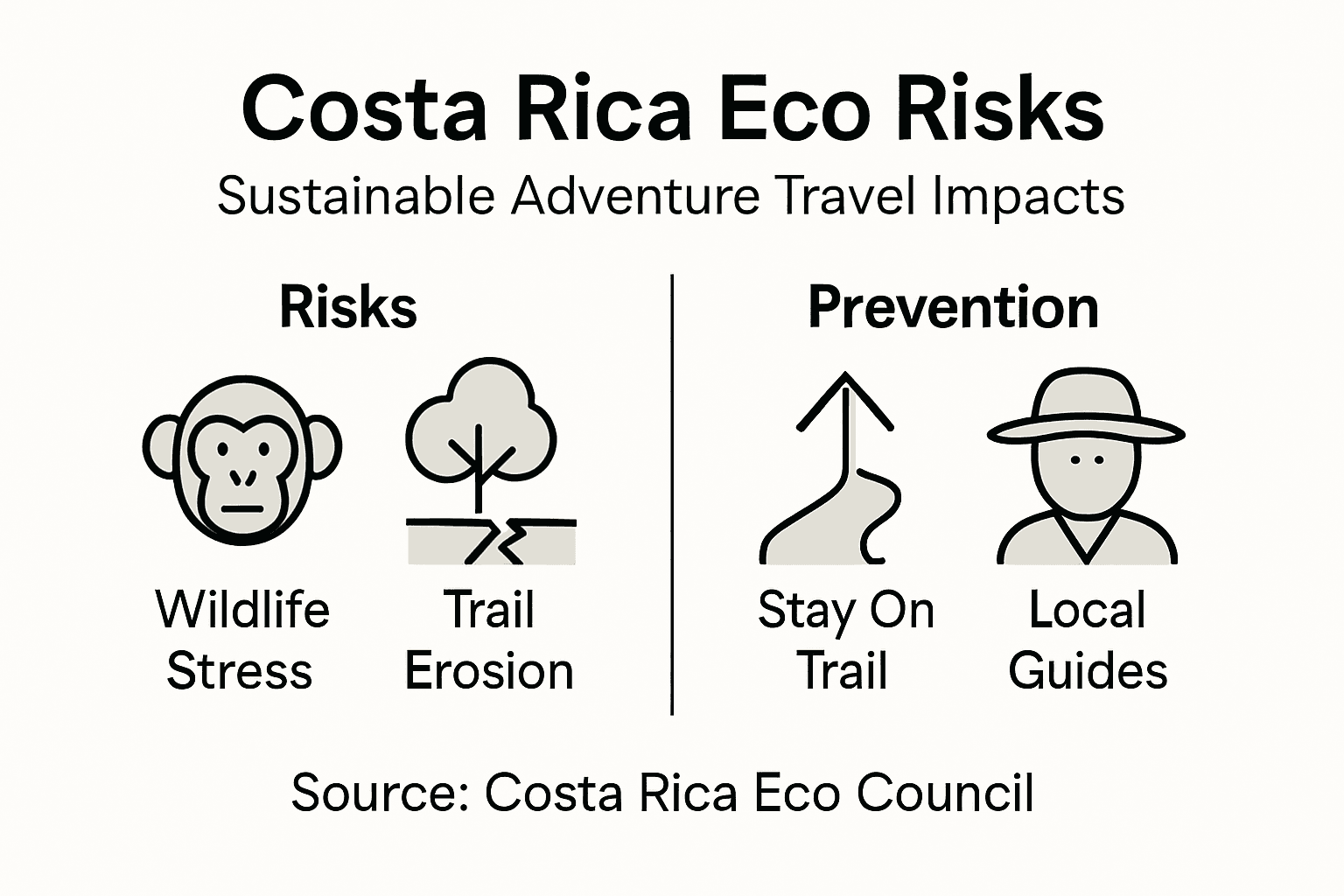
Responsible travelers must recognize that their individual actions contribute to broader environmental impacts. By understanding and actively mitigating potential risks, adventurers can transform tourism from a potentially destructive activity into a force for conservation and positive community engagement.
Pro tip: Always follow designated trails, practice leave-no-trace principles, and engage with local conservation guidelines during your adventure travels.
Supporting Local Communities And Conservation
Community-centered tourism represents a transformative approach to sustainable travel, where visitors become active participants in preserving local ecosystems and supporting indigenous populations. This model goes beyond traditional tourism by creating meaningful connections between travelers, local communities, and their natural environments.
Sustainable tourism development involves strategic engagement that empowers local residents through multiple pathways:
- Creating economic opportunities
- Preserving cultural traditions
- Generating alternative income streams
- Protecting traditional environmental knowledge
- Developing local infrastructure
- Promoting community-led conservation initiatives
Community-led sustainable tourism generates profound impacts that extend far beyond simple economic transactions. By valuing indigenous practices and traditional ecological understanding, these approaches transform tourism into a powerful tool for biodiversity conservation and cultural preservation.
Successful community support requires genuine collaboration, mutual respect, and long-term commitment. Travelers must approach these interactions as opportunities for cultural exchange and shared learning, recognizing that local communities are the true stewards of their environments.
Below is a summary of positive outcomes from supporting local communities in eco-tourism:
| Outcome Type | Example Benefit | Long-Term Effect |
|---|---|---|
| Economic | New jobs for locals | Community prosperity |
| Cultural | Preservation of traditions | Stronger cultural identity |
| Ecological | Improved conservation efforts | Healthier natural habitats |
Pro tip: Choose tour operators that demonstrate transparent, equitable partnerships with local communities and prioritize community-driven conservation efforts.
Experience Sustainable Adventure with Costa Rica Waterfall Tours
The article highlights the growing need for sustainable adventure travel that preserves Costa Rica’s wild beauty while offering authentic cultural and ecological experiences. Many travelers face the challenge of finding adventure tours that minimize environmental impact and actively support local communities. If you are seeking thrilling outdoor activities that align with principles like conservation, cultural immersion, and responsible travel operations you will appreciate what Costa Rica Waterfall Tours offers.
Costa Rica Waterfall Tours specializes in adrenaline-pumping experiences such as the famous Jaco Waterfall and Canyoning Tours. These adventures are designed with sustainability in mind, ensuring minimal ecological footprint while supporting the local economy and promoting responsible interaction with nature. To enjoy one of the best adventure tours in Costa Rica that respects the environment and uplifts local communities, explore more at Costa Rica Waterfall Tours. Discover how you can make your next trip both unforgettable and environmentally conscious by booking your tour today.
Ready to embrace true adventure that protects Costa Rica’s wild landscapes? Find out what to do in Costa Rica with tours that prioritize eco-friendliness and community support. Don’t wait—choose Jaco Waterfall and Canyoning Tours now and experience top-rated waterfall adventures while contributing to sustainable travel practices.
Frequently Asked Questions
What is sustainable adventure travel?
Sustainable adventure travel focuses on minimizing environmental impact while maximizing authentic experiences. It involves conserving natural ecosystems and supporting local communities through responsible travel practices.
How can travelers participate in eco-friendly adventure activities?
Travelers can engage in eco-friendly activities such as wildlife viewing, hiking, and cultural immersion experiences while choosing operators that prioritize sustainability and community support.
What are the principles of responsible travel operations?
Responsible travel operations include minimizing environmental harm, supporting local economies, protecting cultural heritage, promoting fair labor practices, and ensuring transparent operations.
What are the environmental impacts associated with adventure tourism?
Adventure tourism can lead to habitat disruption, pollution, ecosystem erosion, and socio-economic pressures. It’s essential for travelers to follow guidelines that mitigate these risks.