Most American adventure travelers seek more than surface-level thrills when visiting Costa Rica, yet only certified local guides can deliver genuine canyoning and waterfall journeys near Jacó. With over 1,000 hours of specialized training required for Costa Rican guides, these professionals offer much more than basic tour commentary. Discover how local expertise elevates your adventure, connects you to hidden landscapes, and transforms each expedition into a truly authentic exploration.
Table of Contents
- Defining Local Guides In Costa Rica Tourism
- Types Of Local Guides And Their Specializations
- How Local Guides Enhance Adventure Experiences
- Safety, Training, And Legal Requirements For Guides
- Economic And Community Impact Of Local Tourism Guides
Key Takeaways
| Point | Details |
|---|---|
| Certification is Essential | Local guides in Costa Rica must undergo rigorous certification, ensuring professionalism and safety in tourism experiences. |
| Diverse Specializations Enhance Experiences | Guides specialize in areas such as nature, culture, and adventure, providing authentic insights and tailored tours. |
| Community Impact is Significant | Local guides drive economic growth in their communities by connecting tourism to local services and preserving cultural heritage. |
| Environmental Stewardship is Key | Guides protect ecosystems and educate travelers, fostering a sustainable tourism model that benefits both nature and communities. |
Defining Local Guides in Costa Rica Tourism
Local guides in Costa Rica represent far more than simple tour facilitators. They are certified professionals who play a critical role in shaping authentic, responsible tourism experiences across the country’s diverse landscapes. Tourist guides in Costa Rica undergo rigorous training and certification processes mandated by the Instituto Costarricense de Turismo, ensuring they possess comprehensive knowledge about the nation’s geography, natural history, and cultural heritage.
These knowledgeable professionals serve multiple crucial functions within Costa Rican tourism. They are environmental stewards who protect wildlife habitats, cultural ambassadors who preserve indigenous traditions, and educational resources who help travelers understand the nuanced ecosystems and social contexts of different regions. By following strict park regulations and sharing deep local insights, guides transform standard tourist visits into meaningful, responsible exploration experiences.
The certification process for Costa Rican local guides is comprehensive and demanding. Candidates must demonstrate proficiency in multiple areas including customer service skills, English language capabilities, safety protocols, and extensive regional knowledge. This ensures that travelers receive not just transportation and basic information, but genuine, professional interpretations of the landscapes, wildlife, and cultural contexts they are experiencing.
Pro Tip: When booking a tour in Costa Rica, always verify your guide’s official certification to guarantee a high-quality, authentic experience.
Types of Local Guides and Their Specializations
Costa Rica’s tourism industry features several specialized guide categories, each offering unique expertise and experiences for travelers. Nature Guides are perhaps the most prominent, focusing on the country’s remarkable biodiversity and ecological systems. These professionals specialize in wildlife identification, ecosystem interpretations, and leading tours through national parks, rainforests, and protected conservation areas.
Another critical category includes Cultural Heritage Guides who provide deep insights into Costa Rica’s rich historical and anthropological landscape. Cultural tourism experts excel at explaining indigenous traditions, local customs, historical sites, and the intricate social dynamics that shape Costa Rican society. They might lead tours through colonial towns, indigenous reserves, or archaeological sites, offering nuanced perspectives beyond typical tourist experiences.
Adventure and activity-specific guides represent another essential specialization. These professionals are trained in specific disciplines like Waterfall Rappelling Guides, Canyoning Guides, Hiking Specialists, and Marine Ecosystem Guides. Each specialization requires unique technical skills, safety certifications, and in-depth knowledge of specific environments and activity protocols. Adventure guides not only ensure traveler safety but also provide technical instruction and environmental education during specialized tour experiences.
Pro Tip: Always inquire about a guide’s specific certification and specialization to ensure you receive the most authentic and knowledgeable tour experience possible.
Here’s a summary of Costa Rica’s main local guide specializations and what they uniquely offer:
| Guide Type | Core Expertise | Typical Activities | Unique Value |
|---|---|---|---|
| Nature Guide | Biodiversity & ecology | National park tours, wildlife spotting | Ecological education, conservation focus |
| Cultural Heritage Guide | History & traditions | Historic sites, indigenous reserves | Cultural interpretation, local customs insight |
| Adventure/Activity Guide | Technical skills & safety | Rappelling, canyoning, marine tours | Activity instruction, risk management |
How Local Guides Enhance Adventure Experiences
Local guides in Costa Rica transform standard adventure experiences into extraordinary journeys through their deep knowledge, safety expertise, and intimate understanding of the environment. Sustainable tourism research demonstrates that these professionals do far more than simply lead tours they actively connect travelers with the intricate ecological and cultural systems of the region.
Beyond navigation and safety, local guides serve as critical environmental interpreters. They provide real-time ecological education, helping travelers understand complex ecosystem interactions, wildlife behaviors, and conservation challenges. When a guide points out a rare bird species or explains the symbiotic relationships between plants and insects, they’re not just sharing information they’re cultivating environmental awareness and inspiring personal connections with nature.

Technical adventure experiences like waterfall rappelling, canyoning, and jungle trekking are dramatically enhanced by local guides’ specialized skills. These professionals possess comprehensive knowledge of terrain, weather patterns, and potential hazards. They understand micro-level environmental conditions that can impact adventure activities, ensuring not just safety but also maximizing the quality of each unique experience. Their expertise allows travelers to push personal boundaries while maintaining essential safety protocols.
Pro Tip: Request a guide’s specific certifications and experience level before booking an adventure tour to ensure the most enriching and secure experience possible.
Safety, Training, and Legal Requirements for Guides
Costa Rica maintains rigorous standards for tourism professionals, with the Costa Rican Tourism Institute establishing comprehensive certification requirements that ensure visitor safety and experience quality. These regulations mandate extensive training encompassing geography, natural history, customer service, emergency response, and legal compliance, creating a professional framework that elevates the entire tourism industry.
The certification process is multifaceted and demanding. Prospective guides must complete over 1,000 hours of specialized study, covering diverse areas such as ecological systems, cultural heritage, first aid, and safety protocols. Different certification categories exist, including general, local, naturalist, and adventure guide designations, each requiring specialized knowledge and demonstrating the country’s commitment to professional development and expertise.
Legal requirements extend beyond basic training. Guides must fulfill tax obligations, maintain social security contributions, and continuously update their skills through ongoing education programs. While certification is technically optional, most professional tour operators and national parks require guides to hold official credentials, effectively making these qualifications a practical necessity for anyone serious about guiding in Costa Rica’s complex and delicate environments.
Pro Tip: Always verify a guide’s current certification and ask about their recent training to ensure you’re receiving a professionally qualified and up-to-date tourism experience.
The following table compares key certification and legal requirements for local guides in Costa Rica:
| Requirement Area | Details | Impact on Tourism |
|---|---|---|
| Training Hours | Over 1,000 hours required | Ensures high professionalism |
| Knowledge Domains | Geography, safety, culture, ecology | Guarantees well-rounded expertise |
| Legal Obligations | Tax and social security compliance | Supports guide livelihood and accountability |
| Ongoing Education | Required for most guides | Keeps skills current and tours safe |
Economic and Community Impact of Local Tourism Guides
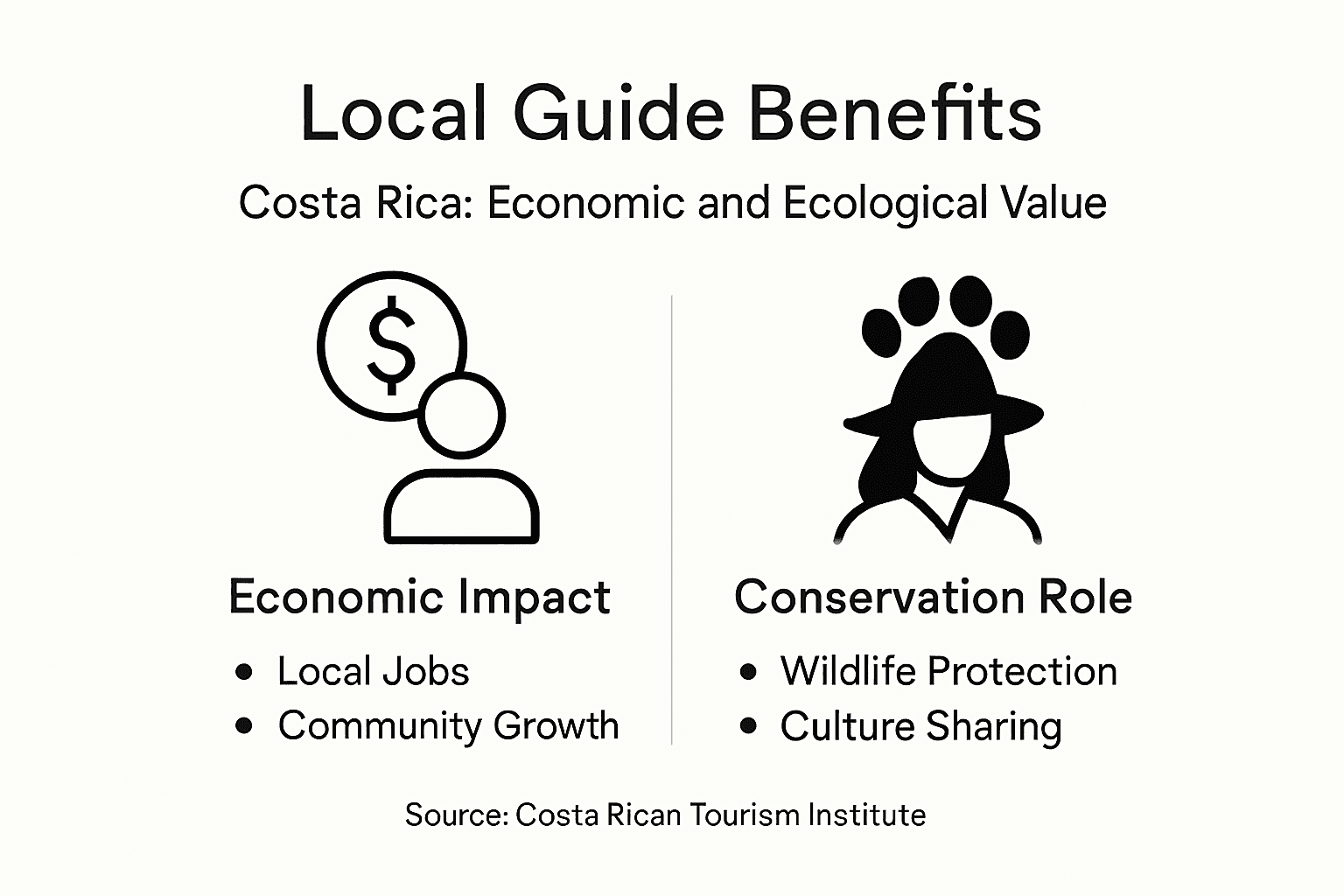
Local tourism guides are pivotal economic drivers in Costa Rica, transforming traditional employment models and creating sustainable opportunities in rural and urban communities. Tourism studies research demonstrates that community-based tourism initiatives generate substantial economic benefits by directly connecting local populations with the global tourism market, enabling individuals to monetize their cultural knowledge and environmental expertise.
These professionals serve as critical economic multipliers, generating income streams that extend far beyond direct guiding services. By facilitating authentic experiences, local guides create economic opportunities for surrounding communities, including local accommodations, restaurants, artisan markets, and transportation services. Their deep understanding of regional ecosystems and cultural landscapes allows them to develop nuanced tour experiences that attract high-value, environmentally conscious travelers willing to invest in meaningful interactions.
Moreover, local guides play a crucial role in biodiversity conservation and cultural preservation. Their economic activities are intrinsically linked to maintaining healthy ecosystems and protecting cultural heritage, creating a sustainable economic model where environmental stewardship and community development are mutually reinforcing. By translating local knowledge into economic value, guides demonstrate how tourism can be a powerful tool for community empowerment and ecological conservation.
Pro Tip: Choose tour operators that prioritize local guide employment and community-based tourism to ensure your travel dollars directly support sustainable local economies.
Experience the True Value of Local Guides with Costa Rica Waterfall Tours
The article highlights how essential certified and specialized local guides are in creating safe, authentic, and meaningful adventure experiences in Costa Rica. If you want to truly connect with the country’s breathtaking landscapes and natural wonders while benefiting from expert safety guidance and ecological insights, it is key to choose tours led by professionals who meet rigorous training and certification standards.
At Costa Rica Waterfall Tours, you get exactly that combination of adventure and trusted expertise. Located in Jacó, our certified guides specialize in thrilling Waterfall and Canyoning Tours tailored to both adrenaline seekers and nature lovers. With a keen focus on safety, environmental stewardship, and local knowledge, our team enhances every moment of your trip.
Don’t just visit Costa Rica. Immerse yourself in its extraordinary ecosystems with guides who care. Discover why we are a top choice for best adventure tours in Costa Rica. Book your tour today to secure an unforgettable experience backed by local expertise you can trust.
Frequently Asked Questions
What certifications do local guides in Costa Rica need to have?
Local guides in Costa Rica must undergo rigorous training and obtain certification from the Costa Rican Tourism Institute. This includes proficiency in geography, natural history, safety protocols, and customer service skills.
How do local guides enhance the tourism experience in Costa Rica?
Local guides provide valuable knowledge about the ecosystems, wildlife, and cultural heritage of Costa Rica, transforming standard tours into enriching and meaningful experiences through education and local insights.
What types of local guides are available in Costa Rica?
Costa Rica features various specialized guides, including Nature Guides, Cultural Heritage Guides, and Adventure Guides. Each type offers unique expertise and focuses on different aspects of tourism, such as biodiversity, history, and adventure sports.
Why is it important to verify a local guide’s certification?
Verifying a local guide’s certification ensures you receive a professional and safe experience. Certified guides have undergone extensive training and are familiar with safety protocols, enhancing both the quality and security of your tour.