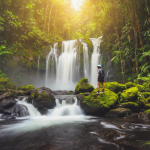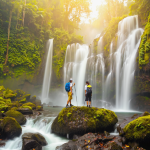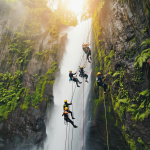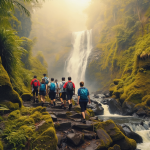
Picture two travelers boarding the same flight to San José. One has a resort reservation and a poolside agenda. The other has a waterproof bag, a trekking permit for Corcovado, and a handwritten list of waterfalls to reach before the rainy season peaks. Both are tourists. But only one is practicing what the global travel industry now recognizes as adventure tourism, a category that has quietly become one of the most economically significant and personally transformative forms of travel on the planet.
Adventure tourism is no longer a niche pursuit reserved for extreme athletes or gap-year backpackers. It has evolved into a mainstream travel philosophy, drawing millions of visitors annually to destinations like Costa Rica, where the intersection of biodiversity, terrain, and ecotourism infrastructure creates conditions that no other country in the hemisphere can fully replicate. Understanding what adventure tourism actually is, what current adventure tourism studies reveal about who participates and why, and how destinations like Costa Rica’s Central Pacific coast fit into the global picture, gives travelers a much richer framework for planning trips that matter.
This article breaks down the concept from first principles, examines the research landscape around adventure travel and tourism, and explores what the adventure tourism industry looks like when you move past the marketing language and into the lived reality of places like Jacó, La Fortuna, and the rainforests of Puntarenas Province.
Defining Adventure Tourism: More Than Just Adrenaline
Adventure tourism is broadly defined as travel that combines physical activity, natural or cultural immersion, and an element of risk or challenge. That definition, widely accepted across tourism academia and industry bodies alike, is deceptively simple. The nuance lies in how those three components interact and how much weight each receives depending on the traveler and the destination.
The EU Tourism Platform’s insights on travel and tourism’s global impact position nature-based and adventure travel as one of the fastest-growing segments within global tourism, driven by post-pandemic demand for meaningful, active experiences over passive consumption. The shift is structural, not cyclical.
Most frameworks for understanding adventure tourism distinguish between two broad categories:
- Hard adventure: Activities with high perceived risk and technical demand, such as whitewater rafting, mountaineering, paragliding, or deep jungle trekking. Participants typically require specialized equipment, physical conditioning, and often a licensed guide.
- Soft adventure: Activities with moderate challenge and lower perceived risk, accessible to a wider range of fitness levels. This includes waterfall hikes, snorkeling, zip-lining, horseback riding through cloud forest, and guided wildlife tours. Most family adventure travel falls in this category.
What unites both categories is intentionality. Adventure tourists are not passive spectators. They choose destinations precisely because those places demand something from them, physical effort, navigational problem-solving, environmental awareness, or simply the willingness to get wet on a trail that wasn’t designed for comfort.
Costa Rica has been particularly effective at building infrastructure that serves both ends of the spectrum simultaneously. A visitor staying in Jacó can hike to a remote waterfall in the morning (soft adventure), then opt for a technical surf lesson on one of the Pacific coast’s more demanding breaks in the afternoon (harder adventure), without ever leaving the Central Pacific region. That flexibility is a competitive advantage that very few destinations in the world can match.
The Role of Guided Experiences in Modern Adventure Tourism
One of the most significant shifts in how adventure tourism operates is the increasing centrality of the professional guide. Early conceptions of adventure travel emphasized self-sufficiency and independent exploration. Contemporary adventure tourism, particularly in biodiverse hotspots like Costa Rica, has moved toward expert-led experiences as the default model, and for good reason.
A skilled guide does more than ensure physical safety. They translate the environment. A waterfall hike through secondary rainforest in Puntarenas Province is a pleasant walk with nice views when you go alone. With a knowledgeable guide, the same trail becomes a layered ecological narrative: the strangler fig consuming its host tree over decades, the poison dart frog that local communities have monitored for generations, the sound of a Resplendent Quetzal in the canopy above. The guide converts scenery into understanding, and understanding into the kind of memory that travelers describe years later as life-changing.
This is why companies operating at the quality end of the adventure tourism industry invest heavily in guide training, local ecological knowledge, and safety certification. It is also why traveler reviews consistently cite the guide as the single most important factor in whether an adventure experience felt worth it.
What Adventure Tourism Studies Actually Reveal About Traveler Psychology
The academic literature on adventure tourism has grown substantially over the past two decades, and its most consistent finding is that adventure travelers are not primarily motivated by thrill-seeking. The dominant motivations identified across multiple research traditions are personal growth, stress recovery, connection with nature, and the desire for authentic experiences that contrast sharply with everyday life.
This distinction matters enormously for destinations and operators trying to understand their audience. Marketing adventure tourism purely on the basis of adrenaline and risk misrepresents who most adventure travelers actually are and what they are actually seeking. The traveler who books a waterfall trek through the rainforest outside Jacó is, in most cases, not primarily chasing fear. They are chasing presence, the specific quality of full sensory engagement that comes from moving through a living landscape that demands attention.
Voluntary Risk as a Psychological Reset
Tourism researchers have explored the concept of “voluntary risk” extensively in the context of adventure travel. Unlike the involuntary risks of everyday life (financial stress, health uncertainty, relationship complexity), the risks encountered in adventure tourism are chosen, bounded, and usually managed by professionals. This creates a psychological dynamic that many participants describe as liberating.
When a traveler navigates a slippery river crossing or reaches a waterfall after a two-hour hike through dense jungle, the challenge has a clear resolution. Success is tangible and immediate. This is fundamentally different from the open-ended, often invisible challenges of modern professional life. The adventure tourism experience provides what psychologists refer to as a “competence narrative,” a story the traveler tells themselves about their own capability that carries well beyond the duration of the trip.
Costa Rica is an unusually well-suited environment for this kind of experience. The terrain is genuinely challenging without being prohibitively dangerous. Trails to waterfalls like those accessible from Jacó involve real physical effort, real environmental conditions (rain, humidity, river crossings), and real reward. The stakes are calibrated in a way that produces the psychological benefits of challenge without exposing participants to unacceptable risk, particularly when experienced operators are guiding the experience.
Social Bonding and Group Adventure Dynamics
Another consistently documented pattern in adventure tourism studies is the accelerated social bonding that occurs among group participants. Shared challenge, even at moderate intensity, produces social cohesion at a speed that conventional social settings cannot replicate. This is the foundation of the corporate team-building adventure market, but it operates just as powerfully for groups of friends, families, and strangers who happen to be on the same tour.
Families who take guided waterfall tours frequently report that the shared experience created memories and conversations that outlasted their entire trip. Couples describe adventure excursions as relationship-deepening in a way that resort-based relaxation rarely achieves. The mechanism is relatively straightforward: navigating a shared challenge creates shared identity, and shared identity is the substrate of lasting connection.
The Global Adventure Tourism Industry: Scale, Structure, and Opportunity
The adventure tourism industry has grown from a marginal travel segment into a major economic force, generating substantial revenue for destination communities, conservation programs, and local economies worldwide. Understanding its structure helps both travelers and destinations make better decisions about how to participate in it responsibly.
The industry organizes itself around a few core segments that have distinct economic profiles:
| Segment | Typical Activity Types | Adventure Level | Primary Market | Costa Rica Relevance |
|---|---|---|---|---|
| Nature-based soft adventure | Waterfall hikes, wildlife tours, birdwatching, kayaking | Low–Medium | Families, couples, retirees | ✅ Core offering |
| Ecotourism | Guided conservation tours, reforestation, research-based travel | Low–Medium | Eco-conscious travelers, educators | ✅ High relevance (CST certification) |
| Hard adventure / extreme sport | Technical climbing, Class V rafting, BASE jumping | High | Experienced adventure athletes | ⚠️ Limited but growing |
| Cultural adventure | Indigenous community visits, traditional food experiences, rural homestays | Low | Cultural travelers, slow travel community | ✅ Growing segment |
| Multi-sport adventure | Combination packages: surf + hike + rappel | Medium–High | Active travelers, 25–45 demographic | ✅ Central Pacific speciality |
The economic distribution within this structure is notable. Nature-based soft adventure and ecotourism together represent the largest share of global adventure tourism by participant volume. Hard adventure is smaller by headcount but commands significantly higher per-trip spending due to specialized equipment, guide requirements, and permit costs.
For destinations like Costa Rica, this breakdown is strategically important. The country’s competitive advantage lies in the soft-to-medium adventure range, where its biodiversity, conservation infrastructure, and professional guide community can create genuinely world-class experiences at accessible price points for international visitors arriving from the U.S., Canada, and Europe.
The Economic Multiplier Effect in Adventure Destinations
One of the most powerful arguments for investing in quality adventure tourism infrastructure is the economic multiplier effect it produces in local communities. Adventure travelers, particularly those engaged in guided nature experiences, tend to spend more per day than beach-and-resort tourists, stay longer, and distribute their spending more broadly across local businesses rather than concentrating it in all-inclusive resort economies.
In Jacó and the surrounding Central Pacific communities, this pattern is visible in how adventure tourism revenue flows through the local economy. A guided waterfall tour that departs from Jacó might involve a local guide, a locally operated vehicle, a community-owned trail permit, lunch at a family restaurant near the trailhead, and craft purchases at a roadside market on the return journey. Each link in that chain represents economic activity that stays in the region rather than being extracted by international hotel chains or cruise operators.
This is one reason why Costa Rica’s Instituto Costarricense de Turismo (ICT) has consistently prioritized adventure and ecotourism development as a national economic strategy. The model aligns with the country’s environmental commitments while generating the kind of distributed prosperity that mass tourism often fails to deliver.
What Is Ecotourism in Costa Rica? Understanding the Distinction That Matters
Ecotourism in Costa Rica is not a marketing label. It is a formal framework backed by national legislation, government certification, and enforceable environmental standards that set Costa Rica apart from virtually every other adventure destination in the Western Hemisphere.
The most commonly referenced definition of ecotourism, developed by the International Ecotourism Society, describes it as responsible travel to natural areas that conserves the environment, sustains the well-being of local people, and involves interpretation and education. In most countries, this definition functions as an aspiration. In Costa Rica, it functions as a regulated practice with teeth.
The CST Certification System
The Certificación para la Sostenibilidad Turística (CST), administered by the ICT, is Costa Rica’s national sustainability certification for tourism businesses. Unlike greenwashing programs that award certification based on self-reporting, the CST involves independent evaluation across four domains: the biological-physical environment, the infrastructure and services offered, the external socioeconomic environment, and the interaction with the client/guest.
Companies are scored on a scale from zero to five “leaves,” with each level representing measurable progress toward sustainability benchmarks. A five-leaf operation has demonstrably minimized its environmental footprint, engages in active conservation, contributes economically to the surrounding community, and educates its guests about the natural systems they are entering.
For travelers who care about the integrity of their ecotourism experience, looking for CST certification is the single most reliable filter available in Costa Rica. It separates operators who use ecological language as marketing from those who have submitted to independent verification of their practices.
Legal Architecture: The Laws That Make It Real
Costa Rica’s ecotourism credibility rests on a foundation of actual legislation, not just political rhetoric. Several key laws structure how the natural environment is managed and how tourism operators must interact with it:
- Ley de Biodiversidad (Law No. 7788): Establishes the legal framework for conserving Costa Rica’s biological diversity, regulating access to genetic resources, and protecting ecosystems. Tourism operators working in or near protected areas must operate within the constraints this law establishes.
- Ley Forestal (Law No. 7575): Prohibits deforestation of forest cover and provides the legal basis for Payment for Environmental Services (PES) programs that compensate landowners for maintaining forest on their property. This law is a primary reason Costa Rica reversed deforestation trends that devastated much of the region in the 20th century.
- SETENA (Secretaría Técnica Nacional Ambiental): The environmental impact assessment authority that evaluates new tourism infrastructure projects. Any significant development in or near sensitive ecosystems must pass SETENA review, which limits the kind of destructive development that has compromised ecotourism credentials in other destinations.
- SINAC (Sistema Nacional de Áreas de Conservación): Manages Costa Rica’s network of national parks, wildlife refuges, and protected areas, covering more than 25% of national territory. Tour operators working within or adjacent to SINAC-managed lands must comply with specific access protocols and visitor limits designed to protect fragile ecosystems.
For the traveler, this legal infrastructure has a practical consequence: when you book a guided ecotourism experience with a reputable Costa Rican operator, you are entering a system that has been specifically designed to prevent the experience from destroying the very thing that makes it worth having.
Bandera Azul Ecológica and Community-Level Sustainability
Beyond the CST, Costa Rica operates the Bandera Azul Ecológica program, which certifies beaches, communities, schools, and protected areas for environmental management standards. The program, administered through AyA (Acueductos y Alcantarillados) and other government bodies, provides travelers with a way to identify communities and destinations that have committed to measurable environmental standards at a local level.
Several beaches in the Central Pacific region, including areas around Jacó, participate in the Bandera Azul program. For adventure travelers, this certification signals that the coastal and marine environments where ocean-based activities take place are being actively managed, not simply exploited for short-term tourism revenue.
Costa Rica’s Biodiversity as an Adventure Tourism Asset
Costa Rica contains approximately 5% of the world’s known biodiversity within a territory that represents just 0.03% of the Earth’s land surface. This extraordinary concentration of life is not merely a conservation statistic. It is the foundational asset that makes Costa Rica’s adventure tourism industry possible, distinctive, and genuinely difficult to replicate anywhere else.
For adventure travelers, biodiversity translates into encounter density. In other destinations, you might hike for hours and see familiar species. In Costa Rica’s rainforests, the probability of encountering something you have never seen before, a species of tree frog, a migratory raptor, an orchid that blooms only in cloud forest above 1,500 metres, is extraordinarily high. This creates a quality of attention that transforms a physical hike into something closer to a sensory immersion.
The Central Pacific Rainforest Corridor
The Central Pacific coast, anchored by Jacó and extending through the Tárcoles River corridor toward Manuel Antonio National Park to the south, represents one of Costa Rica’s most ecologically productive adventure tourism zones. The terrain moves rapidly from beach to river mouth to secondary rainforest to primary forest as you move inland, creating a landscape that packs extraordinary ecological diversity into relatively short distances.
The Tárcoles River, accessible from Jacó, is home to one of the largest populations of American crocodiles in Central America. The cloud forest above Jacó transitions into habitat for species that require higher elevation, lower temperatures, and higher moisture levels than the coastal zone provides. Waterfalls form where rivers descend from these elevated zones, creating the kind of dramatic terrain that defines the Central Pacific adventure experience.
For visitors arriving during the green season (May through November), waterfall volume is at its peak. The forests are intensely green, wildlife activity is high, and the trails are challenging in the specific way that makes the reward of reaching a waterfall feel genuinely earned. The dry season (December through April) offers easier trail conditions and predictable weather, making it the preferred window for families and first-time adventure travelers.
Wildlife Encounters as Adventure Experiences
One category of adventure that is sometimes underrepresented in conversations about Costa Rica is wildlife-based adventure. Encountering a troop of white-faced capuchins at close range, watching a three-toed sloth navigate a cecropia tree, or spotting a fer-de-lance (one of the region’s venomous snake species) safely from a guided distance are experiences that carry genuine emotional intensity without requiring extreme physical exertion.
Guides trained by reputable operators know where wildlife concentrations are highest, what behavioral cues indicate an animal’s comfort level with human presence, and how to create encounter conditions that respect the animal while maximizing the visitor’s experience. This expertise is not improvised. It is built over years of observation in specific landscapes, which is why local, experienced guides consistently outperform any technology-based alternative for wildlife encounters.
Adventure Tourism and Conservation: The Feedback Loop That Funds Preservation
One of the most powerful arguments for adventure tourism as a conservation strategy is the direct financial relationship it creates between visitor spending and habitat preservation. When travelers pay for guided experiences in natural environments, a portion of that revenue funds the protection of the very landscapes they are visiting. This creates a self-reinforcing cycle that pure conservation advocacy cannot replicate.
Costa Rica’s experience demonstrates how this cycle can operate at national scale. In the 1980s, the country had lost the majority of its forest cover to agriculture and cattle ranching. The combination of environmental legislation (particularly the Ley Forestal), international conservation investment, and the growth of nature-based tourism revenue created economic conditions in which forests became more valuable standing than cleared. Costa Rica has since become one of the few tropical countries to achieve net reforestation, a reversal that would not have been financially sustainable without the tourism revenue that made intact ecosystems economically competitive with land conversion.
Park Entrance Fees and Direct Conservation Funding
In Costa Rica, national park entrance fees paid by foreign visitors (set at a higher rate than domestic fees, reflecting the principle that international tourism should contribute to conservation costs) flow directly to SINAC and fund park maintenance, ranger staffing, trail infrastructure, and wildlife monitoring programs. When a visitor pays to enter Manuel Antonio National Park or crosses into the Carara National Park corridor near Tárcoles, that payment has a direct, traceable connection to conservation outcomes.
This is qualitatively different from a donation to a conservation organization. The money arrives because the experience was worth having, not because the traveler was persuaded to give. The market mechanism aligns incentives in a way that conservation advocacy alone cannot achieve.
Community-Based Conservation and Tourism Revenue Distribution
The most sophisticated ecotourism models in Costa Rica go beyond park fees to create direct economic relationships between local communities and conservation outcomes. Community-based tourism operations in areas like Tortuguero (Caribbean coast), the Osa Peninsula near Corcovado, and increasingly in communities adjacent to the Central Pacific rainforest corridor, allow local residents to earn income as guides, hospitality providers, and conservation monitors.
When a community’s economic wellbeing depends on the health of the adjacent forest or the survival of nesting sea turtle populations, conservation becomes a community interest rather than an externally imposed regulation. This alignment of economic and ecological interests is the foundation of genuinely sustainable adventure tourism, and Costa Rica has more examples of it functioning successfully than almost any other country in the world.
Safety Standards and Risk Management in Adventure Tourism
Risk is inherent to adventure tourism by definition, but the difference between managed risk and reckless exposure is the entire distance between a life-changing experience and a dangerous one. Understanding how professional adventure tourism operators approach risk management helps travelers make better choices about who to book with and what to expect.
In Costa Rica, adventure tourism activities operate under oversight from several bodies. The ICT licenses adventure tourism operators and sets minimum standards for guide qualifications, safety equipment, and operational protocols. The CFIA (Colegio Federado de Ingenieros y de Arquitectos) reviews infrastructure associated with adventure activities (suspension bridges, zip-line platforms, rappelling anchors). Operators working in or adjacent to SINAC-managed areas must comply with specific protocols that prioritize both visitor safety and ecosystem protection.
What Professional Risk Management Looks Like on the Ground
For a guided waterfall hike, professional risk management involves multiple layers that are largely invisible to the participant but continuously active:
- Pre-trip assessment: Reputable operators conduct or request health and fitness information from participants to match them appropriately with the physical demands of specific trails. A guide who places a participant with a cardiac condition on a trail with a 200-metre vertical gain in 30 Celsius heat has failed at the first layer of risk management.
- Trail monitoring: Active operators monitor trail conditions, river levels, and weather patterns continuously, particularly during the green season when conditions can change rapidly. A trail that was passable at 7:00 AM may be compromised by a storm that passed 40 km inland by noon. Good operators have protocols for these scenarios.
- Equipment inspection: For activities involving technical equipment (harnesses, ropes, helmets, water shoes), pre-departure inspection is non-negotiable in professional operations. Equipment that shows wear beyond manufacturer specifications is replaced, not repaired.
- Emergency protocols: Remote trail environments require pre-established emergency communication plans, first aid capability, and evacuation protocols. Operators working in areas without consistent cellular coverage (common in Costa Rica’s more remote rainforest zones) use satellite communication devices and have relationships with local emergency services.
- Guide-to-participant ratios: Responsible operators maintain guide ratios appropriate to the difficulty of the activity and the experience level of participants. Higher-risk activities require lower ratios. A single guide managing 20 participants on a technical trail is a red flag; a ratio of 1:8 or better on challenging terrain is a reasonable standard.
Travelers who prioritize safety should ask operators directly about their guide certification, emergency protocols, and group size limits before booking. Reputable operators welcome these questions. Those who deflect them warrant scrutiny.
Adventure Travel and Tourism: What the Research Says About Long-Term Traveler Impact
One of the most compelling findings from adventure tourism research is that the effects of adventure travel experiences persist well beyond the duration of the trip itself. Participants in adventure tourism experiences, particularly nature-immersive ones, consistently report lasting shifts in environmental attitudes, personal confidence, and life satisfaction that conventional vacation research does not find for passive tourism experiences.
The mechanism appears to be related to the nature of the memories formed. Adventure experiences, particularly those involving physical challenge, sensory intensity, and novel environments, tend to produce what psychologists call “peak experiences,” moments of intense engagement that are encoded in memory with unusual vividness and emotional weight. These memories remain accessible and emotionally resonant in ways that memories of passive relaxation typically do not.
Environmental Attitude Change Through Direct Experience
A consistent pattern in adventure tourism research is that participants who engage in guided nature experiences, particularly in biodiverse environments, report more pro-conservation attitudes and behaviors after their trip than before. The effect is strongest when the guide actively facilitates ecological interpretation rather than simply leading a physical activity.
This matters for destinations like Costa Rica because it means that every well-guided adventure tour is also, in a meaningful sense, a conservation education program. A traveler who returns from a waterfall hike in the Central Pacific rainforest understanding why that ecosystem exists, what threatens it, and what their visit contributed to its protection, is more likely to advocate for conservation, donate to relevant organizations, and make environmentally conscious choices in the future.
The educational dimension of adventure tourism is not an add-on. It is one of the core mechanisms through which the industry generates value that extends beyond the immediate economic transaction.
Physical Health Benefits of Active Adventure Travel
The physical health benefits of adventure tourism activities are relatively straightforward: hiking, swimming, kayaking, and similar activities provide cardiovascular and musculoskeletal benefits that sedentary vacation styles do not. But the psychological health benefits are less obvious and arguably more significant for modern travelers.
Time spent in natural environments, particularly forest environments, is associated with reduced cortisol levels, lower blood pressure, and improved mood. The concept of “forest bathing” (shinrin-yoku), developed in Japan and now supported by a substantial body of physiological research, suggests that immersion in forest environments produces measurable stress-reduction effects independent of the physical activity involved. When you combine those environmental effects with the psychological benefits of voluntary challenge and physical exertion, the result is a recovery experience that genuinely differs from resort-based relaxation in kind, not just degree.
Planning an Adventure Tourism Experience in Costa Rica’s Central Pacific
The Central Pacific coast, anchored by Jacó, offers one of Costa Rica’s most accessible and diverse adventure tourism environments for international travelers arriving from the United States. Understanding how to approach planning from a visitor’s perspective helps ensure that the experience matches expectations and delivers genuine value.
Getting There from the U.S.
Direct flights from major U.S. hubs (Miami, New York, Los Angeles, Houston, Atlanta) to San José’s Juan Santamaría International Airport in Alajuela Province are available through multiple carriers year-round. Jacó is approximately 100 km southwest of San José, a journey of roughly 1.5 to 2 hours by road, making it one of the most accessible adventure destinations in the country for arriving international travelers. Cruise passengers docking at Puntarenas are even closer, placing Jacó and the Central Pacific adventure corridor within practical shore excursion range.
Choosing the Right Operator
The adventure tourism operator landscape in Costa Rica ranges from highly professional, ICT-licensed companies with certified guides and comprehensive safety protocols to informal operations that lack the infrastructure to manage risk appropriately. For travelers investing in a Costa Rica adventure experience, operator selection is the highest-stakes decision in the planning process.
Key selection criteria for discerning travelers include:
- ICT licensing: Verify that the operator holds a current ICT license for the specific activities offered. The ICT maintains public records of licensed operators.
- Guide certification: Ask about guide training, language proficiency, and local ecological knowledge. The best guides in the Central Pacific region have years of experience in the specific terrain where they operate.
- Verified reviews: Platforms that verify purchase before review publication provide more reliable signals than open platforms. Consistent five-star feedback across a large volume of verified reviews is a stronger signal than a handful of testimonials on an operator’s own website.
- Safety communication: Operators who proactively communicate what participants should bring, what fitness level is appropriate, and what safety protocols are in place are signaling investment in participant experience beyond the commercial transaction.
- Environmental commitment: Operators with CST certification or documented ecotourism practices are more likely to deliver experiences that respect the environments they operate in, which directly affects the quality of the encounter.
Costa Rica Waterfall Tours, based in Jacó, operates in this premium segment of the Central Pacific adventure market, offering guided waterfall tours, rainforest excursions, and multi-activity packages built around the region’s most spectacular natural features. Their approach combines expert local knowledge with a genuine commitment to ecotourism principles, and their consistently five-star reviewed tour portfolio reflects the standard that discerning adventure travelers should seek. Explore their full range of experiences at Costa Rica Waterfall Tours adventure tours.
Seasonal Considerations for Adventure Planning
Both seasons in Costa Rica offer authentic adventure tourism experiences, but they offer different ones. The choice between them should be driven by what kind of adventure you are seeking:
| Factor | Dry Season (Dec–Apr) | Green Season (May–Nov) |
|---|---|---|
| Waterfall volume | ⚠️ Reduced flow, easier crossings | ✅ Peak volume and drama |
| Trail conditions | ✅ Drier, more predictable | ⚠️ Muddy, more challenging |
| Crowd levels | ⚠️ Higher (peak season) | ✅ Lower (more intimate) |
| Forest greenery | ⚠️ Drier, some browning | ✅ Intensely lush |
| Wildlife activity | ✅ High (migrant species present) | ✅ High (breeding activity) |
| Photography quality | ✅ Clearer light, easier conditions | ✅ Dramatic mist, intense color |
| USD pricing | Higher (peak demand) | Lower (green season discounts) |
For most first-time adventure travelers arriving from the U.S., the dry season window (particularly January through March) offers the most predictable introduction to Costa Rica’s adventure landscape. More experienced adventure travelers who want to see the rainforest at its most dramatic, and who are comfortable with wet conditions and more challenging trail logistics, often prefer the green season for its intensity and reduced crowding.
Frequently Asked Questions About Adventure Tourism
What exactly is adventure tourism, and how is it different from regular tourism?
Adventure tourism involves travel experiences that combine physical activity, natural or cultural immersion, and an element of challenge or risk. It differs from conventional tourism primarily in the active participation it requires. Rather than observing a destination from a comfortable distance, adventure travelers engage with the environment directly, through hiking, trekking, water activities, wildlife encounters, or similar experiences that demand physical and sometimes mental engagement.
Is adventure tourism the same as ecotourism?
They overlap significantly but are not identical. Ecotourism specifically emphasizes conservation and environmental education as core outcomes, alongside minimizing ecological impact. Adventure tourism encompasses a broader range of activities, some of which may not be environmentally oriented. The most desirable intersection is responsible adventure tourism that operates with ecotourism principles, which is the model Costa Rica has built its reputation on.
What is ecotourism in Costa Rica specifically?
In Costa Rica, ecotourism refers to nature-based tourism that actively contributes to conservation, supports local communities economically, and educates travelers about the natural systems they are encountering. It is backed by formal certification programs (CST, Bandera Azul Ecológica) and regulated through legislation including the Ley de Biodiversidad and Ley Forestal. Costa Rica is widely recognized as a global leader in ecotourism practice and policy.
What do adventure tourism studies consistently find about why people travel this way?
The research literature consistently identifies personal growth, stress recovery, and connection with nature as the primary motivations for adventure travel. Thrill-seeking and adrenaline are secondary motivators for most participants. Adventure travelers are predominantly seeking experiences that contrast with the passive, sedentary patterns of everyday life, not simply risk for its own sake.
How large is the global adventure tourism industry?
The adventure tourism industry is one of the fastest-growing segments within global travel, generating substantial economic activity across hundreds of destination countries. Nature-based soft adventure and ecotourism represent the largest share by participant volume. The sector has grown particularly strongly following the pandemic period, as travelers prioritized meaningful outdoor experiences over conventional resort vacations.
Is adventure tourism in Costa Rica safe?
Adventure tourism activities in Costa Rica, when conducted with licensed, professional operators, maintain strong safety records. The ICT licenses and monitors adventure tourism operators, and regulatory bodies including SETENA and SINAC impose environmental and safety standards on operations in and near protected areas. Travelers improve their safety outcomes substantially by choosing ICT-licensed operators with certified guides, verified reviews, and transparent safety communication.
What is the best time of year to visit Costa Rica for adventure tourism?
Both seasons offer genuine adventure value. The dry season (December through April) provides more predictable conditions and is better suited to first-time visitors and families. The green season (May through November) offers peak waterfall volume, more intense forest conditions, lower crowds, and typically lower pricing. The best time depends on what kind of adventure experience you are prioritizing.
How does adventure tourism benefit local communities in Costa Rica?
Adventure tourism, particularly guided nature experiences, distributes spending broadly through local economies via guide employment, local transportation, community-based food services, and conservation-linked permits and fees. This contrasts with all-inclusive resort models that concentrate revenue within a single property. In Costa Rica’s Central Pacific communities, adventure tourism revenue supports local families directly through the guide economy and indirectly through conservation funding that protects the natural assets that make the region economically valuable.
What should I look for when choosing an adventure tour operator in Costa Rica?
Prioritize ICT licensing, certified guide credentials, verified third-party reviews, clear safety protocols, appropriate guide-to-participant ratios, and demonstrated environmental commitment (such as CST certification). Operators who proactively communicate what participants should expect, what fitness level is appropriate, and how emergencies are handled are signaling the kind of professionalism that produces safe, high-quality experiences.
Can families with children participate in adventure tourism in Costa Rica?
Absolutely. The soft adventure segment of Costa Rica’s tourism industry is specifically designed to be accessible across a wide age and fitness range. Guided waterfall hikes, wildlife tours, river cruises, and similar activities are appropriate for children when conducted with experienced operators who understand how to calibrate the experience for family groups. Reputable operators will advise on minimum age requirements and fitness expectations for specific activities.
How does adventure tourism contribute to conservation in Costa Rica?
Adventure tourism generates revenue through park entrance fees, guide employment, and operator licensing that flows directly into conservation programs managed by SINAC and other bodies. It also creates economic incentives for landowners and communities to maintain rather than convert natural habitat. The relationship between visitor spending and conservation funding is direct and traceable in Costa Rica in a way that is not typical of most tourism destinations.
What makes Costa Rica’s Central Pacific coast particularly good for adventure tourism?
The Central Pacific coast combines exceptional ecological diversity (forest, river, coastal, and marine environments within short distances), well-developed adventure tourism infrastructure, accessibility from international airports and cruise ports, and a concentration of experienced, licensed operators. Jacó serves as the logistical hub for a region that includes everything from crocodile-inhabited river systems to primary rainforest waterfalls, making it one of the most versatile adventure destinations in the Americas.
Key Takeaways
- Adventure tourism is defined by three elements: physical activity, natural or cultural immersion, and an element of challenge or risk. It encompasses both hard adventure (technical, high-risk) and soft adventure (accessible, moderate challenge), with soft adventure representing the largest global market segment.
- Adventure tourism studies consistently find that travelers are primarily motivated by personal growth, stress recovery, and nature connection, not pure adrenaline. Guided experiences that facilitate ecological interpretation produce the strongest and most lasting effects on participants.
- Ecotourism in Costa Rica is a formally regulated practice, backed by CST certification, Bandera Azul Ecológica, and legislation including the Ley de Biodiversidad, Ley Forestal, and oversight from SINAC, ICT, and SETENA. This regulatory infrastructure distinguishes genuine ecotourism from greenwashing.
- Costa Rica contains approximately 5% of the world’s biodiversity in 0.03% of its land area, creating encounter density that makes its adventure tourism experiences genuinely difficult to replicate elsewhere.
- The Central Pacific coast around Jacó is one of Costa Rica’s most accessible and diverse adventure destinations, combining rainforest, river, waterfall, and coastal environments within practical reach of international flights and cruise ports.
- Operator selection is the highest-stakes decision in adventure travel planning. ICT licensing, certified guides, verified reviews, and transparent safety protocols are the primary filters for identifying quality operators.
- Adventure tourism creates a conservation funding loop in Costa Rica: visitor spending generates revenue that makes intact ecosystems economically competitive with land conversion, producing measurable conservation outcomes at national scale.
- Both seasons offer value, but they offer different adventures. Dry season conditions suit first-time visitors and families; green season peak waterfall volume and forest intensity appeal to experienced adventure travelers seeking maximum immersion.
Ready to Experience Adventure Tourism in Costa Rica’s Central Pacific?
Understanding what adventure tourism is at a conceptual level is genuinely useful. But the experience itself is what transforms travelers. Costa Rica’s Central Pacific rainforest, with its waterfalls, wildlife, and landscapes that resist easy description, is available to visitors who choose to engage with it actively and thoughtfully.
Costa Rica Waterfall Tours brings years of expert local knowledge and a five-star reviewed track record to every guided experience departing from Jacó. Whether you are planning your first adventure travel experience or adding another chapter to a long history of active travel, their team is equipped to match you with the right experience in the right environment.
Browse available adventure tours and book your Central Pacific experience here.
About the author
Costa Rica Waterfall Tours Editorial Team · Editorial Team
Book Your Guided Waterfall Adventure