Most travelers arriving in Jacó spend their first afternoon staring at a map of tour options, feeling genuinely confused. Not because the options are bad, but because they all sound equally appealing: crashing through jungle to reach hidden waterfalls, bobbing on the Pacific on a wildlife-spotting boat, or signing up for a packed multi-activity day that promises to do everything at once. The problem isn’t a lack of options. The problem is that most comparison guides treat all three as interchangeable products when they’re actually completely different experiences designed for completely different types of travelers.
Here’s the uncomfortable truth: the “best” adventure in Jacó depends almost entirely on who you are, how many days you have, and what you’re actually hoping to feel by the end of the day. A multi-activity package that’s perfect for a group of college friends can be exhausting and logistically awkward for a couple celebrating an anniversary. A solo ocean excursion that’s thrilling for a marine biology enthusiast might leave a family with young kids underwhelmed. And a waterfall trek that transforms a first-time rainforest visitor into a lifelong ecotourism convert might genuinely frustrate someone who just wants to float on calm water and take photos.
This guide cuts through the noise with a genuine three-way comparison: waterfall trekking, ocean excursions in Jacó, and multi-activity adventure packages. Each option is evaluated on physical demand, scenic payoff, value, flexibility, and who it actually suits. No fence-sitting. No vague “it depends.” Real recommendations based on real criteria.
Why Jacó Is the Right Place to Have This Conversation
Jacó sits at a geographic crossroads that makes this comparison uniquely relevant. Located in Puntarenas province on Costa Rica’s Central Pacific coast, roughly 100 kilometers from San José, it combines direct Pacific Ocean access with rapid elevation gain into the Fila Costeña mountain range. Within 30 minutes of the town center, terrain shifts from tidal flats and surf breaks to dense humid forest with rivers, waterfalls, and primary jungle.
That dual geography is why Jacó supports all three adventure categories with genuine quality rather than just proximity. Ocean excursions launch directly from Playa Jacó or nearby Herradura Bay, where the calm conditions of the Nicoya Gulf’s influence make boat-based activities accessible for most of the year. Waterfall treks head inland toward locations near Bijagual, La Cangreja, and the broader Carara National Park corridor, which sits under the jurisdiction of SINAC (Sistema Nacional de Áreas de Conservación). Multi-activity packages are designed specifically to exploit both directions, combining elements of each into a single day.
The town itself has matured into a legitimate adventure hub, not just a surf destination. Cruise passengers from Puntarenas make Jacó one of their primary shore excursion stops. Domestic tourists from San José and Alajuela treat it as a weekend escape. International visitors, particularly from the United States and Canada, use it as a base for 3–7 day Central Pacific itineraries. All of these audiences have different time constraints, fitness levels, and expectations, which is exactly why choosing between these three adventure categories matters more here than it might in a destination with fewer options.
Costa Rica’s dry season (verano, roughly December through April) brings optimal conditions for ocean excursions, with calmer seas and clearer visibility for wildlife spotting. The green season (invierno, May through November) actually enhances waterfall trekking, as higher rainfall swells waterfalls to their most dramatic volume and the forest reaches its most vivid green. Multi-activity packages operate year-round but adjust their components seasonally. Understanding this seasonal dimension is part of making the right choice.
Waterfall Trekking in Costa Rica: What It Actually Involves
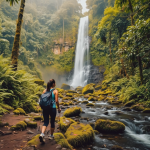
Waterfall trekking is the most misunderstood of the three categories. Many first-time visitors picture a gentle stroll down a paved path to a scenic overlook. The reality, particularly around Jacó and the Central Pacific, is something considerably more physical, more immersive, and ultimately more rewarding than that mental image suggests.
The Physical Reality of the Trek
A quality waterfall trek in this region typically involves 2–5 kilometers of trail walking, including sections with moderate to steep elevation change, river crossings, and uneven terrain. Trails near Bijagual and the Carara corridor are managed under SINAC regulations, which means they’re maintained for safety but not paved or manicured. You’ll encounter root systems, loose rock, mud (especially during the green season), and canopy-filtered light that makes footing less predictable than open-air hiking.
The payoff for that effort is access to waterfalls that most tourists never see. The Central Pacific’s volcanic geology and high rainfall create tiered cascades that fall into natural swimming holes, some with swimming access, some best appreciated from a distance. Water temperatures typically range from 18°C to 22°C depending on elevation and season. The sound, the spray, and the surrounding primary forest create an environment that photographs, frankly, cannot fully capture.
Guided waterfall treks with experienced operators add a layer of safety and context that self-guided attempts rarely match. A knowledgeable guide can identify the difference between a safe river crossing point and a dangerous one after recent rainfall, recognize wildlife that a solo trekker would walk past entirely, and explain the ecological relationships between the forest, the river, and the waterfall system. Costa Rica’s SINAC-managed protected areas require visitor compliance with specific access rules, and operating with a certified guide ensures those rules are followed correctly.
Who Benefits Most from Waterfall Trekking
Waterfall trekking is the right choice for travelers who want to feel genuinely inside the ecosystem rather than observing it from a distance. It suits people with moderate fitness, a tolerance for getting wet and muddy, and a genuine interest in what makes Costa Rican rainforest different from any other jungle on earth. It’s particularly powerful for first-time Costa Rica visitors who want to understand why the country has earned its reputation as a global biodiversity hotspot, given that Costa Rica protects more than 25% of its national territory in conservation areas despite being a small nation.
Families with children over 8 years old who have some hiking experience generally handle these treks well with proper footwear and preparation. Solo travelers and couples find the intimate group sizes of guided treks create genuine camaraderie. Travel photographers consistently rate waterfall treks as their highest-value experience because the combination of cascades, primary forest, and wildlife creates multiple compelling compositions in a single outing.
What Waterfall Trekking Doesn’t Deliver
Waterfall trekking is not the right choice for travelers with significant mobility limitations, those seeking air-conditioned comfort between activities, or anyone who genuinely dislikes humidity and physical exertion. It also doesn’t deliver the ocean wildlife encounters, the sensation of open water, or the adrenaline of activities like zip-lining or ATV riding. If those are your priorities, a different category will serve you better.
Ocean Excursions in Jacó: What the Pacific Actually Offers
Ocean excursions operate on a fundamentally different logic than land-based adventures. The Pacific Coast near Jacó presents a marine environment shaped by the seasonal upwelling of cold, nutrient-rich water, proximity to the Nicoya Peninsula, and the protected waters of Herradura Bay. The result is a coastline that supports dolphin pods, sea turtles, whale sharks (seasonally), humpback whales (July through November and December through April), and an abundance of seabirds that use the coast as a navigation corridor.
The Range of Ocean Excursion Formats
Ocean excursions from Jacó fall into several distinct formats, each with different characteristics. Boat tours focused on wildlife spotting (dolphins, whales, sea turtles) typically last 2–4 hours and operate on rigid-hull inflatable boats or small motorized vessels that can move quickly and quietly to wildlife sightings. Sportfishing charters operate on a completely different rhythm, with 4–8 hour full-day or half-day options targeting species like mahi-mahi, roosterfish, and sailfish. Kayak and stand-up paddleboard excursions explore calmer coastal sections, including mangrove channels near the Tárcoles River estuary, which is famous for its American crocodile population.
Snorkeling excursions exist but should be approached with realistic expectations. The Central Pacific coast’s visibility is not comparable to the Caribbean side (Cahuita, Puerto Viejo) or the more remote Corcovado/Osa Peninsula waters. When conditions are right, particularly during the dry season, snorkeling near rocky outcroppings can yield fish species and invertebrates, but travelers expecting Caribbean-quality underwater visibility should plan their trip around the Caribbean coast, not Jacó.
Seasonal Variability and Its Impact
Ocean excursions are more seasonally variable than waterfall treks. During the green season, Pacific swells increase, wind patterns shift, and some excursion formats become uncomfortable or unavailable for days at a time. Reputable operators will reschedule or refund when conditions aren’t safe, but this variability is a genuine logistical consideration for travelers with fixed departure dates. Dry season (December through April) offers the most consistently reliable ocean conditions, with calmer seas, better visibility, and higher probability of wildlife encounters near the surface.
Humpback whale watching is a genuine draw during two distinct migration periods, as the Central Pacific receives both Northern and Southern Hemisphere humpback populations at different points in the year. The Central Pacific’s dual humpback season is unusual globally and makes Jacó-area ocean excursions genuinely compelling for wildlife-focused travelers.
Who Gets the Most from Ocean Excursions
Ocean excursions deliver the highest satisfaction for travelers who are primarily motivated by marine wildlife, those who find being on water inherently restorative, and sportfishing enthusiasts for whom a half-day on the Pacific is intrinsically worthwhile regardless of what else happens. Cruise passengers with 4–6 hours in port at Puntarenas or Caldera often find ocean excursions the most time-efficient way to have a genuinely memorable experience without the transit time required for inland adventures.
Ocean excursions also work well for travelers with lower physical fitness levels, since most boat-based formats require minimal exertion. The trade-off is that you’re primarily an observer rather than a participant in the landscape. You’re watching wildlife from a vessel rather than moving through the ecosystem on foot.
What Ocean Excursions Miss
Ocean excursions don’t deliver the immersive jungle experience, the physical satisfaction of completing a trail, or the waterfalls and forest canopy that most people picture when they think of Costa Rica’s natural beauty. Wildlife encounters are real but unpredictable. A dolphin pod appearing 10 meters from the boat is extraordinary; a 3-hour boat trip with limited wildlife activity is a legitimate risk, even with the best operators. Travelers who need guaranteed “wow moments” may find the unpredictability frustrating.
Multi-Activity Adventure Packages: The Case for Doing Everything at Once
Multi-activity adventure packages are Costa Rica’s answer to the traveler who either has limited time or genuinely can’t choose. A well-constructed package might combine waterfall trekking with a river float, zip-lining, ATV riding, and a coastal wildlife segment into a single structured day. A lighter version might pair a morning waterfall hike with an afternoon ocean excursion and a stop at a local lunch spot. The format varies significantly by operator, which is why package evaluation requires more scrutiny than single-activity booking.
The Architecture of a Good Package
The best multi-activity packages are built around a coherent geographic and experiential narrative. They move through different terrain types in a sequence that makes sense physically (starting with the most demanding activity when energy is highest), logistically (minimizing transit time between locations), and experientially (creating contrast and variety rather than repetition). A package that starts with a rainforest waterfall trek, transitions to a river float or rappelling experience, and finishes with a coastal sunset segment creates a complete picture of what Central Pacific Costa Rica actually offers.
The worst multi-activity packages are collections of activities bolted together by transit time, with guests spending more time in vehicles than in the field. This is a genuine risk in Jacó, where operators sometimes try to include too many geographically dispersed activities in a single day. A package that promises zip-lining in Monteverde, a waterfall near Bijagual, and an afternoon ocean excursion from Jacó is mathematically unrealistic in 8–10 hours, and the attempt to deliver it results in rushed experiences at every stop.
Value Arithmetic: When Packages Actually Save Money
Multi-activity packages typically offer a meaningful per-activity discount compared to booking each component separately. The discount reflects the operator’s ability to consolidate transport, guide time, and equipment across a group. For travelers who would book 3 or more separate activities anyway, the math usually favors a package, provided the package includes activities they actually want.
The hidden cost in packages is flexibility. A single-activity booking can be rescheduled around weather, energy levels, or a spontaneous change of plans. A full-day package commitment creates a more rigid structure. Travelers who value spontaneity, or who are traveling with young children whose moods and energy levels are hard to predict, sometimes find that booking individual activities gives them more control over the actual quality of each experience.
| Factor | Waterfall Trekking | Ocean Excursions | Multi-Activity Package |
|---|---|---|---|
| Typical Duration | 3–5 hours | 2–6 hours | 6–10 hours |
| Physical Demand | Moderate to High | Low to Moderate | Variable (Moderate avg.) |
| Best Season | Green season for volume; dry for easier trails | Dry season (Dec–Apr) | Year-round (dry preferred) |
| Wildlife Encounters | ✅ Forest species (monkeys, toucans, sloths) | ✅ Marine species (dolphins, whales, turtles) | ✅ Both (depends on package) |
| Family-Friendly | ⚠️ Kids 8+ with hiking experience | ✅ Most ages (boat stability varies) | ⚠️ Depends on package components |
| Cruise Passenger Suitability | ⚠️ Time-dependent (need 5+ hours) | ✅ Highly suitable (2–4 hrs) | ⚠️ Light packages only |
| Photography Value | ✅ Extremely high | ✅ High (wildlife, seascape) | ✅ High (varied subjects) |
| Flexibility | High | High | Low to Medium |
| Price Range (USD per person) | $50–$120 | $60–$150+ | $120–$250+ |
| Ecotourism Alignment | ✅ High (low-impact by nature) | ⚠️ Depends on operator practices | ⚠️ Depends on components |
Who Gets the Most from Multi-Activity Packages
Multi-activity packages deliver the highest satisfaction for groups of adults who want variety, don’t want to coordinate multiple separate bookings, and have a full day available. They’re particularly effective for corporate or incentive travel groups, where the shared experience across multiple activities builds genuine team cohesion in a way that a single-activity outing doesn’t. Bachelor and bachelorette groups, friend groups celebrating milestones, and travelers on their first Costa Rica visit who want a “full picture” day also tend to rate multi-activity packages very highly.
The key is choosing a package built around activities that genuinely interest the group rather than simply the longest list of inclusions. A focused 4-activity package that flows well and gives adequate time at each stop will consistently outperform a 7-activity package that rushes everyone through each location.
The Ecotourism Dimension: Not All Adventures Are Equal
Costa Rica’s reputation as a global ecotourism leader is real, not marketing. The country’s CST (Certificación para la Sostenibilidad Turística) program, administered by the Instituto Costarricense de Turismo (ICT), rates tourism businesses on their environmental, social, and economic sustainability practices. The rating matters because it reflects genuine operational differences between operators, not just branding.
Waterfall trekking, when conducted within SINAC-managed areas with certified guides, is inherently low-impact. Trail access fees contribute directly to conservation funding. The physical format of the activity (walking, minimal equipment, no motorized components) aligns naturally with ecotourism principles. Travelers specifically seeking experiences that minimize environmental impact while maximizing ecological learning tend to rate guided waterfall treks as their most aligned option.
Ocean excursions vary more significantly in their ecotourism credentials. Responsible wildlife-watching operators follow established protocols for minimum approach distances to marine mammals, avoid harassment of nesting sea turtles, and operate fuel-efficient vessels. Less responsible operators may prioritize passenger excitement over animal welfare. When booking any ocean excursion, checking for ICT registration and CST certification is a legitimate filter that separates operators who take sustainability seriously from those who use it as a marketing claim.
Multi-activity packages present the most complex ecotourism evaluation because they combine multiple activity types with potentially different sustainability profiles. A package that includes ATV riding through sensitive terrain alongside a waterfall trek represents a fundamentally different ecological footprint than one that combines a forest hike with a river float and a wildlife boat tour. Travelers who care about this dimension should review the specific activities included and ask operators directly about their CST status and land-use practices.
Costa Rica’s SINAC also administers the Bandera Azul Ecológica program for coastal and aquatic areas, which some ocean excursion operators participate in. This certification signals genuine commitment to water quality, coastal conservation, and responsible marine tourism practices.
Practical Logistics: What Nobody Tells You Before You Book
The comparison between these three adventure categories isn’t just about the experience itself. It’s also about the logistical realities that shape how the day actually feels from arrival to return. Several practical factors rarely appear in tour descriptions but consistently affect traveler satisfaction.
Transportation and Meeting Points
Most Jacó-based operators offer hotel pickup within the Jacó town limits, which is a genuine convenience. Travelers staying in Herradura or Playa Hermosa (just north and south of Jacó respectively) should confirm whether pickup extends to their specific location, as some operators define their pickup zone narrowly. Ocean excursion departures from Herradura Bay require less transit time than inland treks, making them slightly more practical for travelers staying further from town. Waterfall trek departures typically begin with a 20–45 minute vehicle transfer to the trailhead, which is part of the experience but should be factored into the total time commitment.
What to Wear and Bring
Packing for each activity type differs significantly. Waterfall treks require closed-toe shoes with grip (water shoes or hiking sandals work for some trails, but true hiking shoes are better for longer routes), quick-dry clothing, and a dry bag for electronics. Getting wet on a waterfall trek is not a risk, it’s a certainty on most routes. Ocean excursions require sun protection as a priority: SPF 50+ reef-safe sunscreen (required by responsible operators), polarized sunglasses, and a windbreaker for boat speed. Seasickness medication is worth taking 30–60 minutes before departure for anyone with susceptibility. Multi-activity packages require the widest packing range, often necessitating a change of clothes mid-day.
Health and Fitness Screening
Reputable operators conduct informal health screening during the booking process, asking about relevant medical conditions, recent injuries, and fitness levels. This is not bureaucratic formality. It’s how experienced guides determine which tour format serves each guest safely. Waterfall treks have the highest baseline fitness requirement. Ocean excursions are the most accessible for guests with limited mobility. Multi-activity packages can often be adjusted in the field by experienced guides, but only if the operator is informed of limitations in advance.
Group Size and Its Impact on Experience Quality
Group size significantly affects experience quality across all three categories, but the effect is most pronounced in waterfall trekking. A group of 4–8 people on a forest trail creates minimal disruption to wildlife behavior and allows guides to deliver detailed ecological interpretation. A group of 20+ on the same trail creates noise, congestion at viewpoints, and a fundamentally different atmosphere. Before booking, ask operators about their maximum group sizes. The answer reveals a great deal about how they prioritize experience quality versus revenue per tour slot.
| Traveler Profile | Recommended Option | Reason |
|---|---|---|
| First-time Costa Rica visitor with 2+ days in Jacó | Waterfall Trek (Day 1) + Ocean Excursion (Day 2) | Covers both ecosystems at full quality, avoids rushing |
| Cruise passenger with 4–5 hours in port | Ocean Excursion or Light Package | Time efficiency, no risk of missing departure |
| Group of friends (6–12 people, ages 20–40) | Multi-Activity Package | Shared variety, group energy, cost efficiency |
| Family with children ages 8–14 | Waterfall Trek (moderate route) | Engaging, educational, memorable for kids |
| Couple seeking a romantic experience | Private Waterfall Trek | Intimate, scenic, allows pace flexibility |
| Wildlife photographer with full day available | Waterfall Trek + morning Ocean Excursion | Maximum subject variety, different lighting conditions |
| Solo traveler on first trip, limited budget | Guided Waterfall Trek | Best value, natural social dynamic in small groups |
| Corporate incentive group (15–30 people) | Multi-Activity Package (customized) | Team dynamics, shared challenge, variety keeps engagement high |
| Traveler with low mobility but strong interest in nature | Ocean Excursion (wildlife focus) | Accessible, spectacular marine wildlife without demanding terrain |
The Value Question: Breaking Down What You’re Actually Paying For
Price is almost never the right primary filter when comparing adventure tours, but it is a legitimate consideration when evaluating value relative to what each option actually delivers. The cost of a guided adventure in Jacó reflects several components that are worth understanding before booking.
What Drives the Cost of Each Category
Waterfall trek pricing reflects guide certification and expertise (a trained naturalist guide costs more than an untrained one, and is worth the premium), trail access fees payable to SINAC or private reserve owners, transportation to the trailhead, and equipment like dry bags, walking poles, and first-aid kits. The most important cost driver is guide quality, which is also the hardest to evaluate from a tour listing alone. Reviews mentioning specific guides by name, noting their biological knowledge, language fluency, and group management skills, are the most reliable indicator of guide quality.
Ocean excursion pricing reflects vessel operating costs (fuel, maintenance, harbor fees), captain and crew wages, safety equipment requirements, and the cost of any specialized gear (fishing equipment, snorkeling kit, binoculars). Sportfishing charters are the most expensive ocean excursion format because the equipment is specialized and the crew-to-passenger ratio is high. Wildlife-watching boat tours represent the middle price point. Kayak excursions, when offered, are typically the most affordable ocean format.
Multi-activity package pricing reflects all of the above components combined, plus a coordination premium that covers the logistics of moving a group efficiently between multiple locations. The discount over individual booking is real, but it only creates genuine value if the package includes activities that would have been booked separately anyway.
The Hidden Value of Guide Quality
Across all three categories, guide quality is the single factor that most consistently separates a memorable experience from an average one. In waterfall trekking, a guide who can identify the call of a chestnut-mandibled toucan before the bird appears in view, explain the relationship between the forest’s fig trees and its wildlife, and time the group’s arrival at the main waterfall to avoid midday crowds creates a completely different experience than one who leads the walk in silence and points at the waterfall when it appears.
In ocean excursions, a captain who understands dolphin behavior well enough to position the vessel ahead of a pod’s travel direction rather than chasing it creates both a better experience and a more ethical one. In multi-activity packages, a lead guide who reads group energy levels and adjusts the pace and sequence of activities accordingly is what separates a great day from an exhausting one.
The practical implication: prioritize operator reviews that discuss guide quality specifically over reviews that simply describe what happened. A review that says “the waterfall was beautiful” tells you nothing. A review that says “our guide Carlos stopped us at a cecropia tree to watch a three-toed sloth before we’d even reached the trail” tells you everything.
Making the Right Choice for Your Specific Trip
The decision framework below cuts through the analysis and gives a direct answer for the most common scenarios. These are not hedged recommendations. They’re based on the genuine strengths and limitations of each category as described above.
If you have only one day in Jacó and want to understand why Costa Rica’s Central Pacific is different from everywhere else on earth: book a guided waterfall trek. The combination of primary rainforest, moving water, wildlife encounters, and physical engagement creates a sensory experience that no other single activity category matches. You will leave with a genuine understanding of the ecosystem, not just a collection of photographs.
If marine wildlife is your primary motivation and you’re visiting during the dry season (December through April): prioritize an ocean excursion. The Pacific’s wildlife is real, accessible, and extraordinary when conditions are right, and dry season maximizes your probability of optimal conditions.
If you’re traveling with a group of adults who want variety and are prepared to commit a full day: a well-chosen multi-activity package from a reputable operator will deliver more total experience per dollar than any single-category alternative, provided the package is built around activities the group genuinely wants rather than the longest possible activity list.
If you have two or more days in the Jacó area: don’t choose between categories. Use Day 1 for a waterfall trek (when energy is highest and the forest is most rewarding in the morning), and Day 2 for an ocean excursion or a second waterfall experience at a different location. This is the approach that consistently produces the highest traveler satisfaction for visitors with adequate time.
For travelers specifically interested in a guided waterfall experience with an operator that has built its reputation on exactly this category, Costa Rica Waterfall Tours’ adventure tour offerings provide a well-structured starting point for comparing specific itineraries against the criteria outlined in this guide.
Frequently Asked Questions About Jacó Adventure Experiences
Which activity is safest for first-time adventure travelers in Costa Rica?
Guided waterfall treks with certified operators are generally considered the most controllable safety environment, because pace can be adjusted, trail conditions are assessed before departure, and groups stay together throughout. Ocean excursions have their own safety protocols but introduce variables like sea conditions and motion sickness that are harder to predict. Multi-activity packages are safe when operated by experienced companies, but the range of activities means a wider range of safety considerations to manage simultaneously. In all cases, booking with an ICT-registered operator is the baseline safety requirement.
Do I need to be physically fit to go waterfall trekking near Jacó?
Moderate fitness is genuinely required. Trails involve uneven terrain, river crossings, and elevation change. Guests who are comfortable with 2–3 hours of walking on varied surfaces, including some steep sections, handle these treks well. Guests with knee issues, recent injuries, or very low cardiovascular fitness should discuss trail options with operators before booking, as some routes are more demanding than others and alternatives may be available.
What’s the best time of year for ocean excursions from Jacó?
The dry season (December through April) offers the most consistently calm seas, best surface visibility, and highest reliability for scheduling. However, the green season (May through November) brings its own marine wildlife highlights, including the peak of Southern Hemisphere humpback whale migration (July through October). Experienced ocean excursion operators run quality trips year-round; the key is choosing a day with favorable forecasted conditions rather than a specific calendar period.
Are multi-activity packages worth the higher price?
For groups of 4 or more who would book 3+ separate activities anyway, multi-activity packages almost always represent genuine value. For solo travelers or couples who want depth over breadth, two well-chosen individual activities typically deliver more satisfaction than a packed package. The value calculation depends on the specific activities included, the operator’s group management quality, and how much time pressure the traveler is under.
Can cruise passengers from Puntarenas do a waterfall trek?
It’s possible but requires careful time planning. Cruise ships typically dock at Puerto Caldera, approximately 25 kilometers from Jacó. A round-trip waterfall trek with transit requires a minimum of 5–6 hours, which fits within most full-day port schedules but leaves minimal buffer. Cruise passengers with 4 hours or less in port are better served by ocean excursions that depart and return from the coast, minimizing transit time. Always confirm exact port departure times with your cruise line and communicate them clearly to your tour operator before booking.
What wildlife can I expect to see on a waterfall trek vs. an ocean excursion?
Waterfall treks in the Carara/Bijagual corridor frequently yield sightings of white-faced capuchin monkeys, howler monkeys, three-toed sloths, toucans, motmots, and a wide range of tropical bird species. Reptile sightings (lizards, anoles, occasional snakes) are common. Ocean excursions from Jacó offer good probability of bottlenose dolphin encounters, with seasonal humpback whale sightings, sea turtle appearances (especially during nesting season), and seabird activity. Neither environment guarantees specific sightings, but both have high wildlife density relative to most destinations globally.
Are waterfall treks suitable for children?
Children aged 8 and above with some hiking experience handle most guided waterfall treks well. Children under 8 or those without prior trail experience should be discussed with operators on a case-by-case basis, as trail difficulty varies. Children are often the most enthusiastic participants in these treks, particularly when guides engage them with wildlife identification and ecological storytelling. Ocean excursions are generally more accessible for younger children, provided they’re comfortable on boats and the sea conditions are calm.
How do I evaluate whether an operator is genuinely sustainable?
Check for ICT registration and CST certification, which are publicly verifiable through the Instituto Costarricense de Turismo website. Ask operators directly whether their guides are certified naturalist guides through SINAC or recognized certification programs. For ocean excursions, ask about their wildlife approach protocols and whether they follow established minimum-distance guidelines for marine mammals. Sustainable operators welcome these questions. Those who deflect or provide vague answers warrant skepticism.
Can I combine a waterfall trek and an ocean excursion in a single day?
Yes, provided both are scheduled thoughtfully. A morning waterfall trek (departing at 07:00, returning by 12:00) can be followed by an afternoon ocean excursion (departing at 13:30–14:00) with adequate rest and food between. This combination works best during the dry season when afternoon sea conditions are stable. It’s a demanding day and requires good physical conditioning. Many experienced operators can help design this sequence if asked.
What should I look for in a tour operator’s reviews before booking?
Look specifically for reviews that mention guide names, describe wildlife encounters in detail, and comment on how the operator handled unexpected situations (weather changes, trail closures, group fitness challenges). Reviews that describe specific moments, “we stopped at a strangler fig and the guide showed us exactly how the fig tree slowly replaces the host,” are far more useful than generic positive statements. Also look at how operators respond to negative reviews, since professionalism and transparency in handling complaints reveals a great deal about company culture.
Is it possible to customize a multi-activity package for specific group needs?
With the right operator, yes. Experienced Jacó-based operators can typically build custom itineraries for groups with specific interests (photography, birdwatching, family-appropriate activities) or physical limitations. Customization is easier to achieve with advance notice of at least 2–3 weeks and for groups of 6 or more, where the per-person economics make custom logistics viable. Smaller groups and last-minute requests can sometimes be accommodated, but the range of customization options narrows.
Which activity produces the best photographs?
Waterfall treks consistently produce the most visually dramatic photographs: cascading water against primary forest, wildlife in natural habitat, and the intimate scale of the jungle environment. Ocean excursions produce spectacular images when wildlife cooperates (a breaching humpback or a dolphin bow-riding a boat is genuinely hard to beat), but the unpredictability of marine wildlife means a dedicated photography day on the ocean carries more risk of limited opportunity. Multi-activity packages produce the greatest variety of subjects. For dedicated photography travelers, a waterfall trek in the morning (best light for forest) combined with a golden-hour ocean excursion creates the widest range of quality compositions.
Key Takeaways
- Waterfall trekking is the highest-immersion option, best for travelers who want to feel genuinely inside the Costa Rican ecosystem, and delivers consistent value for solo travelers, couples, families with older children, and photography-focused visitors.
- Ocean excursions are the most accessible format physically and the most time-efficient for cruise passengers or travelers with limited days, but carry seasonal variability in conditions and some unpredictability in wildlife encounters.
- Multi-activity packages deliver the best value for groups booking multiple activities anyway, but require careful evaluation of the package’s specific components, group size management, and the operator’s logistics quality.
- Guide quality is the single most important variable across all three categories. Invest time in reading reviews that describe specific guide behaviors rather than just overall star ratings.
- Travelers with two or more days in Jacó should seriously consider combining categories rather than choosing between them: a waterfall trek on Day 1 and an ocean excursion on Day 2 covers both of the region’s defining ecosystems at full depth.
- Ecotourism alignment matters, and ICT’s CST certification and SINAC compliance are verifiable standards that separate genuinely sustainable operators from those using sustainability as a marketing label.
- Seasonal planning affects each category differently. The dry season optimizes ocean excursions. The green season amplifies waterfall drama. Multi-activity packages are available year-round but work best when one of the two seasons is factored into which activities are prioritized.
For travelers ready to move from comparison to booking, explore the full adventure tour lineup at Costa Rica Waterfall Tours, where guided waterfall experiences, ocean excursions, and multi-activity options are available with transparent itineraries and the kind of five-star guide quality that makes the difference between a good day and an unforgettable one.
About the author
Costa Rica Waterfall Tours Editorial Team · Editorial Team
Book Your Guided Waterfall Adventure