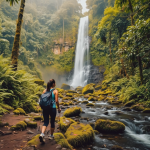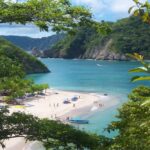
Picture this: a cruise ship drops anchor off the coast of Puntarenas on a Tuesday morning. A family from Colorado steps onto a tender boat, clutching a printed list of “things to do near Jacó.” By noon, they are standing beneath a 30-meter waterfall curtain in a rainforest that holds more species of birds than the entire continental United States. By evening, they are back on board, already planning a return trip, this time without the ship.
That story plays out hundreds of times a week along Costa Rica’s Central Pacific coast, and it is not an accident. The region’s transformation into one of the world’s most celebrated ecotourism destinations is the product of deliberate policy, extraordinary geography, and a generation of local communities that bet their futures on protecting nature rather than exploiting it. Understanding how the Central Pacific became what it is today means understanding the interlocking forces of conservation law, biodiversity, infrastructure investment, and the quiet revolution in how travelers define a great vacation.
This is the story of that transformation, and a practical guide to why the Central Pacific deserves a central place in any serious Costa Rica travel plan.
What Makes the Central Pacific Coast Geographically Unique?
The Central Pacific’s power as an ecotourism destination begins with its geography, which is genuinely unusual even by Costa Rica’s extraordinary standards. Stretching from the Gulf of Nicoya southward through Jacó, Quepos, and into the Osa Peninsula buffer zone, this coastal strip compresses an astonishing range of ecosystems into a remarkably small area.
The Talamanca mountain range, Costa Rica’s geological spine, pushes close to the Pacific coastline here, meaning that within a single day’s drive from Jacó, a traveler can move from sea-level mangrove estuaries through primary rainforest to cloud forest elevation. The rivers that drain the Talamanca range cut steep gorges through the coastal hills, creating the waterfall systems that have become one of the region’s signature attractions. Rainfall patterns amplify this effect: the Pacific-facing slopes receive heavy precipitation during the rainy season (May through November), feeding river systems year-round and keeping the landscape dramatically green even during the dry season (December through April).
The coastline itself adds another dimension. The Central Pacific features a mix of exposed surf beaches, Jacó, Hermosa, Esterillos, alongside sheltered estuaries and rocky headlands. This diversity supports marine ecosystems that include nesting olive ridley sea turtles, humpback whale migration corridors, and some of the most productive sport fishing grounds in the Eastern Pacific. Scarlet macaws, once hunted to near-extinction in this region, now fly in pairs along the coastal tree line between Jacó and Carara National Park, a recovery that has become a symbol of what conservation policy can achieve.
The Carara Effect: A National Park That Anchors an Entire Region
No single feature shapes the Central Pacific’s ecotourism identity more than Carara National Park, managed by SINAC (Sistema Nacional de Áreas de Conservación). Covering roughly 5,242 hectares at the mouth of the Río Tárcoles, Carara sits at the ecological transition zone between the dry forests of Guanacaste to the north and the wet rainforests of the southern Pacific. This transition zone, technically called an ecotone, produces biodiversity density that is exceptional even by Costa Rican standards.
Carara’s proximity to Jacó, approximately 20 kilometers to the north, means that visitors based in the region’s main adventure hub can access primary rainforest within 30 minutes. The park protects the scarlet macaw population that has become a regional icon, and the Río Tárcoles bridge crossing at the park’s northern entrance is arguably the most reliable spot in Costa America to observe American crocodiles in the wild. On any given morning, dozens of visitors stop on that bridge to photograph crocodiles basking on the riverbanks below, a scene that has appeared in travel media worldwide.
For the Central Pacific as a whole, Carara functions as an ecological anchor. The protected forest buffer prevents the kind of coastal deforestation that has degraded other tropical coastlines, and the wildlife that thrives within park boundaries spills over into surrounding areas, enriching the experiences available across the entire region.
How Costa Rica’s Conservation Framework Created the Conditions for Ecotourism
Ecotourism does not emerge spontaneously. It requires the prior existence of something worth protecting, and the legal architecture to keep it protected. Costa Rica built that architecture over several decades, and the Central Pacific has been one of the primary beneficiaries.
The foundational legislation is the Ley Forestal (Law No. 7575), which prohibits the clearing of forest on steep slopes, riparian zones, and protected areas. This single piece of legislation has done more to preserve the Central Pacific’s waterfall corridors and river ecosystems than any tourism marketing campaign. When developers look at a steep forested hillside above Jacó or Quepos and see potential for a luxury villa, the Ley Forestal is what stands between that vision and the bulldozer.
SETENA (Secretaría Técnica Nacional Ambiental) adds another layer of protection by requiring environmental impact assessments for any development project that could affect natural systems. In practice, this means that hotels, tour operators, and infrastructure projects near sensitive ecosystems must demonstrate that their activities will not cause irreversible harm. The system is imperfect, enforcement varies and capacity is limited, but the framework exists, and it has materially shaped what the Central Pacific looks like today.
The Role of the ICT and Sustainable Tourism Certification
The Instituto Costarricense de Turismo (ICT) has been central to translating conservation policy into tourism brand value. The ICT administers the Certificación para la Sostenibilidad Turística (CST), a voluntary rating system that evaluates tourism businesses on four dimensions: physical-biological environment, management of services, external client interaction, and socioeconomic environment. Businesses that score well receive a leaf rating from one to five, a signal that carries real weight with environmentally conscious travelers.
The CST program has driven a measurable shift in how Central Pacific operators approach their business. Tour companies that want to attract the growing segment of eco-conscious international visitors have strong commercial incentives to pursue certification, which in turn requires them to formalize practices around waste management, wildlife interaction protocols, community sourcing, and guide training. The certification system, in other words, turns good environmental behavior into a competitive advantage rather than a cost.
The Bandera Azul Ecológica program extends similar logic to beaches and communities. Jacó and several nearby beaches have participated in this program, which evaluates water quality, beach cleanliness, environmental education, and community engagement. The blue flag designation is visible marketing that tells arriving visitors they are in a place that takes environmental management seriously.
Ley de Biodiversidad and the Protection of Living Resources
Costa Rica’s Ley de Biodiversidad (Law No. 7788) establishes the legal framework for protecting biological resources, including the genetic patrimony of native species. For the Central Pacific, this legislation matters because it creates legal barriers against the commercial exploitation of the region’s wildlife. The law also establishes the SINAC network of conservation areas, which encompasses the Área de Conservación Pacífico Central (ACOPAC), the administrative unit responsible for Carara National Park and the surrounding protected zones.
Together, these legal instruments have created a situation where the Central Pacific’s most valuable economic assets, its forests, rivers, wildlife, and beaches, are legally protected from the forms of exploitation that have destroyed comparable regions elsewhere in the tropics. This is not idealism; it is the structural foundation on which the entire ecotourism economy rests.
Jacó: How a Beach Town Became the Central Pacific’s Adventure Hub
Jacó’s emergence as the region’s primary adventure hub is a story of location, infrastructure, and community identity. Situated approximately 100 kilometers west of San José via the Ruta 27 highway (Autopista Bernardo Soto), Jacó is the closest Pacific beach town to the capital, a geographical fact that has shaped its development trajectory in fundamental ways.
The completion of the modern Ruta 27 toll road dramatically reduced the travel time from San José to Jacó, making the town accessible as a weekend destination for the capital’s urban population and transforming it into the default arrival point for international visitors wanting a Pacific coast experience without a connecting flight. This accessibility has been a double-edged sword: it brought rapid development pressure alongside the tourism boom, but it also created the critical mass of visitors that makes the Central Pacific’s adventure tourism economy viable.
Today, Jacó functions as the Central Pacific’s logistical nerve center. The town provides accommodation across every price tier, from budget hostels to boutique properties, alongside the restaurants, transport networks, tour operator offices, and supporting services that visitors need. From this base, guided excursions fan out across the surrounding landscape, into the waterfall canyons of the coastal hills, through Carara’s primary forest, along the Río Tárcoles estuary, and down the coast toward Manuel Antonio.
The Cruise Port Factor: Puntarenas and Shore Excursion Demand
One of the less-discussed drivers of the Central Pacific’s tourism growth has been the cruise industry. The port of Puntarenas, on the northern shore of the Nicoya Peninsula across the gulf from Jacó, is one of Costa Rica’s primary cruise ship call points. Ships arriving at Puntarenas bring passengers who have typically four to eight hours of shore time, enough for a guided excursion but not enough for an overnight stay.
This creates a specific demand pattern: high-volume, time-compressed excursions that deliver a maximum of Costa Rican nature experience in a minimum of time. Waterfall tours, wildlife observation drives to Carara, and crocodile boat trips on the Río Tárcoles have all developed partly in response to this demand. The shore excursion market has been commercially significant for Central Pacific operators, but it has also introduced many visitors to the region who subsequently return for longer independent trips. The cruise-to-return-visitor pipeline is a real phenomenon in the Central Pacific tourism economy.
Why Adventure Tourism and Ecotourism Reinforce Each Other Here
The Central Pacific occupies an interesting position in the spectrum of nature tourism. It is not a pristine wilderness accessible only to the most committed eco-travelers, it is a commercially developed tourism zone with full infrastructure. But it retains extraordinary natural assets that are actively managed and protected. This combination means the region can offer adventure-oriented ecotourism: experiences that are physically engaging and emotionally thrilling while being rooted in genuine nature immersion rather than constructed spectacle.
Waterfall trekking is the clearest expression of this. The waterfalls accessible from Jacó are not roadside attractions, reaching them typically involves hiking through secondary and primary forest, crossing rivers, and navigating terrain that requires physical engagement and qualified guidance. The experience is inherently educational: a knowledgeable guide can interpret the forest ecosystem, identify wildlife, explain the geological processes that created the waterfall, and connect the visitor’s physical experience to the broader conservation story of the region. This is ecotourism in its most functional form.
The Biodiversity Argument: Why the Central Pacific Punches Above Its Weight
Costa Rica as a whole is famous for containing approximately 5% of the world’s total biodiversity within 0.03% of its land area, a statistic that the Ministry of Environment and Energy (MINAE) has long used to frame the country’s conservation identity. The Central Pacific claims a disproportionate share of this biological richness, for reasons that go beyond the Carara ecotone effect described earlier.
The region’s topographic complexity is the key variable. Because elevation changes rapidly from sea level to over 2,000 meters within a relatively short horizontal distance, the Central Pacific contains multiple distinct life zones stacked vertically: tropical dry forest fragments near the coast, premontane wet forest in the foothills, and lower montane zones on the upper slopes of the Talamanca range. Each life zone supports a distinct community of species, and the boundaries between zones, where species from adjacent communities overlap, are often the most biodiverse areas of all.
For the visiting naturalist or wildlife photographer, this means that a single multi-day itinerary centered on Jacó can encompass encounters with species that would require separate expeditions to entirely different regions in most other tropical countries. Scarlet macaws and crocodiles at Carara in the morning; poison dart frogs and tree frogs on a waterfall hike in the afternoon; humpback whales or dolphins on a coastal boat trip; then night sounds of kinkajous and red-eyed tree frogs after dark. The density of experience is genuinely unusual.
Birds as a Biodiversity Index
Birdwatching has become one of the Central Pacific’s most commercially significant ecotourism niches, and with good reason. The region’s bird list is exceptional: toucans, trogons, motmots, tanagers, and dozens of raptor species are routinely observed on guided excursions. The scarlet macaw has become the region’s flagship species, its recovery from near-local-extinction to a thriving coastal population is one of conservation’s genuine success stories in this part of the world.
For tour operators, birds serve a practical function beyond their ecological significance: they are reliably observable, reliably photogenic, and emotionally compelling to visitors who may have no prior interest in natural history. A first-time visitor who has never thought about birdwatching will stop and stare when a pair of scarlet macaws fly 20 meters overhead, their crimson plumage catching the morning light. That moment of involuntary awe is the emotional foundation of ecotourism, and the Central Pacific delivers it consistently.
Community Investment and the Social Dimension of Sustainable Tourism
The most durable form of ecotourism is the kind that local communities actively want to maintain, because they benefit from it directly. The Central Pacific has developed, unevenly but genuinely, a model where conservation and community welfare are linked rather than in competition.
In communities around Jacó and southward toward Quepos and Manuel Antonio, the tourism economy has created employment in guiding, hospitality, transport, food service, and craft production. When residents see that an intact forest generates more economic value through tourism than a cleared pasture generates through cattle ranching, the conservation calculus shifts. This is not an abstract principle; it is the lived experience of communities that have watched neighboring villages succeed by betting on nature.
Local guide training and certification programs have been particularly important in this regard. SINAC and various NGOs have invested in training community members as naturalist guides, giving them the skills to interpret the natural environment for visitors and the credentials to participate in the formal tourism economy. A local guide who earns a living wage showing visitors the forest has both economic incentive and personal stake in keeping that forest healthy. This alignment of interests is the social foundation of sustainable ecotourism in Costa Rica.
The Indigenous and Cultural Dimension
While the Central Pacific is not a primary indigenous cultural tourism destination in the way that some regions of Limón or the Talamanca highlands are, there are indigenous Brunca and Boruca communities in the broader southern Pacific zone that have developed community-based tourism programs. These programs offer visitors authentic cultural experiences while generating income that supports traditional practices and community infrastructure. As tourism in the Central Pacific matures, integrating these cultural dimensions into itineraries has become a marker of thoughtful, responsible travel planning.
What Central Pacific Tours Actually Look Like: A Practical Breakdown
Understanding the forces that shaped the Central Pacific’s ecotourism identity is useful context; knowing what that translates into as a visitor experience is equally important. The region’s tour offerings have evolved significantly, moving from generic sightseeing toward deeply immersive nature experiences that combine physical adventure with genuine environmental education.
| Tour Type | Typical Duration | Physical Demand | Best Season | Primary Appeal |
|---|---|---|---|---|
| Waterfall Trekking | 4–8 hours | Moderate to High | Year-round (fuller flow May–Nov) | Adventure + nature immersion |
| Wildlife Observation (Carara) | 3–5 hours | Low to Moderate | Dry season (Dec–Apr) | Birding, macaws, primates |
| Río Tárcoles Boat Tour | 2–3 hours | Low | Year-round | Crocodiles, shorebirds, mangroves |
| Coastal Whale/Dolphin Tour | 3–4 hours | Low | Jul–Oct (humpbacks), Dec–Apr (dolphins) | Marine wildlife, photography |
| Multi-Activity Adventure Day | Full day (8–10 hours) | Moderate | Year-round | Groups, families, maximum variety |
| Night Nature Walk | 2–3 hours | Low to Moderate | Rainy season (richest activity) | Frogs, insects, nocturnal mammals |
The waterfall experience deserves particular attention because it sits at the intersection of multiple things the Central Pacific does exceptionally well. The coastal hills behind Jacó and southward toward Quepos contain a network of river systems that, where they descend over resistant rock formations, produce dramatic waterfall cascades. These are not groomed tourist attractions with parking lots and guardrails, reaching them requires genuine engagement with the landscape, guided by operators who know the terrain and can manage the safety variables of river crossings, slippery rock surfaces, and changing weather.
The experience of standing beneath a waterfall in a tropical rainforest, with the sound of the cascade filling the air and the forest canopy forming a green vault overhead, is something that photographs can gesture toward but not fully capture. It is also, notably, an experience that leaves no physical mark on the landscape. The water keeps falling; the forest keeps growing; the next group of visitors gets the same undiminished experience. This is the circular economy of ecotourism at its most elegant.
The Role of Responsible Operators in Sustaining the Destination
The quality and integrity of a destination’s ecotourism offering ultimately depends on the operators who deliver the visitor experience. In the Central Pacific, the tour operator ecosystem has matured considerably, with a clear differentiation between operators who treat the natural environment as a stage set and those who treat it as a living system that requires active stewardship.
Responsible operators in the region share a set of practices that distinguish them from lower-quality alternatives. They employ certified naturalist guides with genuine knowledge of the local ecosystem, not just route familiarity. They impose group size limits on sensitive trails to prevent compaction damage to forest floor ecology. They have explicit protocols for wildlife encounters that prioritize animal welfare over visitor photo opportunities. They use local suppliers for food and equipment where possible, keeping tourism revenue circulating within the regional economy. And they invest in ongoing staff training and safety systems that protect both guests and the natural environment.
For visitors evaluating Central Pacific Costa Rica tours, these operational distinctions matter enormously. A waterfall tour delivered by a company with deep local knowledge, certified guides, and genuine environmental commitment is a qualitatively different experience from the same route delivered by a cut-rate operator focused on throughput. The difference shows up in the quality of interpretation, the safety margin on difficult terrain, the respect shown to wildlife, and ultimately in the depth of the experience the visitor takes home.
Safety as a Non-Negotiable Foundation
Adventure tourism in tropical environments involves real physical risks. River levels can rise rapidly during rainy season. Waterfall approach trails can be genuinely slippery. Wildlife encounters, while rarely dangerous, require behavioral knowledge to manage safely. Responsible operators treat safety not as a constraint on the adventure experience but as its foundation, the thing that makes the adventure possible rather than reckless.
In Costa Rica, tour operators are regulated by the ICT, which requires registration and compliance with safety standards as a condition of legal operation. CFIA (Colegio Federado de Ingenieros y de Arquitectos) standards apply to any built infrastructure on tour routes. But beyond regulatory minimums, the best operators invest in safety voluntarily, because they understand that their reputation, and the region’s reputation as a whole, depends on every visitor returning home with a good story rather than a bad one.
How the Rainy Season Became a Feature, Not a Bug
One of the most sophisticated evolutions in Central Pacific ecotourism has been the reframing of the rainy season from a liability into a genuine selling point. The instinct of early tourism marketing was to downplay the green season (May through November), treating it as a period of diminished appeal when visitors should be encouraged to come during the dry season instead.
Experienced operators and ecologically sophisticated travelers have inverted this framing. The rainy season is when the Central Pacific’s forests are most lush, most active, and most biodiverse. Waterfall flows are at their maximum volume and drama. Frog populations are most visible, emerging to breed in the seasonal pools. Insect diversity peaks, which in turn drives heightened activity among insectivorous birds and bats. Humpback whales are present in the coastal waters from July through October, making this season ideal for marine wildlife tours.
The practical reality is that rainy season precipitation in the Central Pacific typically follows a pattern of morning sunshine followed by afternoon showers, rather than all-day rain. A morning waterfall trek can be completed before the afternoon rain arrives, and the post-rain forest, steaming, intensely green, alive with sound, is an aesthetic experience that dry season visits simply cannot match. Accommodation and tour prices are also substantially lower during the rainy season, making it the value proposition of choice for travelers who do their research.
This seasonal sophistication is part of what distinguishes the Central Pacific Costa Rica tourism offering from less mature destinations. When a region can make a compelling case for visiting across all 12 months of the year, it has achieved a depth of product development that most tropical destinations never reach.
Photography, Social Media, and the Attention Economy of Ecotourism
The visual drama of the Central Pacific landscape has made it extraordinarily well-suited to the contemporary travel decision-making process, in which social media imagery plays a decisive role. The region’s waterfalls, in particular, photograph in ways that generate the kind of aspirational imagery that drives travel bookings: dramatic scale, saturated tropical color, the interplay of water and forest light.
For travel photographers, both professional and amateur, the Central Pacific offers a concentration of visually compelling subjects within a manageable geographic footprint. A single guided excursion can yield images of cascading water, tropical birds, reptiles, and forest landscapes that would individually require separate expeditions in most other destinations. The accessibility from Jacó means that logistics do not consume the time and energy that remote wilderness photography demands.
This visual currency has a feedback effect on the destination’s visibility. Images from the Central Pacific circulate through social media, travel blogs, and photography communities, generating awareness and aspiration that translates into bookings. The photographic appeal of the destination is, in this sense, part of its conservation infrastructure: every compelling image of an intact waterfall or a scarlet macaw in flight is an argument for keeping the forest that produced it.
Planning Your Central Pacific Ecotourism Experience: A Practical Framework
For visitors moving from inspiration to itinerary, the Central Pacific presents a planning challenge that is entirely positive in nature: there is more to do than any single trip can accommodate, and the choices involve genuine trade-offs between different types of extraordinary experiences.
The framework below is designed to help visitors match their priorities, physical capacity, and available time to the region’s offerings. It is organized around the key decision points that most travelers face.
Choosing Your Base: Jacó, Quepos, or Manuel Antonio?
Jacó is the optimal base for visitors whose primary interest is adventure tourism, waterfall trekking, and day-trip access to Carara. The town’s infrastructure is the most developed in the region, its transport connections to San José are the best, and its position midway along the Central Pacific coast gives it day-trip range in both directions. Jacó also has the most active nightlife and social scene, making it the natural choice for younger travelers and groups.
Quepos and Manuel Antonio offer a different character: more intimate, more wildlife-focused, centered on the extraordinary Manuel Antonio National Park. The park’s beaches are among Costa Rica’s most beautiful, and its wildlife density, particularly white-faced capuchin monkeys, sloths, and squirrel monkeys, is exceptional. Manuel Antonio is the choice for travelers who prioritize beach-and-wildlife immersion over adventure-sport variety.
For visitors with a week or more, combining a Jacó base for the first half with a southward move to Quepos and Manuel Antonio is the most complete Central Pacific experience available.
Timing Your Activities by Season and Conditions
The dry season (December through April) offers the most predictable weather and the clearest trail conditions, but waterfall flows are lower and the forest is comparatively less lush. This is peak season, with corresponding price premiums and higher competition for accommodation and tour slots, advance booking is essential.
The rainy season (May through November) delivers peak waterfall drama, maximum wildlife activity, lower prices, and fewer crowds. The practical trade-off is that some trails become genuinely challenging after heavy rain, and river conditions on waterfall routes require more careful management. Choosing an operator with strong safety protocols and local knowledge becomes even more important during this period.
A useful rule: if the primary motivation is waterfall photography or maximizing the visual drama of the landscape, the shoulder period of June through July or October through November often delivers the best combination of flow volume and manageable weather.
Evaluating Tour Operators: A Decision Framework
| Evaluation Criterion | Green Flag ✅ | Red Flag ❌ |
|---|---|---|
| Guide Credentials | ✅ ICT-registered guides with naturalist training | ❌ No guide credentials mentioned or available on request |
| Group Size Policy | ✅ Stated maximum group sizes (typically 8–12 per guide) | ❌ No group size limits; mass-market throughput focus |
| Safety Protocols | ✅ Published safety procedures; first aid trained staff; equipment checks | ❌ Vague assurances; no documentation available |
| Environmental Practice | ✅ Leave no trace policy; no wildlife feeding or handling | ❌ Wildlife selfie offers; no stated environmental policy |
| Reviews and Reputation | ✅ Consistent five-star reviews across multiple platforms; responsive to feedback | ❌ Sparse or inconsistent reviews; unresponsive to questions |
| Local Community Ties | ✅ Local guides, local suppliers, community investment | ❌ Externally owned; minimal local economic linkage |
The Future of Ecotourism in the Central Pacific
The Central Pacific’s ecotourism model faces genuine challenges alongside its considerable achievements. Climate change is altering rainfall patterns, affecting river systems that feed the waterfall attractions, and intensifying the storm events that periodically damage trail infrastructure. Overdevelopment pressure in Jacó and along the coastal strip continues to test the regulatory framework. And the tension between making ecotourism accessible to a wide range of visitors and maintaining the quality of the experience as visitor numbers grow is an ongoing management challenge.
The response to these challenges is visible in several directions. Conservation organizations and government agencies have expanded the network of biological corridors that connect fragmented forest patches, allowing wildlife to move between protected areas and increasing the ecological resilience of the landscape. Tour operators are investing in trail maintenance and restoration programs that protect the routes on which their businesses depend. And there is growing sophistication among visitors themselves, a shift toward travelers who arrive with more environmental awareness, more respect for wildlife protocols, and more interest in the story of conservation behind the experiences they are purchasing.
The Central Pacific’s long-term viability as a world-class ecotourism destination depends on maintaining the natural assets that make it remarkable. The conservation framework described in this article, the Ley Forestal, the SINAC protected area network, the CST certification system, the community investment model, is the infrastructure on which everything else rests. Protecting and strengthening that infrastructure is not just an environmental imperative; it is an economic one.
For visitors, this means that choosing to travel responsibly, selecting certified operators, respecting wildlife guidelines, supporting locally-owned businesses, and engaging with the conservation story of the places they visit, is not a sacrifice of experience quality. It is the thing that makes the experience worth having in the first place.
If you are ready to experience the Central Pacific’s waterfalls, forests, and wildlife with a team that lives these principles every day, explore the full range of guided adventure tours from Costa Rica Waterfall Tours and find the experience that fits your itinerary.
Frequently Asked Questions About Ecotourism in Costa Rica’s Central Pacific
What is ecotourism, and how does the Central Pacific exemplify it?
Ecotourism is nature-based travel that actively supports conservation and benefits local communities, rather than simply using natural environments as a backdrop. The Central Pacific exemplifies this model through its legal protection frameworks, CST-certified operators, community guide programs, and the direct economic linkage between intact ecosystems and tourism revenue. Visitors experience genuine nature rather than manufactured spectacle, and the communities hosting them have real incentives to protect the environment that makes those experiences possible.
What is the best time of year to visit the Central Pacific for ecotourism?
Both seasons offer distinct advantages. The dry season (December through April) provides the most reliable weather and easiest access to trails, making it ideal for families and first-time visitors. The rainy season (May through November) delivers peak waterfall flows, maximum wildlife activity, lower prices, and fewer crowds. Many experienced ecotravelers prefer the shoulder months of June through July for the best combination of dramatic landscapes and manageable conditions.
How far is Jacó from San José?
Jacó is approximately 100 kilometers west of San José via the Ruta 27 toll road. Under normal traffic conditions, the drive takes approximately 90 minutes to two hours. The route is well-maintained and clearly signed, making it accessible by rental car, shared shuttle, or private transfer from the capital.
Are waterfall tours in the Central Pacific suitable for children and families?
Many waterfall experiences in the region are designed to accommodate families with children, though the specific physical demands vary by route. Responsible operators assess fitness level and experience when recommending tours and will advise families on which options are appropriate for younger participants. Always communicate the ages and fitness levels of your group when booking so the operator can match you to the right experience.
What wildlife can I realistically expect to see on a Central Pacific tour?
The region’s wildlife list is extensive. Scarlet macaws are commonly observed near Carara National Park. American crocodiles are reliable at the Río Tárcoles bridge and on river tours. Howler monkeys, white-faced capuchin monkeys, and sloths are frequently seen on forest trails. Poison dart frogs, tree frogs, and various gecko species appear on night walks. Humpback whales are seasonally present offshore, and dolphins are observed year-round on coastal excursions. Birders can expect to add toucans, trogons, motmots, and multiple raptor species to their lists.
What is the CST (Certificación para la Sostenibilidad Turística) and why does it matter?
The CST is a voluntary certification program administered by the Instituto Costarricense de Turismo (ICT) that evaluates tourism businesses on environmental, social, and service quality dimensions. Businesses are rated on a scale of one to five leaves. Choosing CST-certified operators gives visitors a degree of assurance that the business meets established environmental and social standards, though certification status should be one of several factors considered when evaluating operators.
Is it safe to do adventure tours in the Central Pacific?
Adventure tourism in any tropical environment involves inherent physical risks, but the Central Pacific’s established operator community has developed strong safety protocols over many years. ICT registration requires compliance with baseline safety standards. The key visitor action is to choose registered, well-reviewed operators with certified guides, stated safety procedures, and appropriate equipment, and to follow guide instructions carefully on the day. Avoid unregistered operators offering unusually low prices, as they typically lack the safety infrastructure that makes adventure tourism genuinely safe.
Can cruise passengers access Central Pacific tours from Puntarenas?
Yes. Puntarenas is one of Costa Rica’s primary cruise ports, and the region’s tour infrastructure has developed partly in response to shore excursion demand. Common options for cruise passengers include wildlife tours to Carara National Park, crocodile boat tours on the Río Tárcoles, and coastal excursions. Travel time from the Puntarenas port to Carara is approximately 30–40 minutes by road. Advance booking is strongly recommended for cruise passengers, as shore time is limited and popular tours fill quickly.
What should I pack for a waterfall trekking tour in the Central Pacific?
Essential items include quick-dry clothing (avoid cotton, which stays wet and chafes), closed-toe shoes with good grip that you do not mind getting wet, a small dry bag or waterproof case for electronics, reef-safe sunscreen, insect repellent, a reusable water bottle, and a light rain jacket for afternoon showers. Your operator will typically provide safety equipment including helmets and harnesses where routes require them. Ask your specific operator for their recommended packing list when you book.
How does choosing a local tour operator support conservation?
Local operators with genuine community ties channel tourism revenue into the regional economy in ways that create direct incentives for conservation. Local guides earn livelihoods that depend on healthy ecosystems. Local suppliers benefit from the food and equipment spending of touring groups. When communities see that intact forest is more economically valuable than cleared land, they become active advocates for protection rather than passive bystanders. This economic alignment between community welfare and conservation is the structural foundation of sustainable tourism, and it only works when visitors choose operators who are genuinely embedded in the local economy.
What is SINAC and what role does it play in the Central Pacific?
SINAC (Sistema Nacional de Áreas de Conservación) is the Costa Rican government agency responsible for managing the national protected areas system. In the Central Pacific, SINAC administers the Área de Conservación Pacífico Central (ACOPAC), which encompasses Carara National Park and associated protected zones. SINAC sets the visitor management rules for protected areas, manages park entry and guide protocols, and coordinates conservation programs across the network. Visitors who enter national parks in the region are interacting directly with the SINAC management system.
How do I know if a tour operator is genuinely committed to ecotourism principles?
Look for ICT registration, CST certification or active pursuit thereof, consistent five-star reviews that specifically mention guide knowledge and environmental responsibility, explicit wildlife interaction policies, stated group size limits, local guide employment, and transparent communication about safety protocols. Operators who are genuinely committed to ecotourism principles tend to be forthcoming about all of these dimensions, they are proud of their practices and happy to discuss them. Operators who deflect or provide vague answers to direct questions about their environmental and safety practices are giving you important information.
Key Takeaways
- The Central Pacific’s ecotourism success is structural, not accidental. It rests on decades of conservation legislation, including the Ley Forestal, Ley de Biodiversidad, and the SINAC protected area network, that preserved the natural assets on which the entire tourism economy depends.
- Jacó is the region’s adventure hub for good logistical reasons: proximity to San José via Ruta 27, central position on the coast, and the full infrastructure required to support diverse tour departures across the surrounding landscape.
- Carara National Park anchors the region’s biodiversity offering, protecting the ecological transition zone that generates exceptional species diversity, including the scarlet macaw population that has become the Central Pacific’s conservation flagship.
- The rainy season is underrated. For waterfall drama, wildlife activity, lower prices, and fewer crowds, the green season (May through November) often delivers a richer ecotourism experience than the peak dry season.
- Operator quality determines experience quality. The difference between a responsible, certified operator and a low-quality alternative is the difference between a transformative nature experience and a mediocre one. Evaluate operators rigorously before booking.
- Sustainable tourism is circular. Choosing certified local operators, respecting wildlife protocols, and engaging with the conservation story of the places you visit actively sustains the destination quality that makes the experience worth having.
- The Central Pacific rewards repeat visitors. The density and diversity of the region’s natural offerings mean that no single trip exhausts what is available, the combination of dry season and rainy season experiences, coastal and forest environments, and the full range of tour types creates an itinerary that can be meaningfully different on every visit.
The forces that built the Central Pacific into a world-class ecotourism destination, conservation law, geographic fortune, community investment, and a generation of operators committed to doing it right, are still active. The destination is still becoming. And the best way to experience that becoming is to get into the forest, follow the river to the waterfall, and let the place speak for itself.
Ready to make that happen? Browse the full selection of guided adventure tours from Costa Rica Waterfall Tours and book the Central Pacific experience your next trip deserves.
About the author
Costa Rica Waterfall Tours Editorial Team · Editorial Team
Book Your Guided Waterfall Adventure