Most travelers arrive in Manuel Antonio with a clear plan: spend the morning inside the national park spotting sloths and white-faced monkeys, grab a late lunch at one of the hillside restaurants overlooking the Pacific, and call it a perfect day. What they don’t plan for is the question that comes up over dinner almost every night along the Quepos-Manuel Antonio corridor: “Is there a hot spring nearby we can visit tomorrow?”
It’s a fair question, and the honest answer is more nuanced than most travel blogs let on. Hot springs near Manuel Antonio do exist within a reasonable driving radius, but the logistics, travel time, and overall experience differ significantly from what most travelers picture when they imagine a volcanic hot spring soak. Understanding the geography of Costa Rica’s Central Pacific region before you book anything will save you from a very long drive for a very short dip, and it might redirect your energy toward a nature experience that’s actually more accessible, more spectacular, and more authentically Central Pacific.
This guide covers everything travelers need to know about thermal options near Manuel Antonio, what makes the Central Pacific geologically different from the volcanic north, how far you’d need to travel for the country’s most famous hot springs, and what local alternatives like waterfall experiences offer instead. Read it before you plan your itinerary, and you’ll make smarter decisions about where to spend your limited time on the coast.
Why Manuel Antonio Doesn’t Have Hot Springs At Its Doorstep
Manuel Antonio sits on Costa Rica’s Central Pacific coast in the province of Puntarenas, roughly 180 km southwest of San José. The region is defined by Pacific-facing beaches, dense tropical rainforest, dramatic coastal cliffs, and one of the most biodiverse national parks in Central America. What it is not defined by is volcanic geology, and that distinction matters enormously when it comes to hot springs.
Costa Rica’s famous geothermal activity is concentrated in the northern volcanic mountain ranges, particularly around the Arenal Volcano and the Rincón de la Vieja area managed by SINAC (Sistema Nacional de Áreas de Conservación). The Cordillera Volcánica Central and the Guanacaste volcanic range are where underground water meets magma chambers and emerges as thermal springs at temperatures that make soaking genuinely therapeutic. Towns like La Fortuna (near Arenal) and Bagaces (near Rincón de la Vieja in Guanacaste) have developed entire tourism ecosystems around these geothermal resources.
The Central Pacific, by contrast, sits in a different geological zone entirely. The coastal ranges here, including the Fila Costeña mountain chain that runs parallel to the coast south of Quepos, are not volcanically active. They are ancient metamorphic and sedimentary formations shaped by tectonic uplift rather than volcanic eruption. The rivers and streams that cascade down toward Manuel Antonio from these mountains are fed by rainfall, not geothermal heat. This is why the region is extraordinarily rich in waterfalls and jungle swimming holes, but has no naturally occurring hot springs at the surface.
This isn’t a flaw in the region’s geography. It’s simply a different kind of natural landscape, one shaped by some of the highest rainfall on the Pacific slope and some of the most intact lowland rainforest in the country. But it does mean that travelers who arrive in Manuel Antonio specifically searching for hot springs near Manuel Antonio in the volcanic sense need to recalibrate their expectations or plan a longer excursion.
What About Commercially Developed Thermal Pools?
A handful of wellness resorts and spa properties along the Central Pacific coast have installed heated pools and hydrotherapy facilities that they market with language adjacent to “thermal” or “hot spring” experiences. These are heated swimming pools, not natural geothermal springs. The water is typically heated mechanically or through solar systems and treated with standard pool chemicals. They can be enjoyable as spa amenities, but they bear no resemblance to the volcanic mineral-rich soaking pools you’d find at a legitimate hot spring resort near Arenal or Rincón de la Vieja.
Travelers should read resort marketing carefully. Terms like “thermal pool,” “heated pool,” and “hydrotherapy pool” in the Central Pacific context almost universally refer to mechanically heated water, not naturally occurring geothermal springs. If a resort near Manuel Antonio or Quepos is advertising a genuine natural hot spring, ask specifically about the geothermal source. In most cases, the question alone will clarify what you’re actually looking at.
How Far Are Costa Rica’s Real Hot Springs From Manuel Antonio?
The travel time between Manuel Antonio and Costa Rica’s premier hot spring destinations is substantial, and travelers often underestimate it before committing to a day trip. Here is a realistic breakdown of what the journey actually looks like by road.
| Hot Spring Destination | Distance from Manuel Antonio | Estimated Drive Time (each way) | Road Conditions | Best For |
|---|---|---|---|---|
| La Fortuna / Arenal | ~280–310 km | 4.5–6 hours | Paved, mountain roads with significant grade changes; longer in rainy season | ⚠️ Multi-day trip only, not a day trip |
| Rincón de la Vieja (Guanacaste) | ~390–420 km | 5.5–7 hours | Long highway route through San José or via Nicoya Peninsula ferry | ❌ Not a day trip from Manuel Antonio |
| Jacó area (closest point) | ~70 km | 1–1.5 hours | Coastal highway, mostly paved, good condition | ✅ Waterfall day trips, adventure tours |
| San José thermal spas | ~160 km | 2.5–3.5 hours | Paved, mountain grade on Cerro de la Muerte section | ⚠️ Day trip possible but long; mostly spa facilities, not natural springs |
The takeaway from this table is clear: getting to Costa Rica’s genuine volcanic hot springs from Manuel Antonio is not a casual excursion. La Fortuna, home to the country’s most famous and highest-quality natural hot spring resorts near Arenal Volcano, requires a drive of nearly five hours one way under good conditions. The route passes through San José or over Cerro de la Muerte, a mountain pass that sits above 3,000 metres and is frequently covered in cloud and light rain even during the dry season (verano, December through April).
Attempting La Fortuna as a day trip from Manuel Antonio would mean waking before 4 AM, spending 10-plus hours in a vehicle, and having perhaps 2-3 hours at the springs themselves before needing to turn around. That’s not an experience. That’s an endurance test.
La Fortuna Hot Springs: What You’re Actually Missing (And Why It Matters)
For context on what makes Costa Rica’s volcanic hot springs genuinely special, it helps to understand what La Fortuna and the Arenal zone actually offer. The area sits at the base of Arenal Volcano, which remains one of the most visually striking active volcanoes in Central America. The geothermal activity beneath the volcano heats underground water to temperatures ranging from around 35°C to over 60°C in some natural channels, and a network of private hot spring resorts has developed along the Rio Tabacón and nearby thermal rivers over the past few decades.
These are not swimming pools. The water flows naturally from the ground, passes through a series of pools constructed at different temperatures, and often includes natural mineral content that gives the water a slightly silky feel. The setting is typically jungle-edged, with forest canopy overhead and the volcanic cone visible on clear evenings. Some resorts along this corridor operate riverside thermal pools where the hot spring water meets cooler river currents, creating natural temperature gradients you can move through.
The thermal pools near Manuel Antonio that resorts market locally simply cannot replicate this experience because the underlying geology doesn’t permit it. Travelers who have experienced La Fortuna will know immediately that what’s being offered elsewhere on the Pacific coast under the “thermal” label is a different product category entirely.
This doesn’t mean Manuel Antonio is a lesser destination. It means travelers should match their experiences to what the region actually offers at its best, rather than searching for a volcanic experience in a non-volcanic landscape. And the Central Pacific does have world-class natural experiences on offer. They’re just not hot springs.
What the Central Pacific Region Does Offer: Natural Thermal Springs Costa Rica Context
When travelers search for natural thermal springs Costa Rica, they’re often conflating several different types of experiences that the tourism industry has packaged under overlapping language. It helps to separate these into distinct categories so you know what you’re actually evaluating.
Category 1: Genuine Volcanic Hot Springs
These exist near Arenal (La Fortuna), Rincón de la Vieja (Guanacaste), and around Orosi Valley in Cartago province to a lesser extent. Water temperature is elevated by geothermal sources. Minerals dissolved in the water give it distinct properties. These are the experiences that justify a specific trip and overnight stay. They are not accessible as day trips from Manuel Antonio without a brutal road commitment.
Category 2: Natural River Swimming Holes and Waterfall Pools
The Central Pacific rainforest is threaded with rivers fed by the Fila Costeña mountains. These rivers create natural swimming holes, plunge pools beneath waterfalls, and cool freshwater environments that are deeply refreshing in the tropical heat. The water is not geothermally heated, but it is clean, wild, and surrounded by primary and secondary rainforest in ways that make these settings genuinely spectacular. This is the authentic nature experience the Central Pacific excels at.
Category 3: Spa and Wellness Facilities
Manuel Antonio and Quepos have a growing number of boutique hotels and wellness retreats offering spa services, hydrotherapy, and heated pools. These are legitimate amenities and can be deeply relaxing, but they operate in a resort context rather than a natural setting. If you’re specifically after a pampering day rather than a wild nature experience, these facilities serve that need well.
Understanding which category you’re actually seeking helps you make a much better decision about where to spend your time. For travelers drawn to water-based nature experiences in wild settings, the Central Pacific’s waterfall corridors offer something arguably more adventurous than a hot spring soak in a developed resort pool.
The Waterfall Alternative: Why Manuel Antonio Nature Experiences Shine Here
The rivers that flow down from the mountains behind Manuel Antonio and Quepos toward the Pacific are among the most beautiful in Costa Rica, and they receive relatively little attention compared to the park itself or the beaches. This creates an opportunity for travelers willing to step off the standard tourist circuit and into the forest.
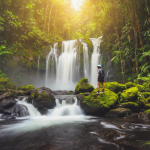
Manuel Antonio nature experiences centered on waterfalls and river trekking offer something that’s genuinely difficult to replicate anywhere else: the combination of primary rainforest biodiversity, dramatic topography, and accessible adventure within a relatively compact geographic area. The Central Pacific receives some of the highest annual rainfall on Costa Rica’s Pacific slope during the green season (invierno, May through November), which means the rivers run strong and the waterfalls are at their most spectacular precisely when other tourists avoid the region in search of guaranteed sunshine.
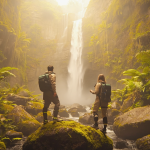
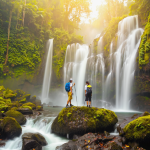
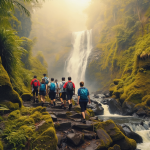
The experience of approaching a jungle waterfall on foot, navigating river crossings, and arriving at a plunge pool hidden beneath a canopy of old-growth forest is qualitatively different from arriving at a thermal resort by shuttle bus. One is a destination. The other is a journey that becomes the experience itself.
What a Guided Waterfall Tour From the Central Pacific Actually Involves
Guided waterfall tours departing from Jacó and the Central Pacific region typically involve several distinct phases that combine to create a full-day adventure. Understanding the structure helps travelers decide whether this type of experience matches what they’re looking for.
- Transport into the forest: Tours typically depart from Jacó or nearby, with pickup available from Manuel Antonio and Quepos hotels on request. The journey into the mountains involves a mix of paved road and unpaved tracks that offer increasingly dramatic views of the forest and coastal landscape.
- Guided trekking: The approach to most major waterfalls involves hiking through secondary or primary rainforest, crossing rivers on foot, and navigating terrain that ranges from gentle to moderately challenging depending on the route. A knowledgeable guide transforms this section from a walk into an education about the forest’s ecology, medicinal plants, and wildlife.
- Waterfall swimming: Arrival at the falls themselves is typically followed by free time to swim in the plunge pool, stand in the waterfall, and photograph the cascade from different angles. The water temperature is refreshing rather than cold, sitting in the range of 22–26°C depending on the season and elevation.
- Return and debrief: The return journey and any included meals round out a full-day experience that typically covers 8–10 hours from pickup to drop-off.
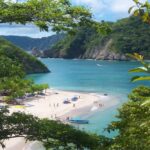
For travelers staying in Manuel Antonio, this type of excursion pairs exceptionally well with a morning at the national park. Spend your first day inside Manuel Antonio National Park spotting wildlife along the beach trails, then dedicate your second day to a waterfall tour from the region’s interior mountains. The contrast between the coastal park environment and the forested mountain watershed is striking, and it gives you a much more complete picture of what the Central Pacific ecosystem actually contains.
Hot Springs Costa Rica Central Pacific: Honest Expectations vs. Marketing Reality
The phrase “Costa Rica hot springs Central Pacific” generates significant search volume, which means the tourism marketing industry has developed content designed to capture that traffic. Travelers will encounter listings for “natural hot spring” experiences along the Central Pacific that, on closer inspection, turn out to be heated jacuzzis at boutique hotels, mechanically warmed plunge pools at spa resorts, or slightly warm river water near a volcanic feature that’s been significantly overstated.
This isn’t necessarily malicious marketing, but it does reflect a gap between what travelers are looking for and what the geography can actually deliver. Before booking anything marketed as a “hot spring” experience in the Central Pacific, ask the following questions directly:
- Is the water heated geothermally, or is it mechanically heated?
- What is the natural temperature of the water at its source?
- Is the facility located at or adjacent to a natural geothermal feature?
- Are there any mineral properties in the water from a geothermal source?
If the answer to the first question is “mechanically heated,” you’re evaluating a spa facility, not a hot spring. That may still be a worthwhile experience depending on your preferences, but it should be evaluated on its own terms rather than compared to the volcanic hot spring experiences available in the north.
A Note on the Orosi Valley Option
The Orosi Valley in Cartago province is worth mentioning because it sits closer to Manuel Antonio than Arenal does, at roughly 180-200 km via the San José route. The valley contains legitimate geothermal features, including the Los Patios thermal pools in Orosi town, which are public municipal facilities fed by genuinely warm water. These are modest, unpretentious pools popular with local Costa Rican families (ticas and ticos who use them regularly), and they offer an authentic cultural experience rather than a resort-style hot spring visit.
The drive from Manuel Antonio to Orosi requires crossing Cerro de la Muerte, the mountain pass on the Pan-American Highway that sits above the cloud forest zone. This road can be spectacular on a clear day and deeply disorienting in heavy cloud. As a day trip from Manuel Antonio, it’s feasible but demanding, involving roughly 5-6 hours of total driving. For travelers with a flexible itinerary and a genuine interest in authentic local hot spring culture rather than resort facilities, this route is worth considering.
Planning a Multi-Day Itinerary That Includes Both Manuel Antonio and Hot Springs
The most satisfying approach for travelers who want to experience both Manuel Antonio’s national park and Costa Rica’s genuine volcanic hot springs is to design a multi-destination itinerary that treats these as separate chapters of a trip rather than day trips from a single base.
A well-structured 10-14 day Costa Rica itinerary for travelers based in the US might look like this:
| Days | Region | Key Experiences | Hot Spring Access |
|---|---|---|---|
| Days 1–2 | San José / Arrival | City orientation, Mercado Central, day trip to Orosi Valley | ✅ Orosi thermal pools accessible as day trip |
| Days 3–5 | La Fortuna / Arenal | Arenal Volcano National Park, lava fields, hanging bridges, Mistico park | ✅ Multiple volcanic hot spring resorts within 20 minutes |
| Days 6–7 | Jacó / Central Pacific | Waterfall tours, beach, surf, mangrove boat tours | ❌ No geothermal springs; waterfall swimming as alternative |
| Days 8–10 | Manuel Antonio | National Park, coastal biodiversity, whale watching (seasonal), kayaking | ❌ Not a hot spring region; focus on marine and forest experiences |
| Days 11–12 | Dominical / Uvita | Marino Ballena National Park, whale watching, Nauyaca Waterfalls | ❌ No geothermal springs; Nauyaca waterfalls are exceptional |
| Days 13–14 | Return / San José | Departure, last-day options: Café Britt, Irazú Volcano, Barva Volcano | ⚠️ Orosi again possible on route to airport |
This structure places the volcanic hot spring experience (La Fortuna) in the early days of the trip when travelers are fresh and have maximum energy for a new region, then transitions to the Pacific coast for beach, waterfall, and marine experiences. No single day involves a punishing drive, and each region is experienced on its own terms rather than as an exhausting satellite excursion from somewhere else.
Cruise Passengers and Shore Excursion Visitors: Special Considerations
Cruise ships calling at Caldera port (near Puntarenas) represent a significant portion of the Central Pacific’s tourism traffic, and passengers with a 6-10 hour window ashore face particularly stark constraints when it comes to hot spring aspirations. La Fortuna is simply not accessible in a single shore excursion window from Caldera, full stop. The drive alone would consume most of the available time.
For cruise passengers docking at Caldera who want a water-based nature experience, the realistic and rewarding options are:
- Waterfall tours from Jacó: Jacó sits approximately 70 km south of Caldera, and the town serves as a base for waterfall excursions into the mountains behind the coast. A guided tour departing from Jacó can accommodate a shore excursion window with proper pre-booking and coordination.
- Tárcoles River crocodile boat tours: The Tárcoles River, which empties into the Pacific between Caldera and Jacó, hosts one of the highest concentrations of American crocodiles in Costa Rica. Boat tours on the river are dramatic, family-friendly, and completely accessible within a shore excursion timeline.
- Carara National Park: Located just 90 km south of Caldera, Carara National Park is one of the best places in the country to see scarlet macaws in a transitional forest zone between Pacific dry forest and tropical rainforest. The park has well-maintained trails and is easily incorporated into a half-day excursion.
- Manuel Antonio National Park: A longer but fully achievable shore excursion destination, Manuel Antonio requires about 2 hours of travel from Caldera each way but rewards the journey with world-class wildlife viewing and some of Costa Rica’s most beautiful beaches inside a protected park setting.
None of these include volcanic hot springs, but all of them offer genuine, high-quality encounters with Costa Rica’s natural environment within a realistic time budget. The important thing is calibrating expectations before departure so that the experience you actually have exceeds rather than disappoints the one you imagined.
What to Actually Look for When Choosing a Nature Tour Near Manuel Antonio
Whether you’re looking for waterfall swimming, wildlife encounters, or an adrenaline-forward adventure day, the quality of your experience in the Central Pacific depends heavily on who’s guiding it. The region has a well-developed tourism infrastructure, but the range in quality between operators is significant. Choosing the wrong tour company can mean a rushed, overcrowded, or poorly narrated experience that doesn’t do justice to what the landscape actually offers.
Here’s what genuinely separates a high-quality tour operator in the Central Pacific from a mediocre one:
Guide Knowledge and Naturalist Training
The Central Pacific’s biodiversity is staggering, but it’s largely invisible to an untrained eye. A guide who can spot a basilisk lizard motionless on a riverside branch, identify the medicinal uses of a heliconia plant, and explain the relationship between fig trees and the animal species that depend on them transforms a walk through the forest into something genuinely educational and memorable. Ask tour operators specifically about their guides’ naturalist training before booking. A guide who knows only how to lead the route without interpreting what you’re seeing is simply a trail leader, not a nature guide.
Group Size and Personalization
Smaller group sizes (typically 8 people or fewer per guide) allow for a more personalized experience, more wildlife spotting opportunities, and a safer environment on technical terrain like river crossings. Large group tours can feel like conveyor belts, moving quickly from point to point without the pauses that allow genuine observation and engagement with the forest.
Safety Equipment and Protocol
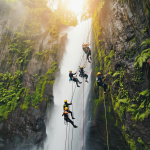
Waterfall and river trekking tours involve technical terrain. Legitimate operators provide properly fitted helmets and life jackets where appropriate, use ropes and safety lines on technical sections, and brief participants thoroughly on what to expect before entering the water. The Instituto Costarricense de Turismo (ICT) licenses tour operators in Costa Rica, and choosing an ICT-registered operator provides a baseline level of assurance about compliance with safety and environmental standards.
Environmental Commitment
Costa Rica’s CST (Certificación para la Sostenibilidad Turística) program rates tourism businesses on their environmental and social sustainability practices. Operators who have earned CST certification have demonstrated a commitment to responsible tourism that goes beyond marketing language. For ecotourism-minded travelers, asking about CST status or specific environmental practices gives a useful signal about whether the company’s sustainability claims are substantive.
The Jacó Connection: Why the Central Pacific’s Adventure Hub Matters for Manuel Antonio Visitors
Travelers based in Manuel Antonio who want access to the most varied adventure activity menu in the Central Pacific will find that Jacó, located approximately 70 km north, serves as the region’s outdoor activity hub. The town’s position between the Fila Costeña mountains and the Pacific coast gives it access to a remarkable variety of natural environments within a short radius.
For waterfall-focused experiences specifically, the rivers and streams that drain the mountains immediately east of Jacó include some of the most accessible and visually dramatic waterfalls on the Central Pacific slope. Tours departing from Jacó can pick up guests from Manuel Antonio hotels with advance arrangement, making the logistics straightforward even without a rental car.
Costa Rica Waterfall Tours operates out of Jacó and specializes precisely in this kind of immersive, expert-guided waterfall experience along the Central Pacific coast. Their tours are designed around genuine engagement with the natural environment, with guides who understand the forest’s ecology and the waterfall systems’ hydrology, and who can adapt the experience to the group’s fitness level and interests. For travelers who arrive in the Manuel Antonio area searching for a nature experience that goes beyond the national park, a guided waterfall tour represents the most authentic and memorable option the region has to offer.
If you’re ready to stop searching for hot springs that don’t exist nearby and start planning the waterfall adventure that the Central Pacific actually does brilliantly, explore the adventure tour options at Costa Rica Waterfall Tours and find the experience that matches your group’s energy and ambition.
Seasonal Considerations: When to Visit and What Changes
The Central Pacific’s two seasons have real implications for waterfall tour quality, road conditions, and overall experience, and travelers making decisions from abroad often don’t fully account for these differences.
Dry Season (Verano): December Through April
Costa Rica’s dry season brings reliable sunshine, lower humidity, and excellent beach conditions. For waterfall tours, dry season means lower water volume in the rivers, which makes river crossings easier and trails drier. Some waterfalls are reduced to a fraction of their wet-season flow by March and April, which can affect the visual drama of the experience. Dry season is the peak tourist period, so tours book up faster and popular sites see more visitors. Manuel Antonio National Park limits daily visitor numbers, so advance reservations for both the park and waterfall tours are essential during this window.
Green/Rainy Season (Invierno): May Through November
The green season brings daily afternoon rainfall, lush vegetation, and dramatically higher waterfall flows. Rivers run powerful and the plunge pools fill deep. Wildlife activity often increases during the green season as fruiting trees attract more species, and the forest is at its most intensely green and biodiverse. Trail conditions can be muddy and river crossings require more care, but tours led by experienced guides manage these conditions safely. Green season pricing is typically lower across the region, and crowd levels at attractions are significantly reduced. For travelers comfortable with afternoon rain and willing to embrace the tropical environment as it actually is, the green season offers genuinely superior waterfall experiences.
There is no bad time to visit the Central Pacific, only different versions of the experience. The key is knowing which version you’re arriving for and packing accordingly.
Frequently Asked Questions About Hot Springs Near Manuel Antonio
Are there any natural hot springs near Manuel Antonio?
No natural geothermal hot springs exist near Manuel Antonio. The Central Pacific region sits outside Costa Rica’s volcanic zone, so the geology doesn’t produce naturally heated spring water. Some resort spa facilities in the area offer heated pools, but these are mechanically warmed, not geothermally sourced.
How far is Manuel Antonio from Arenal’s hot springs?
The drive from Manuel Antonio to La Fortuna (the gateway town to Arenal’s hot spring resorts) is approximately 280-310 km and takes between 4.5 and 6 hours each way depending on road and traffic conditions. This is not a feasible day trip and should be treated as a separate destination requiring at least one overnight stay.
What is the closest hot spring to Manuel Antonio?
The closest legitimate geothermal hot spring experience to Manuel Antonio is the Los Patios public thermal pools in Orosi, Cartago province, approximately 180-200 km away via San José. This is achievable as a long day trip but involves crossing the Cerro de la Muerte mountain pass, which requires confident driving and a very early start.
Is there a thermal pool experience in the Manuel Antonio area worth visiting?
Several upscale hotels and wellness resorts in the Quepos-Manuel Antonio corridor offer heated spa pools and hydrotherapy facilities. These are enjoyable amenities if you’re already staying at the property, but they don’t replicate the volcanic hot spring experience and are best evaluated as spa services rather than natural hot spring visits.
What water-based nature experiences are actually available near Manuel Antonio?
The Central Pacific excels at river swimming holes, waterfall plunge pools, ocean kayaking, mangrove boat tours, snorkeling at Biesanz Beach, and guided river excursions. Waterfall tours departing from Jacó (70 km north) are particularly popular and represent the region’s most distinctive water-based nature experience.
Can I visit hot springs and Manuel Antonio on the same trip?
Yes, but they should be treated as separate chapters of your itinerary rather than day trips from a single base. A well-designed 10-14 day Costa Rica itinerary might include 2-3 nights in La Fortuna for hot springs and volcano experiences, followed by time in Jacó and Manuel Antonio for coastal and waterfall adventures.
Are waterfall tours near Manuel Antonio suitable for families?
Yes, many waterfall tours in the Central Pacific are designed to accommodate mixed-fitness groups including families with children. Reputable operators offer routes that range from family-friendly walking trails to more challenging technical treks, so it’s worth discussing your group’s ages and fitness levels with the operator when booking.
What should I wear to a waterfall tour in the Central Pacific?
Wear quick-dry clothing, a swimsuit underneath, sturdy closed-toe shoes or water sandals with ankle support, and bring sunscreen, a light rain jacket, and a dry bag for electronics. Leave flip-flops and open-toed sandals at the hotel, as river crossings and trail terrain require proper footwear.
Is it safe to swim in waterfall pools near Manuel Antonio?
Yes, when visiting with a licensed operator who assesses conditions in real time. River levels in the Central Pacific can rise rapidly during the rainy season following heavy rainfall, and experienced guides monitor conditions and adjust plans accordingly. Never swim in waterfall pools without local knowledge of current river conditions, particularly during or immediately after heavy rain.
Do I need to book waterfall tours in advance from Manuel Antonio?
During the dry season peak (December through April), advance booking of at least a few days is strongly recommended as tours fill quickly. During the green season, same-day or next-day bookings are often possible, but advance reservation is still the safest approach for groups of more than four people.
Can cruise passengers from Caldera do a waterfall tour near Manuel Antonio?
Cruise passengers docking at Caldera can access waterfall tours through the Jacó corridor within a typical shore excursion window. Jacó is approximately 70 km from Caldera. It’s not possible to reach Manuel Antonio National Park and do a waterfall tour in the same shore excursion day, so choose one focus and plan accordingly with a pre-booked operator who understands port schedules.
What’s the difference between a waterfall tour and a hot spring visit in terms of experience quality?
Both offer water-based relaxation in natural settings, but the experiences are fundamentally different. Hot spring visits are typically more passive, centered on soaking in warm mineral-rich water in developed resort settings. Waterfall tours are active, involving hiking, river crossings, and arrival at a natural cascade that you’ve earned through physical effort. For travelers drawn to adventure and immersion in wild landscapes, waterfall tours often deliver a more vivid and memorable experience.
Key Takeaways
- No natural geothermal hot springs exist near Manuel Antonio. The Central Pacific sits outside Costa Rica’s volcanic zone, and any “thermal pool” marketed locally is almost certainly a mechanically heated spa facility.
- La Fortuna’s volcanic hot springs are 4.5-6 hours from Manuel Antonio each way, making them a multi-day destination, not a day trip.
- The Central Pacific’s real water-based nature experiences are waterfall swimming holes, river trekking, ocean kayaking, and mangrove tours, and these are genuinely world-class.
- Jacó serves as the adventure activity hub for the entire Central Pacific region, with waterfall tours accessible from Manuel Antonio with advance booking.
- Travelers who want both hot springs and Manuel Antonio should structure a multi-destination itinerary rather than attempting punishing day trips between the two regions.
- Green season waterfalls are more dramatic than dry season, with higher water volume and fewer crowds, though trail conditions require appropriate footwear and a capable guide.
- ICT-licensed and CST-certified operators provide meaningful assurance about safety standards and environmental commitment when choosing a tour company.
- Cruise passengers from Caldera can access Jacó-based waterfall tours within a shore excursion window, but should pre-book with an operator familiar with port schedules.
Make the Most of the Central Pacific’s Real Natural Strengths
Manuel Antonio is one of Costa Rica’s most beloved destinations for very good reasons: the national park is extraordinary, the beaches are spectacular, and the surrounding landscape contains some of the most accessible tropical biodiversity on the planet. It simply doesn’t offer volcanic hot springs, and no amount of resort marketing changes that geographic reality.
The travelers who leave the Central Pacific most satisfied are the ones who leaned into what the region actually does best. They spent their mornings spotting squirrel monkeys and two-toed sloths in the park, their afternoons cooling off in jungle waterfall pools after a guided trek through the forest, and their evenings watching the sun drop into the Pacific from a hillside restaurant in Quepos. That’s a Costa Rica experience that stands entirely on its own.
If you’re building your itinerary and want to make sure the waterfall component is guided by people who know this landscape as well as anyone in the Central Pacific, browse the adventure tours offered by Costa Rica Waterfall Tours. Their team operates with the kind of deep local knowledge and commitment to the guest experience that makes the difference between a memorable day in the forest and just another item crossed off a checklist.
The hot springs will be there waiting in La Fortuna when your itinerary brings you north. For now, the waterfalls of the Central Pacific are ready to deliver something just as unforgettable.
About the author
Costa Rica Waterfall Tours Editorial Team · Editorial Team
Book Your Guided Waterfall Adventure