Most corporate retreat planners start their search the same way: a conference room, a budget spreadsheet, and a list of activities that sound fine on paper but fail to move the needle on team cohesion. Golf outings get politely attended. Escape rooms spark a few laughs. Ropes courses check a box. Then the group flies home, returns to their desks, and two weeks later nobody mentions it again.
What separates a forgettable team outing from a genuinely transformative experience is not the budget or the location, it is the quality of the shared challenge. Research in organizational psychology consistently points to one finding: teams that navigate real uncertainty together, with real stakes and real physical engagement, develop trust at a speed that no workshop or facilitated debrief can replicate. That insight is exactly why adventure tours in Costa Rica have moved from a niche curiosity to a mainstream fixture in corporate incentive travel calendars. And among the many options available, waterfall tours for groups in Costa Rica have emerged as a particularly powerful format, combining physical challenge, stunning natural scenery, and the kind of collective accomplishment that employees actually talk about for years.
This article breaks down the science and the strategy behind corporate adventure travel, explains why Jacó and the Central Pacific coast have become a preferred base for group adventure experiences, and provides a practical framework for retreat planners evaluating Costa Rica adventure packages for their teams.
Why Shared Challenge Builds Trust Faster Than Any Workshop
The core argument for adventure-based team building rests on a straightforward psychological principle: trust is built through observed behavior under pressure, not through stated intentions. When a colleague helps you navigate a slippery river crossing or encourages you through a demanding uphill trek to a waterfall, you learn something about that person that a personality assessment cannot tell you. You see how they behave when things are uncomfortable, uncertain, and physically demanding.
Organizational behavior research has long distinguished between swift trust, the kind formed quickly in temporary teams facing shared challenges, and the slower, more fragile trust that develops through professional familiarity alone. Adventure experiences accelerate the conditions for swift trust by placing colleagues in a context where hierarchy flattens, individual competencies shift, and mutual reliance becomes genuine rather than performative.
A senior executive who is physically cautious on a steep rainforest trail may find themselves relying on a junior team member who grew up hiking. That role reversal, however brief, reshapes how both individuals perceive each other back in the office. Industry observers who study experiential learning programs consistently report that adventure-based interventions produce measurable improvements in interpersonal communication and cross-functional collaboration, outcomes that traditional team-building formats struggle to match.
The “Productive Discomfort” Framework
Adventure educators use a concept called the optimal challenge zone, the space between activities that feel too easy (producing boredom and disengagement) and activities that feel genuinely dangerous (producing anxiety and shutdown). The sweet spot in this zone is what practitioners call productive discomfort: challenging enough to require full engagement, safe enough to allow it.
Waterfall tours in Costa Rica, when guided by experienced operators, occupy this zone almost perfectly. The terrain is genuinely demanding, river crossings, root-covered paths, steep descents through humid rainforest, but it is navigable by most fitness levels with proper guidance and preparation. The physical challenge is real, the stakes feel meaningful, and the payoff (standing at the base of a cascading waterfall in the middle of a living rainforest) is visceral and memorable. That combination is extraordinarily difficult to engineer in a hotel conference room or a managed corporate campus.
What This Means for Corporate Retreat Planners
If your team-building budget is being evaluated against measurable outcomes, the case for adventure travel in Costa Rica is stronger than it might initially appear. The return on investment is not just in morale or engagement scores, though those do move. It shows up in how quickly new project teams find their rhythm, how openly colleagues communicate across departments, and how willing individuals are to extend trust in ambiguous situations. These are the capabilities that drive performance in modern organizations, and they are cultivated, not trained.
Why Jacó Has Become a Strategic Hub for Group Adventure Travel
Location logistics are a real concern for corporate retreat planners. Getting a group of 20 to 40 people from an international flight to an adventure experience without losing half a day to transfers is a genuine planning challenge. This is one of the most underappreciated reasons why Jacó has become such a popular anchor point for group tours in Costa Rica.
Jacó sits approximately 100 kilometres southwest of San José’s Juan Santamaría International Airport, a drive that typically takes around 90 minutes on the Ruta 27 highway. For groups arriving from North America or Europe, this means a morning flight arrival can translate to an afternoon adventure experience on the same day. No internal flights, no remote logistics, no multi-stage transfers. The proximity alone makes Jacó operationally superior to many other Costa Rican adventure destinations for time-constrained corporate groups.
Beyond logistics, the Central Pacific region surrounding Jacó offers extraordinary ecological diversity within a compact geographic area. Within a short drive or boat ride of the town, groups can access:
- Primary and secondary rainforest with documented populations of scarlet macaws, white-faced capuchin monkeys, and three-toed sloths
- Dramatic waterfall systems fed by the Talamanca mountain range, accessible via guided trekking routes
- Pacific coastline and estuarine ecosystems through Parque Nacional Carara, one of the most biodiverse transition zones in Central America
- River systems and canyon environments suitable for kayaking and white-water activities
- Ocean-based experiences including sport fishing, surfing instruction, and sunset catamaran tours
This density of experience options within a single base location means corporate groups can run multi-day adventure itineraries without the logistical complexity of moving accommodations between experiences. Retreat planners can design two or three consecutive adventure days, each offering a completely different environment and challenge profile, all departing from the same Jacó base.
The Accommodation and Infrastructure Advantage
Jacó has matured significantly as a destination over recent decades. The town now offers a range of accommodation options that meet corporate travel standards, from boutique hotels with meeting facilities to larger resort properties capable of hosting group dinners, presentations, and evening programming. This infrastructure combination, adventure accessibility plus functional corporate hospitality, is harder to find than it might seem in a country where many spectacular natural areas are intentionally kept remote.
For adventure tours in Jacó, Costa Rica, the combination of experienced local operators, well-maintained trail systems, and proximity to international air connections creates a genuinely competitive offering for incentive travel buyers comparing destinations across Central America and the Caribbean.
The Science of Physical Challenge and Psychological Growth
Personal growth through adventure travel is not a marketing claim, it is a documented psychological phenomenon with a substantial body of supporting research. Understanding the mechanisms involved helps corporate retreat planners articulate the value of adventure programming to stakeholders who may be skeptical of “team-building trips” as a category.
The psychological literature on adventure-based learning points to several interconnected processes that occur when individuals face genuine physical challenges in natural environments:
Self-Efficacy Development
Self-efficacy, an individual’s belief in their capacity to execute behaviors necessary to produce specific outcomes, is one of the strongest predictors of workplace performance, resilience, and adaptability. Psychologist Albert Bandura’s foundational research identified mastery experiences as the most powerful source of self-efficacy development. Completing a challenging waterfall trek, crossing a river that felt daunting at the outset, or summiting a ridge to a view that seemed impossible an hour earlier, these are mastery experiences in the clearest sense.
When employees return from a Costa Rica adventure with a concrete memory of having done something they were not sure they could do, that memory becomes a reference point. Research in positive psychology suggests that individuals who accumulate mastery experiences outside their professional domain become more willing to take on stretch assignments, speak up in high-stakes meetings, and persist through organizational uncertainty. The waterfall becomes a metaphor they carry back to their desks.
Attentional Restoration and Cognitive Renewal
Attention Restoration Theory, developed by environmental psychologists Rachel and Stephen Kaplan, proposes that natural environments provide a specific type of cognitive recovery that urban and built environments cannot. The theory distinguishes between directed attention, the focused, effortful concentration required for analytical work, and involuntary attention, which is engaged effortlessly by natural stimuli like moving water, forest canopies, and wildlife.
Extended time in natural environments allows directed attention to recover, reducing the cognitive fatigue that accumulates during intensive work periods. For corporate teams at the end of a demanding quarter or project cycle, a multi-day rainforest adventure does not just provide a change of scenery, it provides genuine neurological recovery. Groups return from these experiences with measurably improved capacity for creative problem-solving and strategic thinking, according to studies examining cognition before and after wilderness immersion.
Emotional Regulation Under Uncertainty
Modern workplaces demand high-functioning emotional regulation under conditions of ambiguity and change. Adventure environments are unusually effective training grounds for exactly this skill. When the trail becomes unclear, when rain makes the path slippery, or when the final approach to a waterfall requires navigating a steep and unfamiliar descent, individuals must manage their emotional responses in real time, and do so in front of colleagues.
The skills exercised in those moments, staying calm, communicating clearly, asking for help, offering encouragement, are structurally identical to the skills required in high-pressure professional environments. Experienced adventure guides in Costa Rica understand this implicitly, and the best operators design their tour experiences to create and resolve these moments of productive challenge in a way that generates maximum developmental value for participants.
What Makes Costa Rica Waterfall Tours Uniquely Suited to Corporate Groups
Not all adventure activities translate equally well to corporate group settings. Rock climbing, for example, is typically a one-at-a-time activity that leaves most of the group watching rather than participating. Surfing lessons can create sharp divisions between those who pick it up quickly and those who struggle, potentially reinforcing existing social hierarchies rather than disrupting them. Waterfall tours for groups in Costa Rica avoid most of these pitfalls through a combination of structural and contextual factors.
Universal Participation Without Uniform Ability
One of the most important qualities of a good corporate adventure activity is that everyone can genuinely participate, regardless of fitness level or prior experience. Well-designed waterfall tours accommodate this by allowing individuals to progress at their own pace while keeping the group together. The trail itself becomes a shared challenge rather than a competitive arena, slower participants are supported rather than left behind, and the destination is experienced collectively.
Experienced operators in Jacó design their group tour routes with this in mind. Trail selection, pace management, and group positioning are all calibrated to ensure that no participant feels isolated or inadequate. The guide’s role is partly logistical and partly social, managing group dynamics as deliberately as they manage physical safety.
The Destination as a Shared Reward
The structure of a waterfall tour creates a natural narrative arc that most team-building activities lack: there is a clear beginning (the trailhead), a period of sustained shared effort (the trek), and a collectively experienced reward (arriving at the waterfall). This arc maps precisely onto the project structures that corporate teams navigate every day, making the experience feel symbolically resonant rather than arbitrarily recreational.
Arrival at a spectacular waterfall, particularly in the dense, humid rainforest of Costa Rica’s Central Pacific region, where the contrast between the exertion of the trail and the sudden magnificence of a cascading waterfall is genuinely dramatic, produces a shared emotional peak that bonds groups in ways that are difficult to manufacture artificially. Neurologically, shared positive emotional peaks create the conditions for what psychologists call collective effervescence: a sense of group identity and shared purpose that persists well beyond the moment itself.
Built-In Debrief Opportunities
The rest stops, river crossings, and summit moments on a waterfall trek provide natural opportunities for facilitated reflection. Experienced operators can incorporate brief guided conversations at key points on the trail, connecting the physical experience to professional themes, communication under pressure, trust, interdependence, adaptability. This structured reflection converts a great outdoor experience into a genuinely developmental one, satisfying both the adventure-seekers and the outcome-oriented stakeholders in any corporate group.
Designing a Corporate Retreat Around Costa Rica Adventure Packages
The difference between a well-designed corporate adventure retreat and a loosely organized trip is largely a function of intentional programming. Costa Rica adventure packages for corporate groups should be evaluated not just on the quality of individual activities but on how those activities are sequenced, how they build on each other, and how they are framed for participants before, during, and after the experience.
A Framework for Evaluating Corporate Adventure Packages
When comparing packages from different operators, retreat planners benefit from applying a consistent evaluation framework. The table below outlines the key dimensions to assess:
| Evaluation Dimension | What to Look For | Red Flags |
|---|---|---|
| Guide Experience | Certified guides with group leadership experience, bilingual capability, wilderness first aid training | ❌ No certifications listed, high guide turnover, limited local knowledge |
| Safety Protocols | Written safety briefings, equipment checks, emergency communication plans, participant fitness assessment | ❌ Vague safety descriptions, no pre-trip medical screening, minimal equipment standards |
| Group Size Management | Defined maximum group sizes, guide-to-participant ratios, sub-group options for large teams | ❌ Unlimited group sizes, single-guide operations for large groups |
| Customization Capability | Flexibility in itinerary, pacing, difficulty level, and integration of team-building elements | ❌ Rigid fixed itineraries with no corporate group differentiation |
| Sustainability Credentials | ICT registration, CST certification, SINAC compliance, low-impact trail management | ❌ No environmental certifications, no mention of trail impact management |
| Logistics Support | Group transport coordination, meal/hydration planning, gear provision, pre-trip communication | ❌ Self-organized transport, minimal pre-trip briefing, no equipment provision |
| Review History | Consistent five-star reviews, specific mentions of group experiences, operator responsiveness to feedback | ❌ Generic reviews, no group-specific testimonials, unresolved complaints |
Sequencing Activities for Maximum Impact
For multi-day retreats, the sequencing of activities matters as much as the activities themselves. Industry experience suggests a three-phase structure that aligns with how groups naturally develop:
Phase 1, Orientation and Connection (Day 1): Begin with a lower-intensity shared experience that introduces the environment and establishes group comfort. A guided nature walk through Parque Nacional Carara, a river kayaking introduction, or an evening wildlife tour creates initial shared references without demanding peak physical effort from a jet-lagged group.
Phase 2, Challenge and Cohesion (Day 2–3): This is where the waterfall trek belongs. Deploy the most physically demanding and emotionally engaging experiences after the group has had time to settle into the environment and each other. The challenge will land more powerfully when participants are rested, comfortable, and already building interpersonal connections.
Phase 3, Reflection and Integration (Final Day): Close with experiences that are restorative rather than demanding, a beach morning, a cooking class featuring Costa Rican cuisine, or a guided visit to a local community project. This gives the group space to process the experiences of the preceding days and begin translating insights back to their professional context.
The Ecotourism Dimension: Why It Matters for Corporate Groups
Corporate social responsibility has moved from peripheral to central in how companies present themselves to employees, clients, and investors. For corporate retreat planners, this creates both an obligation and an opportunity: choosing adventure experiences that align with organizational values around sustainability sends a message that extends well beyond the trip itself.
Costa Rica’s ecotourism framework is among the most sophisticated in the world. The country’s Certificación para la Sostenibilidad Turística (CST) program, administered by the Instituto Costarricense de Turismo (ICT), rates tourism operators on a scale of one to five leaves based on their environmental and social performance. Working with CST-certified operators ensures that the corporate group’s adventure spending contributes to ecosystem conservation, local employment, and responsible resource management.
The Ley de Biodiversidad and Ley Forestal, Costa Rica’s foundational environmental legislation, establish strict protections for the ecosystems that adventure tourism depends on. Responsible operators work within these frameworks, coordinating with SINAC (Sistema Nacional de Áreas de Conservación) to ensure that trail use, group sizes, and activity types remain within sustainable limits. For corporate groups with active ESG reporting requirements, working with operators who can document their compliance with these frameworks adds genuine value to the retreat’s CSR narrative.
The “Leave No Trace” Corporate Standard
Beyond certifications, the most meaningful measure of an operator’s environmental commitment is their day-to-day practice. The principles outlined by Leave No Trace, minimizing waste, staying on designated trails, respecting wildlife, and leaving natural features undisturbed, should be observable in how guides conduct themselves and brief participants before entering sensitive ecosystems.
For corporate groups, this behavioral standard has a secondary benefit: it models the kind of disciplined, values-aligned behavior that organizations want to cultivate internally. Watching a guide carefully manage a group’s passage through a delicate riverine ecosystem demonstrates organizational values in action far more powerfully than a company policy document ever could.
Seasonal Strategy: Timing Your Corporate Group Tour
Costa Rica’s two distinct seasons have significant practical implications for corporate retreat planning. Understanding these patterns allows retreat planners to make informed decisions about timing rather than discovering the constraints after booking.
The dry season (verano, roughly December through April) offers consistently clear skies, lower humidity, and easier trail conditions. Waterfalls tend to be more moderate in volume but more accessible. This period is peak tourist season in Costa Rica, which means higher accommodation rates, greater competition for booking slots with popular operators, and livelier town environments in Jacó. For corporate groups prioritizing comfortable conditions and predictable weather, the dry season is the natural choice.
The green season (invierno, May through November) transforms the landscape considerably. Rainfall intensifies waterfall flows dramatically, creating more spectacular visual experiences at the cost of more challenging trail conditions. The rainforest is at its most lush and vibrant during this period, wildlife is more active, and accommodation rates are generally lower. For adventure-oriented groups that want the most immersive, dramatic version of the Costa Rican rainforest experience, and are prepared for afternoon rain as a feature rather than a flaw, the green season offers genuinely superior experiences at the waterfall destinations themselves.
| Factor | Dry Season (Dec–Apr) | Green Season (May–Nov) |
|---|---|---|
| Trail Conditions | ✅ Drier, more accessible | ⚠️ Muddy, more physically demanding |
| Waterfall Volume | ⚠️ Moderate flow | ✅ Peak dramatic flow |
| Accommodation Rates | ❌ Peak pricing | ✅ Lower rates, better availability |
| Wildlife Activity | ⚠️ Good but variable | ✅ High activity, lush vegetation |
| Booking Availability | ❌ Competitive, book early | ✅ More flexible scheduling |
| Overall Experience Drama | ⚠️ Beautiful but predictable | ✅ Intense, immersive, memorable |
For corporate groups where participant comfort is the primary concern, the dry season between January and March offers an excellent balance of reliable conditions and post-holiday scheduling. For groups that want the most impactful adventure narrative, a June or September trip during the green season, carefully managed by an experienced operator with appropriate gear and safety protocols, can be extraordinary.
How to Prepare Your Corporate Group for a Waterfall Trek
One of the most common failures in corporate adventure travel is inadequate preparation, not of the itinerary, but of the participants. Groups that arrive without appropriate footwear, without adequate hydration habits, or without realistic expectations of physical demands will have a diminished experience regardless of how good the operator is. This preparation responsibility falls jointly on the retreat planner and the tour operator.
Pre-Trip Communication That Actually Works
Effective pre-trip briefing for corporate groups should cover four areas:
- Physical expectations: Honest, specific descriptions of trail length (in kilometres), elevation gain (in metres), estimated duration, and the types of terrain participants will encounter. Avoiding euphemisms like “moderate challenge” in favor of concrete descriptions, “approximately 4 km round trip with two river crossings and a 120-metre elevation gain”, allows participants to self-assess and prepare appropriately.
- Gear requirements: Specific footwear recommendations (trail shoes or hiking boots, not sandals or running shoes), clothing appropriate for humid rainforest conditions, sun protection, and any personal medical items. Operators who provide a detailed packing list demonstrate experience with group logistics.
- Safety protocols: What to do if someone feels unwell on the trail, how to communicate with guides, what emergency procedures look like. This information reduces anxiety and increases participant confidence.
- The experience narrative: Brief the group on what they will see, why it matters ecologically, and how to be present in the environment. Participants who arrive with contextual knowledge engage more deeply and report higher satisfaction with the experience.
Fitness Considerations for Mixed-Ability Groups
Corporate groups almost always include a wide range of fitness levels, and this range is often greater than the retreat planner anticipates. The safest approach is to design the primary itinerary around the least-fit participant’s realistic capacity, while building in optional extensions or side trails that allow more physically capable participants to add challenge without the group fragmenting.
Operators with experience in corporate group tours will typically conduct a brief pre-tour assessment, either through a questionnaire or through an initial conversation with the group lead, to calibrate the experience appropriately. This is a meaningful differentiator between experienced operators and those who treat all groups identically regardless of composition.
Personal Growth Through Adventure Travel: The Individual Dimension
Personal growth through adventure travel is not just a collective phenomenon, it operates at the individual level in ways that have lasting professional relevance. Understanding what individual participants typically experience during and after a well-designed adventure retreat helps retreat planners communicate the value of the investment to both leadership and participants themselves.
The Identity-Expanding Effect
One of the most consistent findings in adventure-based learning research is what practitioners call the identity-expanding effect: participants emerge from challenging outdoor experiences with a slightly expanded sense of what they are capable of. This is not merely confidence in the colloquial sense, it is a genuine update to an individual’s self-concept, the mental model they carry of who they are and what their limits are.
For professionals who have spent years operating within narrowly defined role expectations, the experience of navigating a demanding rainforest trail, managing physical discomfort, and arriving at a spectacular natural destination is a reminder that they exist beyond their job title. That reminder has a documented carry-over effect on workplace behavior: individuals who have recently had identity-expanding experiences tend to approach professional challenges with greater creativity and less defensive rigidity.
The Role of Natural Awe
Psychological research on the emotion of awe, characterized by a sense of vastness that challenges existing mental frameworks, has found consistent associations between awe experiences and prosocial behavior, reduced self-focus, and increased sense of connectedness with others. Waterfalls, as natural phenomena, are among the most reliable awe-inducing stimuli available: the combination of scale, sound, movement, and the sensory richness of a rainforest environment creates conditions for genuine awe that urban or built environments rarely replicate.
For corporate groups, this matters because the prosocial effects of awe, greater generosity, reduced ego-driven conflict, increased willingness to prioritize group goals over individual ones, are exactly the behavioral shifts that team-building programming aims to produce. A well-timed moment of collective awe at a waterfall destination can accomplish what hours of facilitated team activities cannot.
Disconnection as a Developmental Tool
Modern professionals are chronically over-connected to digital communication channels, and this over-connection has measurable costs for cognitive performance, emotional regulation, and creative capacity. A guided waterfall trek in Costa Rica’s rainforest provides enforced digital disconnection, not as a punitive restriction but as a natural consequence of being deep in a forest environment where the appropriate response is sensory engagement with the physical world.
Industry observers consistently report that the digital disconnection component of adventure travel is among the most valued aspects reported by participants in post-retreat surveys. The permission to be fully present in a physical environment, without the ambient anxiety of unread messages and pending notifications, is itself a form of restoration that many professionals have not experienced in years.
Frequently Asked Questions About Corporate Adventure Tours in Costa Rica
What group size is ideal for a corporate waterfall tour in Costa Rica?
Most experienced operators in Jacó can comfortably manage groups between 8 and 30 participants on waterfall treks. Larger groups of 30 to 60 can typically be accommodated by splitting into sub-groups with separate guide assignments, departing at staggered intervals. Groups smaller than 8 function well but may miss some of the social dynamics that make group adventure experiences particularly powerful for team cohesion. For optimal trail safety and experiential quality, a guide-to-participant ratio of 1:10 or better is the standard to look for.
Do participants need prior hiking experience for Costa Rica waterfall tours?
No prior hiking experience is required for most guided waterfall tours in the Jacó area. Reputable operators design their routes with mixed-ability groups in mind, and experienced guides manage pacing and support to ensure that all fitness levels can complete the experience. Participants should have a basic level of general mobility and be comfortable walking on uneven terrain. Medical conditions that affect mobility or cardiovascular exertion should be disclosed to operators in advance so routes and pacing can be adjusted appropriately.
What is the best time of year for a corporate retreat in Jacó?
The dry season between January and April offers the most comfortable conditions for groups with mixed fitness levels and participants unfamiliar with tropical environments. However, the green season (May through November) delivers more dramatic waterfall experiences, lower accommodation costs, and greater scheduling flexibility. Many experienced retreat planners choose shoulder periods, late November to early December, or late April, to capture the advantages of both seasons.
How does Costa Rica’s CST certification affect operator selection?
The CST (Certificación para la Sostenibilidad Turística) is a credible, government-administered certification that evaluates operators across environmental management, social engagement, and economic sustainability dimensions. Choosing a CST-certified operator provides documented assurance that the company operates within Costa Rica’s regulatory framework for sustainable tourism. For corporate groups with active ESG reporting, this certification can be referenced in sustainability reports as evidence of responsible procurement in corporate travel.
What safety standards should corporate retreat planners require from Costa Rica adventure operators?
At minimum, retreat planners should require: ICT (Instituto Costarricense de Turismo) operator registration, wilderness first aid certification for all lead guides, written emergency protocols with defined communication procedures, equipment inspection records, and participant pre-screening processes for medical conditions. Operators should be able to provide these credentials on request. Strong review histories specifically mentioning safety management are also meaningful indicators of operational quality.
Can waterfall tours be combined with other activities for a multi-day corporate program?
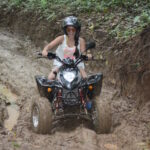
Absolutely, and this combination approach is typically how the most effective corporate retreats are structured. Jacó’s location provides convenient access to river kayaking, sport fishing charters, surfing lessons, wildlife tours through Parque Nacional Carara, ATV excursions, and zip-line canopy experiences. Most operators in the region offer multi-activity packages or can coordinate with complementary providers to build a cohesive multi-day itinerary. Sequencing matters: place the most physically demanding activities mid-retreat when the group is fully acclimatized and cohesion is building.
How far in advance should corporate groups book Costa Rica adventure packages?
For groups of 15 or more during the dry season (December through April), booking 3 to 6 months in advance is strongly recommended. Popular operators in Jacó fill their peak-season group slots quickly, and last-minute bookings often result in compromised itineraries or reduced operator options. Green-season bookings for groups can often be secured with less lead time, though early booking still ensures the best accommodation and guide availability.
What currency do participants need for tours in Jacó?
Most tour operators in Jacó accept both USD and Costa Rican colones (CRC/₡). International corporate groups typically transact in USD for tour packages and accommodation. Day-to-day personal expenses, meals, souvenirs, local transport, are best handled in colones. ATMs dispensing both currencies are widely available in Jacó. Many operators can issue invoices in USD for corporate expense reporting purposes.
Are there environmental restrictions that affect group tour access to waterfalls near Jacó?
Yes. Several waterfall destinations in the Central Pacific region fall within or adjacent to areas managed by SINAC under Costa Rica’s protected area system. Access is regulated under the Ley Forestal and Ley de Biodiversidad, and group sizes, trail usage, and activity types may be subject to permit requirements. Reputable operators manage these compliance requirements on behalf of their clients, ensuring that the group’s access is fully legal and that trail use remains within sustainable limits. Retreat planners should confirm with operators that all necessary permits are included in the package.
How do Costa Rica waterfall tours support local communities?
Responsible operators in Jacó source their guides, transport, catering, and equipment locally, creating direct economic benefits for Central Pacific communities. Many operators also contribute to conservation funding through arrangements with SINAC or local environmental NGOs. For corporate groups, this community benefit dimension adds meaningful substance to the ESG narrative of the retreat, participants are not just having an adventure, they are contributing to the economic sustainability of a community that depends on responsible tourism.
What should participants wear for a rainforest waterfall trek?
The standard recommendation from experienced Jacó operators includes: lightweight, quick-dry hiking pants or shorts, moisture-wicking long-sleeve shirts (for sun and insect protection), waterproof trail shoes or hiking boots with ankle support, a lightweight rain jacket, and a hat with brim for sun exposure on open sections. Participants should avoid cotton fabrics, which retain moisture and increase chafing risk in humid conditions. Operators typically provide or recommend specific gear lists as part of pre-tour briefing materials.
How does adventure travel in Costa Rica compare to other corporate retreat destinations?
Costa Rica’s combination of ecological diversity, proximity to North American hubs, mature tourism infrastructure, and world-class adventure operator ecosystem makes it genuinely competitive against alternatives like Panama, Peru, or Caribbean island destinations. The country’s political stability, high English proficiency among tourism professionals, and strong regulatory framework for adventure tourism reduce the logistical complexity that can undermine retreats in less developed destinations. For North American corporate groups in particular, the flight time advantage, 3 to 5 hours from most major US cities, is a meaningful practical benefit.
Key Takeaways
- Adventure-based team building works because it creates genuine shared challenge, not simulated challenge. The trust built through a demanding waterfall trek in Costa Rica’s rainforest transfers directly to professional relationships.
- Jacó is strategically positioned for corporate groups: 90 minutes from San José’s international airport, with world-class adventure access, mature hospitality infrastructure, and experienced operators capable of handling large groups.
- The waterfall tour format is uniquely well-suited to mixed-ability corporate groups because it offers universal participation, a natural narrative arc, and a shared emotional peak that creates lasting group identity.
- Personal growth through adventure travel is a documented psychological process, not marketing language. Self-efficacy development, cognitive restoration, and identity expansion are measurable outcomes of well-designed adventure experiences.
- Seasonal strategy matters. Dry season (December–April) offers comfort and predictability. Green season (May–November) offers drama, lower costs, and peak waterfall experiences. Both have legitimate corporate retreat applications.
- Operator selection is the highest-leverage decision in planning a corporate adventure retreat. Evaluate guide credentials, safety protocols, CST sustainability certification, group management capability, and review history before committing.
- Costa Rica adventure packages for corporate groups should be evaluated as developmental investments, not recreational perks. The organizations that frame them correctly get the most out of them, in team performance, employee engagement, and ESG narrative value.
- Pre-trip preparation is non-negotiable. Groups that arrive informed, appropriately geared, and with realistic physical expectations have dramatically better experiences than those who arrive cold. The best operators provide detailed pre-trip briefing materials as a standard part of their service.
For retreat planners ready to move beyond the conference room and invest in an experience that genuinely moves teams forward, the Central Pacific coast of Costa Rica offers something rare: a destination where the adventure is real, the infrastructure is reliable, and the natural environment delivers on every promise. Costa Rica’s waterfall destinations are not just beautiful, they are one of the most effective team-building environments on earth, backed by both ecological science and organizational psychology. The only question left is when your group will go.
About the author
Costa Rica Waterfall Tours Editorial Team · Editorial Team
Ready to Experience Costa Rica’s Waterfalls?
Join a five-star, expert-guided waterfall and adventure tour from Jacó on Costa Rica’s Central Pacific coast — small groups, safety-first guides, and unforgettable rainforest scenery.
Book Your Guided Waterfall Adventure →
Popular guides: Best waterfalls near Jacó · Costa Rica waterfall swimming guide · Why visit Costa Rica’s waterfalls