Here’s something most travelers get wrong about La Fortuna: they treat the hot springs as an afterthought, a relaxing cap on a long day of volcano hikes, zip-lining, and waterfall chasing. But the thermal pools surrounding Arenal are not a footnote to the adventure. For many visitors, soaking in geothermally heated water while mist rolls off the volcano above is the defining memory of their entire Costa Rica trip. The problem is, with dozens of options ranging from free roadside pools to luxury resort complexes charging over $100 per person, making the wrong choice wastes both money and time in one of the most spectacular natural settings on the planet.
This guide cuts through the marketing noise. Whether you’re planning a full Arenal itinerary or adding La Fortuna as a day trip from the Central Pacific coast, what follows is a detailed, honest breakdown of the best hot springs in La Fortuna, how they compare, what to expect at each price point, and how to build a smarter trip around them.
Why La Fortuna Has the Best Hot Springs in Costa Rica
La Fortuna’s thermal springs are not a manufactured attraction. They are a direct consequence of Arenal Volcano’s geothermal activity, which heats subsurface water as it moves through volcanic rock before emerging at the surface in a range of temperatures, typically between 30°C and 60°C depending on proximity to the heat source. The result is a network of natural and developed thermal pools concentrated along the western flanks of the Arenal massif, particularly along the road between La Fortuna town and Arenal Volcano National Park.
Costa Rica sits on the Ring of Fire, and Arenal was one of the most active volcanoes in the Western Hemisphere throughout much of the twentieth century, with its last major eruption cycle running from 1968 through roughly 2010. While the volcano has entered a resting phase, its geothermal engine remains very much alive, continuously heating the groundwater that feeds the region’s thermal springs. This is not the same as artificially heated pools common at many spa resorts, the water chemistry here carries dissolved minerals from volcanic rock, including silica and sulfur compounds, that give the water a distinct character and, according to many long-term visitors, a genuinely therapeutic quality.
The hot springs La Fortuna Costa Rica corridor stretches roughly 15 kilometers along Route 142, making it accessible by car, shuttle, or bicycle from La Fortuna town center. The concentration of springs in this relatively tight geographic zone means visitors can meaningfully compare multiple options in a single trip, though most travelers wisely choose one or two rather than trying to hit all of them in a day.
The Geothermal Gradient: Why Temperature and Location Matter
Not all thermal pools in La Fortuna draw from the same heat source at the same depth. Springs closer to Arenal’s base tend to run hotter and carry higher mineral concentrations. Those further from the volcanic cone, or fed by springs that mix with cooler surface water, offer a more temperate soak. Most developed facilities engineer a range of pool temperatures across their complex, giving guests the choice of hydrotherapy-style progression from cool dipping pools through warm soaking pools to the hottest mineral-rich pools they can comfortably tolerate.
For visitors with specific physical considerations, cardiovascular conditions, pregnancy, or heat sensitivity, the cooler pools at any major facility are genuinely comfortable, while still delivering the mineral-rich water experience. La Fortuna’s elevation (approximately 600 metres above sea level) means ambient temperatures are noticeably cooler than the coast, making even the hottest pool experiences more manageable than they might sound on paper.
The Full Spectrum: What Each Price Tier Actually Delivers
One of the most useful frameworks for choosing among La Fortuna’s thermal options is to stop thinking about “cheap vs. expensive” and start thinking about what experience tier you actually want. The pricing at La Fortuna thermal pools reflects dramatically different product categories, not just varying levels of luxury. Understanding this distinction prevents the most common visitor mistake: paying resort prices expecting a natural experience, or seeking free springs expecting resort amenities.
| Experience Tier | Typical Price Range (USD/person) | What’s Included | Best For | Trade-offs |
|---|---|---|---|---|
| Free Natural Springs | $0 | Natural pools, no facilities | Budget travelers, authentic seekers | ⚠️ Crowded, no services, variable water quality |
| Budget Local Parks | $15–$30 | Multiple pools, basic changing rooms, sometimes food | Families, backpackers | ⚠️ Basic infrastructure, can be busy on weekends |
| Mid-Range Thermal Parks | $35–$65 | Multiple pools, restaurants, landscaped gardens, towels | Most travelers, couples, groups | ✅ Best value-to-experience ratio |
| Upscale Hotel Thermal Complexes | $70–$120+ | Day pass with food credit, swim-up bars, spa treatments available, extensive grounds | Honeymoons, special occasions, guests already staying on property | ⚠️ Premium price, crowded with hotel guests in peak season |
| Luxury Resort Experiences | $120–$200+ | Full dining credit, spa access, unlimited premium facilities | Bucket-list travelers, luxury segment | ✅ Extraordinary experience ❌ Significant cost per person |
The Free Hot Springs Question: Honest Assessment
Every La Fortuna guide mentions free or low-cost natural hot springs, and every guide glosses over the real trade-offs. The most commonly referenced free thermal spot is the roadside hot spring area along the Río Cholín, where geothermally heated water mixes with the river creating warm pools that locals and budget travelers use regularly. To reach it, visitors typically walk or drive along Route 142 and look for the unmarked pull-off areas where small paths lead down to the river bank.
Here is what those guides often omit. The natural hot springs Costa Rica experience at free sites comes with no water quality monitoring, no changing facilities, no restrooms, no shade infrastructure, and no rescue services. During the dry season (December through April, known locally as verano), these spots can become intensely crowded with both tourists and Costa Rican day-trippers, particularly on weekends when families from San José make the roughly four-hour drive to the Arenal area. During the rainy season (invierno, May through November), flash flooding is a genuine risk on any river-adjacent site, water levels in the Río Cholín can rise dramatically within minutes after heavy rainfall in the watershed above.
This is not an argument against free springs. For travelers who are flexible, self-sufficient, and comfortable with variable conditions, a sunset soak in a natural river hot spring with Arenal looming overhead is an extraordinary experience that no resort can replicate. The argument is simply for honesty: know what you’re choosing before you arrive, pack accordingly (water shoes, a towel, insect repellent), and check weather conditions before heading to any river-adjacent natural pool.
The Real Value Play at Free Sites
The optimal strategy for free thermal springs in La Fortuna is an early morning visit during the week, ideally arriving before 09:00 when crowds are minimal and the morning mist creates genuinely magical conditions. Pair this with a packed breakfast from one of La Fortuna’s excellent local sodas (traditional Costa Rican eateries), and you have a memorable two-hour experience at zero cost. This approach frees up budget for a more comfortable mid-range thermal park visit in the evening, when artificial lighting and landscaping at developed facilities create a different but equally compelling atmosphere.
The Major Developed Thermal Parks: What Separates Them
La Fortuna’s developed thermal parks have multiplied significantly over the past two decades, ranging from modest community-operated facilities to internationally recognized resort complexes. The following breakdown covers the key distinguishing factors across the main options, without endorsing specific operators, the market changes, facilities renovate, and pricing shifts seasonally.
Tabacón: The Benchmark Experience
Tabacón Grand Spa Thermal Resort is the facility against which all other La Fortuna hot springs are measured. Situated approximately 12 kilometers west of La Fortuna town, Tabacón sits at the base of Arenal Volcano and draws directly from geothermal springs that reach temperatures of up to 57°C at the source. The resort channels this water through an elaborate series of pools, cascades, and rivers across extensively landscaped tropical gardens.
A day pass at Tabacón includes access to multiple pools ranging from cool to very hot, a swim-up bar, multiple dining options, and the famous thermal river, where guests can float in naturally heated water beneath a canopy of tropical vegetation. The surrounding gardens are genuinely impressive, maintained to a standard that feels more like a botanical collection than a resort amenity. On clear evenings, the view of Arenal from the poolside is among the most photographed scenes in Costa Rica.
The honest critique of Tabacón is capacity. During peak season (December through April, and particularly during the Christmas-New Year period and Semana Santa), the facility can feel crowded in a way that undercuts the premium pricing. The Arenal hot springs guide advice that actually works: book Tabacón for a Tuesday or Wednesday evening rather than a weekend, and arrive for the sunset session rather than the midday rush. The evening atmosphere, with pool lighting activating as the jungle darkens, justifies the top-tier pricing in a way the midday experience often does not.
Baldi Hot Springs: The Volume Leader
Baldi Hot Springs is the largest thermal complex in the La Fortuna area and, by visitor numbers, likely the busiest. With over 25 pools spanning a wide temperature range, a full restaurant, multiple bars, and a large physical footprint, Baldi represents the mid-to-upper end of the market at a lower price point than the top luxury properties. The pools include some dramatic waterfall features and slides that make it particularly popular with families and younger travelers.
The trade-off at Baldi is the scale of its tourism operation. The facility is frequently included in group tour packages, which means it can receive large volumes of visitors simultaneously, particularly in the early afternoon window when day-tour buses arrive from the Pacific coast and San José. For a more relaxed Baldi experience, the same early morning or late evening timing strategy applies.
Eco Termales: The Capacity-Controlled Option
Eco Termales takes a fundamentally different approach to the hot springs business by strictly limiting the number of visitors admitted per session. This reservation-only facility accepts a small number of guests at any given time, creating an experience that feels genuinely exclusive without necessarily carrying the highest price tag in the market. The pools themselves are beautiful, set in well-maintained tropical gardens, and the service quality reflects the lower volume of guests the staff is managing at any point.
Eco Termales is consistently rated highly by visitors who prioritize atmosphere and tranquility over the breadth of facilities offered at larger complexes. If you are visiting La Fortuna specifically for the hot springs experience rather than as part of a broader activity day, and you value serenity over social buzz, Eco Termales’s reservation model makes it one of the smartest choices on the corridor. Book well in advance during peak season, as limited capacity means sessions sell out reliably.
Springs Resort: The Mega-Complex
The Springs Resort and Spa takes the hot springs concept to its largest local expression, with a complex that includes numerous thermal pools, wildlife viewing areas (including a on-site animal sanctuary), a full spa, multiple restaurants, and accommodation. Day pass access here delivers a full resort experience, and the facility’s elevated position on the hillside above the La Fortuna corridor provides exceptional volcano views from many of its pools.
The Springs skews toward travelers who want to combine a hot springs visit with a broader resort day, including wildlife spotting, dining, and spa treatments. It is particularly well-suited to groups or families who need varied programming across different interests and fitness levels.
Timing Your Visit: Dry Season vs. Green Season Trade-offs
The timing of a La Fortuna hot springs visit involves more nuance than most travelers realize. The conventional wisdom, “go in the dry season for guaranteed sunshine”, misses several important factors specific to the Arenal region.
Arenal Volcano is famously cloud-shy. The volcano sits in a microclimate where cloud cover is almost the norm rather than the exception, and the peak dry season months of January through March, while technically drier on average, do not guarantee clear volcano views. The clearest conditions at Arenal often occur during the transitional months of November and December, or briefly in the very early morning hours during any season. This is a well-documented local phenomenon that surprises many visitors who time their trip specifically around clear volcano views.
For hot springs specifically, the rainy season has genuine advantages. Visitor volumes at all La Fortuna thermal parks drop substantially during the green season (May through November), meaning reduced crowds, lower prices at some facilities, and a more intimate experience. Soaking in a thermal pool while tropical rain falls around you, steam rising from the hot water into the cool rainy-season air, is an experience with its own distinct appeal. The jungle surrounding the thermal parks is also at its most lush and vivid during the wet months, with more intense green foliage and more active wildlife.
The practical caution for rainy season visits: afternoon thunderstorms in the Arenal region can be intense, typically building from early afternoon and often peaking in the late afternoon to evening. Outdoor activities like waterfall hikes are best scheduled for mornings, with thermal park visits positioned for late afternoon when the rain has typically eased and temperatures have cooled. Always check current weather conditions through the Instituto Meteorológico Nacional de Costa Rica before planning river-adjacent activities.
Peak Periods to Avoid (or Book Far in Advance)
Three periods drive the most significant visitor surges at La Fortuna’s thermal parks: the Christmas and New Year window (approximately 22 December through 3 January), Semana Santa (Holy Week, the week before Easter), and the long weekends created by Costa Rican public holidays. During these periods, even the largest facilities can feel genuinely overcrowded, prices frequently increase, and advanced booking becomes essential rather than optional. If your travel dates fall in these windows, booking Eco Termales or Tabacón sessions weeks in advance is not overcautious, it is necessary.
Pairing Hot Springs with the Full La Fortuna Adventure
La Fortuna is not a one-attraction destination. The town sits at the center of one of Costa Rica’s most activity-dense regions, and the best trips treat the thermal pools as one element of a broader adventure day rather than the sole objective. Understanding how to sequence activities around a hot springs visit significantly improves the overall experience.
The Optimal La Fortuna Day Structure
The approach that consistently produces the best experiences follows a simple logic: high-energy activities in the morning, wildlife and nature in the midday, thermal pools in the late afternoon and evening. Morning is when Arenal Volcano is most likely to be visible before cloud cover builds, temperatures are coolest for physical exertion, and wildlife is most active. This makes morning the ideal window for:
- Arenal Volcano National Park hikes on the lava fields and forest trails managed by SINAC (Sistema Nacional de Áreas de Conservación)
- La Fortuna Waterfall (Catarata La Fortuna), a 70-metre cascade reached via a steep 500-step descent into a canyon, best visited before midday heat builds
- Hanging bridges walks in the Arenal Hanging Bridges reserve, which threads through primary and secondary forest at canopy level
- Río Celeste day trips from La Fortuna to Tenorio Volcano National Park, where the turquoise-colored river is the primary attraction
Midday is well spent at a local soda for a traditional casado (the standard Costa Rican rice-and-beans plate), followed by a brief rest during the hottest part of the day. Then, from approximately 15:00 onward, the thermal parks come into their own as the day’s activities have tired the body and the pools offer genuine recovery. Evening visits with artificial lighting and cooler ambient temperatures create the most atmospheric setting for thermal soaking.
Combining Hot Springs with Waterfall Experiences
One of the most rewarding La Fortuna itineraries pairs the Catarata La Fortuna waterfall hike in the morning with a thermal park visit in the afternoon. The waterfall, located approximately 5 kilometers south of La Fortuna town, sits within a private reserve managed under agreement with MINAE (Ministerio de Ambiente y Energía) and requires an entry fee. The descent to the base pool involves significant knee stress on the return climb, making the subsequent thermal pool soak not just pleasant but genuinely therapeutic for tired legs.
For travelers based on the Central Pacific coast near Jacó, La Fortuna is achievable as a long day trip via the Lake Arenal route (approximately 3.5 to 4 hours driving), though most visitors from the coast find a two-night stay in La Fortuna far more satisfying. The drive itself, particularly along the southern shore of Lake Arenal, is among the most scenic in Costa Rica, passing through cattle ranch country and small towns like Nuevo Arenal before reaching the volcano zone.
The Natural Hot Springs Costa Rica Experience: What the Minerals Actually Do
Beyond the Instagram-worthy scenery, there is genuine scientific grounding for why thermal mineral springs have been valued for therapeutic purposes across cultures for millennia. The specific mineral profile of Arenal’s thermal waters, shaped by passage through volcanic basalt and andesite, includes dissolved silica, calcium, magnesium, and trace sulfur compounds. The research on balneotherapy (therapeutic bathing in mineral waters) is substantial enough that European medical systems have integrated it into clinical practice, with dedicated study programs at institutions including the European Spas Association.
What the microbiology of geothermal spring environments reveals is that volcanic springs support distinct biological communities shaped by temperature and mineral chemistry, a reminder that these are living ecosystems, not simply hot water. Responsible thermal park operators in La Fortuna manage their water treatment carefully to maintain safety while preserving the mineral character of the source water, a balance that varies across facilities and is worth asking about when booking.
For practical purposes, most visitors notice that extended soaking (45 minutes to 90 minutes) in properly mineralized thermal water produces genuine muscular relaxation and improved sleep quality that evening. This is particularly relevant for active travelers who have combined the springs with a full day of hiking, zip-lining, or waterfall scrambling. The thermal soak functions as active recovery in a way that a standard hotel pool simply does not replicate.
Responsible Soaking: What the ICT Recommends
The Instituto Costarricense de Turismo (ICT), Costa Rica’s national tourism authority, maintains standards for tourism operations including thermal facilities under its Certificación para la Sostenibilidad Turística (CST) program. CST-certified thermal parks are evaluated on environmental management, water use practices, and community benefit, among other criteria. When choosing between facilities, a CST certification (look for the leaf rating system, with five leaves representing the highest standard) is a meaningful indicator of responsible operation rather than just marketing language.
Beyond certification, responsible thermal pool etiquette in Costa Rica includes: not applying sunscreen immediately before entering mineral pools (synthetic chemicals degrade water quality and damage filtration systems), showering before entering, and respecting posted temperature guidelines for health conditions. Most developed facilities post these guidelines clearly in both Spanish and English.
Getting to La Fortuna from the Central Pacific Coast
For travelers based in Jacó or elsewhere along the Central Pacific, reaching La Fortuna requires planning. There is no direct public bus between Jacó and La Fortuna, making private transportation or organized tour shuttles the practical options for most visitors.
Private Transfer or Rental Car
The most flexible approach is a rental car or private driver. The route from Jacó to La Fortuna most commonly follows: Jacó north along the Costanera (Route 34/1) to San José, then northwest on the Pan-American Highway to Ciudad Quesada (San Carlos), then east to La Fortuna. Total distance is approximately 190 kilometers and takes between 3.5 and 4.5 hours depending on traffic. An alternative, more scenic but slower route circles via Lake Arenal from Tilarán, adding scenic value but also time.
For travelers who want to avoid the logistics of driving, organized adventure tour packages from the Central Pacific frequently include La Fortuna as a multi-day extension with transport, accommodation, and activity bookings managed by the operator.
Shared Shuttle Services
Multiple shuttle companies run regular Jacó-to-La Fortuna connections, typically via San José or via Puntarenas and the Lake Arenal road. Journey times range from 4 to 6 hours depending on route and stops. Booking through established operators rather than informal arrangements is strongly recommended, as legitimate shuttle services maintain proper vehicle inspections, driver certifications under the MOPT (Ministerio de Obras Públicas y Transportes) standards, and insurance coverage.
What to Pack for a Hot Springs Day in La Fortuna
Packing for a La Fortuna hot springs visit seems obvious but consistently trips up first-time visitors. The combination of tropical heat, rain risk, volcanic terrain, and extended water immersion requires a more thoughtful kit than a standard beach day.
- Swimwear: Pack at least two sets. You will want dry swimwear for the drive or shuttle home, and thermal pools combined with tropical humidity mean nothing dries quickly.
- Water shoes or sandals: Pool decks at most facilities can be slippery and hot underfoot. For free natural spring sites, water shoes provide essential grip on river rocks.
- Reef-safe, mineral-based sunscreen: Many thermal facilities specifically request mineral sunscreen (zinc oxide or titanium dioxide based) to protect their water systems. Apply at least 30 minutes before entering any pool, or ideally, before leaving your accommodation.
- Lightweight towel: Premium facilities include towels in their day pass; mid-range and budget facilities frequently do not. A compact microfiber travel towel adds minimal weight and ensures you are covered.
- Reusable water bottle: Thermal soaking is dehydrating. Drink water consistently throughout your visit. Most facilities have water stations for refills.
- Rain jacket or packable poncho: Rainy season visits in particular benefit from a compact rain layer for the walk between pools and facilities.
- Insect repellent: The lush jungle surroundings at most thermal parks mean mosquitoes are present, particularly at dusk. Apply repellent before the evening session.
- Cash (colones or USD): Most major facilities accept credit cards, but smaller roadside options and food vendors around the springs area often prefer cash. ATMs (cajeros automáticos) in La Fortuna town are reliable and widely available.
Safety Considerations: What Every Visitor Needs to Know
La Fortuna’s thermal springs are overwhelmingly safe when visited at established facilities with proper infrastructure. The risks that do exist are specific and manageable with basic awareness.
Temperature Risks
The hottest pools at some facilities reach temperatures that can cause burns with prolonged immersion. Most pools are clearly marked with temperature readings in Celsius, and the standard protocol is to spend no more than 15 to 20 minutes in any pool above 40°C before moving to a cooler pool or resting in shade. Children, elderly visitors, and anyone with cardiovascular conditions should be particularly conservative with high-temperature pool exposure. When in doubt, ask facility staff, they are trained to provide guidance and will not hesitate to recommend a cooler pool.
Flash Flood Risk at Natural Sites
This risk applies specifically to free natural springs at river sites. The Arenal region receives some of the highest annual rainfall in Costa Rica, and rivers in the watershed respond rapidly to upstream rain that may not be visible from the river bank. Never enter or remain in a river-adjacent natural hot spring if you hear thunder, see water levels rising, or notice the water color changing from clear to brown or gray (indicating upstream sediment movement). Move immediately to high ground and wait for conditions to stabilize.
Wildlife Awareness
The jungle surrounding La Fortuna’s thermal parks is genuinely wild. Most visits are entirely uneventful from a wildlife safety perspective, but basic awareness is appropriate. Fer-de-lance (Bothrops asper) snakes, though rarely encountered, are present in the Arenal region. Watch where you step on trails between facilities, do not reach into vegetation without looking, and wear closed-toe shoes on any path outside the pool area.
Extend Your Adventure: Combining Hot Springs with a Central Pacific Tour
The geography of Costa Rica makes it genuinely practical to combine a La Fortuna hot springs trip with the very different adventure offerings of the Central Pacific coast. The two regions represent distinct ecological and experiential zones: Arenal’s volcanic highlands with cloud forest, thermal springs, and freshwater adventure versus the Pacific coast’s ocean, waterfall canyons, and primary rainforest.
A well-designed Costa Rica itinerary allocates three to four days in the La Fortuna/Arenal zone and three to four days on the Central Pacific coast, with the two regions bookending the trip or connected via a scenic lake Arenal drive. Travelers who attempt to do both in a single day trip from either base consistently report feeling rushed, particularly if they want to do justice to both a waterfall hike and a proper thermal pools session.
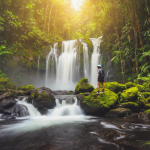
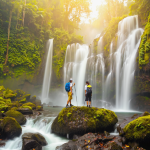
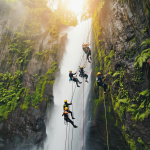
For adventure travelers based in Jacó, the Central Pacific coast offers its own spectacular waterfall experiences, guided by operators with deep local knowledge of the terrain, safety protocols, and ecological significance of the sites. The waterfall landscapes of the Jacó area, including sites accessible only with expert guides, provide a different but equally compelling chapter of the Costa Rica adventure story.
Ready to explore Costa Rica’s most spectacular natural landscapes beyond the thermal springs? Browse the full range of adventure tours from Costa Rica Waterfall Tours, including guided waterfall treks, ecotourism excursions, and multi-activity packages departing from Jacó and the Central Pacific coast. Five-star reviewed, expertly guided, and built for travelers who want more than the standard tour bus experience.
The Sustainability Question: How La Fortuna’s Hot Springs Handle Environmental Impact
The thermal tourism industry in La Fortuna operates within Costa Rica’s notably strong environmental regulatory framework. SETENA (Secretaría Técnica Nacional Ambiental) requires environmental impact assessments for any development affecting water sources or protected zone buffer areas. The Arenal Volcano National Park’s protected zone, managed by SINAC, creates a regulatory boundary that constrains development within the most ecologically sensitive areas immediately adjacent to the volcano.
Water use is regulated under Costa Rica’s Ley de Aguas (Water Law), which requires operators drawing from natural springs to hold a concession from SENARA (Servicio Nacional de Aguas Subterráneas, Riego y Avenamiento) and to demonstrate that extraction rates do not threaten the sustainability of the source. In practice, the thermal spring systems in the Arenal area have proven robust, fed by the enormous geothermal reservoir beneath the volcanic massif, but concession requirements ensure ongoing monitoring.
The CST program, administered by the ICT, provides the visitor-facing indicator of environmental performance. Facilities with higher CST leaf ratings have demonstrated compliance with standards including water treatment and discharge management, energy efficiency (though many thermal parks leverage the natural heat source, reducing energy consumption for heating), solid waste management, and community employment practices. Choosing CST-certified facilities is one of the most direct actions a traveler can take to ensure their tourism spending supports responsible operations.
Costa Rica’s broader environmental track record is relevant context here. The country protects over 25% of its national territory in parks and reserves and operates one of the cleanest electricity grids in the world, with over 99% of generation from renewable sources (primarily hydropower, supplemented by geothermal, wind, and solar) according to the Instituto Costarricense de Electricidad (ICE). This commitment to environmental stewardship shapes the regulatory environment within which La Fortuna’s tourism industry operates.
Frequently Asked Questions About Hot Springs in La Fortuna
What is the best time of day to visit La Fortuna hot springs?
Late afternoon to evening, from around 15:00 to 21:00, offers the best combination of conditions: cooler ambient temperatures, lower UV intensity, beautiful lighting as the sun sets over the volcano, and, at facilities with evening lighting, a genuinely atmospheric experience. Morning visits work well for natural free springs when crowds are minimal. Avoid midday visits to large commercial parks during peak season, when bus tour arrivals can significantly increase crowd levels.
Are the hot springs safe for children?
Yes, all major developed facilities in La Fortuna have pools specifically designed for families with children, including shallow warm pools and cooler dipping pools appropriate for young visitors. The main caution is keeping children away from the hottest pools, which reach temperatures that can cause burns. Staff at established facilities are accustomed to families and will guide you toward appropriate pool areas. Natural river springs are less suitable for young children due to variable currents and the absence of safety infrastructure.
Do I need to book hot springs in advance?
For Eco Termales, advance booking is essential year-round due to strict capacity limits. For Tabacón and The Springs Resort, advance booking is strongly recommended during peak season (December-April and major holidays). Baldi and larger volume facilities are more likely to accommodate walk-ins, but even these can fill during Semana Santa and Christmas. Booking at least two to three weeks in advance for any peak-season visit is wise.
Can I see Arenal Volcano from the hot springs?
Yes, several facilities have pools positioned with direct sight lines to Arenal’s cone, particularly Tabacón and The Springs Resort. However, Arenal is frequently cloud-covered, especially in the afternoon. Clear views most often occur in the early morning hours or during brief clearing windows in the dry season. Do not plan your entire trip around a clear volcano view, treat it as a bonus when it happens rather than a guarantee.
What is the water temperature at La Fortuna hot springs?
Pool temperatures at developed facilities in La Fortuna are engineered across a range, typically from cool plunge pools at around 18-22°C through comfortable warm pools at 32-38°C to hot therapeutic pools at 40-45°C. Source water from the geothermal springs can reach 57°C or higher before being channeled and mixed to achieve these ranges. Natural river spring temperatures vary and are generally lower, typically in the 32-38°C range where thermal water mixes with cooler river water.
Are there any free hot springs in La Fortuna?
Yes, natural thermal areas exist along the rivers in the Arenal zone where geothermal water surfaces and mixes with river water, creating warm pools accessible at no charge. The most commonly visited are along the Río Cholín corridor. These sites have no facilities, no safety infrastructure, and no water quality monitoring. They are suitable for flexible, self-sufficient travelers who understand the trade-offs. During rainy season, flash flood risk makes river-adjacent sites more hazardous and conditions more variable.
What should I wear to La Fortuna hot springs?
Standard swimwear is appropriate at all facilities. Some premium resorts request modest swimwear rather than string bikinis or very brief swimwear in shared areas, but this is rarely strictly enforced. Water shoes or sandals are useful for navigating pool decks and paths between pools. After your soak, a light cover-up or change of clothes for the journey home is recommended, as wet swimwear and air conditioning in shuttles or rental cars can make the return trip uncomfortable.
How far are the hot springs from La Fortuna town center?
The main concentration of thermal parks sits along Route 142 between 6 and 15 kilometers west of La Fortuna town center, in the direction of Arenal Volcano National Park. Tabacón is approximately 12 km from town, Baldi around 4 km, and Eco Termales roughly 5 km. Most facilities are accessible by taxi from La Fortuna town for a modest fare in colones, and many accommodations in La Fortuna offer shuttle services to the major thermal parks.
Is transportation from Jacó to La Fortuna easy?
There is no direct public bus between Jacó and La Fortuna. The practical options are private transfers, rental car (approximately 3.5-4.5 hours), or shared shuttle services booked through established operators. The drive is straightforward on paved roads throughout. Many travelers book the Jacó-to-La Fortuna leg through their adventure tour operator, who can arrange private transport as part of a broader itinerary.
Do La Fortuna hot springs have food and drinks available?
All major developed thermal parks have restaurants, cafes, or snack bars on site. Premium facilities like Tabacón and The Springs Resort have full restaurant service with dinner menus. Mid-range parks typically have a buffet-style restaurant and a bar. Day pass prices at higher-end facilities often include a food and beverage credit that partially offsets the admission cost. Budget facilities may have only basic snacks and drinks. For free natural springs, you are entirely self-sufficient, so bring your own food and water.
What currency should I bring to La Fortuna hot springs?
Major developed facilities accept USD and credit cards (Visa and Mastercard most reliably; American Express less universally). Local sodas, taxi drivers, and smaller vendors prefer Costa Rican colones (CRC). ATMs in La Fortuna town dispense both USD and CRC. Admission prices at thermal parks are typically quoted in USD for tourists, though paying in colones at the official exchange rate is generally accepted and sometimes slightly cheaper due to exchange rate rounding practices.
Can I combine a hot springs visit with other La Fortuna activities in one day?
Yes, this is the standard approach for most visitors. A well-structured La Fortuna day combines a morning activity (Arenal Volcano hike, La Fortuna Waterfall, hanging bridges, or white-water rafting on the Río Sarapiquí or Río Toro) with an afternoon-to-evening thermal park visit. Allow at least three to four hours at any major thermal park to do it justice, rushing through a hot springs complex defeats much of the purpose. If you are driving from the Central Pacific for a single-day visit, an early departure (05:00-06:00) from Jacó is necessary to fit meaningful morning activities before the thermal park session.
Key Takeaways: Making the Most of La Fortuna’s Thermal Springs
- La Fortuna’s thermal pools are genuinely geothermal, not manufactured spa water, the mineral character and heat source are real, and the distinction matters for the quality of the experience.
- Price tiers reflect fundamentally different product categories, not just varying luxury levels. Match your choice to what experience you actually want, not just what fits the budget.
- Eco Termales’s capacity control model consistently delivers the most tranquil experience for travelers who prioritize atmosphere. Book weeks in advance during peak season.
- Evening visits outperform midday visits at every price tier. Cooler ambient temperatures, atmospheric lighting, and lower crowd levels make late afternoon the optimal window.
- Rainy season (May-November) offers real advantages: lower prices, fewer crowds, and lush jungle conditions, with the trade-off of afternoon rain risk, best managed by scheduling springs visits from 15:00 onward.
- Free natural springs are genuinely special but require self-sufficiency, weather awareness, and flash flood caution. They are not a budget substitute for developed facilities, they are a different experience category entirely.
- CST certification is a meaningful filter for identifying environmentally responsible operators in a market where sustainability claims are common but verified performance is less so.
- La Fortuna pairs naturally with Central Pacific coast adventures as part of a broader Costa Rica itinerary, with the two regions delivering complementary ecological and activity experiences.
- Hydration, reef-safe sunscreen, and water shoes are the three most commonly overlooked practical items for a hot springs day. All three genuinely matter.
The best hot springs in La Fortuna are not a secret, but knowing how to choose among them, time your visit, and pair the experience with the rest of Costa Rica’s extraordinary adventure landscape transforms a pleasant afternoon into one of the trip’s defining highlights. Whether you’re soaking under Arenal’s silhouette at a world-class resort or finding a quiet thermal river pool before the crowds arrive, the Arenal hot springs deliver something genuinely rare: a natural wonder that is both spectacular and accessible.
Planning a broader Costa Rica adventure that goes beyond the thermal pools? Explore the full lineup of guided tours from Costa Rica Waterfall Tours, where five-star reviewed waterfall treks, ecotourism excursions, and multi-activity packages await along the Central Pacific coast.
About the author
Costa Rica Waterfall Tours Editorial Team · Editorial Team
Book Your Guided Waterfall Adventure