Picture this: you’ve just landed at Juan Santamaría International Airport in Alajuela, your rental car is packed, and you’ve got a week to absorb everything the Central Pacific coast has to offer. You’ve heard about Jacó, the surf, the noise, the energy, but what nobody warned you about is the decision paralysis that hits the moment you realize the beaches around this town are not interchangeable. The wave crashing in front of the main strip is not the same wave that rolls into Playa Hermosa eight kilometers south. The calm stretch near the river mouth at the northern end of Jacó beach behaves nothing like the reef break at Playa Escondida. And choosing the wrong beach as your base of operations for ocean excursions, surf lessons, or guided coastal adventures can mean the difference between a trip that exceeds every expectation and one that leaves you wishing you’d done more homework.
This guide cuts through that confusion. What follows is a practical, expert-level breakdown of the beaches in Jacó, covering surf character, safety realities, seasonal behavior, and how each beach connects to the broader adventure tourism ecosystem of the Central Pacific. Whether you’re a cruise passenger disembarking at the Caldera port with five hours to spare, a family of four looking for guided waterfall hikes between beach days, or a solo traveler building a week-long itinerary around surf and ecotourism, the information here gives you a genuine decision-making framework, not just a list of pretty places.
Understanding Jacó’s Coastal Geography Before You Book Anything
Jacó sits inside a bay on the Central Pacific coast of Costa Rica, in the province of Puntarenas, roughly 110 kilometers southwest of San José. The geography of that bay shapes everything about how the beaches here behave. The town’s main beach, Playa Jacó, runs approximately three and a half kilometers from north to south, flanked by the Río Jacó at the northern end and a rocky headland at the southern end. That headland, combined with the bay’s orientation, creates a predictable swell pattern that has made this area one of the most accessible surf destinations in the country for intermediate and beginner surfers.
What matters for visitors planning activities is that the Central Pacific coast faces southwest, which means it receives swell generated by Southern Hemisphere storms. This is why the surf here is most consistent and powerful during the green season (May through November), not the dry season (December through April) that many North American visitors associate with “good weather.” That inversion of expectations catches a lot of first-timers off guard. The beaches are not uniformly flat during the dry season, but if powerful surf and consistent waves are your priority, the rainy season actually delivers more of what you’re looking for.
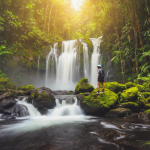
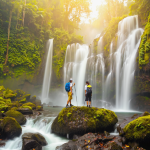
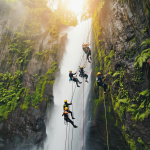
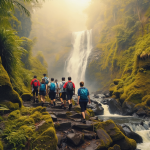
The terrain behind the beaches is equally important for trip planning. The Fila Chonta mountain range forms a dramatic backdrop, creating steep river valleys that feed multiple waterfalls within 30 to 90 minutes of the coast. This proximity of beach and rainforest is what makes Jacó uniquely positioned as an adventure tourism hub: you can surf in the morning, take a guided waterfall tour into the jungle in the afternoon, and be back on the beach for sunset without ever getting in a car for more than an hour. That loop is the core value proposition of the Central Pacific, and understanding the coastal geography is the first step to designing it properly.
The Jacó Bay Swell Window Explained
Because Jacó faces southwest and sits inside a bay, it is partially sheltered from the largest open-ocean swells that hit more exposed points like Dominical or Pavones further south. This sheltering effect is actually a feature, not a bug, for most visitors. It means that when big swells are running and those southern beaches are closing out at overhead-plus, Jacó often has cleaner, more manageable surf. For families, beginners, and anyone doing ocean excursions that don’t involve surfing, this protective bay character translates to more usable days on the water across the year.
Wind behavior also varies significantly by season. During the dry season, offshore winds (blowing from land toward the ocean) are common in the mornings, creating clean surf faces before the afternoon onshore breezes arrive. During the green season, the pattern is less predictable, with occasional offshore windows but more frequent onshore conditions. For guided ocean excursions, the calmest windows tend to be early morning departures, regardless of season, which is why most reputable operators schedule their water-based activities between 6:00 AM and 10:00 AM.
Playa Jacó: The Main Beach and What Visitors Actually Experience
Playa Jacó is Costa Rica’s most accessible surf beach, not because it’s the easiest or the safest, but because it’s the most logistically convenient. Everything you need to enter the water is within walking distance: board rentals, surf schools, beach restaurants, and hotels that front directly onto the sand. For visitors using Jacó as an adventure base, the main beach functions as the hub from which all other activities radiate.
The beach itself is a dark volcanic sand beach, grey-black rather than the white sand tourists associate with Caribbean destinations like Cahuita or Manuel Antonio’s Playa Biesanz. This is normal for the Central Pacific, and the color comes from volcanic geology rather than any environmental concern. The sand is coarse and drains quickly after rain, which keeps the beach usable even during heavy green season showers.
Surf Conditions at Playa Jacó
The surf at Playa Jacó is a beach break, meaning waves form over a sandy bottom rather than over reef or rock. Beach breaks are generally more forgiving for beginners than reef breaks because wipeouts land you in sand rather than coral, but they are also less predictable in shape. The waves at Jacó tend to be mushy and crumbling rather than hollow and barreling, which makes them excellent for learning but less exciting for experienced surfers chasing performance waves.
Multiple peaks break along the length of the beach, so crowding is less of an issue than at point breaks where everyone competes for the same wave. The northern end near the river mouth is typically softer and more beginner-friendly. The central section in front of the main town strip picks up more swell and is where most intermediate-level surfers congregate. The southern end, near the headland, can produce faster, more powerful waves when the swell is up.
Surf schools operate year-round on Playa Jacó, and this is genuinely one of the best places in Costa Rica to take your first lesson. The combination of accessible waves, warm water (typically 27–29°C), and the sheer density of qualified instructors means that most first-timers get to their feet within an hour of paddling out for the first time. If you’re organizing a group experience that mixes surf lessons with other activities, Jacó’s surf schools can accommodate groups of 10 to 30 people without special arrangements.
Safety Realities on Playa Jacó
Rip currents are present on Playa Jacó and are the primary hazard for swimmers and surfers alike. The beach is not always lifeguarded, particularly at the northern and southern ends and during low-traffic morning hours. The Instituto Costarricense de Turismo (ICT) flags beach safety information at major tourist beaches, and the red-yellow-green flag system is used at staffed sections of Playa Jacó during peak season. Visitors should check flag status before entering the water and should never swim alone at unguarded sections.
Rip current behavior at Jacó is influenced by the sandbar formations that shift seasonally. After major rainstorms, the Río Jacó deposits sediment that can alter current patterns significantly at the northern end. If you’re visiting during the early green season (May or June), be especially cautious near the river mouth where freshwater outflow combines with coastal currents to create unpredictable conditions.
For non-surfers and families, the safest swimming on the main beach is the central section during mid-tide, when sandbars create calmer pools close to shore. Avoid swimming at high tide, when wave energy pushes further up the beach with less predictable force.
Playa Hermosa: The Serious Surfer’s Alternative Eight Kilometers South
Playa Hermosa, located eight kilometers south of Jacó’s town center, is one of the most respected surf breaks on the Central Pacific coast and consistently hosts the Quicksilver Surf Pro, one of the highest-ranked surf competitions in Central America. The contrast with Playa Jacó is stark: this is a fast, heavy beach break that produces hollow, barreling waves capable of reaching three meters or more during peak green season swells.
The beach itself is longer and more isolated than Playa Jacó, running approximately five kilometers with very limited development compared to the Jacó strip. A handful of surf lodges and restaurants line the road behind the beach, but there are no large hotels, no nightclubs, and no crowds of non-surfers. This gives Playa Hermosa a completely different atmosphere, quieter, more focused, and oriented entirely around the surf.
Who Should and Shouldn’t Visit Playa Hermosa
Playa Hermosa is not appropriate for beginner surfers or casual swimmers. The waves here are powerful even on small days, and the shore break (the wave that breaks directly onto the sand at the water’s edge) is particularly dangerous. Experienced surfers who have been surfing for at least two to three years and are comfortable in overhead surf can have extraordinary sessions here. Everyone else should observe from the beach, which is genuinely spectacular viewing even without entering the water.
For visitors staying in Jacó who want to include Playa Hermosa as a day trip, the drive takes approximately 15 minutes on the coastal highway. The beach is accessible by taxi, rental car, or bike if you’re comfortable on the road. There’s no formal parking infrastructure, so most visitors park along the road shoulder behind the beach.
The appeal of Playa Hermosa extends beyond surfing for visitors interested in wildlife. The beach is a nesting site for olive ridley and leatherback sea turtles, and nighttime nesting activity can be observed during the green season with a licensed guide. SINAC (Sistema Nacional de Áreas de Conservación) regulates turtle observation activities, and independent nighttime beach visits during nesting season are prohibited. Any turtle observation excursion should be arranged through a licensed operator to comply with Costa Rican environmental law under the Ley de Biodiversidad.
Playa Escondida and the Hidden Coves North of Jacó
North of Jacó’s main beach, a series of smaller coves and rocky points offer dramatically different coastal experiences from the open beach breaks of the main strip. Playa Escondida (literally “hidden beach”) is accessible via a short hike from the Río Tárcoles bridge road or by kayak from Jacó, and it rewards the effort with a secluded black-sand cove backed by primary forest.
This stretch of coast is positioned near the mouth of the Río Tárcoles, which marks the northern boundary of the Carara National Park buffer zone. The river is famous for its population of American crocodiles (Crocodylus acutus), one of the most accessible and visually dramatic wildlife encounters in Costa Rica. The bridge over the Río Tárcoles on the coastal highway is a regular stop for tour groups and independent travelers who observe crocodiles from the bridge railing, animals frequently exceeding three meters in length rest on the riverbanks below in full view.
The ecological significance of this area means that ocean excursions originating from Jacó that head north often combine coastal kayaking or boat tours with crocodile observation and birdwatching in the Tárcoles estuary. The estuary is one of the best birding locations on the Pacific coast, with scarlet macaws (which nest in the adjacent Carara National Park), roseate spoonbills, and multiple heron species regularly visible from the water.
Kayak and Small Boat Excursions Along the Northern Coves
The coves north of Jacó are best accessed by water, and ocean excursions in Jacó, Costa Rica that use kayaks or small pangas (flat-bottomed motorboats) can reach beaches and tide pools that are entirely inaccessible by land. These excursions typically launch from the northern end of Playa Jacó during the early morning tide window and return before midday as afternoon onshore winds pick up.
From a practical standpoint, these northern excursions pair exceptionally well with a full-day adventure itinerary: start with a morning ocean kayak tour along the coves, return to Jacó for lunch, and then head inland for an afternoon waterfall trek. The combination covers two completely different ecosystems, coastal and montane rainforest, within a single day, which is one of the genuine advantages of using Jacó as an adventure base rather than a purely beach-oriented destination.
The Best Time to Visit Jacó Based on What You Want to Do
The best time to visit Jacó depends entirely on the type of experience you’re prioritizing, and the honest answer is that no single season is objectively superior for every visitor. Understanding the seasonal trade-offs at this specific location allows you to make a genuinely informed decision rather than defaulting to the generic advice of “visit during dry season.”
| Activity | Dry Season (Dec–Apr) | Green Season (May–Nov) | Peak Window |
|---|---|---|---|
| Beginner Surfing | ✅ Smaller, more manageable waves | ⚠️ Larger swells, still doable with instruction | January–March |
| Advanced Surfing | ⚠️ Inconsistent swell | ✅ Consistent powerful swell, hollow surf | June–September |
| Waterfall Trekking | ⚠️ Falls may be lower volume | ✅ Full flow, dramatic cascades | June–October |
| Wildlife Viewing | ✅ Drier trails, more accessible | ✅ Lush vegetation, higher species activity | Year-round |
| Ocean Kayaking / Snorkeling | ✅ Calmer seas, better visibility | ⚠️ More variable conditions | January–April |
| Turtle Nesting Observation | ❌ Not nesting season | ✅ Peak nesting activity | July–October |
| Budget Travel | ❌ Peak pricing, crowds | ✅ Lower rates, fewer tourists | May–June, October–November |
| Photography | ⚠️ Harsh midday light, dry brown hills | ✅ Lush green landscapes, dramatic cloud light | June–September |
The Shoulder Season Advantage Most Visitors Overlook
The most underrated windows for visiting Jacó are the shoulder months of May, June, and November. In May and June, the dry season crowds have thinned but the rains haven’t yet settled into their full intensity, creating a pattern of sunny mornings and brief afternoon showers. Accommodation rates drop, tour availability opens up, and the landscape transitions from the dry-season dusty brown to vivid green almost overnight. For waterfall tours specifically, late May and early June are exceptional: the falls are beginning to fill with the first seasonal rains, but trails are still firm enough to be easily navigable.
November sits at the opposite shoulder, as the rainy season winds down before the December peak season crowds arrive. The landscape is at its most lush, waterfalls are running at full volume, and hotel rates haven’t yet climbed to their December–January peaks. If your travel dates have any flexibility, these shoulder months represent genuine value that most first-time visitors to Costa Rica don’t know to target.
Jacó Costa Rica Tours: How the Beach Fits Into a Full Adventure Itinerary
The beaches in Jacó are not just destinations in themselves, they are departure points. The town’s position on the Central Pacific coast places it within reach of an extraordinary variety of environments and experiences, and the most effective way to use Jacó as a base is to think of the beach as your morning activity and the interior as your afternoon activity, or vice versa.
Jacó, Costa Rica tours that originate here and extend into the surrounding landscape access a range of natural attractions that would each individually justify a dedicated trip. Carara National Park, 30 minutes north, is one of Costa Rica’s most biodiverse protected areas and a transitional zone between dry and wet forest ecosystems, home to the only Pacific coast population of scarlet macaws. The waterfalls of the Fila Chonta and surrounding mountains are 45 to 90 minutes inland. Manuel Antonio National Park, 90 minutes south, offers one of the most visually spectacular combinations of beach and jungle in Central America. Dominical and the Marino Ballena National Park, 2.5 hours south, provides whale watching opportunities that are difficult to find anywhere else in the world.
Building a Realistic Multi-Day Adventure Itinerary from Jacó
The following framework represents the kind of itinerary that experienced adventure travelers consistently describe as the most satisfying structure for a week in the Jacó area. It balances beach time, inland adventure, and the practical logistics of travel on Costa Rican roads.
Day 1: Arrive, orient yourself, walk the full length of Playa Jacó from north to south to understand the beach’s character. Observe the surf conditions, identify the sections that match your skill level, and book any surf lessons or tours for the following days. Evening: Jacó’s main strip for dinner.
Day 2: Morning surf lesson on Playa Jacó or morning ocean excursion to the northern coves and Tárcoles estuary. Afternoon: guided waterfall trek into the mountains behind the coast. This is the signature combination that first-time visitors to the Central Pacific consistently rate as the highlight of their trip.
Day 3: Full-day excursion to Carara National Park. Guided birdwatching walks cover the primary forest trails where scarlet macaws are reliably seen. Return to Jacó for late afternoon beach time.
Day 4: Day trip south to Playa Hermosa for surf observation or advanced surfing, followed by a visit to the Bijagual waterfall complex, one of the tallest accessible waterfalls in the Central Pacific region at approximately 180 meters.
Day 5: Day trip to Manuel Antonio National Park. The park’s beaches (Playa Espadilla Sur, Playa Manuel Antonio) are completely different in character from Jacó: white sand, calm water, surrounded by forest where white-faced capuchin monkeys regularly walk across sunbathers. Book through the park’s official reservation system, as daily visitor numbers are capped by SINAC to protect the ecosystem.
Day 6: Free beach day at Playa Jacó, or use this as a buffer day for any rained-out or rescheduled activities from earlier in the week. Green season visitors should always build at least one buffer day into their itinerary.
Day 7: Departure from Jacó to San José (approximately 1.5 to 2 hours on the well-maintained Route 27 highway).
Ocean Excursions from Jacó: What’s Actually Available and Who Each Is For
The range of ocean excursions in Jacó, Costa Rica available to visitors covers everything from passive whale watching to physically demanding offshore fishing charters, and understanding what each involves prevents the common mistake of booking the wrong activity for your group’s actual interests and fitness level.
Sportfishing
Jacó is one of the most accessible departure points for offshore sportfishing on the Pacific coast. Roosterfish, mahi-mahi, yellowfin tuna, and marlin are all present in the waters off the Central Pacific, with peak offshore fishing during the green season when warmer current conditions concentrate baitfish and the larger predators that follow them. Half-day and full-day charters depart from Jacó and from the nearby marina at Los Sueños, which is one of the most complete sportfishing marinas in Central America. Charters vary significantly in price based on vessel size and target species, and most legitimate operators are registered with ICT.
Whale Watching
Humpback whales use the Central Pacific as a breeding and calving ground, and the waters off Jacó and Dominical see whale activity during two distinct windows: August through October (Southern Hemisphere population) and December through April (Northern Hemisphere population). This gives the Central Pacific one of the longest cumulative whale watching seasons of any location in the world. Excursions typically run 3 to 4 hours, departing early morning, and combine whale watching with dolphin spotting and occasional manta ray sightings.
Snorkeling and Diving
The waters immediately off Playa Jacó have limited visibility for snorkeling due to river sediment discharge, particularly during and after rains. The better snorkeling and diving destinations accessible from Jacó as a base are Isla Tortuga (a 3-hour boat ride north into the Gulf of Nicoya) and the rocky reefs around Isla Herradura, 15 minutes north of Jacó by boat. Isla Tortuga is a day-trip destination that combines snorkeling with beach time on a protected island and is popular with both independent travelers and cruise excursion groups.
Kayaking and Stand-Up Paddleboarding
The calmer northern section of Playa Jacó and the estuary waters near Tárcoles are well-suited for kayaking and stand-up paddleboarding. These are accessible activities for all fitness levels and are often combined with wildlife observation. Mangrove kayak tours through the Tárcoles estuary provide close-up encounters with crocodiles, tropical birds, and occasionally river otters, in a setting that feels remote despite being 30 minutes from Jacó’s hotel strip.
Central Pacific Costa Rica Tours: How Jacó Compares to Other Bases
Visitors planning Central Pacific Costa Rica tours sometimes wrestle with the decision of whether to base themselves in Jacó or in one of the alternative towns along this coast. The comparison is worth addressing directly, because each base has genuine advantages that suit different traveler profiles.
| Base Town | Best For | Beach Character | Distance from Jacó | Key Limitation |
|---|---|---|---|---|
| Jacó | Adventure base, surf lessons, groups, logistics | Dark sand, beach break, accessible | , | Can be noisy, tourist-heavy |
| Manuel Antonio | Families, national park access, scenic beaches | White sand, calm bays, park-protected | ~90 km south | More expensive, limited adventure operators |
| Dominical | Advanced surfers, off-grid travelers | Powerful, exposed beach break | ~145 km south | Remote, limited infrastructure |
| Herradura | Calm water, fishing charters, marina access | Protected bay, no surf | ~15 km north | Less personality, limited dining options |
For most visitors, Jacó remains the strongest base for combining beach access with a full adventure itinerary. The town’s infrastructure is genuinely impressive for its size: reliable Route 27 highway access means San José is 1.5 hours away rather than the 3-plus hour journey it was before the highway opened, international chain hotels sit alongside independent surf lodges, and the density of tour operators means that last-minute bookings and flexible itinerary changes are manageable in a way they aren’t from smaller towns.
Why the Cruise Port at Caldera Changes the Calculus
The port of Puntarenas/Caldera is approximately 50 kilometers north of Jacó, and cruise ships docking there have made Jacó one of the most visited shore excursion destinations in Costa Rica. Cruise passengers typically have between 4 and 8 hours of available shore time, and the logistics of Jacó work well within that window: the drive from Caldera to Jacó takes 45 to 60 minutes, leaving time for a surf lesson, a guided waterfall excursion, or a wildlife tour before returning to the ship.
For cruise visitors specifically, pre-booking is not optional, it is essential. Shore excursion time is too limited to spend any of it arranging tours on arrival. Reputable operators in Jacó cater specifically to cruise passengers with pre-arranged pickup logistics, and the best experiences are those where transportation, activity, and return transfer are handled by a single operator rather than assembled from multiple independent arrangements.
What Makes a Good Adventure Tour Operator in Jacó: A Decision Framework
The quality gap between adventure tour operators in Jacó is significant. Because the town’s tourism density is high, the market includes operators at every quality level, from highly professional safety-focused companies to informal setups with inconsistent standards. For activities involving water, heights, or physical exertion, operator quality directly affects safety, not just experience quality.
The Five-Factor Operator Assessment
Use this framework when evaluating any adventure tour company in Jacó:
- ICT registration: The Instituto Costarricense de Turismo maintains a registry of licensed tour operators. Legitimate operators can provide their ICT registration number on request. This is not a guarantee of quality, but its absence is a warning sign.
- Guide certification: For water-based activities, guides should hold relevant certifications (lifeguard certification, first aid). For jungle and waterfall tours, look for guides with formal naturalist training or certification through organizations recognized by SINAC.
- Group size limits: Professional operators cap group sizes for safety and experience quality reasons. For waterfall treks, groups above 12 to 15 people become logistically unwieldy on narrow trails. For ocean excursions, vessel capacity should not be exceeded regardless of demand.
- Equipment standards: Life jackets, helmets, harnesses, and other safety equipment should be well-maintained, properly sized, and provided as standard, not optional extras.
- Verified review history: Five-star reviews across multiple independent platforms (Google Maps, TripAdvisor) over an extended period are meaningful. Recent reviews matter more than overall averages because operator quality can change rapidly with staff turnover.
Costa Rica Waterfall Tours operates with all five of these criteria in place, combining ICT-registered guiding with small group maximums, certified safety equipment, and a consistently five-star reviewed track record built over hundreds of excursions. For visitors who want the adventure without the uncertainty, browsing the full tour menu is the most efficient way to match your interest level and fitness to the right experience.
Beach Safety in Jacó: The Information That Most Travel Guides Skip
Beach safety in Jacó deserves its own section because the information available in most travel guides focuses on the obvious (watch for rip currents, don’t swim alone) without addressing the specific coastal dynamics that make the Central Pacific genuinely different from other beach destinations.
Understanding Rip Currents on Dark Sand Beaches
One of the counterintuitive challenges on dark sand beaches like Playa Jacó is visual identification of rip currents. On white or light-colored sand beaches, rip currents often appear as darker channels of calmer water between breaking waves. On dark volcanic sand beaches, this color contrast is absent or reversed, making visual identification harder for visitors who have learned rip current identification techniques at other beaches. The practical alternative is to watch the foam patterns: rip currents carry foam and surface debris seaward in a narrow channel, and this is visible regardless of sand color if you observe the surface carefully for 30 to 60 seconds before entering the water.
The Shore Break Hazard at Playa Hermosa
Shore break injuries (waves that break directly onto the beach rather than further out) are among the most common serious beach injuries at surf destinations. At Playa Hermosa, the steep beach profile combined with powerful swell creates a shore break that can flip and tumble non-surfers who wade in even at ankle depth during larger swell periods. The rule is simple: if you are not a surfer, stay out of the water at Playa Hermosa when surf is above 1.5 meters. Watching from the beach is genuinely spectacular and carries zero risk.
Sun Exposure at Lower Latitudes
Jacó sits at approximately 9.5 degrees north latitude, which means UV exposure is significantly more intense than at North American or European beach destinations. Sunburn that would take hours at a Florida beach can occur within 30 to 45 minutes at Jacó during midday in the dry season. Reef-safe, broad-spectrum SPF 50 sunscreen applied every 90 minutes is the practical standard for any beach or outdoor activity, and it protects both you and the marine ecosystems you’re visiting.
Frequently Asked Questions About Beaches in Jacó
Is Playa Jacó safe for swimming?
Playa Jacó is swimmable, but it requires awareness. The central section of the beach is generally the safest for non-surfers, particularly during mid-tide. Rip currents are present and can be strong during swell periods. Always swim in flagged zones when lifeguards are present, never swim alone, and avoid the river mouth at the northern end where currents are most unpredictable. Children should only swim in supervised areas with an adult who is comfortable in the ocean.
What is the difference between Playa Jacó and Playa Hermosa?
Playa Jacó is an accessible beach break with waves suitable for beginners and intermediates, located in front of the main town. Playa Hermosa is eight kilometers south, a powerful and fast beach break suited for experienced surfers, hosting international competition-level surf. Playa Hermosa is not appropriate for casual swimming or beginner surfing. Both are dark volcanic sand beaches, but their wave character and surrounding development are completely different.
When is the best time to visit Jacó for surfing?
For consistent, powerful surf, the green season (May through November) is best. Southern Hemisphere swells generate the most reliable waves during this period, and Playa Hermosa in particular is at its best from June through September. For beginner-friendly conditions, the dry season (December through April) offers smaller, more manageable surf. The peak of December through January also brings the most tourists and highest accommodation prices, so there’s a trade-off between surf conditions and crowd levels.
Can I visit the beaches in Jacó as a day trip from San José?
Yes. The Route 27 highway connects San José to Jacó in approximately 1.5 to 2 hours depending on traffic. Day trips are completely practical and common, particularly for families or groups who want a beach day without committing to overnight accommodation in Jacó. The route is well-maintained and clearly signed. Departure from San José before 7:00 AM avoids peak traffic leaving the city.
Are there family-friendly beaches near Jacó?
Playa Herradura, 15 kilometers north of Jacó, is a calm, protected bay with minimal surf that is genuinely family-friendly for small children. The bay’s geography blocks most swell, making it one of the calmest swimmable beaches on the Central Pacific. For families staying in Jacó who want a calmer option without a long drive, the central section of Playa Jacó during low-to-mid tide in the dry season is manageable with close supervision.
What tours are available from Jacó that don’t involve the beach?
The inland adventure options from Jacó are extensive. Guided waterfall treks access multiple cascades within 45 to 90 minutes of the coast. Carara National Park offers guided wildlife and birdwatching tours. ATV tours, zip-line canopy tours, and horseback riding are all available within the Jacó area. For a curated selection of the best inland and adventure experiences, the Costa Rica Waterfall Tours adventure tour page covers the most compelling options with clear details on fitness requirements and logistics.
How do I get from the Caldera cruise port to the beaches in Jacó?
The port of Caldera is approximately 50 kilometers north of Jacó, roughly a 45 to 60-minute drive depending on traffic. Shore excursion buses and private transfer services operate between the port and Jacó for cruise passengers. Pre-arranged transfers are strongly recommended over attempting to arrange taxis independently at the port, where pricing and reliability can vary significantly. Most reputable Jacó tour operators offer port pickup as part of packaged excursions.
Are the beaches in Jacó good for photography?
Yes, but the best photographic opportunities depend on timing. Early morning (6:00–8:00 AM) offers the most dramatic light on the surf, particularly during the green season when low clouds create diffuse, even illumination. The dark volcanic sand provides strong contrast with white water and colorful surf equipment. For landscape photography, the hills behind Jacó turn vivid green during the rainy season, creating a dramatic backdrop visible from the beach. Wildlife photography is enhanced by early morning walks along the less-trafficked sections of the beach.
What should I bring to the beach in Jacó?
Reef-safe sunscreen (SPF 50 minimum), a rash guard or UV-protective shirt for extended ocean time, water shoes if you plan to explore the rocky northern coves, at least 1.5 liters of water per person (hydration is critical at tropical latitudes), cash in USD or Costa Rican colones for beach vendors, and a dry bag if you’re carrying electronics. A basic first aid kit and any personal medications should be in your beach bag for day trips far from your accommodation.
Is Jacó’s beach clean and well-maintained?
Playa Jacó’s cleanliness varies by season and location. The central section in front of the main hotel strip is generally kept clean by municipal maintenance and the adjacent businesses. The northern section near the river mouth accumulates more debris, particularly after heavy rains that carry material downstream. During the green season, drift material (wood, plant matter, and occasionally plastic) washes up across the full length of the beach. The SINAC environmental management framework governs beach and coastal protection, and community beach cleanups organized by local businesses occur regularly.
Can I access all the beaches near Jacó without a car?
Playa Jacó itself is fully accessible on foot from anywhere in the town. Playa Hermosa (8 km south) is accessible by taxi or tour shuttle. Playa Herradura (15 km north) and the northern coves near Tárcoles require a vehicle or arranged transportation. Bicycle rentals are available in Jacó and the flat coastal road to Playa Hermosa is cyclable, though road conditions and traffic require care. For beaches accessed by water, such as the coves north of Jacó, organized ocean excursions are the only practical option.
What’s the water temperature at Jacó’s beaches?
Water temperature in the Central Pacific stays warm year-round, typically ranging between 26°C and 30°C. No wetsuit is required for surfing or swimming. A rash guard is recommended to protect against sunburn during extended sessions rather than for warmth. The warmest water temperatures generally occur at the end of the dry season (March–April) when there is less cold upwelling from offshore currents.
Key Takeaways for Planning Your Jacó Beach Adventure
- Not all beaches in Jacó are the same. Playa Jacó, Playa Hermosa, Playa Herradura, and the northern coves each have distinct wave characters, safety profiles, and best-use cases. Choose based on your activity, not just proximity.
- The best time to visit Jacó depends on what you’re doing. Green season delivers powerful surf and full waterfalls; dry season offers calmer conditions and easier logistics. Shoulder months (May–June, November) offer the best balance of value and experience quality.
- Ocean excursions from Jacó cover far more than surfing. Whale watching, sportfishing, kayaking, snorkeling near Isla Herradura, and crocodile river tours are all available within an hour of the main beach.
- Jacó works best as an adventure hub, not just a beach destination. The proximity of rainforest, waterfalls, national parks, and diverse coastal environments makes it uniquely suited to multi-activity itineraries.
- Cruise passengers can have a full adventure day from Caldera. Pre-booking is essential. A 5-hour shore window is enough for a waterfall tour or guided nature excursion if logistics are handled by one experienced operator.
- Operator quality varies significantly in Jacó. Use the five-factor assessment framework: ICT registration, guide certification, group size limits, equipment standards, and verified review history.
- Beach safety requires specific knowledge for the Central Pacific. Rip current identification on dark sand beaches is harder than on light sand. Shore break at Playa Hermosa is dangerous for non-surfers. UV exposure is more intense than at higher-latitude beach destinations.
- The waterfall and beach combination is the Central Pacific’s signature experience. Morning on the ocean, afternoon in the rainforest, this is what Jacó as an adventure base makes uniquely possible.
The beaches in Jacó are entry points into one of the most concentrated adventure ecosystems in Central America. Choosing the right beach for the right activity, understanding the seasonal patterns that shape conditions, and working with an operator who knows this coast deeply are the three factors that separate a good trip from one you’ll still be talking about years later. When you’re ready to move from planning to booking, explore the full range of guided adventure tours available from Jacó’s most experienced waterfall and ecotourism operator, and start building the itinerary that actually matches what you came to Costa Rica to find.
About the author
Costa Rica Waterfall Tours Editorial Team · Editorial Team
Book Your Guided Waterfall Adventure