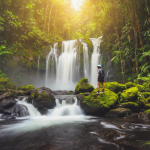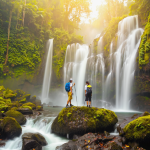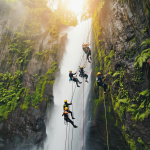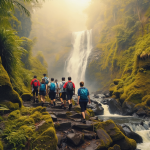
Most travelers arrive in Jacó and see the finished product: a zip-line platform cantilevered over a cloud-forest canopy, a suspension bridge trembling gently above a river gorge, a waterfall trail carved through dense jungle that somehow feels both wild and walkable. What they rarely see is the decade of regulatory work, ecological assessment, infrastructure engineering, and community negotiation that made any of it possible. Adventure tourism development is one of the most complex forms of land-based construction on earth, and Costa Rica’s Central Pacific coast is one of its most instructive classrooms.
This article unpacks how adventure tourism destinations are actually built, from the first environmental impact study to the final safety certification. It uses the Jacó corridor and the broader Central Pacific region as its primary reference point, because this stretch of coastline and rainforest has produced some of Latin America’s most sophisticated adventure infrastructure while simultaneously protecting the ecosystems that make it worth visiting. Whether you’re a traveler who wants to understand what goes into the experiences you book, or simply someone curious about how wild places get turned into world-class adventure destinations without being destroyed in the process, the story is worth knowing.
What Adventure Tourism Development Actually Means
Adventure tourism development is not simply building trails and installing zip-lines. It is a structured process that combines physical infrastructure construction, regulatory compliance, ecological planning, community integration, and commercial design into a single coherent system. When done well, the result is an experience that feels effortless to the visitor precisely because so much effort went into its design. When done poorly, the result is environmental degradation, safety incidents, and ultimately the destruction of the natural asset that attracted visitors in the first place.
The International Ecotourism Society defines ecotourism as responsible travel to natural areas that conserves the environment, sustains the wellbeing of local people, and involves interpretation and education. That definition is useful because it frames adventure tourism development as inherently dependent on the health of its natural setting. A waterfall tour loses its value the moment the watershed is compromised. A jungle trek loses its appeal when the biodiversity it was designed to showcase disappears. This creates a built-in incentive for responsible development that many other industries simply don’t have.
In Costa Rica, the adventure tourism industry operates within one of the world’s most robust legal and institutional frameworks for environmental protection. The country’s Ley de Biodiversidad (Law 7788) and Ley Forestal (Law 7575) establish the legal baseline for any development that touches protected land, forest zones, or wildlife corridors. The Sistema Nacional de Áreas de Conservación (SINAC), which falls under the Ministerio de Ambiente y Energía (MINAE), manages the national conservation areas that surround many of the country’s most spectacular adventure sites.
Any adventure tourism project that intersects with protected areas, riparian zones, or forest reserves must pass through SETENA, the Secretaría Técnica Nacional Ambiental, which is Costa Rica’s environmental impact authority. SETENA evaluates proposed developments against ecological sensitivity criteria and issues either a Viabilidad Ambiental (environmental viability) or a rejection. This process is not a rubber stamp. Projects in the Central Pacific, which includes destinations like Jacó, Quepos, and Manuel Antonio, face particularly rigorous review because the region’s biodiversity corridors connect the coast to the Cordillera de Talamanca, one of the most ecologically significant mountain ranges in Central America.
For operators and developers, this regulatory environment is both a constraint and a competitive advantage. It ensures that the natural settings remain intact, which protects the long-term commercial viability of every tour, trail, and adventure experience built within them.
The Infrastructure Foundation: Trails, Access Roads, and Water Crossings
Before any visitor sets foot on an adventure tour, a significant amount of physical infrastructure must exist. The challenge in Costa Rica’s rainforest terrain is that conventional construction methods often cause more damage than they prevent. Trail construction in particular requires a completely different engineering approach than road building or urban development.
Trail design in steep, wet terrain, which describes most of the Central Pacific’s interior, starts with hydrology. The primary engineering problem is not the trail surface itself but water management. Costa Rica’s invierno (rainy season, May through November) delivers intense rainfall across the Jacó corridor, and trails that aren’t designed to shed water rather than channel it will erode within a single season. Sustainable trail construction uses a combination of outsloping (angling the trail surface slightly away from the hillside), rolling grade dips (short, frequent drainage breaks), and armoring with local stone on high-traffic sections.
The Colegio Federado de Ingenieros y de Arquitectos de Costa Rica (CFIA) sets the professional standards for infrastructure development, and any construction project of meaningful scale requires a licensed engineer. For adventure tourism specifically, this typically means a civil engineer for access roads and bridges, and often a separate specialist for structural elements like canopy platforms or via ferrata installations.
Water crossings present a particular challenge in the Central Pacific. Rivers like the Río Tárcoles and its tributaries, which drain the highlands above Jacó, carry significant sediment loads during the rainy season and can rise dramatically after storms. The Ley de Aguas and regulations administered by AyA (the Instituto Costarricense de Acueductos y Alcantarillados) govern any permanent structure within or adjacent to watercourses. Suspension bridges designed for pedestrian adventure use must account for dynamic loading (groups of people moving in rhythm), not just static weight, and must be anchored in ways that don’t destabilize riverbanks.
Access Road Engineering in Rainforest Terrain
Access roads to remote adventure sites in the Central Pacific follow a specific engineering logic. The goal is to achieve the minimum necessary road standard to transport guests safely while minimizing the footprint and avoiding the compaction of primary forest soils. In practice, this often means unpaved laterite roads reinforced with local volcanic rock, designed to drain quickly rather than resist water intrusion.
Many of the most spectacular adventure sites near Jacó are located on private land adjacent to protected reserves. Operators work with landowners and Municipalidades (municipal governments) to establish legal easements and access agreements. The Municipalidad de Garabito, which governs the Jacó area, plays a direct role in permitting access infrastructure on roads that connect to the municipal network.
Waterfall Site Development: A Special Case
Waterfall sites require particular care because they concentrate visitor foot traffic in ecologically sensitive riparian zones. The riparian buffer protections under Costa Rican law establish setback requirements from watercourses, meaning that viewing platforms, changing areas, and any permanent structures must be positioned outside these zones. The actual approach trail to a waterfall pool often requires armoring with natural stone to prevent erosion from the constant foot traffic, while the pool area itself must be assessed for safe visitor use, including depth mapping, rock stability analysis, and seasonal flow variation.
The most well-developed waterfall tour operations in the Jacó corridor, including those offered by experienced local operators like Costa Rica Waterfall Tours, integrate these engineering considerations invisibly. The visitor experiences a pristine, wild-feeling environment precisely because the infrastructure was designed to disappear into the landscape rather than announce itself.
Regulatory Navigation: How Costa Rican Law Shapes Adventure Development
Navigating Costa Rica’s regulatory environment is one of the most underestimated challenges in adventure tourism development. The country’s commitment to environmental protection is genuine and legally enforceable, which means that operators who cut corners face real consequences, including project shutdowns, fines, and loss of operating licenses. This section explains the key regulatory pathways that any serious adventure development must traverse.
The starting point for any development near protected land is the SETENA process. Depending on the scale and location of the project, developers submit either a D1 (minor environmental impact) or D2 (significant environmental impact) assessment. Projects near SINAC-administered conservation areas, which includes most of the spectacular terrain around Jacó and the broader Puntarenas province, typically trigger D2 review. This involves baseline ecological studies, archaeological surveys in some cases, hydrological assessments, and a public consultation process.
The Instituto Costarricense de Turismo (ICT) adds another layer of oversight specific to tourism operations. ICT licenses and classifies tourism businesses, and adventure tourism operators must meet specific criteria related to guide certification, safety equipment standards, and insurance coverage. The ICT’s classification system distinguishes between different types of adventure activities, and operators must demonstrate compliance with the relevant technical standards for each activity type they offer.
For ecotourism operations specifically, the ICT administers the Certificación para la Sostenibilidad Turística (CST) program, which rates tourism businesses on a scale of one to five leaves based on their environmental management practices, social integration, and economic sustainability. The CST is voluntary but increasingly important commercially, because international visitors, particularly those from North American and European markets, recognize it as a credible quality indicator. Many of the most reputable adventure operators in the Jacó area hold or are pursuing CST certification.
The Bandera Azul Ecológica program, administered by the Ministry of Health and AyA, applies specifically to beach and water resource management. For adventure operations that involve coastal or aquatic elements, Bandera Azul compliance signals a commitment to water quality and environmental management that resonates strongly with environmentally conscious travelers.
The Role of SINAC in Adventure Tourism Zones
SINAC manages eleven conservation areas across Costa Rica, and the Central Pacific coast falls within the Área de Conservación Pacífico Central (ACOPAC). ACOPAC oversees protected areas including Parque Nacional Carara, immediately north of Jacó and famous for its scarlet macaw population and transitional dry-wet forest ecosystem, as well as the marine protected areas extending along the coast.
Adventure operations that take place within or adjacent to SINAC-managed areas require permits that are distinct from municipal and ICT licenses. These permits specify the number of daily visitors allowed, the trails that may be used, and the activities that are permitted. The permit system is designed to prevent overcrowding that degrades both the ecosystem and the visitor experience, a lesson learned from destinations globally where unmanaged visitor growth destroyed the very resource that attracted tourism in the first place.
Safety Standards in the Adventure Tourism Industry
Safety is the dimension of adventure tourism development that visitors feel most directly, even when they don’t consciously notice it. A well-run adventure tour feels exciting but controlled. The risk is real but managed. The guide seems relaxed because they have prepared for every contingency. None of this happens by accident.
The adventure tourism industry in Costa Rica has developed safety standards through a combination of ICT requirements, international best practices, and the accumulated operational experience of the country’s established operators. The relevant international framework is the ISO 21101 standard for adventure tourism safety management systems, which provides a globally recognized framework for risk assessment, incident management, and continuous improvement in adventure operations.
Guide certification is the most visible safety element from a visitor’s perspective. Costa Rica requires that adventure guides hold licenses issued through the ICT’s guide certification system. Different activity types require different certification levels. A waterfall trekking guide requires different credentials than a whitewater rafting guide or a zip-line operator. The certification process includes first aid training (typically Wilderness First Responder or equivalent), activity-specific technical skills assessment, and language proficiency evaluation, because most of the adventure tourism market is English-speaking.
Risk Assessment and Hazard Management
Before any adventure operation opens to visitors, the operator must conduct a formal hazard assessment of every element of the experience. For a waterfall tour, this includes:
- Trail hazard assessment: identification of unstable slopes, exposed roots, slippery rock sections, and overhead hazards such as dead branches or loose rock
- Water feature assessment: depth mapping of swimming areas, identification of submerged hazards, current analysis, flood risk evaluation based on upstream conditions
- Wildlife hazard assessment: identification of venomous species habitats along the route, appropriate protocols for encounters with fer-de-lance, bullet ants, or other hazardous fauna common in the Central Pacific rainforest
- Weather risk assessment: decision protocols for tour cancellation or modification based on rainfall thresholds, lightning risk, and rapid river rise conditions
- Medical emergency response planning: evacuation routes, nearest hospital facilities (Hospital Max Terán Valls in Quepos is the main referral hospital for the Central Pacific region), communication protocols for areas with limited cellular coverage
This hazard assessment is not a one-time document. Responsible operators update it seasonally, after significant weather events, and whenever trail conditions change. The transition between dry season (December through April) and rainy season (May through November) represents a significant shift in the risk profile of almost every adventure activity in the Central Pacific, and operators adjust protocols accordingly.
Equipment Standards and Maintenance Cycles
Adventure equipment in Costa Rica’s climate faces accelerated degradation compared to temperate environments. UV radiation at low tropical latitudes, combined with high humidity, salt air near the coast, and biological agents like mold and insects, shortens the useful life of ropes, harnesses, carabiners, and other life-safety equipment. Responsible operators follow manufacturer-specified retirement schedules and maintain detailed equipment logs that document purchase dates, inspection records, and retirement decisions.
The equipment standards for specific activities are increasingly well-defined. The European EN and American UIAA standards for climbing and rappelling equipment are widely referenced by Costa Rican adventure operators, even though they are not legally mandated, because they represent the most comprehensive available frameworks for equipment performance and lifespan.
Community Integration and Economic Development
Adventure tourism development that ignores local communities tends to fail over the long term. The communities surrounding adventure sites control land access, local political support, informal visitor management, and the cultural authenticity that increasingly sophisticated travelers seek. Operators who build genuine economic relationships with surrounding communities gain durable advantages that no marketing budget can replicate.
In the Jacó corridor, this dynamic plays out across multiple dimensions. The town of Jacó itself, in the canton of Garabito in Puntarenas province, has evolved from a surf destination into a multi-activity adventure hub. The growth of the adventure tourism industry has created employment opportunities for local guides, drivers, equipment maintenance technicians, and hospitality workers. The most sustainable operators in the area source food for visitor meals locally, hire guides from nearby communities, and reinvest a portion of revenue into local conservation initiatives.
The communities of Tárcoles, Bijagual, and the agricultural areas east of Jacó toward the mountains have become increasingly integrated into the adventure tourism supply chain. Bijagual, located in the highlands above Jacó, is home to several waterfall sites that have become significant tourism assets, and the families with land in this area have become important partners for tour operators offering inland excursions.
The Local Guide Economy
The guide profession is one of the most important economic pathways created by adventure tourism development. A skilled, ICT-certified guide in the Central Pacific can earn a meaningful livelihood while working in the natural environment they grew up in. This creates a powerful incentive for local conservation: guides whose income depends on healthy ecosystems become natural advocates for the forests, rivers, and wildlife that make their work possible.
The best adventure operators invest in guide development beyond the minimum ICT requirements. This includes language training, naturalist interpretation skills, photography assistance for guests, and first aid recertification. These investments pay commercial dividends because guide quality is consistently cited by visitors as the single most important determinant of tour satisfaction, but they also create genuine career pathways for talented young Costa Ricans in the communities adjacent to adventure sites.
The Ecotourism Framework: Principles That Govern Responsible Development
Ecotourism in Costa Rica is not a marketing label. It is a specific operational philosophy with measurable criteria, and Costa Rica’s institutional framework for evaluating it is more sophisticated than almost anywhere else in the world. Understanding the ecotourism principles that underpin sustainable tourism in Costa Rica helps visitors make better choices about the operators they support.
The foundational tension in ecotourism development is between access and preservation. More visitors mean more revenue, which can fund conservation. But more visitors also mean more physical impact on sensitive ecosystems. Resolving this tension requires a carrying capacity framework: a scientifically determined limit on the number of visitors that a given site can absorb without measurable ecological degradation.
As noted in peer-reviewed research on the impact of tourism development upon environmental sustainability, tourism growth and development can create significant economic benefits for local environments while simultaneously creating pressures that require careful management. The key variable is governance quality. Destinations with strong institutional frameworks, like Costa Rica, are significantly better positioned to capture the economic benefits of tourism while containing its environmental costs.
Costa Rica’s approach to this challenge has evolved over several decades. The protected area system, which covers more than 25% of the national territory, establishes hard limits on development in the most sensitive zones. The CST certification system creates market incentives for sustainable practice in the commercial tourism sector. The SINAC permit system controls visitor volumes in national parks and wildlife refuges. Together, these mechanisms create a layered governance architecture that no single regulation could achieve alone.
What Genuine Ecotourism Looks Like in Practice
For visitors evaluating adventure operators in the Jacó area, distinguishing genuine ecotourism practice from marketing is important. The following criteria are practical indicators of authentic commitment:
| Indicator | Authentic Practice | Greenwashing Signal |
|---|---|---|
| Guide origin | ✅ Guides are from local communities and have naturalist training | ❌ Generic guides with no ecological knowledge or local connection |
| Group size limits | ✅ Maximum group sizes set by carrying capacity analysis, not just logistics | ❌ Group sizes limited only by vehicle capacity or trail width |
| Waste management | ✅ Pack-in/pack-out policy enforced, composting or proper disposal at base | ❌ Single-use plastics provided, no visible waste management system |
| Wildlife interaction | ✅ Strict no-feeding policy, minimum approach distances communicated to guests | ❌ Wildlife used as photo props or animals kept in unnatural conditions |
| Certification | ✅ ICT license current, CST rating visible, guides certified | ❌ No visible certification, vague claims about being “eco-friendly” |
| Community benefit | ✅ Demonstrable local employment, local supply chain, community investment | ❌ Revenue flows entirely to absentee owners with no local economic footprint |
How Destinations Like Jacó Evolve: The Development Lifecycle
Understanding how Jacó became a world-class adventure hub requires looking at the full development lifecycle of a destination, from early discovery through maturation. This lifecycle is not unique to Costa Rica, but the specific way Jacó has navigated it offers lessons for destinations globally.
Jacó’s early identity was as a surf town, accessible from San José via the Ruta 27 (the Caldera Highway), which dramatically shortened the drive from the capital to around an hour. Surf tourism brought the first wave of infrastructure: hostels, sodas (local restaurants), surf shops, and basic tour operations. But the physical setting, a narrow coastal plain backed by steep, forested mountains drained by rivers that cut dramatic valleys toward the Pacific, offered far more adventure potential than surfing alone.
The second phase of Jacó’s development as an adventure destination came with the recognition of the highlands immediately behind the town as a significant tourism asset. The waterfalls of the Bijagual area, accessible via rough mountain roads, began attracting visitors willing to trade comfort for spectacle. Early waterfall tours were informal, often organized by local families who had land access, using 4WD vehicles and local knowledge rather than formal guiding infrastructure.
The maturation phase, where Jacó sits today, involves the formalization of these experiences into professionally operated, safety-certified, ecologically managed tour products. This is the phase where adventure tourism development intersects most directly with the regulatory, engineering, and community integration work described throughout this article. The experiences that visitors book today through established operators represent the accumulated investment of this entire developmental arc.
The Role of Proximity to San José
One of Jacó’s structural advantages as an adventure tourism hub is its proximity to Juan Santamaría International Airport in Alajuela, which serves as Costa Rica’s main international gateway. The roughly 1.5-hour drive on Ruta 27 makes Jacó accessible as either a primary destination or a day trip from the capital. This drives visitor volume that justifies the investment in professional adventure infrastructure, creating a virtuous cycle: more visitors support better infrastructure, which attracts more visitors.
Cruise passengers disembarking at Puerto Caldera, the container and cruise port near Puntarenas, are within easy reach of the Jacó adventure corridor. Shore excursion time is typically four to six hours, which is sufficient for a well-organized waterfall tour with transportation. Cruise-specific adventure programming has become an important segment of the Central Pacific adventure market, requiring operators to design experiences that are compelling, safe, and reliably time-bounded.
Infrastructure Investment Benchmarks for Adventure Tourism Projects
Visitors rarely think about the capital investment behind an adventure experience, but understanding the cost structure helps explain why quality varies so dramatically between operators. Adventure tourism construction is expensive relative to the revenue it generates, which creates strong pressure on undercapitalized operators to cut corners on safety, maintenance, and environmental compliance.
| Infrastructure Element | Approximate Cost Range (USD) | Key Variables |
|---|---|---|
| Trail development (per km) | $8,000 – $35,000 | Terrain gradient, stone armoring requirement, drainage complexity |
| Pedestrian suspension bridge (20–40m span) | $25,000 – $80,000 | Span length, load rating, access difficulty, engineering fees |
| Waterfall viewing platform | $15,000 – $50,000 | Materials, structural engineering, SETENA compliance requirements |
| 4WD access road (per km) | $12,000 – $45,000 | Slope, drainage structures, rock base requirement, rainy season durability |
| Visitor reception and safety briefing facility | $30,000 – $120,000 | Size, materials, utility connections, ICT standards compliance |
| SETENA environmental study and permits | $5,000 – $30,000 | Project scale, proximity to protected areas, study complexity |
These figures illustrate why serious adventure tourism development requires substantial upfront capital and multi-year time horizons before generating returns. They also explain why established operators with this investment behind them offer a categorically different experience from informal, unregistered alternatives. The infrastructure itself is part of the safety and quality equation.
Seasonal Dynamics and Their Effect on Adventure Operations
The Central Pacific’s two-season climate creates operational rhythms that shape every aspect of adventure tourism development and management. Understanding these dynamics helps visitors plan better experiences and helps operators design more resilient businesses.
The dry season (verano, December through April) brings lower humidity, less rainfall, and more predictable conditions. Trails are firmer, river crossings are lower and safer, and waterfall flows, while reduced compared to peak rainy season, are still spectacular. This is peak tourism season for the Central Pacific, and adventure operators run at or near capacity. Advance booking is essential, particularly for groups.
The rainy season (invierno, May through November) transforms the landscape. Waterfalls swell to their most dramatic volumes. The forest is lush, green, and alive with wildlife activity. Rainfall typically comes in afternoon patterns rather than all-day events, leaving mornings viable for adventure activities. However, the operational demands on adventure infrastructure are significantly greater during this period. Trails require more frequent maintenance. River levels must be monitored closely. Weather decision protocols become more consequential.
From an infrastructure development perspective, the rainy season is the true test of trail and road engineering quality. Structures that survive multiple rainy seasons without significant maintenance intervention represent genuinely well-engineered investments. Those that require major repair every season signal design flaws that will eventually compromise both safety and economics.
Wildlife and Seasonal Experience Quality
Adventure tourism in the Central Pacific is not purely about physical infrastructure. The biological richness of the region is itself a major draw, and it has its own seasonal rhythms. Scarlet macaw activity around Parque Nacional Carara peaks during nesting season. Sea turtle nesting on Playa Hermosa and other Central Pacific beaches occurs during specific months. The migratory patterns of whale sharks, humpback whales, and other marine species create seasonal windows for ocean adventure experiences that complement the inland waterfall and forest offerings.
Guide training that incorporates this seasonal ecological knowledge transforms a trail walk into an interpretive experience. The difference between a guide who points at a bird and says “toucan” and one who explains the toucan’s role in seed dispersal and its relationship to the fig trees along the trail is the difference between a commodity tour and a genuinely memorable experience.
The Visitor Experience Design Process
Adventure tourism development doesn’t end when the trail is built and the permits are issued. The visitor experience itself must be designed with the same intentionality applied to the physical infrastructure. This is the discipline of experience design, and it is where many technically competent operators fall short.
Experience design in adventure tourism starts with the visitor journey map: every touchpoint from the initial booking inquiry through the post-tour review. For a waterfall tour departing from Jacó, this sequence typically includes:
- Pre-booking information: fitness level guidance, what to bring, what to expect in terms of physical demand and environmental conditions
- Transportation: pickup logistics, vehicle quality and safety, pre-tour communication from guides
- Safety briefing: the quality and delivery of the mandatory pre-activity safety briefing sets the tone for the entire experience
- Trail and site experience: pacing, interpretation quality, photography support, moment creation at key viewpoints
- Transition and refreshment: how the operator manages the end of the active experience, including cooling down, hydration, and the transition back to transportation
- Post-tour communication: photo sharing, review requests, referral encouragement
Each of these touchpoints represents an opportunity to either reinforce or undermine the quality of the core experience. The most professionally operated adventure tours in the Central Pacific treat every element of this sequence as intentional design, not logistics afterthought.
Visitors looking for this level of professional experience design in the Jacó area should look at operators with demonstrated track records and genuine guest reviews across multiple platforms. The team at Costa Rica Waterfall Tours brings this kind of end-to-end intentionality to their Central Pacific waterfall experiences, combining world-class natural settings with the operational professionalism that transforms a good tour into a five-star memory.
What the Future of Adventure Tourism Development Looks Like
The trajectory of adventure tourism development in Costa Rica points toward greater sophistication on multiple dimensions simultaneously. Environmental management is becoming more data-driven, with some SINAC-managed areas beginning to implement digital visitor tracking to monitor real-time carrying capacity. Guide training standards are rising, partly driven by the expectations of increasingly experienced international visitors who have done adventure tours in multiple countries and can benchmark quality.
Technology is also changing the commercial side of adventure tourism development. Online booking systems, digital liability waivers, and real-time weather integration are becoming standard operational tools for serious operators. Drone photography and videography have created new marketing assets that drive booking decisions, but they also require additional regulatory navigation, as commercial drone operations in Costa Rica require DGAC (Dirección General de Aviación Civil) authorization and are restricted near national parks and protected areas.
The growing segment of visitors seeking authentic, immersive experiences rather than commodified thrills is reshaping the competitive landscape. Operators who can offer genuine ecological knowledge, real community connections, and experiences that feel personally meaningful rather than generically exciting are gaining market share from those who compete primarily on price or spectacle. This shift rewards exactly the kind of investment in guide development, ecological management, and experience design described throughout this article.
Costa Rica’s position as a global leader in sustainable tourism is not accidental. It reflects decades of institutional investment in the regulatory frameworks, conservation infrastructure, and professional standards that make genuine ecotourism possible. For the adventure tourism industry in the Central Pacific, this creates both a floor (minimum standards that protect the resource base) and a ceiling (aspirational benchmarks that the best operators are actively working toward). The gap between floor and ceiling is where competitive differentiation happens, and where visitors who do their research can find genuinely exceptional experiences.
Frequently Asked Questions About Adventure Tourism Development
What permits does an adventure tour operator need in Costa Rica?
A legitimate adventure tour operator in Costa Rica must hold a current license from the Instituto Costarricense de Turismo (ICT), which requires meeting specific safety, guide certification, and insurance standards. Operations near protected areas also require permits from SINAC. Any physical infrastructure development requires SETENA environmental review and municipal construction permits. Guides must hold individual ICT certification relevant to their activity type.
How does Costa Rica’s SETENA process work for adventure tourism projects?
SETENA reviews proposed developments for environmental impact before construction can begin. Developers submit either a D1 (minor impact) or D2 (significant impact) assessment, depending on project scale and proximity to protected land. The review involves ecological baseline studies, hydrological assessment, and public consultation. Projects near conservation areas managed by SINAC face additional scrutiny. Approval results in a Viabilidad Ambiental, which is required before other permits can be issued.
What is the CST certification and why does it matter for visitors?
The Certificación para la Sostenibilidad Turística (CST) is an ICT-administered program that rates tourism businesses on environmental management, social integration, and economic sustainability, from one to five leaves. It matters for visitors because it represents an independently verified assessment of how genuinely a business operates according to ecotourism principles, rather than simply claiming to be “eco-friendly.” Operators with higher CST ratings have demonstrated measurable performance across multiple sustainability criteria.
What makes waterfall trail construction in Costa Rica’s rainforest so complex?
The primary challenges are water management and ecological sensitivity. Costa Rica’s rainy season delivers intense rainfall that erodes poorly designed trails rapidly. Riparian zones around waterfalls are legally protected under Costa Rican water law, restricting where permanent structures can be placed. The steep terrain typical of the Central Pacific highlands requires engineered drainage solutions and armored trail surfaces to remain safe and passable year-round.
How do adventure operators manage safety during Costa Rica’s rainy season?
Serious operators maintain weather monitoring protocols and have clear decision criteria for tour modification or cancellation. River level monitoring is critical for any trail that involves water crossings. Guides receive updated weather briefings before departures, and tours that begin in dry morning conditions may be shortened if afternoon storm development accelerates. Equipment inspections are more frequent during the rainy season, and trail maintenance crews check critical sections after significant rainfall events.
What is the difference between ecotourism and standard adventure tourism in Costa Rica?
Standard adventure tourism focuses on delivering a physical experience (a waterfall visit, a zip-line ride, a river float) with safety and logistics as the primary concerns. Ecotourism adds ecological interpretation, active conservation contribution, community economic integration, and visitor impact minimization as core components of the experience, not optional add-ons. In Costa Rica, the ICT and CST frameworks provide measurable criteria that distinguish genuine ecotourism operations from those using the label primarily for marketing purposes.
How does visitor carrying capacity get determined for adventure sites?
Carrying capacity assessment combines ecological impact analysis (how many visitors can a trail or site absorb before measurable degradation occurs), social carrying capacity (at what density does the visitor experience quality decline), and management capacity (how many visitors can be supervised safely with available staff and infrastructure). SINAC applies formal carrying capacity limits to national park trails and sites. Private operators outside protected areas are responsible for setting their own limits, though responsible operators base these on genuine ecological and safety analysis rather than purely commercial considerations.
Are adventure tours in Jacó suitable for families with children?
Many adventure operations in the Jacó corridor offer family-friendly options designed for participants including children. The key variables are trail length, elevation gain, water crossing difficulty, and physical fitness requirements. Reputable operators are transparent about these parameters in their pre-booking information and can help families select experiences appropriate for their group’s age range and physical capabilities. Waterfall tours with shorter trails and minimal technical difficulty are often excellent family experiences, while more demanding multi-hour treks are better suited for older children and adults.
What role do local communities play in adventure tourism development?
Local communities are essential partners in sustainable adventure tourism development. They often control land access to key sites, provide the guide workforce, supply food and services to operations, and hold informal political influence over whether a development is welcomed or resisted. The most durable adventure operations in the Central Pacific have invested in genuine economic relationships with surrounding communities, creating shared incentives for conservation and quality maintenance that no regulatory framework alone can achieve.
How can visitors tell if an adventure operator is genuinely reputable?
The most reliable indicators are: a current and verifiable ICT license, guide certification relevant to the activities offered, transparent safety briefing materials, clear group size limits, genuine guest reviews across multiple platforms (not just curated testimonials on the operator’s own website), and evidence of community and environmental commitment beyond marketing language. CST certification, where held, provides additional independent verification. Visitors should be cautious of operators who cannot produce license documentation on request or who offer pricing dramatically below market rate, as this often signals corner-cutting on safety or regulatory compliance.
What is the best time of year to visit Jacó for adventure tours?
Both seasons offer genuine value, but the experience differs. The dry season (December through April) provides more predictable conditions, higher visitor volumes, and easier logistics. The rainy season (May through November) delivers the most dramatic waterfall flows, lush forest conditions, and lower crowd levels, often with morning weather windows that allow excellent touring before afternoon rainfall. Many experienced adventure travelers actually prefer the rainy season for the intensity of the natural environment, provided they book with operators who have solid wet-season protocols and flexible scheduling.
How does adventure tourism construction affect wildlife in the Central Pacific?
Poorly designed adventure construction can fragment wildlife corridors, introduce invasive species via disturbed soil, increase noise and human presence in sensitive habitat, and degrade water quality in riparian zones. Well-designed adventure infrastructure minimizes these impacts through strategic trail routing that avoids core wildlife habitat, construction timing that avoids breeding seasons for sensitive species, use of local materials that don’t introduce biological contaminants, and visitor management protocols that keep people on designated routes. The SETENA environmental review process is specifically designed to identify and mitigate these risks before construction begins.
Key Takeaways
- Adventure tourism development is a multi-layered process combining physical infrastructure engineering, regulatory compliance, ecological management, and experience design into a single coherent system.
- Costa Rica’s regulatory framework, including SETENA environmental review, SINAC permit systems, ICT licensing, and CST certification, creates one of the world’s most rigorous governance environments for adventure tourism, protecting both the natural resource base and visitor safety.
- The Jacó corridor exemplifies mature adventure tourism development, where decades of investment in infrastructure, guide training, and ecological management have produced world-class experiences without destroying the natural settings that make them valuable.
- Genuine ecotourism is measurably different from standard adventure tourism, with specific criteria around guide training, community integration, ecological impact management, and independent certification that visitors can verify before booking.
- Seasonal dynamics matter: dry season (December to April) offers predictability and ease of access, while rainy season (May to November) delivers the most dramatic natural conditions, particularly for waterfall experiences.
- Infrastructure investment is substantial: trail construction, bridge engineering, access roads, and regulatory compliance represent significant capital commitments that distinguish professional operators from informal alternatives with significant safety implications.
- Local community integration is not optional for sustainable adventure tourism, it is a structural requirement for long-term viability, because communities control land access, guide talent, and the political environment in which operations function.
- The visitor experience design process extends from the first booking inquiry through the post-tour review, and the best Central Pacific operators treat every touchpoint as an intentional design decision rather than a logistical afterthought.
The adventure tourism industry in Costa Rica’s Central Pacific represents one of the most sophisticated examples of what responsible destination development can achieve. The waterfalls, forests, and wildlife of the Jacó corridor are as spectacular today as they were before tourism arrived, precisely because the development process was designed to keep them that way. When you book a tour with a reputable local operator, you’re not just purchasing an experience. You’re participating in an economic model that has kept one of the world’s most biodiverse regions intact.
Ready to experience the results of this remarkable development story firsthand? Explore the adventure tours offered by Costa Rica Waterfall Tours and book your Central Pacific waterfall experience with a five-star-rated operator that puts safety, ecology, and unforgettable memories at the center of everything they do.
About the author
Costa Rica Waterfall Tours Editorial Team · Editorial Team
Book Your Guided Waterfall Adventure