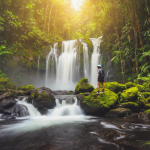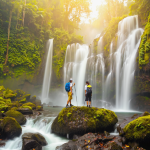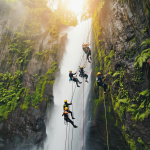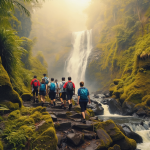
Picture this: it’s 6:30 in the morning, and a group of travelers from Seattle is standing at the edge of a jungle trail outside Jacó, Costa Rica. The air smells like wet earth and orchids. Their guide, a local naturalist who grew up in the region, crouches down to show them something most people walk past without noticing, a poison dart frog, barely the size of a thumbnail, perched on a leaf the color of a lime. Nobody pulls out a phone to scroll. Everyone leans in. In that single, quiet moment, something shifts. These travelers are no longer tourists passing through. They are witnesses. And witnessing, it turns out, is where environmental impact begins.
This is what adventure tourism conservation education travel experiences look like in practice. Not lectures. Not pamphlets. Not guilt-driven messaging about carbon footprints. Real, visceral, emotionally resonant contact with the natural world, guided by people who understand it deeply, structured to protect it systematically, and designed to leave travelers permanently changed in how they think about wild places.
Costa Rica has spent decades refining this model, and the results speak for themselves. The country protects over 25% of its national territory inside reserves, national parks, and protected areas, one of the highest proportions of any country on Earth. It hosts roughly 5% of the world’s total biodiversity in a landmass smaller than West Virginia. And it has built an international reputation not just for being beautiful, but for being intentional: deliberately linking tourism revenue to conservation outcomes through policy, certification, and on-the-ground practice. Understanding how that link works, and how responsible travelers can deepen it, is what this article is about.
Why Adventure Tourism and Conservation Are Natural Partners
Adventure tourism and conservation reinforce each other when the relationship is structured correctly. Wild, intact ecosystems are the raw material of adventure tourism, without healthy forests, clean rivers, and thriving wildlife, there is no product. That dependency creates a built-in economic incentive for operators to protect the environments that make their business possible.
The relationship goes deeper than economics, though. Adventure tourism is unique among travel formats because it places visitors inside ecosystems rather than observing them from a distance. Hiking to a waterfall through primary rainforest, snorkeling above a coral reef, or kayaking through a mangrove estuary creates a quality of attention that other forms of tourism rarely produce. Travelers engaged in physical, sensory experiences absorb environmental context differently than those reading a museum placard or watching a documentary.
This attentional quality is what makes adventure tourism so powerful as a conservation education tool. When a guide explains that the strangler fig you’re resting against provides critical habitat for 150 species of insects, birds, and mammals, and you can actually see the roots, the epiphytes, the birds flitting through the canopy, that information sticks. It creates what behavioral scientists call an “episodic memory,” a vivid personal experience that becomes part of how someone understands a topic for the rest of their life.
The Shift from Extractive to Regenerative Models
Traditional tourism models were largely extractive: visitors arrived, consumed scenic value, and left. The local environment absorbed the costs (erosion, noise disturbance, waste) while the economic benefits often flowed to international hotel chains and airline companies rather than local communities or conservation efforts.
Responsible adventure tourism inverts this logic. When designed correctly, it channels visitor spending directly into habitat protection, employs local guides and naturalists who have strong incentives to maintain ecological health, and limits group sizes to prevent the kind of overuse that degrades the experiences visitors came to have in the first place. The Costa Rican model, built around institutions like the national conservation system SINAC and the ICT’s tourism certification framework, demonstrates that this inversion is achievable at national scale.
When Adventure Tourism Goes Wrong
It would be dishonest to present adventure tourism as uniformly beneficial. Poorly managed adventure tourism can cause serious ecological harm. High-traffic hiking trails without erosion controls compact soil and destroy root systems. Unregulated wildlife interaction disturbs nesting and feeding behaviors. ATV tours through sensitive habitats fragment corridors that animals depend on for movement between forest patches.
The distinction between responsible and irresponsible adventure tourism is not always obvious to travelers, which is precisely why education needs to be embedded in the experience itself rather than delivered as an optional add-on. Guides who explain trail protocols as they walk them, who point out the difference between a designated path and a shortcut that causes erosion, who model the behavior they want travelers to adopt, these are the practitioners who make the difference between adventure tourism that helps and adventure tourism that harms.
How Ecotourism Conservation Works in Costa Rica
Ecotourism conservation in Costa Rica operates through a set of interconnected mechanisms: legal protection of land, direct revenue sharing with conservation programs, certification of sustainable operators, and community-level stewardship incentives. Understanding these mechanisms helps travelers make informed choices about which operators genuinely contribute to conservation and which ones use the language of ecotourism as marketing without the substance.
Costa Rica’s foundational conservation legislation, the Ley de Biodiversidad and the Ley Forestal, establishes the legal framework that makes ecotourism possible. The Ley Forestal prohibits deforestation of native forest regardless of ownership, meaning that even privately owned land with tree cover is legally protected. This created a dramatic shift in landowner incentives: instead of clearing forest for agriculture, landowners discovered that intact forest generates tourism revenue that often exceeds what cleared land would produce.
SINAC (Sistema Nacional de Áreas de Conservación) administers Costa Rica’s 11 regional conservation areas, which collectively protect the country’s most ecologically significant landscapes. Entry fees collected at national parks and reserves feed directly back into management budgets, ranger salaries, and habitat restoration programs. When a traveler pays the entrance fee at Manuel Antonio National Park or Corcovado, they are directly funding the rangers who prevent illegal hunting and logging.
The CST Certification System and What It Actually Means
The Certificación para la Sostenibilidad Turística (CST) is Costa Rica’s national sustainability certification for tourism businesses, administered by the ICT (Instituto Costarricense de Turismo). It evaluates businesses across four dimensions: physical-biological parameters (how the operation interacts with natural ecosystems), management of services (energy, water, waste), socioeconomic environment (impact on local communities), and client interaction (how effectively the business educates and informs visitors).
Businesses are rated on a leaf scale from 1 to 5, a system that has become internationally recognized as a credible indicator of genuine sustainability commitment rather than greenwashing. The CST framework is notable for including client education as a measurable criterion, reflecting the understanding that informing and inspiring travelers is itself a conservation outcome.
For travelers evaluating tour operators, CST certification provides a meaningful signal. But it’s not the only one. The Bandera Azul Ecológica program certifies beaches, communities, and watersheds for water quality and environmental management standards, relevant context for coastal adventure tourism operations near destinations like Jacó, Quepos, and Puerto Viejo.
The Payments for Ecosystem Services Program
One of Costa Rica’s most significant conservation innovations is its Pagos por Servicios Ambientales (PSA) program, administered by FONAFIFO (Fondo Nacional de Financiamiento Forestal). This program pays private landowners directly for keeping their land forested, recognizing the ecological services that intact forest provides: carbon sequestration, watershed protection, biodiversity habitat, and scenic value for tourism.
Tourism revenue is part of what makes PSA economically viable. When intact forest generates income through ecotourism, that income supplements PSA payments and strengthens the case for landowners to maintain forest cover rather than convert it to agriculture or development. Adventure tourism operators who route travelers through privately owned forest corridors are participating in this ecosystem, often without realizing it.
What Sustainable Tourism Education Actually Looks Like on the Trail
Sustainable tourism education is most effective when it is embedded in the physical experience of a tour rather than delivered as a separate informational session. The most skilled guides understand that the best moment to explain why you don’t pick up a frog is when someone is about to pick up a frog, not during a pre-tour briefing that most travelers have already half-forgotten by the time the trail begins.
Effective trail-based environmental education works through several principles that experienced Costa Rican guides have refined over years of practice:
- Context-triggered explanation: Information is delivered at the moment it is most relevant, when travelers encounter the actual species, habitat feature, or ecological relationship being discussed.
- Sensory anchoring: Guides connect abstract concepts to immediate sensory experiences. The sound of a howler monkey becomes an entry point for discussing territory, social structure, and why forest fragmentation disrupts primate populations.
- Behavior modeling: Guides demonstrate the behaviors they want travelers to adopt, staying on trail, keeping voices low near wildlife, not touching plants or animals, rather than simply stating rules.
- Narrative framing: Ecological information is delivered through stories about specific places, specific animals, and specific events rather than as abstract facts. A story about a local jaguar corridor is more memorable than a general statement about wildlife connectivity.
- Personal relevance: Skilled guides draw connections between what travelers see in Costa Rica and environmental issues they have context for at home, water quality, climate patterns, species loss, making the experience globally meaningful rather than locally exotic.
When a waterfall tour is designed with these principles in mind, it becomes something qualitatively different from a recreational hike with scenic payoff. It becomes an environmental encounter that travelers carry with them long after they’ve returned home, an experience that shapes how they vote, what they support, and how they talk about wild places with the people around them.
The Role of Local Guides as Conservation Educators
The quality of environmental education in adventure tourism depends almost entirely on the quality and preparation of local guides. In Costa Rica, the most effective conservation educators are naturalist guides who grew up in the regions where they work, who have formal training in natural history and ecology, and who are economically invested in the long-term health of the ecosystems they interpret.
This is not a small point. A guide who grew up near Jacó, whose family has lived in the Central Pacific region for generations, has a relationship with the forest that no textbook training can replicate. They know where the motmots nest in a particular ravine, which seasonal fruit draws monkeys to the trail edge in October, how the river level at a specific waterfall changes through the dry season and what that means for trail conditions. That granular, lived knowledge is what transforms a guided tour from a recreational service into a genuine educational experience.
It also explains why choosing operators who hire and invest in local guides is itself a conservation action. Local guides have strong incentives to maintain healthy ecosystems because those ecosystems are their livelihood, their home, and their heritage. When tourism revenue flows to locally rooted naturalist guides, it builds a community of people whose economic interests are aligned with conservation outcomes.
The Measurable Environmental Benefits of Nature-Based Tourism
Nature-based tourism environmental benefits operate across several timescales and categories. Some are immediate and direct: entry fees funding ranger salaries, trail maintenance preventing erosion, guide employment creating conservation-aligned livelihoods. Others are longer-term and behavioral: travelers returning home with changed attitudes, donating to conservation organizations, advocating for environmental policy, choosing more sustainable products and practices.
Both categories matter, and responsible adventure tourism operators understand that they are operating in both simultaneously.
Direct Economic Conservation Benefits
The most direct way that adventure tourism benefits conservation is through the revenue it generates for protected area management. In Costa Rica, national park entrance fees, concession revenues, and tour operator licensing fees contribute to SINAC’s operating budget. This funding supports the ranger corps that enforces anti-poaching regulations, the maintenance of trail infrastructure that concentrates visitor impact in designated areas, and the habitat restoration programs that expand forest cover around protected area borders.
Beyond formal protected areas, adventure tourism creates economic value for private landowners who maintain natural habitats on their property. A landowner in the mountains above Quepos who allows responsible tour groups to cross their property earns income that makes forest conservation more economically rational than land conversion. Multiply this across hundreds of private landowners in a region, and the effect on landscape-level conservation is substantial.
Biodiversity Monitoring as a Tourism Co-product
Organized adventure tourism also generates biodiversity data as a byproduct of its operations. Trained naturalist guides who walk the same trails regularly develop detailed knowledge of wildlife presence, species behavior, and ecological change that is genuinely valuable to conservation science. Some operators have formalized this through citizen science partnerships, training guides to record wildlife observations in standardized formats that contribute to national biodiversity databases.
SINAC and MINAE (Ministerio de Ambiente y Energía) have increasingly recognized the value of tourism-generated observational data for monitoring population trends, detecting invasive species, and identifying areas of ecological concern. This positions adventure tourism operators not just as economic contributors to conservation but as active participants in the scientific monitoring systems that inform conservation management.
Behavioral Change in Travelers: The Long-Tail Effect
The hardest conservation benefit to quantify but arguably the most significant is the behavioral change that transformative travel experiences produce in visitors. When someone returns from a Costa Rica waterfall tour having spent three days in genuine contact with a functioning rainforest ecosystem, guided by a naturalist who helped them understand what they were seeing, they are different. Their relationship to nature has changed. Their understanding of what is at stake has deepened.
This matters because environmental outcomes at global scale depend not just on what happens inside protected areas but on what billions of people decide to prioritize, fund, and vote for. Adventure tourism that genuinely educates travelers creates ripple effects that extend far beyond the forest trail where they started.
| Conservation Benefit Type | Mechanism | Timescale | Measurability |
|---|---|---|---|
| Protected area funding | Entry fees, concession revenue, licensing | Immediate | ✅ High |
| Private land conservation | Tourism income replacing land conversion | Short to medium term | ⚠️ Moderate |
| Local guide employment | Conservation-aligned livelihoods | Immediate and ongoing | ✅ High |
| Biodiversity monitoring | Citizen science, guide observation records | Ongoing | ⚠️ Moderate |
| Traveler behavioral change | Environmental attitudes, advocacy, spending | Long-term | ❌ Difficult |
| Community ownership of conservation | Local economic stake in ecological health | Medium to long term | ⚠️ Moderate |
How Responsible Adventure Travel Impact Is Built Into Tour Design
Responsible adventure travel impact doesn’t happen automatically. It has to be deliberately designed into every aspect of how a tour operates, from group size limits and trail routing to guide training protocols and post-tour follow-up. The difference between a tour that genuinely contributes to conservation and one that simply takes place in a natural setting lies entirely in these design choices.
Several design principles consistently characterize responsible adventure tourism operations in Costa Rica:
Carrying Capacity Management
Every natural ecosystem has a carrying capacity: a threshold of human visitation beyond which ecological damage begins to accumulate faster than it can recover. Responsible operators design their tours around carrying capacity limits, keeping group sizes small enough that the trail, the watershed, and the wildlife can absorb the visit without degradation.
In Costa Rica’s most visited areas, this is increasingly a regulatory requirement. SINAC imposes visitor limits on high-sensitivity areas within national parks, and tour operators who work within these areas must hold concession agreements that specify maximum group sizes and operational protocols. In less regulated areas, responsible operators self-impose limits based on their own ecological assessment and professional judgment.
Smaller groups also produce better educational outcomes. A guide who is managing 6 people can stop, crouch down, speak quietly, and direct everyone’s attention to the same thing simultaneously. A guide managing 25 people is managing logistics, not delivering education.
Trail Design and Erosion Prevention
Waterfall tours in Costa Rica’s Central Pacific region typically involve trails through humid tropical forest with significant elevation change. These conditions create serious erosion risk if trail design is poor or maintenance is inadequate. Responsible operators invest in trail infrastructure, proper drainage channels, step construction, root bridge maintenance, and seasonal rerouting when sections become too damaged to use safely.
The relationship between trail quality and conservation outcomes is direct. A well-maintained trail concentrates foot traffic in a defined corridor, protecting the forest floor on either side. A deteriorating trail causes hikers to fan out around obstacles, widening the impact zone and compressing soil across a much larger area. Trail maintenance is therefore not just a safety and comfort issue, it’s a conservation intervention.
Waste Management and Leave No Trace Protocols
Responsible adventure tourism operators in Costa Rica have adopted Leave No Trace principles as operational standards rather than optional guidelines. This means packing out all waste, including organic material that doesn’t belong in the local ecosystem. It means briefing travelers on protocols before they reach sensitive areas. It means guides carrying out any waste they find regardless of whether their group left it there.
In watershed areas above rivers and streams, common settings for waterfall tours, waste management has particular significance. The rivers and waterfalls that make these tours possible are fed by the same watersheds that communities downstream depend on for drinking water, managed by AyA (Acueductos y Alcantarillados). Protecting water quality in these areas is simultaneously an ecological and a public health responsibility.
Wildlife Interaction Protocols
One of the most important and most frequently violated responsible tourism protocols involves wildlife interaction. The instinct to approach, touch, or feed wild animals is powerful, and it takes active, ongoing education to redirect it. Responsible guides in Costa Rica are trained to intercept these impulses before they happen, by explaining animal behavior in ways that make distance feel respectful rather than disappointing, and by positioning group members to observe wildlife without triggering flight responses.
The coastal forests and river corridors around Jacó and the Central Pacific coast host an extraordinary range of wildlife: scarlet macaws, white-faced capuchin monkeys, two-toed sloths, caimans, and dozens of reptile and amphibian species. All of these animals can be observed safely and meaningfully by informed travelers who understand what they’re looking at and why distance matters.
The Jacó Region as a Case Study in Adventure Tourism Done Right
Jacó occupies a distinctive position in Costa Rica’s tourism landscape. It’s one of the country’s most accessible beach destinations from San José, roughly 1.5 hours by car along the Costanera highway, which makes it a natural hub for travelers arriving at Juan Santamaría International Airport who want to reach the coast quickly. That accessibility has historically brought a mix of tourism types, from surf culture to nightlife, alongside the ecotourism visitors drawn by the region’s extraordinary natural assets.
The Central Pacific region surrounding Jacó is ecologically remarkable. The mountains immediately behind the coast rise quickly into cloud forest, creating dramatic elevation gradients that support exceptional biodiversity within a compact geographic area. Rivers like the Río Tárcoles and Río Naranjo cut through these mountains on their way to the Pacific, carving the canyon systems and waterfall corridors that make this region among the most scenically dramatic in Costa Rica.
The Carara National Park, located just north of Jacó near the Tárcoles River bridge, is one of Costa Rica’s most significant transitional forest reserves, the point where the dry forests of Guanacaste give way to the humid forests of the south. This transition zone supports exceptional bird diversity, including healthy populations of scarlet macaws that have become one of the region’s most celebrated wildlife attractions.
How Waterfall Tours Connect Travelers to Conservation
Waterfall tours in the Jacó region are particularly effective as conservation education vehicles because they require travelers to engage with the forest rather than observe it from a distance. To reach a waterfall, you walk through the ecosystem that sustains it. You cross the streams that feed it. You move through the forest that holds the watershed together. The waterfall at the end of the trail is spectacular, but the journey to reach it is where the education happens.
Experienced local guides use these journeys to explain the relationship between forest cover and water flow, why intact forest maintains year-round stream flow while deforested hillsides produce seasonal flooding followed by drought. They point out the biological diversity in the understory that most travelers walk past without noticing. They explain the ecological significance of the dead log covered in fungi, the epiphyte-draped tree, the army ant column crossing the trail.
By the time travelers reach the waterfall, they understand, viscerally, not abstractly, that what they’re looking at is a product of ecosystem health. The waterfall is beautiful because the forest is intact. Protecting the forest is what makes this experience possible. That understanding is the foundation of lasting conservation commitment.
If you’re ready to experience this connection firsthand, explore the adventure tours offered by Costa Rica Waterfall Tours and find the guided experience that fits your group and fitness level.
Choosing a Responsible Operator: A Decision Framework for Travelers
For travelers who want to ensure their adventure tourism spending actually contributes to conservation, choosing the right operator is the most consequential decision they’ll make. The adventure tourism market in Costa Rica ranges from genuinely exemplary operations to those that use eco-language as branding without meaningful substance behind it. Distinguishing between them requires asking the right questions.
The following framework gives travelers a structured way to evaluate operators before booking:
| Evaluation Criterion | Green Flags | Red Flags |
|---|---|---|
| Guide qualifications | ✅ Local guides with naturalist training, ICT certification, regional knowledge | ❌ Guides with no ecological training, high turnover, scripted commentary |
| Group size limits | ✅ Maximum 8–12 per guide, enforced limits on sensitive trails | ❌ Unlimited group sizes, double-booked trails, no capacity planning |
| Certification and permits | ✅ ICT-registered, CST certified, SINAC concession agreements | ❌ No ICT registration, no certifications, operating in protected areas without permits |
| Local economic integration | ✅ Local staff, local suppliers, community partnerships | ❌ Revenue flowing to international franchises, minimal local employment |
| Educational content | ✅ Active ecological interpretation, behavior protocols explained, conservation context provided | ❌ No environmental interpretation, wildlife interaction encouraged, no Leave No Trace briefing |
| Waste and impact protocols | ✅ Pack-in/pack-out policy, reusable gear, waste collection on trails | ❌ Single-use plastics, no waste policy, no protocols for sensitive zones |
| Transparency and reviews | ✅ Detailed public information, verified guest reviews, responsive communication | ❌ Vague marketing, no reviews, poor communication before booking |
The EU’s guide to eco-responsible travel provides additional frameworks for travelers evaluating sustainable tourism options globally, including criteria for assessing operator claims about environmental commitment.
The Science Behind Why Nature Experiences Change People
The claim that transformative adventure tourism creates lasting behavioral change is not simply intuitive, it has a body of evidence behind it in environmental psychology and conservation behavior research. Understanding the mechanisms helps explain why well-designed ecotourism experiences are more effective conservation education tools than traditional formats.
Contact with natural environments produces measurable psychological effects. Research in environmental psychology consistently documents that time in natural settings reduces physiological stress markers, improves attentional capacity, and increases prosocial behavior. These effects create a psychological state that is particularly receptive to new information and attitude formation. A traveler who is relaxed, attentive, and socially connected, the typical state produced by a well-designed guided adventure, absorbs environmental information more deeply than one who is stressed or distracted.
The concept of “place attachment” is particularly relevant here. When people form emotional connections to specific places, a particular waterfall, a forest trail they walked, a river they swam in, those places become psychologically significant in ways that abstract environmental causes do not. Place attachment activates protective motivations: people want to defend places they love in ways they don’t want to defend abstract ecosystems they’ve only read about.
Adventure tourism creates place attachment at scale. When thousands of travelers per year form genuine emotional connections to the Río Tárcoles watershed, the forests above Jacó, or the Pacific coastal mangroves they kayaked through, those places acquire a global constituency of people who care about their protection. That constituency matters, it shapes conservation funding, travel industry norms, and political support for environmental protection in ways that extend far beyond the borders of Costa Rica.
The Multiplier Effect of Conservation Stories
Travelers who have powerful nature experiences talk about them. They share photographs, they tell stories, they recommend operators to friends and family. In the era of social media, a single compelling experience shared by a passionate traveler reaches audiences that no conservation organization’s marketing budget could replicate.
This multiplier effect is one of the most underappreciated dimensions of adventure tourism’s conservation contribution. Every traveler who returns home genuinely moved by what they experienced in Costa Rica’s forests becomes an informal ambassador for the ecosystems they visited. They normalize the idea that wild places are worth protecting, worth visiting, worth spending money to experience properly. They model a relationship to travel that is attentive, respectful, and educationally engaged rather than passive and consumptive.
Practical Guidance for Travelers Who Want Their Trip to Matter
For travelers planning a Costa Rica adventure with genuine conservation impact in mind, there are concrete choices that make a measurable difference. These aren’t abstract commitments, they’re specific decisions about which operators to book, how to behave on trails, and how to extend the impact of the experience after returning home.
Before You Travel
Choose operators who are ICT-registered and can demonstrate their conservation commitments concretely. Ask whether guides are local naturalists with formal training. Ask about group size limits and trail protocols. Check whether the operator has CST certification or Bandera Azul recognition. Read reviews specifically for mentions of educational quality and guide knowledge, these are the signals that distinguish genuine ecotourism from green-labeled recreation.
Consider the timing of your visit. Costa Rica’s dry season (December through April) brings peak visitor volumes to the most popular destinations. Visiting during the green season (May through November) reduces pressure on high-traffic areas, often produces lower prices and smaller groups, and reveals a different face of the country, lush, dynamic, and often more wildlife-active than the dry season. Many experienced travelers consider the green season the superior ecotourism window, particularly for waterfall experiences where flow is at its most dramatic.
While You’re on the Trail
Engage actively with your guide. Ask questions. Express genuine curiosity about what you’re seeing. Guides who work with engaged groups deliver better educational content, the quality of the experience is partly a function of what you bring to it. Ask about the specific threats facing the ecosystems you’re walking through. Ask what you can do when you return home. Ask what the guide wishes visitors understood better about the place they’re visiting.
Follow all protocols without exception. Stay on designated trails. Don’t pick up, touch, or feed wildlife. Pack out everything you bring in. These behaviors matter in themselves, and they also signal to local communities and operators that travelers care about ecological health, which strengthens the economic and social case for conservation-oriented tourism development.
After You Return
The conservation impact of your trip doesn’t have to end at the airport. Share your experience in ways that communicate the ecological value of what you witnessed, not just its aesthetic beauty. Support the conservation organizations that protect the areas you visited. If you were particularly moved by a specific place or ecosystem, consider finding the organization responsible for its management and making a direct contribution.
Tell your story in a way that makes the connection between tourism and conservation visible to people who haven’t made it yet. The most powerful conservation communication isn’t statistics or policy arguments, it’s one person telling another about a moment in a forest that changed how they see the world.
Ready to have that experience yourself? Book a guided adventure tour with Costa Rica Waterfall Tours and discover what responsible adventure tourism feels like from the inside.
Frequently Asked Questions About Adventure Tourism, Conservation, and Education
What is the difference between ecotourism and adventure tourism?
Ecotourism focuses specifically on visiting natural environments in ways that minimize impact, support conservation, and educate travelers about ecology and local culture. Adventure tourism emphasizes physical activity and outdoor challenge in natural settings. The two overlap significantly, and the most impactful tourism experiences combine both, offering physical engagement with natural environments alongside genuine conservation education and ecological interpretation.
How does visiting Costa Rica specifically benefit conservation?
Costa Rica has built a tourism system in which visitor spending flows directly into protected area management through entrance fees and concession revenues, supports private landowners who maintain forest cover, and employs local guides and naturalists whose livelihoods depend on healthy ecosystems. The country’s legal framework, including the Ley Forestal, Ley de Biodiversidad, and the PSA program, means that tourism revenue operates within a conservation-oriented policy environment rather than despite it.
What should I look for when choosing an eco-responsible tour operator?
Look for ICT registration, CST certification (the national sustainability certification), locally employed naturalist guides with formal ecological training, enforced group size limits, clear Leave No Trace protocols, and transparent communication about how their operation contributes to conservation. Read reviews specifically for mentions of guide knowledge and educational quality, these are more reliable indicators of genuine ecotourism commitment than marketing language alone.
Is the green season (rainy season) a good time for waterfall tours in Costa Rica?
The green season (May through November) is actually the optimal time for many waterfall experiences because rainfall dramatically increases water flow, producing the most spectacular visual effects. Trails can be muddier and some river crossings less accessible during peak rainfall, but experienced operators manage these conditions as part of standard operations. Green season also means lower visitor volumes, smaller groups, and a more intimate experience of the forest.
How do local guides contribute to conservation beyond leading tours?
Local naturalist guides are often the most effective biodiversity monitors in their regions. Walking the same trails regularly across years, they accumulate detailed knowledge of wildlife presence, behavioral patterns, and ecological change that is genuinely valuable to conservation management. Many contribute observational data to national biodiversity monitoring systems. Their economic stake in healthy ecosystems also makes them natural advocates for conservation policy and community-level stewardship.
What is the CST certification and why does it matter?
The Certificación para la Sostenibilidad Turística (CST) is Costa Rica’s national sustainability certification for tourism businesses, administered by the ICT. It evaluates operators across four dimensions: ecological impact, service management, socioeconomic contribution, and client education. A leaf rating of 1–5 provides a standardized indicator of genuine sustainability commitment. CST certification requires third-party evaluation and periodic renewal, making it a more reliable signal than self-applied eco-labels.
Can a short tour really have meaningful conservation impact?
Yes, through multiple channels simultaneously. A single guided tour generates revenue that supports protected area management, employs conservation-aligned local workers, contributes to the economic case for maintaining natural land uses, and potentially changes the attitudes and behaviors of the travelers involved. The cumulative effect of thousands of such tours per year across a region like the Central Pacific coast is substantial and measurable.
What behaviors should travelers avoid to minimize their environmental impact?
Stay on designated trails at all times. Never touch, pick up, or feed wildlife, including insects and amphibians. Pack out all waste, including organic material. Avoid using chemical sunscreen or insect repellent near waterways. Keep voice levels low in areas with wildlife. Don’t pick plants or collect natural materials. Follow your guide’s instructions immediately and without negotiation, especially in sensitive or high-risk areas.
How does adventure tourism support local communities in Costa Rica?
When structured responsibly, adventure tourism creates employment for local guides, drivers, hospitality workers, and food suppliers. It generates tax revenue for municipal governments (Municipalidades) and national conservation authorities. It creates economic alternatives to land uses that would otherwise drive deforestation and habitat loss. It builds community pride in natural heritage, strengthening the social foundation for long-term conservation commitment.
Are waterfall tours in Costa Rica safe?
Waterfall tours in Costa Rica involve genuine physical challenges, uneven terrain, river crossings, elevation change, and weather variability, that require appropriate preparation and qualified guidance. Reputable operators assess trail conditions regularly, enforce safety protocols, provide appropriate gear, and match group members to suitable routes based on fitness and experience level. Travelers should follow pre-tour preparation guidance, disclose any relevant health conditions, and follow guide instructions throughout.
What is SINAC and how does it relate to tourism?
SINAC (Sistema Nacional de Áreas de Conservación) is the Costa Rican government body responsible for managing the country’s national parks, biological reserves, wildlife refuges, and wetlands. It operates under MINAE and administers 11 regional conservation areas covering the country’s most ecologically significant landscapes. Tour operators working within SINAC-managed areas require concession agreements and must comply with visitor limits, operational protocols, and environmental standards set by SINAC.
How can I extend the conservation impact of my Costa Rica trip after returning home?
Share your experience in ways that communicate ecological value, not just aesthetic beauty. Support organizations that protect the specific places you visited. Consider making direct contributions to conservation programs in the areas you traveled through. Use your experience to inform how you talk about wild places with your community, normalize the idea that protecting natural environments is worth prioritizing, worth funding, and worth traveling to experience properly.
Key Takeaways
- Adventure tourism and conservation are structurally aligned when tours are designed to concentrate visitor impact, channel revenue to protected area management, and employ locally rooted naturalist guides.
- Costa Rica’s conservation success is built on legal frameworks (Ley Forestal, Ley de Biodiversidad), economic incentives (PSA payments, tourism revenue), and institutional infrastructure (SINAC, ICT, CST certification) that link tourism spending to ecological outcomes.
- Effective conservation education happens on the trail, not in pre-tour briefings, through context-triggered explanation, sensory anchoring, behavior modeling, and narrative framing by skilled local naturalist guides.
- The Jacó and Central Pacific region offers a compelling concentration of accessible forest, dramatic waterfalls, and extraordinary biodiversity within reach of San José, making it an ideal base for responsible adventure tourism.
- Travelers should evaluate operators using concrete criteria: ICT registration, CST certification, local guide employment, group size limits, and explicit conservation protocols, not marketing language alone.
- The long-tail conservation impact of transformative travel experiences, through changed attitudes, advocacy, and behavioral shifts in travelers after they return home, may be the most significant benefit of responsible adventure tourism, even if it’s the hardest to measure.
- Your trip can matter, by choosing responsible operators, engaging actively with guides, following ecological protocols on the trail, and carrying the experience forward when you return home.
The forest outside Jacó that group from Seattle walked into on that early morning has been standing for thousands of years. It will keep standing, or it won’t, based partly on whether the people who pass through it leave changed. Adventure tourism, at its best, is the mechanism that makes that change possible. Start planning your responsible adventure with Costa Rica Waterfall Tours and find out what it means to travel in a way that gives back to the places you visit.
About the author
Costa Rica Waterfall Tours Editorial Team · Editorial Team
Book Your Guided Waterfall Adventure