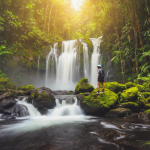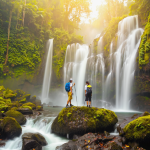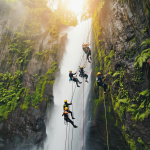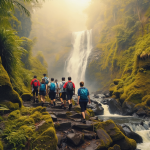
Most visitors arrive in Jacó expecting a beach town. They leave having rappelled down a waterfall, spotted a crocodile from a kayak, and hiked through primary rainforest to a pool that looked designed by someone who had never seen anything that beautiful before. The gap between expectation and reality here is enormous, and it works entirely in the traveler’s favor.
Jacó sits at a geographic sweet spot on Costa Rica’s Central Pacific coast, roughly 100 km from San José, accessible in under two hours from Juan Santamaría International Airport. The Fila Costeña mountain range rises sharply behind the town, the Pacific stretches out in front, and between those two extremes sits one of the densest concentrations of adventure tourism activities available anywhere in the country. This isn’t marketing language. It’s geography doing the work.
The challenge for most visitors isn’t finding something to do. It’s deciding where to start, understanding which activities match their fitness level and group composition, and knowing which operators actually deliver the experience they promise. This guide answers all three. Each activity below is ranked by its combination of accessibility, wow factor, and overall value to a first-time or returning visitor. The ranking logic is explained so you can adjust priorities based on what matters most to you.
1. Waterfall Trekking: The Signature Experience of Costa Rica’s Central Pacific
Waterfall trekking in Costa Rica isn’t a category of activity so much as a category of experience. It combines hiking, wildlife spotting, river crossings, and the payoff of arriving at a natural pool fed by a multi-tiered cascade, often entirely alone except for your guide. Near Jacó, several primary-forest waterfall destinations sit within 30–90 minutes of town, making this the most rewarding activity per unit of effort available in the region.
The Central Pacific receives some of Costa Rica’s heaviest rainfall, which feeds river systems year-round. During the green season (May through November), waterfalls run at full volume and the jungle is at its most vivid. During the dry season (December through April), trails are easier to navigate and river crossings are lower-risk. Both seasons produce genuinely spectacular results, which is unusual for a single activity in this region.
What makes waterfall trekking here different from other destinations is the combination of biodiversity and trail access. Costa Rica protects more than 25% of its national territory as conservation areas, and much of the land surrounding Jacó falls within or adjacent to zones managed by SINAC (Sistema Nacional de Áreas de Conservación). Trails pass through secondary and primary growth where howler monkeys, poison dart frogs, toucans, and morpho butterflies are standard sightings rather than lucky encounters.
The trekking routes accessible from Jacó range from beginner-friendly paths with minimal elevation gain to technical trails requiring confident footing on root-covered terrain. Most guided waterfall tours from Costa Rica Waterfall Tours are designed to be accessible to guests with average fitness levels while still delivering a genuine jungle experience, not a manicured park walk.
How to Prepare for Waterfall Trekking Near Jacó
Footwear is the single most consequential preparation decision. Waterproof hiking sandals with grip or lightweight trail shoes outperform flip-flops or bare feet on wet, root-covered ground. Guides consistently see guests arrive in inappropriate footwear, which limits pace and increases fall risk. Bring a dry bag or waterproof phone case, water (at least 1.5 liters per person), and sunscreen applied before you arrive at the meeting point, not at the trailhead where sunscreen runoff enters the water system.
Guides from established operators will handle route navigation, wildlife identification, safety briefings, and first-aid readiness. The right guide turns a waterfall hike into a natural history lesson. The wrong operator turns it into a procession. Check reviews specifically for guide quality, not just logistics.
| Waterfall Trek Type | Fitness Level | Duration | Best Season | Best For |
|---|---|---|---|---|
| Short Forest Walk to Single Cascade | Beginner | 2–3 hours | Year-round | Families, first-timers |
| Multi-Tier Cascade Trek | Intermediate | 4–6 hours | Year-round (easier in dry season) | Couples, small groups |
| Full-Day River Canyon Trek | Intermediate–Advanced | 6–8 hours | Dry season preferred | Adventure seekers, photographers |
| Multi-Activity Waterfall Package | Intermediate | Full day | Year-round | Groups, corporate teams |
2. Canyoning and Rappelling: The Activity Most People Don’t Know They Want
Canyoning near Jacó ranks second on this list for a specific reason: it consistently produces the strongest emotional reactions of any activity available in the region, but it remains underbooked compared to zip-lining and surfing. That gap is entirely due to unfamiliarity. Guests who have done it once almost universally wish they had booked it first.
Canyoning combines rappelling down waterfall faces, swimming through canyon pools, jumping from rock ledges into clear river water, and navigating narrow slot canyons on foot. The routes accessible from Jacó run through river systems fed by the same mountains that produce the region’s famous waterfalls. The technical setup, including anchors, harnesses, and rope systems, is managed entirely by guides. Guests need no prior climbing or rappelling experience.
The fear factor is real but manageable. Most first-time canyoners describe a 30-second moment of genuine terror at the top of their first rappel, followed by immediate exhilaration once they realize the physics are working entirely in their favor. Guides are positioned at both top and bottom on every descent, and rope control is handled by the guide, not the guest, until confidence builds. For most healthy adults, the activity is physically accessible; it’s psychologically challenging in a way that produces genuine satisfaction.
What to Expect on a Guided Canyoning Excursion
A standard canyoning excursion from Jacó begins with a ground-level safety briefing covering harness fitting, body position during rappel, and communication signals with guides. This is not a five-minute formality. Reputable operators take 20–30 minutes on the ground before any guest touches a rope. The quality of this briefing is one of the clearest signals of an operator’s safety culture.
Routes typically involve three to five rappels of varying height, ranging from short confidence-builders of 5–8 meters to main drops of 20–40 meters. Natural swimming pools at the base of each drop allow guests to recover, enjoy the environment, and prepare for the next section. Total canyon time runs 3–5 hours depending on group size and pace.
Operators certified through Costa Rica’s Instituto Costarricense de Turismo (ICT) licensing system are required to meet minimum safety standards for equipment, guide certification, and emergency protocols. Always confirm ICT licensing before booking any adventure activity in Costa Rica.
3. Zip-Lining Through Primary Rainforest Canopy
Zip-lining is Costa Rica’s most recognized adventure export, and the canopy experience near Jacó earns its reputation. The distinction worth understanding before booking is the difference between a genuine canopy zip-line operation, where cables run through or above the forest at actual tree height, and a hillside cable operation that happens to be near trees. Both exist in the Jacó area. Only one delivers the full experience.
Authentic canopy tours near Jacó place guests in harnesses on cables that traverse active forest at heights of 20–60 meters above the forest floor. The sensation of crossing a valley between two ridgelines, with the Pacific coast visible to one side and forested mountains rising on the other, is genuinely unlike anything available on a screen or in a description. It has to be experienced to be understood.
The canopy zip experience is the most broadly accessible high-adrenaline activity in the region. Weight limits vary by operator (typically 120–130 kg maximum), but there is no lower fitness threshold. Guests who cannot hike to a waterfall can often still zip-line. This makes it the go-to recommendation for mixed-ability groups where waterfall trekking might exclude some participants.
Choosing the Right Zip-Line Operator Near Jacó
The Jacó area has multiple zip-line operators. The variables that matter most when comparing them are: number of cables and total route length, maximum platform height, guide-to-guest ratio, harness and cable maintenance records, and whether the operation holds current ICT registration. A longer route with more cables is not automatically better. A shorter route through genuinely dense primary forest often produces a more memorable experience than a longer route over cleared hillside.
Ask operators specifically whether the route passes through secondary or primary forest, and whether wildlife sightings are common on the course. Operators who can answer those questions in detail have guides who actually know the forest. Operators who cannot are running a mechanical thrill ride with trees as backdrop.
4. White Water Rafting on the Río Naranjo and Río Savegre
The rivers descending from the Fila Costeña mountains toward the Central Pacific coast are among the most consistently runnable rafting rivers in Costa Rica. The Río Naranjo and Río Savegre, both accessible from Jacó within 45–90 minutes, offer class III and class IV rapids depending on the section chosen and the current water level, which varies significantly between dry and green season.
The Río Savegre holds an additional distinction as one of the cleanest rivers in Central America, flowing through land that is largely protected as part of the Savegre watershed. Rafting this river puts guests in contact with an ecosystem that sees relatively low human impact compared to rivers closer to urban centers. Kingfishers, herons, otters, and a variety of reptiles are commonly spotted from the raft.
White water rafting is particularly well-suited for groups because it is an inherently cooperative activity. The raft guide calls strokes, navigates lines through rapids, and manages safety, but the paddling power comes from the guests. This team dynamic makes it a natural fit for corporate groups, bachelor/bachelorette parties, and family trips where everyone wants to contribute to a shared challenge.
Season Considerations for Rafting Near Jacó
Water levels affect both the difficulty and the character of a rafting run. During the green season, higher water volume creates faster, more powerful rapids with fewer exposed rocks. During the dry season, lower water levels create more technical lines through narrower channels. Neither is inherently safer or more dangerous when managed by experienced guides, but the experience is meaningfully different. Guests who prefer more intense rapids should target the green season. Guests who prefer a more technical, controlled experience should consider the dry season.
All reputable operators provide wetsuits or splash gear, helmets, and personal flotation devices. Experienced guides lead each raft and position safety kayakers on class IV sections. Confirm these provisions before booking any rafting excursion in Costa Rica.
5. Kayaking and Stand-Up Paddleboarding in the Estero and Ocean
Jacó’s position between the Tárcoles River estuary to the north and the rocky headlands to the south creates multiple distinct paddling environments within a short distance of the main beach. Ocean kayaking along the coastline, estuary paddling through mangrove channels, and stand-up paddleboarding (SUP) in the calmer bay sections all operate as distinct experiences that attract different types of visitors.
Estuary kayaking near the Tárcoles River estuary deserves particular mention. The Tárcoles River is famous for its American crocodile population, one of the densest in Costa Rica. Guided estuary kayak tours operate at controlled distances from the banks with guides who understand crocodile behavior and maintain appropriate safety margins. The experience of paddling through a mangrove channel while scanning the banks for crocodiles, watching scarlet macaws cross overhead, and listening to howler monkeys in the canopy is genuinely extraordinary.
Stand-up paddleboarding is the most accessible water activity for non-swimmers and those with limited water confidence. Calm bay sections near Jacó provide flat water for beginners, and guides offer basic balance instruction before guests enter the water. SUP sessions typically run 1–2 hours and work well as an early morning or late afternoon activity when combined with other excursions.
Wildlife Kayaking: The Tárcoles Estuary Experience
The Tárcoles estuary and its mangrove systems function as critical nursery habitat for fish, crustaceans, and bird species. The mangrove corridors accessible by kayak are protected under Costa Rica’s Ley Forestal, which prohibits clearing of mangrove zones. Paddling through intact mangrove forest provides a perspective on this ecosystem that is impossible to replicate from a boat or a bridge, the two most common ways visitors experience the Tárcoles area.
Photography from a kayak at water level produces images that are structurally different from those taken from any other vantage point. For travel photographers, the estuary kayak is one of the most productive excursions available near Jacó. Bring a waterproof housing or dry bag rated for full submersion, not just splash protection.
6. Horseback Riding Through Tropical Forest and Beachfront Trails
Horseback riding near Jacó occupies a specific role in the regional adventure menu: it is the highest-quality slow-paced outdoor experience available, and it is consistently underestimated by visitors who associate horseback riding with lazy resort trail rides. The terrain around Jacó is not flat, and the riding here is not passive.
Routes accessible from Jacó climb through secondary and primary forest, cross river fords, and in some cases arrive at waterfall destinations that are also accessible on foot. Riding to a waterfall adds a logistical layer that changes the entire dynamic of the experience, particularly for guests who want the waterfall payoff without the full physical demand of a trekking route.
Horseback riding is one of the most family-friendly adventure activities available near Jacó, provided that children meet the minimum age and weight requirements of the operator. Smaller children typically ride double with a guide or parent on a lead rope. Older children and adults ride independently with guide supervision. The pace is set by the guide and adjusted for group ability.
Responsible Horseback Operations in Costa Rica
The welfare of horses used in tourism operations varies widely across Costa Rica, and this is a genuine ethical consideration for visitors. When evaluating operators, look for horses that are well-muscled and alert (not lethargic), tack that fits correctly without visible pressure sores, and operators who limit daily ride hours per animal. Operators who allow unlimited weight loads without assessment, or who run horses on hard pavement for extended periods, are not operating to acceptable welfare standards.
Responsible operators in the Jacó area typically cap group sizes, limit ride duration per horse per day, and provide horses appropriate to the rider’s weight. Ask these questions directly before booking. A reputable operator will welcome the inquiry.
7. Surfing Lessons and Ocean Adventure Activities
Jacó Beach is one of Costa Rica’s most consistent surf breaks, accessible year-round with waves that range from gentle whitewash for absolute beginners to more powerful shore break that rewards intermediate surfers. The surfing culture here is genuine and well-established, with a local community of instructors who have been teaching visitors for decades.
Surf lessons near Jacó typically run 90 minutes to 2 hours, covering ocean safety, wave reading, paddling technique, and the mechanics of standing on a board. The beach’s consistent waves and sandy bottom make it appropriate for first-timers. Most guests stand up within their first lesson, which makes the activity highly satisfying even for those who have never surfed before.
Beyond basic surf lessons, the Jacó area supports more advanced ocean adventure options including surf coaching, dawn patrol sessions at less-crowded nearby breaks, and combined surf/waterfall day packages that give guests both ocean and jungle experiences in a single day. The proximity of the Pacific to the Central Pacific rainforest is what makes this combination logistically feasible in a way that it simply isn’t elsewhere in the country.
Combining Surf with Other Jacó Adventures
The geography of Jacó makes multi-activity days more realistic here than at many other destinations in Costa Rica. A guest can surf at dawn, join a waterfall trek in mid-morning, and be back on the beach by mid-afternoon. Multi-activity adventure tours in Costa Rica built around this geographic reality consistently rank among the highest-rated experiences in the region.
The key to making combined days work is sequencing. Water-based ocean activities should precede forest treks when possible, as guests arriving at waterfalls already wet and relaxed from a surf session tend to have a more fluid experience than those going directly from hotel to jungle. Operators who understand this sequencing dynamic build better itineraries.
8. Wildlife and Nature Tours: Sloth Encounters, Bird Watching, and Night Safaris
Not every adventure in Jacó requires physical exertion. The region’s biodiversity supports a category of guided nature experiences that are as intellectually rewarding as they are visually spectacular. Costa Rica contains approximately 5% of the world’s total biodiversity within a country smaller than West Virginia, and the Central Pacific zone represents some of the most accessible wildlife habitat in the country.
Guided wildlife tours near Jacó can be organized around specific target species or as broad ecological surveys. Dedicated birding tours targeting endemic and migratory species, sloth-spotting tours in secondary forest where three-toed and two-toed sloths are consistently found, and night safari excursions revealing the nocturnal residents of the forest (red-eyed tree frogs, tarantulas, Jesus Christ lizards, and kinkajous) all operate from Jacó.
Night safaris are the most underrated wildlife experience available near Jacó. The forest at night is acoustically and visually completely different from the daytime environment, and species that are effectively invisible during daylight hours become active and observable. A skilled guide with a quality spotlight can locate species within minutes that a solo visitor would never find in days. The experience is appropriate for children old enough to manage a 1–2 hour trail walk in the dark.
Photography Considerations for Wildlife Tours Near Jacó
Wildlife photography near Jacó rewards preparation. For daytime tours, a telephoto lens of at least 200mm is useful for canopy-level birds and monkeys. For night safaris, a camera with strong low-light performance and the ability to shoot at high ISO without excessive noise will outperform a smartphone in virtually every scenario. Guides will position guests for the best angles when possible, but the forest does not wait for exposure adjustments. Practice your settings before the tour, not during it.
For waterfall photography specifically, a wide-angle lens (16–24mm equivalent on full frame) captures the scale of cascades more effectively than a standard zoom. A polarizing filter reduces glare on wet rock faces and deepens the color of pool water. A small tripod or gorilla pod allows long exposure shots that render moving water as smooth silk rather than frozen droplets.
9. ATV and Off-Road Tours Through the Jacó Backcountry
ATV tours represent the highest-speed, lowest-physical-effort adventure activity available near Jacó, and they serve a specific traveler profile extremely well. Guests who want to cover ground, see multiple landscapes in a single session, and experience the physical energy of off-road driving without the sustained effort of a trek find ATV tours a natural fit.
Routes accessible from Jacó climb into the mountains behind the town, pass through working farms and cattle country, and in some cases connect to viewpoints with unobstructed Pacific views. The transition from beach town to mountain backcountry happens within 15–20 minutes of departure, which consistently surprises visitors who expect a more gradual landscape shift.
ATV tours work particularly well for mixed groups where some members want high-adrenaline activity and others prefer a more comfortable pace. Operators typically offer both single-rider and tandem ATV configurations, allowing couples or parent-child pairs to share a vehicle. Children must meet operator-specified minimum age requirements, which typically fall between 5 and 8 years old for passenger seats.
Environmental Considerations for ATV Activity
Off-road vehicle activity in Costa Rica is subject to SETENA (Secretaría Técnica Nacional Ambiental) oversight when it occurs within or adjacent to protected zones. Reputable ATV operators in the Jacó area use established route corridors that avoid sensitive habitat and riparian zones. Ask operators about their route’s environmental status and whether they maintain trails to prevent erosion. Operators who cannot answer these questions may be running routes that cause measurable habitat impact.
10. Sportfishing and Ocean Excursions: The Blue Water Option
The Pacific Ocean off the Jacó coast sits above the continental shelf with deep-water access within a relatively short boat ride from the marina. This geographic reality supports a sportfishing operation that ranges from inshore fishing for roosterfish, snapper, and amberjack to offshore blue water trips targeting sailfish, mahi-mahi, and wahoo. Costa Rica is among the world’s premier sportfishing destinations, and the Central Pacific zone contributes significantly to that reputation.
Sportfishing charters from Jacó operate on both half-day and full-day schedules. Half-day inshore trips are appropriate for guests who want the ocean experience without a full commitment of time or budget. Full-day offshore trips target larger pelagic species and require a higher tolerance for open ocean conditions, including swell and motion.
Beyond fishing, the offshore environment near Jacó supports whale-watching excursions during migration season, dolphin tours year-round (spinner and bottlenose dolphins are consistently encountered), and snorkeling trips to rocky reef formations along the coastline. The variety of ocean excursions available from a single departure point is one of the genuine logistical advantages of basing a Costa Rica adventure itinerary in Jacó rather than in a more remote location.
How Multi-Activity Adventure Tours in Costa Rica Work Near Jacó
Multi-activity adventure tours in Costa Rica are the most efficient way to experience the full range of what the Jacó area offers, particularly for visitors with limited time. Rather than booking individual activities with separate operators, a well-constructed multi-activity package sequences complementary experiences through a single operator who manages logistics, transportation, timing, and guide continuity across the full day.
The practical advantages of this approach are significant. A single briefing covers safety protocols for all activities. Transportation between sites is coordinated without gaps. Guides who know the full route can make real-time decisions about sequencing based on weather, group energy, and trail conditions. The guest’s role is to show up, follow the guide, and have the experience.
The most effective multi-activity combinations near Jacó typically pair a waterfall trek with one additional water-based or land-based activity. Waterfall trekking plus canyoning creates a full jungle immersion day. Waterfall trekking plus ocean kayaking gives guests both ecosystem types in a single day. Waterfall trekking plus wildlife photography is increasingly popular with guests who want to maximize their encounter rate with specific species.
What to Look for in a Multi-Activity Package
When evaluating multi-activity packages from any operator near Jacó, assess the following elements specifically:
- Guide continuity: Does the same guide or guide team accompany the group through all activities, or do guests hand off between operators? Continuity produces better experiences and maintains consistent safety standards.
- Activity sequencing: Is the order of activities logical given energy demands, travel time, and environmental conditions? A package that schedules the most physically demanding activity last in the day is not optimally designed.
- Inclusion of meals and hydration: Full-day packages should include at minimum a meal and regular hydration stops. Guides who do not proactively manage group hydration in tropical conditions are not operating to appropriate care standards.
- Emergency protocols: Ask specifically what happens if someone in the group is injured on a remote trail. The answer should include specific steps, equipment carried, and communication tools available. Vague reassurances are a red flag.
- Group size limits: Smaller groups produce better experiences and safer outcomes on technical terrain. Operators who cap group sizes at 8–12 guests per guide are making a deliberate quality and safety decision. Those who run groups of 20+ on a single guide should be evaluated carefully.
The Outdoor Adventures Costa Rica Decision Matrix: Matching Activities to Traveler Profiles
One of the most common planning errors visitors make is choosing activities based on what sounds exciting rather than what matches their actual fitness level, group composition, and available time. The matrix below is designed to solve this problem directly.
| Traveler Profile | Top Activity Pick | Second Choice | Avoid | Notes |
|---|---|---|---|---|
| Family with young children (under 10) | Waterfall trekking (beginner route) | Wildlife tour / horseback | Canyoning, class IV rafting | Confirm child age minimums before booking |
| Couple seeking romantic/unique experience | Waterfall trek + photography | Kayaking / sunset ocean tour | Large group tours | Request semi-private or private guide |
| Solo traveler, high fitness | Canyoning or full-day canyon trek | White water rafting (joins group) | N/A (most activities work) | Group tours are social; good for solo travelers |
| Corporate / incentive group | Multi-activity package | Rafting (high team dynamic) | Activities requiring split groups | Book private group for best cohesion |
| Cruise passenger (4–8 hrs ashore) | Waterfall trek (half-day) | Zip-line canopy | Full-day multi-activity packages | Confirm return-to-ship buffer time with operator |
| Travel photographer | Waterfall trek + wildlife | Estuary kayaking | High-speed ATV tours | Request guide who will slow pace for shooting opportunities |
| Older adults / limited mobility | Wildlife / nature tour | Horseback riding (flat routes) | Technical canyon treks | Ask specifically about trail terrain before booking |
Safety Standards and What Reputable Operators Do Differently
The adventure tourism industry in Costa Rica operates under a regulatory framework administered by the Instituto Costarricense de Turismo, which licenses operators and sets minimum standards for guide certification, equipment maintenance, and emergency response capability. However, ICT licensing represents a baseline, not a ceiling, and the difference between a licensed operator and an excellent operator is significant.
Reputable operators near Jacó share a set of observable behaviors that distinguish them from the minimum-compliance tier. They conduct thorough pre-activity health screenings, asking specifically about heart conditions, pregnancy, recent surgeries, and phobias relevant to the activity. They conduct genuine equipment inspections before each use, not periodic checks. They carry first-aid kits appropriate to the remote terrain they operate in, which for waterfall trekking means wound care, splinting supplies, and communication devices capable of reaching emergency services from within a forest canyon.
The most telling signal of a reputable operator is how they handle participant hesitation on-site. On a canyoning route, when a guest reaches a rappel point and freezes, the guide’s response defines the operator’s culture. A reputable guide creates space, offers modified options, and never pressures a guest to proceed beyond their comfort level. An operator whose guides pressure hesitant guests to proceed is creating liability and, more importantly, creating trauma rather than adventure.
Costa Rica’s SINAC also plays a role in regulating activity within protected areas. Tours that operate within or adjacent to conservation areas must comply with visitor capacity limits and route designations. This protects both the ecosystem and the quality of the visitor experience by preventing trail overcrowding.
Planning Your Jacó Adventure: Logistics Every Visitor Needs to Know
Jacó is located approximately 100 km southwest of San José along the Costanera Sur highway (Route 34). The drive from Juan Santamaría International Airport takes approximately 1.5–2 hours depending on traffic. Shared shuttle services, private transfers, and rental car options all operate from San José to Jacó. The Costanera Sur is a paved highway in generally good condition, and the drive is straightforward in daylight.
For cruise passengers arriving at the Caldera port near Puntarenas, Jacó is approximately 50–60 km south, a 45–60 minute drive. Several adventure operators near Jacó specifically design half-day excursions for cruise passengers with hard return deadlines. Confirm that your operator has experience managing cruise-timeline logistics before booking.
Booking timing matters more than most visitors realize. The dry season (December through April) is peak visitor season in Jacó, and popular waterfall trekking and canyoning slots fill several days to a week in advance during high periods. Booking at least 48–72 hours ahead is prudent during dry season. During the green season, same-day bookings are often available, but morning tours should still be reserved the evening before to allow operators to confirm guide availability and check trail conditions.
What to bring on any adventure tour from Jacó: closed-toe shoes with grip (not flip-flops), a change of clothes (waterfall activities will get you wet), sunscreen applied before departure (not at the waterfall to protect aquatic ecosystems), insect repellent, at least 1.5 liters of water per person, a waterproof bag or dry sack for valuables, and a fully charged phone or camera. Most operators provide the rest.
Frequently Asked Questions About Adventure Tourism Activities Near Jacó
What is the best adventure activity near Jacó for first-time visitors to Costa Rica?
Waterfall trekking is the single best activity for first-time visitors. It combines the most iconic elements of a Costa Rica experience, including jungle hiking, wildlife encounters, and a dramatic natural payoff, in a format that is accessible to most fitness levels and requires no prior technical skills. It also introduces visitors to the forest environment that underlies nearly every other adventure activity in the region.
Do I need to be physically fit to enjoy adventure tours near Jacó?
Most waterfall trekking and nature tours near Jacó are designed for average fitness levels. You should be comfortable walking on uneven terrain for 2–3 hours. More demanding activities like full-day canyon treks and canyoning require a moderate fitness baseline. Zip-lining, ATV tours, horseback riding, and wildlife tours are accessible to guests with limited fitness. Always describe your fitness level and any physical limitations to operators when booking so they can match you to the appropriate route and activity.
Is waterfall trekking safe for children near Jacó?
Yes, on beginner and intermediate routes with reputable guided operators. Children should be comfortable hiking on uneven terrain and following guide instructions. Most operators set a minimum age of 6–8 years for waterfall treks and will assess suitability based on the specific route. Confirm age requirements and trail difficulty directly with your operator before booking.
What is the best time of year to visit Jacó for adventure activities?
Both seasons offer excellent adventure experiences, with different characteristics. The dry season (December through April) offers more predictable weather, easier trail conditions, and lower river levels that make waterfall pools more accessible. The green season (May through November) brings fuller waterfalls, more vibrant forest color, and a significant reduction in tourist crowds. Most activities operate year-round. The main exception is that some river activities may be suspended during extreme rainfall events.
How far in advance should I book adventure tours in Jacó?
During peak dry season months (December through March), book popular activities 3–7 days in advance. During the green season, 24–48 hours is usually sufficient. For group bookings of 8 or more people, book at least 1–2 weeks ahead regardless of season to ensure guide availability and appropriate logistics.
Can cruise passengers from Caldera do a waterfall tour near Jacó?
Yes. The Caldera port near Puntarenas is approximately 45–60 minutes from Jacó, and several operators design half-day packages specifically for cruise passengers with hard return deadlines. A waterfall trek or zip-line tour can typically be completed within a 4–5 hour shore excursion window. Confirm your ship’s all-aboard time with your operator and add a buffer of at least 60–90 minutes for the return drive and any unexpected delays.
What should I wear on a waterfall trekking tour near Jacó?
Lightweight, quick-dry clothing that you don’t mind getting wet and muddy. Closed-toe shoes with grip, either waterproof hiking sandals or lightweight trail shoes, are strongly recommended over flip-flops or bare feet. Bring a change of dry clothes to leave in the vehicle for after the tour. Apply sunscreen before departure rather than at the waterfall to avoid introducing chemicals into the aquatic environment.
Are there adventure activities near Jacó suitable for non-swimmers?
Yes. Zip-lining, ATV tours, horseback riding, wildlife walks, and most waterfall treks do not require swimming ability. Some canyoning routes involve wading through shallow pools where non-swimmers can manage with guide assistance. Estuary kayaking is also accessible to non-swimmers with proper life jacket use. Always disclose swimming ability to operators when booking so they can assign appropriate activities and take precautions.
What eco-certifications should I look for in a Jacó adventure operator?
The most relevant certification in Costa Rica’s tourism sector is the CST (Certificación para la Sostenibilidad Turística), administered by the Instituto Costarricense de Turismo. Operators with CST certification have been evaluated on environmental management, social responsibility, and economic impact. ICT licensing is a baseline requirement for legal operation. Operators who can demonstrate both ICT licensing and CST certification are operating above minimum standards.
Can I combine a waterfall tour with other activities in the same day?
Yes, and this is often the most efficient approach for visitors with limited time. Common same-day combinations near Jacó include waterfall trekking plus canyoning, waterfall trekking plus ocean kayaking, and waterfall trekking plus wildlife spotting. Multi-activity packages managed by a single operator simplify logistics and typically offer better value than booking individual activities separately. Confirm the full day’s itinerary, including transportation and meal arrangements, before booking any multi-activity package.
What happens if weather prevents my tour from operating?
Reputable operators monitor weather conditions and trail status before each departure. In cases of extreme rainfall, flooding, or conditions that make specific routes unsafe, established operators will offer rescheduling, alternative activity options, or refunds per their stated cancellation policy. Ask specifically about weather-related cancellation terms before booking. Be cautious of operators who have no weather-related cancellation policy, as this signals limited awareness of or concern for safety protocols.
Is Jacó a good base for adventure activities compared to other Costa Rica destinations?
Jacó offers one of the most logistically efficient adventure bases in Costa Rica for visitors arriving from the United States. Its proximity to San José (under 2 hours), its position between the Pacific and the mountain rainforest, and the density of operators in the area make it possible to access waterfall trekking, ocean activities, rainforest wildlife, and river adventures within a short radius. Destinations like La Fortuna, Monteverde, or Manuel Antonio offer their own distinct advantages, but for combining multiple activity types in a short trip window, Jacó is uniquely positioned.
Key Takeaways for Planning Adventure Tourism Activities Near Jacó
- Waterfall trekking is the foundation activity of any Jacó adventure itinerary and the single best introduction to the region’s natural environment for first-time visitors.
- Canyoning is the most underbooked high-reward activity near Jacó. Guests who do it consistently report it as a trip highlight. The fear factor is manageable with a good guide.
- Jacó’s geography is its superpower. Ocean, estuary, river, and primary rainforest are all within 30–90 minutes of town, enabling multi-environment days that aren’t logistically feasible from most other Costa Rica bases.
- Season affects experience quality, not just availability. Green season brings fuller waterfalls and fewer crowds. Dry season brings easier trails and more predictable weather. Both are worth visiting.
- Operator selection is the highest-leverage decision you will make. ICT licensing and CST certification are starting points. Guide quality, group size limits, and emergency protocols are the real differentiators.
- Multi-activity packages outperform individual bookings in almost every scenario, particularly for groups. Single-operator packages provide guide continuity, better sequencing, and simplified logistics.
- Cruise passengers can access meaningful adventures from Jacó within a standard shore excursion window. Book in advance and build in a return buffer of at least 60–90 minutes.
- Preparation determines experience quality. Appropriate footwear, hydration, and sun protection are the variables most within a guest’s control. Operators handle the rest.
The adventure tourism landscape near Jacó is deeper and more varied than most visitors expect when they first arrive. Whether the priority is a private waterfall experience with a photography guide, a full-day canyoning challenge with a small group, or a family-friendly morning trek followed by an afternoon on the Pacific, the combination exists and is accessible from this single base.
Ready to experience it? Explore the full range of adventure tours near Jacó from Costa Rica Waterfall Tours and book the experience that fits your group, your timeline, and your adventure appetite.
About the author
Costa Rica Waterfall Tours Editorial Team · Editorial Team
Book Your Guided Waterfall Adventure